



Chinook Salmon Egg Survival Fieldwork in the Sacramento River, CA
By Western Fisheries Research Center
June 2025 (approx.)


Detailed Description
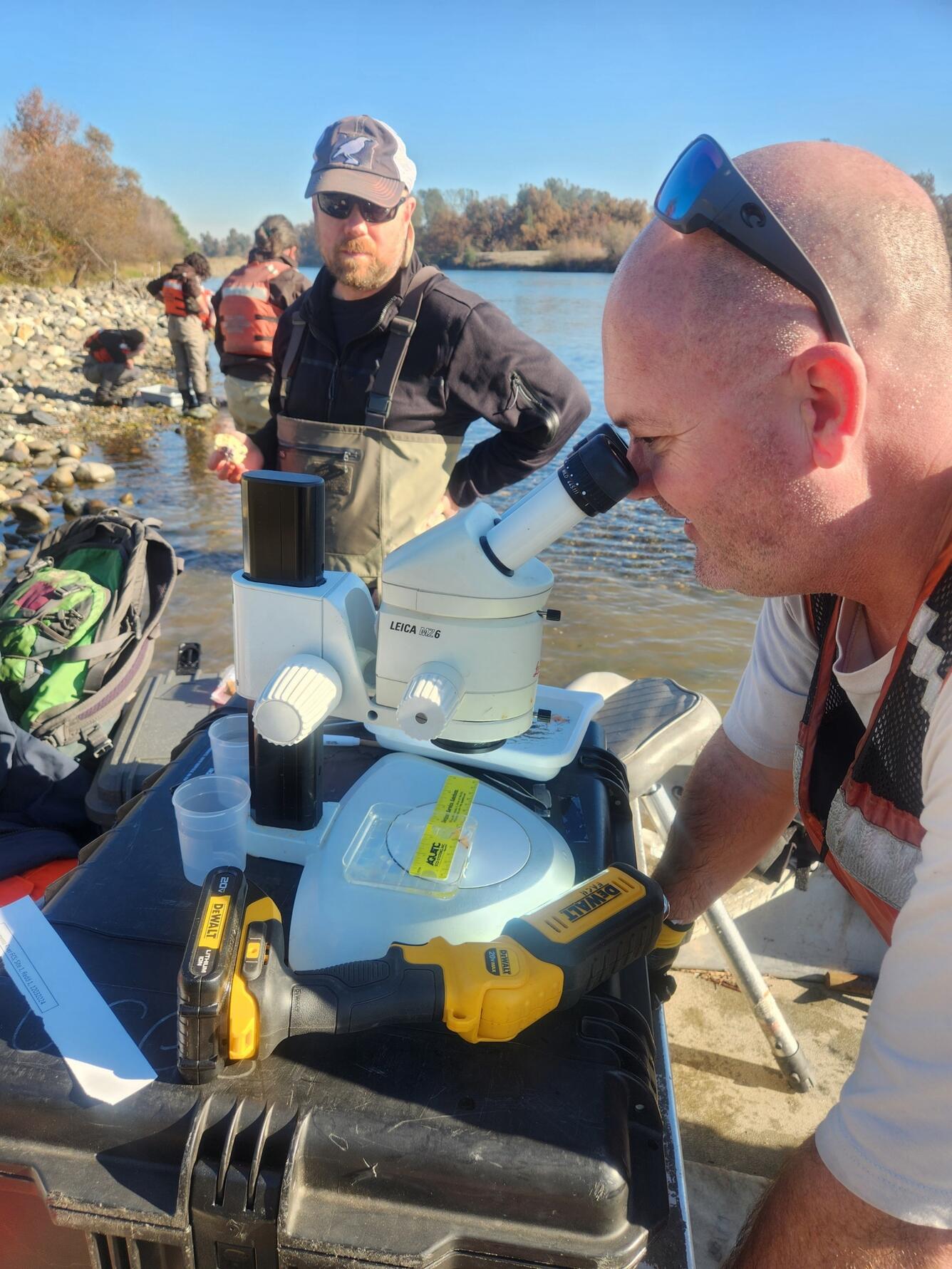
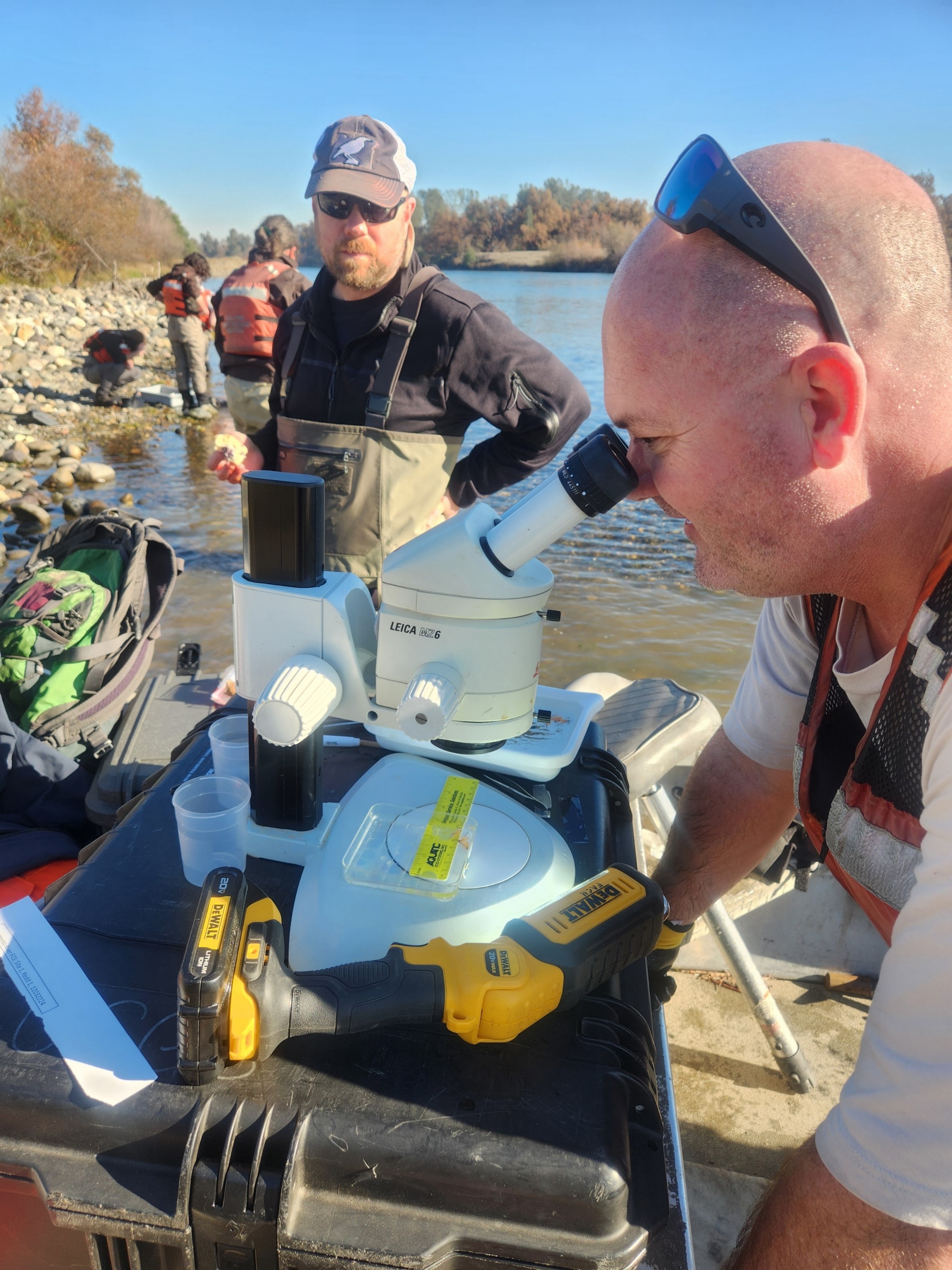
This is fieldwork from a Chinook salmon egg survival pilot study in the Sacramento River. Egg boxes were placed in the river at different locations to collect data on egg-to-fry survival. Some examples of data collected include water velocity and river flow, gravel temperature, scour and deposition, and sediment type.
Sources/Usage
Public Domain.
Related
Quantifying the effects of tides, river flow, and barriers on movements of Chinook Salmon smolts at junctions in the Sacramento–San Joaquin River Delta using multistate models Quantifying the effects of tides, river flow, and barriers on movements of Chinook Salmon smolts at junctions in the Sacramento–San Joaquin River Delta using multistate models
Successful migration of Chinook Salmon (Oncorhynchus tshawytscha) smolts seaward in the Sacramento – San Joaquin River Delta (hereafter, Delta) requires navigating a network of numerous branching channels. Within the Delta, several key junctions route smolts either towards more direct paths to the ocean or towards the interior Delta, an area associated with decreased survival. Movements...
Authors
Michael J. Dodrill, Russell Perry, Adam C. Pope, Xiaochun Wang
Factors affecting spatiotemporal variation in survival of endangered winter-run Chinook Salmon outmigrating from the Sacramento River Factors affecting spatiotemporal variation in survival of endangered winter-run Chinook Salmon outmigrating from the Sacramento River
Among four extant and declining Chinook salmon (Oncorhynchus tshawytscha) runs in California’s Central Valley, none have declined as precipitously as Sacramento River winter-run Chinook Salmon. In addition to habitat loss, migratory winter-run employ a life history strategy to reside and feed in stopover habitats on their way from freshwaters to the ocean. This life history strategy is...
Authors
Jason L. Hassrick, Arnold J. Ammann, Russell W. Perry, Sara N. John, Miles E. Daniels
Outmigration survival of wild Chinook salmon smolts through the Sacramento River during historic drought and high water conditions Outmigration survival of wild Chinook salmon smolts through the Sacramento River during historic drought and high water conditions
Populations of wild spring-run Chinook salmon in California’s Central Valley, once numbering in the millions, have dramatically declined to record low numbers. Dam construction, habitat degradation, and altered flow regimes have all contributed to depress populations, which currently persist in only a few tributaries to the Sacramento River. Mill Creek (Tehama County) continues to...
Authors
Jeremy J. Notch, Alex S. McHuron, Cyril J. Michel, Flora Cordoleani, Matt Johnson, Mark J. Henderson, Arnold J. Ammann
Sacramento River chinook disease (SRCD) Sacramento River chinook disease (SRCD)
No abstract available.
Authors
T. J. Parisot
Related
Quantifying the effects of tides, river flow, and barriers on movements of Chinook Salmon smolts at junctions in the Sacramento–San Joaquin River Delta using multistate models Quantifying the effects of tides, river flow, and barriers on movements of Chinook Salmon smolts at junctions in the Sacramento–San Joaquin River Delta using multistate models
Successful migration of Chinook Salmon (Oncorhynchus tshawytscha) smolts seaward in the Sacramento – San Joaquin River Delta (hereafter, Delta) requires navigating a network of numerous branching channels. Within the Delta, several key junctions route smolts either towards more direct paths to the ocean or towards the interior Delta, an area associated with decreased survival. Movements...
Authors
Michael J. Dodrill, Russell Perry, Adam C. Pope, Xiaochun Wang
Factors affecting spatiotemporal variation in survival of endangered winter-run Chinook Salmon outmigrating from the Sacramento River Factors affecting spatiotemporal variation in survival of endangered winter-run Chinook Salmon outmigrating from the Sacramento River
Among four extant and declining Chinook salmon (Oncorhynchus tshawytscha) runs in California’s Central Valley, none have declined as precipitously as Sacramento River winter-run Chinook Salmon. In addition to habitat loss, migratory winter-run employ a life history strategy to reside and feed in stopover habitats on their way from freshwaters to the ocean. This life history strategy is...
Authors
Jason L. Hassrick, Arnold J. Ammann, Russell W. Perry, Sara N. John, Miles E. Daniels
Outmigration survival of wild Chinook salmon smolts through the Sacramento River during historic drought and high water conditions Outmigration survival of wild Chinook salmon smolts through the Sacramento River during historic drought and high water conditions
Populations of wild spring-run Chinook salmon in California’s Central Valley, once numbering in the millions, have dramatically declined to record low numbers. Dam construction, habitat degradation, and altered flow regimes have all contributed to depress populations, which currently persist in only a few tributaries to the Sacramento River. Mill Creek (Tehama County) continues to...
Authors
Jeremy J. Notch, Alex S. McHuron, Cyril J. Michel, Flora Cordoleani, Matt Johnson, Mark J. Henderson, Arnold J. Ammann
Sacramento River chinook disease (SRCD) Sacramento River chinook disease (SRCD)
No abstract available.
Authors
T. J. Parisot