



Stereoscopy, stereoscopic imaging or 3-D (three-dimensional) imaging is any technique capable of producing three-dimensional visual information or creating the illusion of depth in an image. This apparatus was manufactured by Oculus.
Object ID: USGS-000192
Images
Images
Filter Total Items: 96
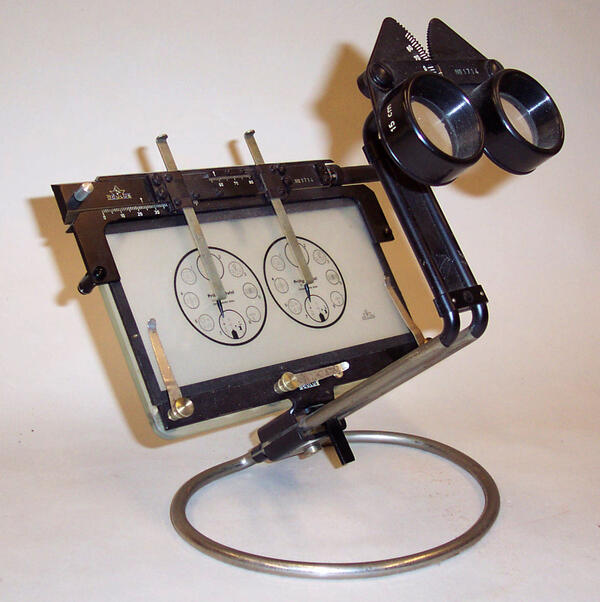
Stereoscope used in Photogrammetry
Stereoscopy, stereoscopic imaging or 3-D (three-dimensional) imaging is any technique capable of producing three-dimensional visual information or creating the illusion of depth in an image. This apparatus was manufactured by Oculus.
Object ID: USGS-000192

Barometer or Barograph
This device records atmospheric pressure and uses twelve stacked aneroid barometer cells in its mechanism to move a pen upon paper, both of which are attached to a drum moved by clockwork. The apparatus is enclosed in a wooden cabinet with set-in glass viewing pane.
Object ID: USGS-000242
This device records atmospheric pressure and uses twelve stacked aneroid barometer cells in its mechanism to move a pen upon paper, both of which are attached to a drum moved by clockwork. The apparatus is enclosed in a wooden cabinet with set-in glass viewing pane.
Object ID: USGS-000242

Bevel Protractor
Object has its original Case. A graduated circular protractor with pivoting arm, it is used for measuring or marking off angles. This instrument was manufactured by Bowen & Company and was first used by the U.S. Army Corp of Engineers before being transferred to the U.S. Geological Survey.
Object ID: USGS-000252
Object has its original Case. A graduated circular protractor with pivoting arm, it is used for measuring or marking off angles. This instrument was manufactured by Bowen & Company and was first used by the U.S. Army Corp of Engineers before being transferred to the U.S. Geological Survey.
Object ID: USGS-000252

Mannheim Type Slide Rule with Leather Sleeve
Original Box & Booklets. Marketed as being made of Ivorite, this slide rule was manufactured by Keuffel & Esser Company, New York & New Jersey in the 1960s.
Original Box & Booklets. Marketed as being made of Ivorite, this slide rule was manufactured by Keuffel & Esser Company, New York & New Jersey in the 1960s.

Polarimeter
An early optoelectronic instrument manufactured by Ernst Leitz G.m.b.H., Wetzlar, Germany, serial #25748. The instrument consists of a weighted stand with optics device with attached power cord, transformer box ("Regel-Transformator / Nur für Wechselstrom / 120/220 Volt - 50 HZ / Typ REDYX Nr. 25748 / Leitz-Speziallampe 6V. 5Amp. / max.
An early optoelectronic instrument manufactured by Ernst Leitz G.m.b.H., Wetzlar, Germany, serial #25748. The instrument consists of a weighted stand with optics device with attached power cord, transformer box ("Regel-Transformator / Nur für Wechselstrom / 120/220 Volt - 50 HZ / Typ REDYX Nr. 25748 / Leitz-Speziallampe 6V. 5Amp. / max.

Rock Dust Testing Kit
Manufactured by Mine Safety Appliances Company sometime after 1914, the wood cabinet-like chest includes an analytical balance, pans and flasks.
Object ID: USGS-000259
Manufactured by Mine Safety Appliances Company sometime after 1914, the wood cabinet-like chest includes an analytical balance, pans and flasks.
Object ID: USGS-000259

Stereo Compilation (3D) Glasses
Manufactured by the Bausch and Lomb Optical Company. Stereographs and stereo compilation glasses are used in the photogrammetry, which is the process of making maps or scale drawings from photographs, especially aerial photographs.
Object ID: USGS-000276
Manufactured by the Bausch and Lomb Optical Company. Stereographs and stereo compilation glasses are used in the photogrammetry, which is the process of making maps or scale drawings from photographs, especially aerial photographs.
Object ID: USGS-000276
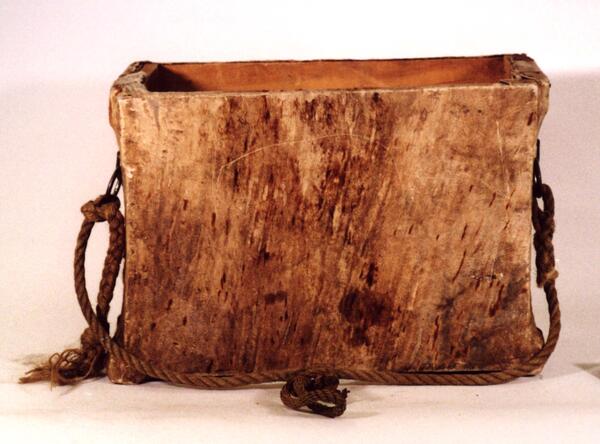
Rawhide Pannier
This rawhide pannier was made for Dr. J. D. Love in 1945. It consists of rawhide stretched over wooden frames. For transportation, this type of pannier was made to hang on animals with wooden pack saddles.
Object ID: USGS-000027
This rawhide pannier was made for Dr. J. D. Love in 1945. It consists of rawhide stretched over wooden frames. For transportation, this type of pannier was made to hang on animals with wooden pack saddles.
Object ID: USGS-000027
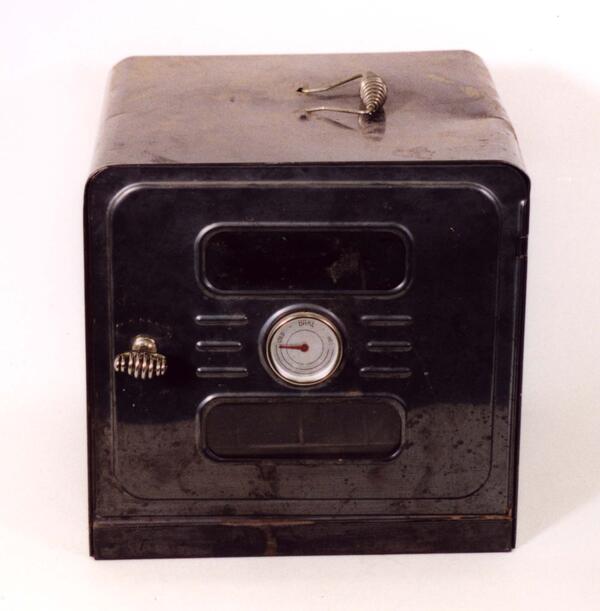
Warming Oven
This oven was made for cooking on top of a stove. There is no heating source, but the bottom is open and the oven sits on a heated stove for warmth. There are racks inside and a small temperature gauge on the oven door. The oven was used by scientists at their campsites.
Object ID: USGS-000111
This oven was made for cooking on top of a stove. There is no heating source, but the bottom is open and the oven sits on a heated stove for warmth. There are racks inside and a small temperature gauge on the oven door. The oven was used by scientists at their campsites.
Object ID: USGS-000111
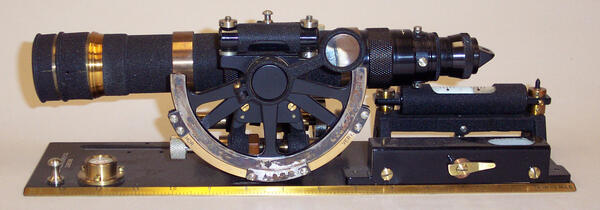
Explorer's Alidade
Manufactured by Keuffel & Esser, New York & New Jersey. In this type of alidade, as opposed to the high standard, the telescope mounted close to the straightedge, producing a more compact instrument. A right-angle prism is attached to the eyepiece and permits viewing by looking down.
Manufactured by Keuffel & Esser, New York & New Jersey. In this type of alidade, as opposed to the high standard, the telescope mounted close to the straightedge, producing a more compact instrument. A right-angle prism is attached to the eyepiece and permits viewing by looking down.
Telescopic Alidade
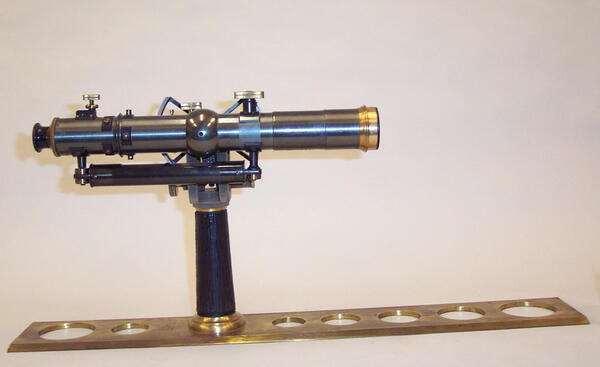
A high standard alidade; this type of alidade permits direct viewing through the telescope. The level is mounted below the inverting telescope and the base (blade) is solid brass with circular voids. Manufactured by Keuffel & Esser, New York & New Jersey.
Object ID: USGS-000165
A high standard alidade; this type of alidade permits direct viewing through the telescope. The level is mounted below the inverting telescope and the base (blade) is solid brass with circular voids. Manufactured by Keuffel & Esser, New York & New Jersey.
Object ID: USGS-000165
Plane Table with Tripod
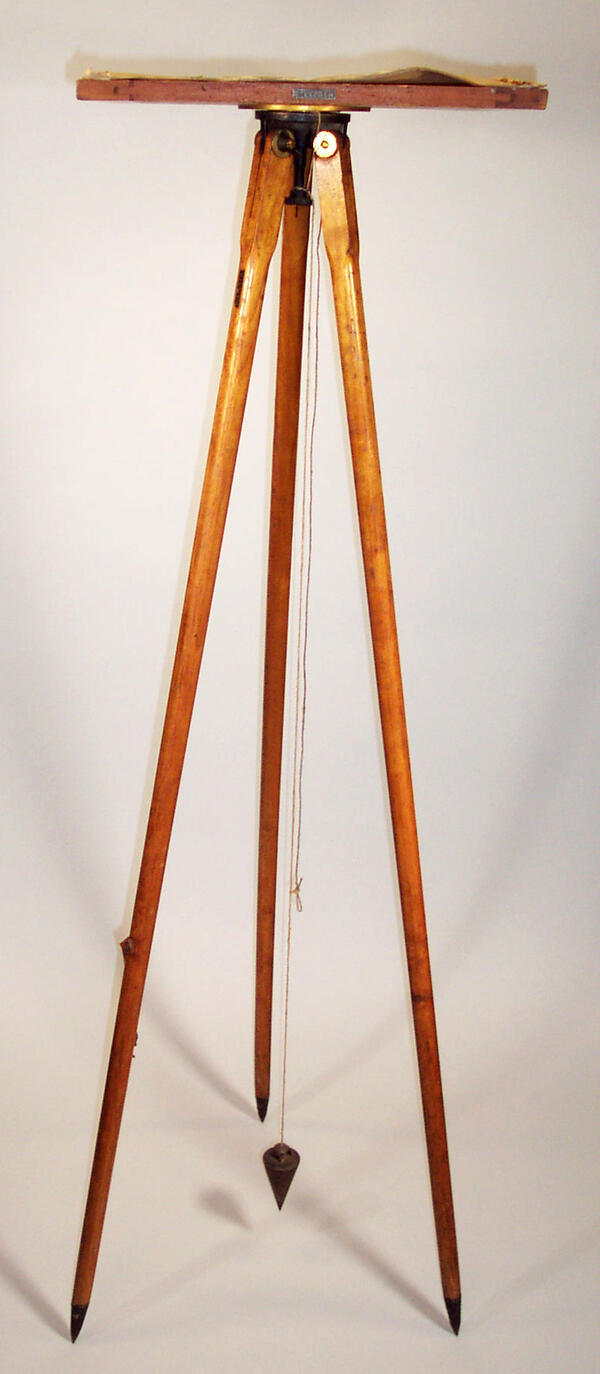
Plane tables are also known as drawing boards. The round leg tripod is made from hardwood, with a bronze head, steel tips and plum bob.
Object ID: USGS-000210
Plane tables are also known as drawing boards. The round leg tripod is made from hardwood, with a bronze head, steel tips and plum bob.
Object ID: USGS-000210
Canvas Plane Table Case
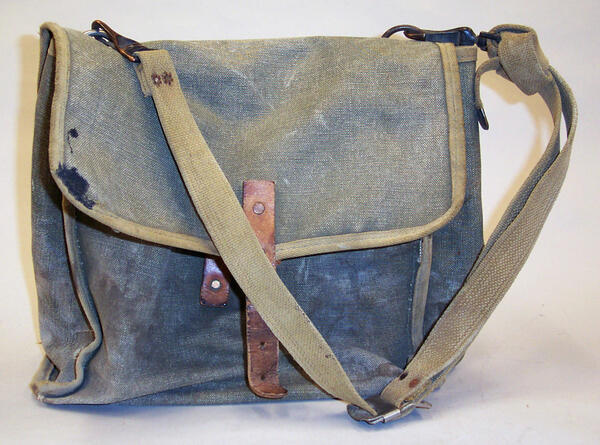
Used in field work by Thomas B. Nolan, who served as the seventh Director of the U.S. Geological Survey (1956-1965).
Object ID: USGS-000214
Used in field work by Thomas B. Nolan, who served as the seventh Director of the U.S. Geological Survey (1956-1965).
Object ID: USGS-000214

Denver Display
Director's Display in Denver Colorado. It displays surveying equipment used by USGS field scientists. Some of the instruments included are engineer's levels, transits, hand-held transits, altimeters and microscopes.
Object ID: USGS-DenverDisplay(1of2)
Director's Display in Denver Colorado. It displays surveying equipment used by USGS field scientists. Some of the instruments included are engineer's levels, transits, hand-held transits, altimeters and microscopes.
Object ID: USGS-DenverDisplay(1of2)

Altimeter
Pocket Model used to measure altitude. Accurate to 15,000 ft. Made in Aug. 1968 by Revue Thommen AG, Switzerland.
Object ID: USGS-000646
Pocket Model used to measure altitude. Accurate to 15,000 ft. Made in Aug. 1968 by Revue Thommen AG, Switzerland.
Object ID: USGS-000646
Stereoscope
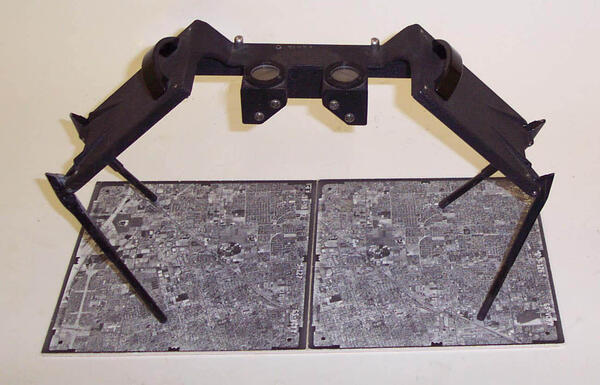
Manufactured by Q-O-S Corporation, New York for the U.S. Army Corp of Engineers. Although originally designed for military reconnaissance work, this type of instrument was used for map reading of aerial photographs up to 8".
Object ID: USGS-000235
Manufactured by Q-O-S Corporation, New York for the U.S. Army Corp of Engineers. Although originally designed for military reconnaissance work, this type of instrument was used for map reading of aerial photographs up to 8".
Object ID: USGS-000235
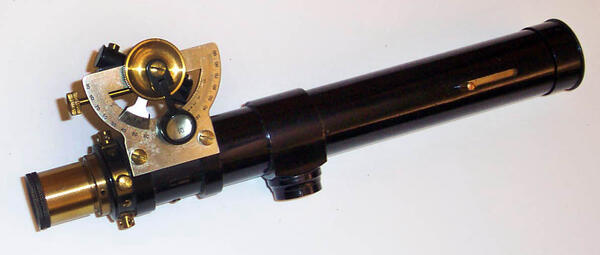
Abney Level
A pocket instrument used in surveying which consists of a fixed sighting tube, a movable spirit level connected to a pointing arm and an arced scale graduated 0 to 90º in both directions. When correctly used, the Abney Level is an accurate surveying tool used to measure degrees, percent of grade and topographic elevation. Manufactured by E.R.
A pocket instrument used in surveying which consists of a fixed sighting tube, a movable spirit level connected to a pointing arm and an arced scale graduated 0 to 90º in both directions. When correctly used, the Abney Level is an accurate surveying tool used to measure degrees, percent of grade and topographic elevation. Manufactured by E.R.
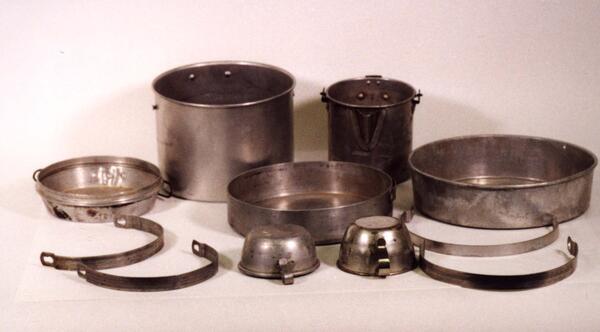
Mess Kit
This is a set of food preparation tools used in the field. Included in the mess kit are cups, pans, interchangeable lids and handles, a strainer, a coffeepot and a hot water pot. This kit was used by field scientists in the west.
Object ID: USGS-000135-136, 138-144, 146 & 148-150
This is a set of food preparation tools used in the field. Included in the mess kit are cups, pans, interchangeable lids and handles, a strainer, a coffeepot and a hot water pot. This kit was used by field scientists in the west.
Object ID: USGS-000135-136, 138-144, 146 & 148-150
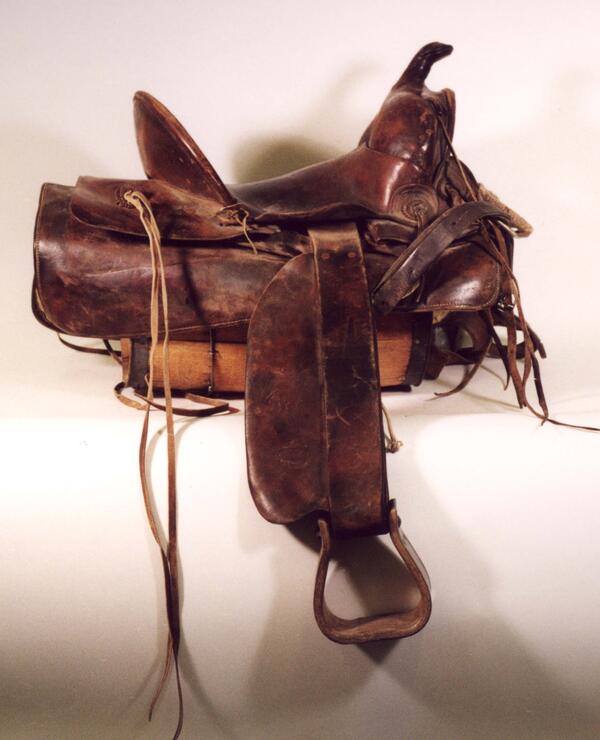
Arnold Hague's Saddle
This is Arnold Hague's saddle. The saddle is likely about 120 years old and in the western style with a sheepskin liner. Arnold Hague used this saddle on his expeditions in the west.
Object ID: USGS-000015
This is Arnold Hague's saddle. The saddle is likely about 120 years old and in the western style with a sheepskin liner. Arnold Hague used this saddle on his expeditions in the west.
Object ID: USGS-000015
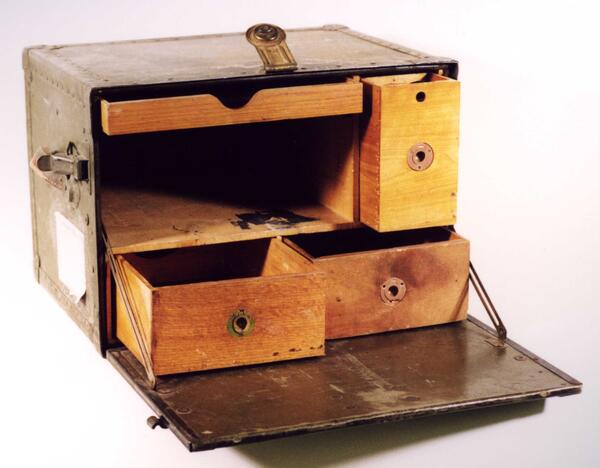
Portable Field Desk
This desk, used in the field, was originally made for the US Army. The drawers all pull into the desk and the writing surface of the desk then folds up for transport. Often, scientists took advantage of surplus items for their field work.
Object ID: USGS-000017
This desk, used in the field, was originally made for the US Army. The drawers all pull into the desk and the writing surface of the desk then folds up for transport. Often, scientists took advantage of surplus items for their field work.
Object ID: USGS-000017
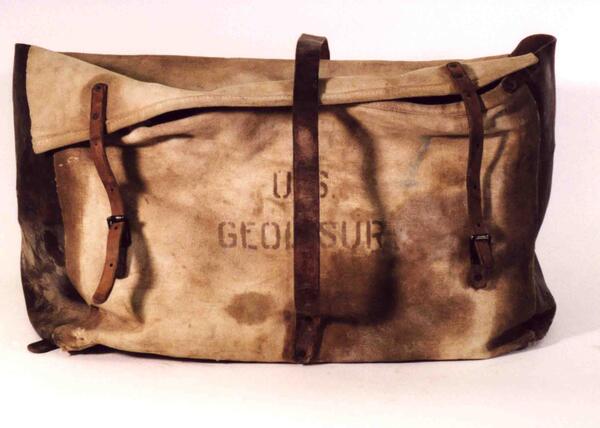
Canvas Pannier
This is one of many heavy, canvas and leather panniers. They were used by Arnold Hague in the late 1800s and are no longer made or used. Many are imprinted with "US Geol. Sur."
Object ID: USGS-000037
This is one of many heavy, canvas and leather panniers. They were used by Arnold Hague in the late 1800s and are no longer made or used. Many are imprinted with "US Geol. Sur."
Object ID: USGS-000037