USGS gage 05079000 Red Lake River at Crookston, MN
USGS gage 05079000 Red Lake River at Crookston, MNUSGS gage 05079000 Red Lake River at Crookston, MN manged by Dakota Water Science Center.
An official website of the United States government
Here's how you know
Official websites use .gov
A .gov website belongs to an official government organization in the United States.
Secure .gov websites use HTTPS
A lock () or https:// means you’ve safely connected to the .gov website. Share sensitive information only on official, secure websites.
Access all multimedia to include images, video, audio, webcams, before-after imagery, and more. Filter and explore with filtering options to refine search.
USGS gage 05079000 Red Lake River at Crookston, MN manged by Dakota Water Science Center.
USGS gage number 02310678 Homosassa Springs at Homosassa Springs, FL
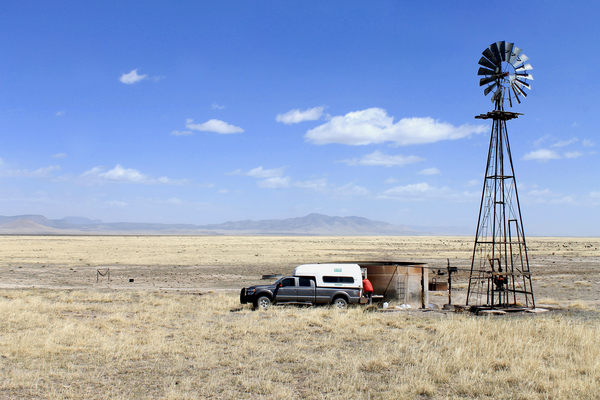
USGS scientist Mike Carlson works to collect a water quality sample from a windmill in the western Plains of San Agustin. Photo taken by Jeff Pepin on April 10th, 2019.
A close-up of the active fumarole field on the north wall of the pit.
This wide-angle video shows the southwest portion of Kīlauea caldera in the area of Halema‘uma‘u. Faint plumes of volcanic gas are rising from yellow fumaroles on the walls of the deep conical pit. Overall, no significant changes were observed at the summit on today's overflight.
Thermal map of Kīlauea Caldera
USGS hydrologist Dan Thomas prepares to measure record flows on the Red River of the North in downtown Fargo, North Dakota. The orange instrument is an acoustic Doppler current profiler, which is used to measure streamflow as it's pulled across the water.
A USGS crew measures flooding on the Red River in downtown Fargo, North Dakota. The orange instrument is an acoustic Doppler current profiler, which is used to measure streamflow as it's pulled across the water.
An instrument called an acoustic Doppler current profiler (ADCP) takes streamflow measurements during flooding. The ADCP is attached to a buoy that is dragged in the water either alongside a boat or by hand. USGS hydrologist Dan Thomas points to the ADCP sensor on the Red River of the North during flooding in downtown Fargo, ND.
Biological Technician Laura (Laney) White adjusts camera settings during a survey.
The Seabird Studies Team at the USGS Western Ecological Research Center is conducting aerial photographic surveys of the ocean off central and southern California to create comprehensive maps of seabird and marine mammal distributions.
Biological Technician Laura (Laney) White adjusts camera settings during a survey.
The Seabird Studies Team at the USGS Western Ecological Research Center is conducting aerial photographic surveys of the ocean off central and southern California to create comprehensive maps of seabird and marine mammal distributions.
A USGS crew measures high flow during flooding on the Maple River near Mapleton, North Dakota. The yellow instrument is an acoustic Doppler current profiler, which is used to measure streamflow as it's pulled across the water. The crew is standing on a road that had been overtaken by the river.
A USGS crew measures high flow during flooding on the Maple River near Mapleton, North Dakota. The instrument being pulled across the water is an acoustic Doppler current profiler, which is used to measure streamflow. The truck is parked on a road that had been overtaken by the river.
This is not a lake! A USGS crew measures high flow during flooding on the Maple River near Mapleton, North Dakota. The instrument being pulled across the water is an acoustic Doppler current profiler (ADCP), which is used to measure streamflow.
Two USGS technicians observe water measurements from a boat with flooding in the background during record Midwest flooding in spring 2019.
A USGS technician steers a watercraft with floodwaters in the background during record Midwest flooding in spring 2019.
A USGS crew prepares to measure streamflow during record flooding on the Maple River near Mapleton, ND, on April 6, 2019. The instrument pictured is an acoustic Doppler current profiler which measures streamflow as it's dragged across the water.
A USGS crew measures streamflow during record flooding on the Red River of the North near Georgetown, ND, on April 6, 2019. The apparatus in the middle of the image is a USGS temporary streamgage installed to monitor flooding, and the orange instrument pictured is an acoustic Doppler current profiler that measures streamflow.
Pilot Barry expertly flies the plane at the correct survey speed and altitude to obtain crisp, clear images.
The Seabird Studies Team at the USGS Western Ecological Research Center is conducting aerial photographic surveys of the ocean off central and southern California to create comprehensive maps of seabird and marine mammal distributions.
Pilot Barry expertly flies the plane at the correct survey speed and altitude to obtain crisp, clear images.
The Seabird Studies Team at the USGS Western Ecological Research Center is conducting aerial photographic surveys of the ocean off central and southern California to create comprehensive maps of seabird and marine mammal distributions.
View of the ocean off the central California coast at the start of a flight.
The Seabird Studies Team at the USGS Western Ecological Research Center is conducting aerial photographic surveys of the ocean off central and southern California to create comprehensive maps of seabird and marine mammal distributions.
View of the ocean off the central California coast at the start of a flight.
The Seabird Studies Team at the USGS Western Ecological Research Center is conducting aerial photographic surveys of the ocean off central and southern California to create comprehensive maps of seabird and marine mammal distributions.
Biological Technician Amelia DuVall views data in real time during an aerial photographic survey.