



Instructions for new users of the USGS Precipitation Runoff Modeling System (PRMS) describing how to quickly get the software running.
Videos
Explore a diverse collection of engaging videos showcasing the latest research, discoveries, and educational content from the U.S. Geological Survey. Dive into the fascinating world of geology, hydrology, ecology, and natural hazards as we bring science to life. Stay informed and inspired by our visual storytelling that highlights the vital work of USGS scientists and their impact on the planet.
Filter Total Items: 2905
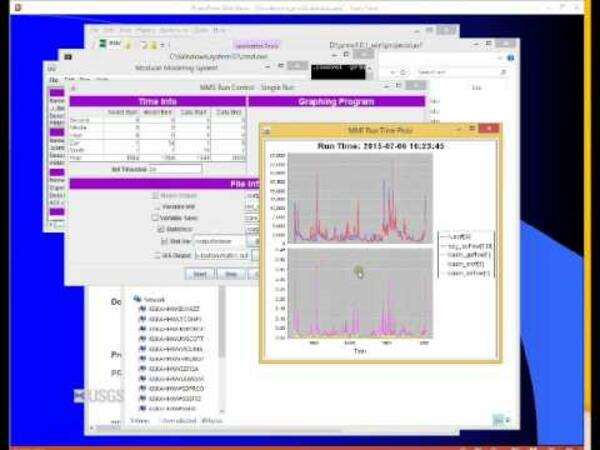
PRMS Quickstart
Instructions for new users of the USGS Precipitation Runoff Modeling System (PRMS) describing how to quickly get the software running.
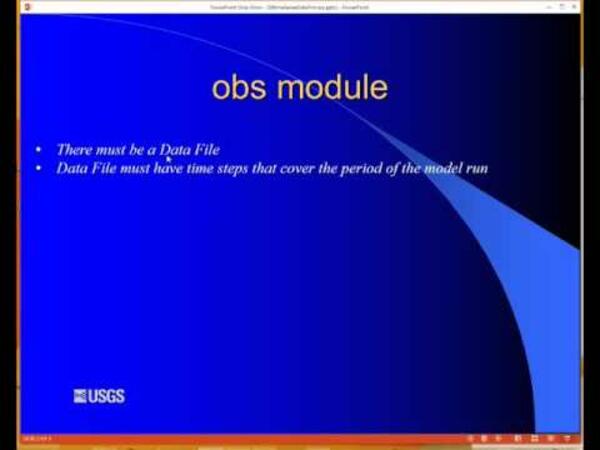
PRMS Time Series
Instructions for time series data preparation when using the USGS Precipitation Runoff Modeling System (PRMS).
Instructions for time series data preparation when using the USGS Precipitation Runoff Modeling System (PRMS).

CRAVe: Climate Registry for the Assessment of Vulnerability
CRAVe: Climate Registry for the Assessment of VulnerabilityThis webinar was conducted as a a part of the Climate Change Science and Management Webinar Series, hosted by the USGS National Climate Change and Wildlife Science Center and the FWS National Conservation Training Center.
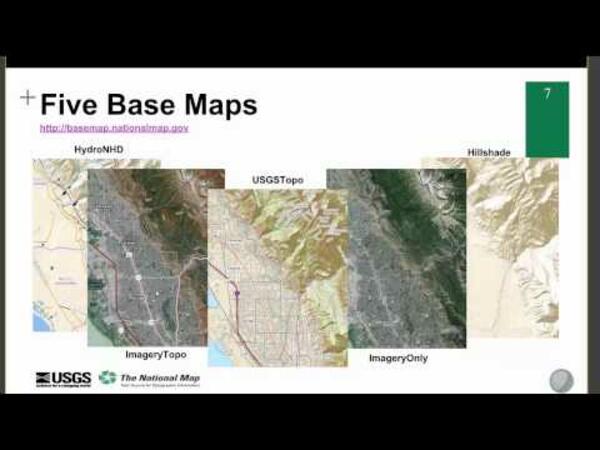
TNM Webinar (2015)
This Webinar is an opportunity for USGS' NGTOC to expose the geospatial data, services, and products available via TNM to developers and user communities.Note: Cleared for use w/I context of this webinar and recorded video.
This Webinar is an opportunity for USGS' NGTOC to expose the geospatial data, services, and products available via TNM to developers and user communities.Note: Cleared for use w/I context of this webinar and recorded video.
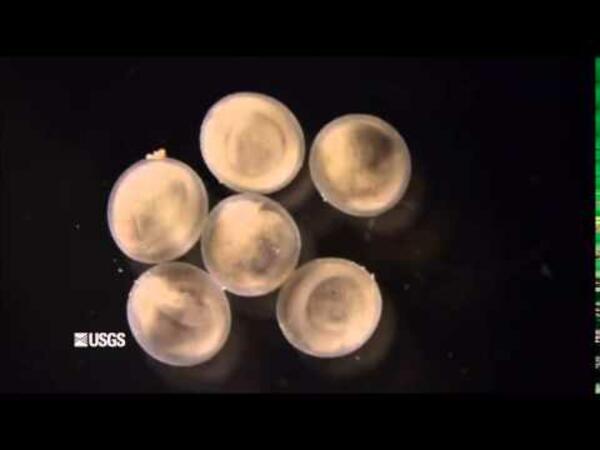
Pallid Sturgeon Embryos
Pallid sturgeon embryos moving inside the egg chorion.
Pallid sturgeon embryos moving inside the egg chorion.

What's the Big Idea? — Remote Sensing Understand Climate Change
What's the Big Idea? — Remote Sensing Understand Climate ChangeZhuoting Wu, research ecologist at the USGS Western Geographic Science Center, explains how the USGS uses remote sensing technology to help Tribal communities better understand the effects of climate change.
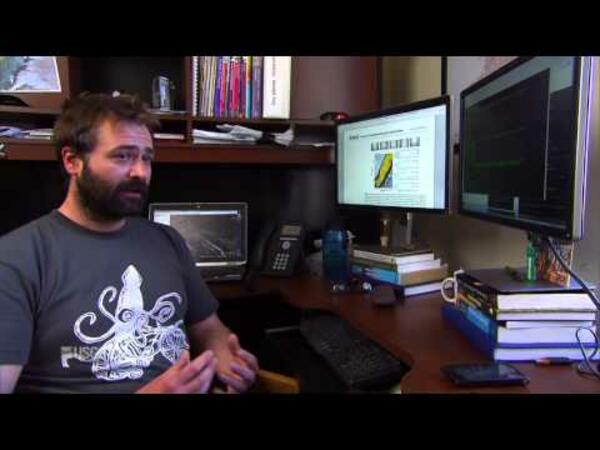
What's the Big Idea? — Using Sound to Remotely Sense the Riverbed
What's the Big Idea? — Using Sound to Remotely Sense the RiverbedDaniel Buscombe, Research Geologist at the USGS Grand Canyon Monitoring and Research Center, discusses his work using acoustic remote sensing technology to map riverbeds in unprecedented ways.

What's the Big Idea?—Using Citizen Science to Track Aquatic Food Webs
What's the Big Idea?—Using Citizen Science to Track Aquatic Food WebsTed Kennedy, research ecologist at the USGS Grand Canyon Monitoring and Research Center, discusses how citizen science helps better inform his work on aquatic food webs of the Grand Canyon.
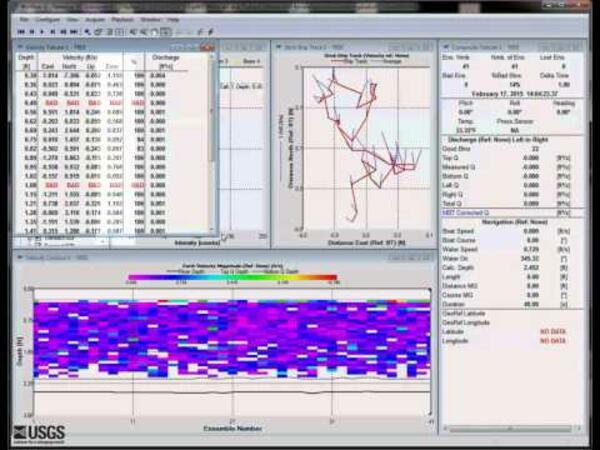
Advanced Review of TRDI SxS Pro Data
This video discusses the basics of performing an advanced review of midsection ADCP data collected in TRDI SxS Pro utilizing BBSlice and WinRiver II.
This video discusses the basics of performing an advanced review of midsection ADCP data collected in TRDI SxS Pro utilizing BBSlice and WinRiver II.
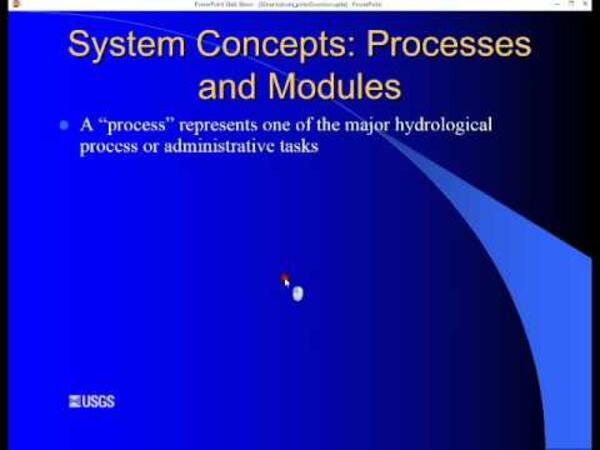
PRMS Overview
Presents overview of the USGS Precipitation Runoff Modeling System (PRMS) software as part of a training series.
Presents overview of the USGS Precipitation Runoff Modeling System (PRMS) software as part of a training series.

USGS Bottom Trawl Sampling on Lake Erie
The U.S. Geological Survey Great Lakes Science Center has conducted lake-wide surveys of the fish community in Lake Erie since the 1960s. The resulting data on relative abundance, size, and age of fishes are used by state and provincial agencies to manage Lake Erie fish stocks. This video shows bottom trawl sampling during June 2015.
The U.S. Geological Survey Great Lakes Science Center has conducted lake-wide surveys of the fish community in Lake Erie since the 1960s. The resulting data on relative abundance, size, and age of fishes are used by state and provincial agencies to manage Lake Erie fish stocks. This video shows bottom trawl sampling during June 2015.

ModelMuse: Flow Observations
This video shows how to define flow observations in ModelMuse and how flow observations can be helpful in calibrating a model.
This video shows how to define flow observations in ModelMuse and how flow observations can be helpful in calibrating a model.

Fumaroles in Norris Geyser Basin
Fumaroles (venting gas and steam) at the base of Porcelain Terrace in the Norris Geyser Basin, Yellowstone.
Fumaroles (venting gas and steam) at the base of Porcelain Terrace in the Norris Geyser Basin, Yellowstone.

Hydrography Webinar Series - Session 2
The USGS Hydrography Webinar Series shares success stories from users, provides information on The National Hydrography Dataset (NHD) and other related products, and provides a forum for users to learn more about Hydrography-related topics.
The USGS Hydrography Webinar Series shares success stories from users, provides information on The National Hydrography Dataset (NHD) and other related products, and provides a forum for users to learn more about Hydrography-related topics.

PubTalk 5/2015 — Breaking Badly:Forecasting California Earthquakes
PubTalk 5/2015 — Breaking Badly:Forecasting California Earthquakesby Morgan Page, USGS Research Geophysicist
PubTalk 5/2015 — Breaking Badly:Forecasting California Earthquakes
PubTalk 5/2015 — Breaking Badly:Forecasting California Earthquakesby Morgan Page, USGS Research Geophysicist

USGS Geophysical Field Experience 2015
USGS Geophysical Field Experience 2015 - Learn about recent hands-on hydrogeophysics field training for USGS interns and scientists.
USGS Geophysical Field Experience 2015 - Learn about recent hands-on hydrogeophysics field training for USGS interns and scientists.

NAWQA - Studying Water Quality Over Time
Follow a U.S. Geological Survey hydrologist as he takes part in the National Water-Quality Assessment Program in the Pacific Northwest. In 1991, the U.S.
Follow a U.S. Geological Survey hydrologist as he takes part in the National Water-Quality Assessment Program in the Pacific Northwest. In 1991, the U.S.

Identifying Interference with the StreamPro in TRDI SxS Pro
Identifying Interference with the StreamPro in TRDI SxS ProThis video discusses the process of identifying potential site interference with the StreamPro when using TRDI SxS Pro.
Identifying Interference with the StreamPro in TRDI SxS Pro
Identifying Interference with the StreamPro in TRDI SxS ProThis video discusses the process of identifying potential site interference with the StreamPro when using TRDI SxS Pro.
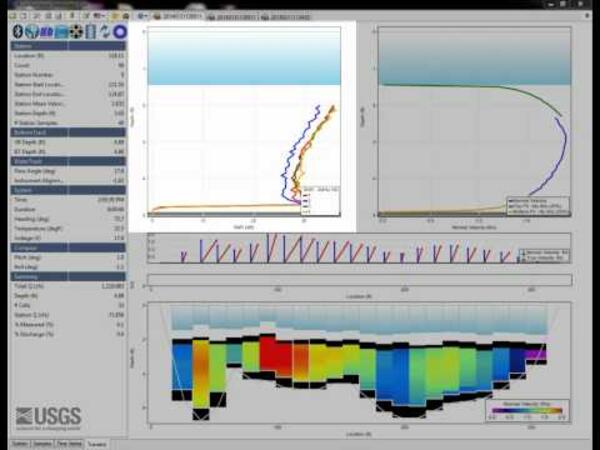
Issues during Review of SonTek RiverSurveyor Stat. Live Data
Issues during Review of SonTek RiverSurveyor Stat. Live DataThis video discusses common issues identified during field review of midsection data collected in SonTek RiverSurveyor Stationary Live. Note: Use of trade names is for descriptive purposes only, and does not imply endorsement by the USGS.

Spattering in Halema`uma`u Crater
This Quicktime movie shows spattering at the margin of the summit lava lake in Halema‘uma‘u Crater. Spattering has been common at the lake, and when it occurs is easily visible from the public viewing area at Jaggar Museum. This video shows a closer view from the rim of Halema‘uma‘u, which is closed to the public due to volcanic hazards.
This Quicktime movie shows spattering at the margin of the summit lava lake in Halema‘uma‘u Crater. Spattering has been common at the lake, and when it occurs is easily visible from the public viewing area at Jaggar Museum. This video shows a closer view from the rim of Halema‘uma‘u, which is closed to the public due to volcanic hazards.
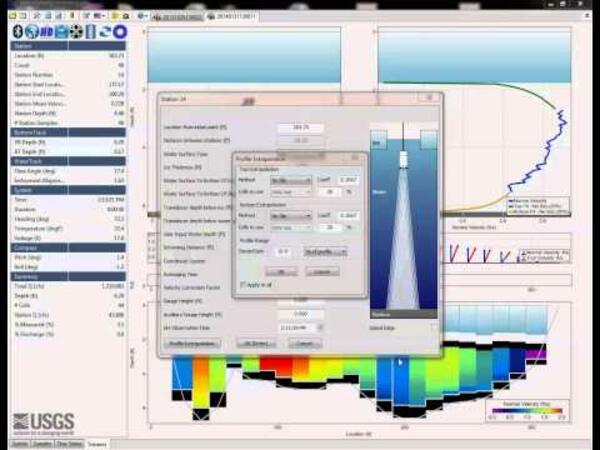
Evaluating Extrapolation in SonTek RiverSurveyor Stat. Live Data
Evaluating Extrapolation in SonTek RiverSurveyor Stat. Live DataThis video discusses the process of evaluating extrapolation methods in the SonTek RiverSurveyor Stationary Live software. Note: Use of trade names is for descriptive purposes only, and does not imply endorsement by the USGS.