



Sometimes it is difficult to know where to start when looking for a job. At the USGS it's easy. All our jobs go through the usajobs.gov website. Interested in a career with the USGS? Start with science. Start with usajobs.gov.
Videos
Explore a diverse collection of engaging videos showcasing the latest research, discoveries, and educational content from the U.S. Geological Survey. Dive into the fascinating world of geology, hydrology, ecology, and natural hazards as we bring science to life. Stay informed and inspired by our visual storytelling that highlights the vital work of USGS scientists and their impact on the planet.
Filter Total Items: 2894

Find Jobs at USGS
Sometimes it is difficult to know where to start when looking for a job. At the USGS it's easy. All our jobs go through the usajobs.gov website. Interested in a career with the USGS? Start with science. Start with usajobs.gov.

What's the Big Idea? — Charting Change from the Skies
What's the Big Idea? — Charting Change from the SkiesTom Loveland, research scientist with the USGS Earth Resources Observation and Science Center, explains how he uses data — both past and present — to help scientists, natural resource managers, and the public better understand how the face of the planet is shifting and what that change means.
What's the Big Idea? — Charting Change from the Skies
What's the Big Idea? — Charting Change from the SkiesTom Loveland, research scientist with the USGS Earth Resources Observation and Science Center, explains how he uses data — both past and present — to help scientists, natural resource managers, and the public better understand how the face of the planet is shifting and what that change means.

What's the Big Idea? — Encouraging Risk-Taking, Learning From Failure
What's the Big Idea? — Encouraging Risk-Taking, Learning From FailureMark Sogge, Regional Director of the USGS Pacific Region, shares his take on what sparks innovation, the importance of learning from failure, and the integral role risk-taking plays in helping the USGS rise to meet challenges in the 21st Century and beyond.
What's the Big Idea? — Encouraging Risk-Taking, Learning From Failure
What's the Big Idea? — Encouraging Risk-Taking, Learning From FailureMark Sogge, Regional Director of the USGS Pacific Region, shares his take on what sparks innovation, the importance of learning from failure, and the integral role risk-taking plays in helping the USGS rise to meet challenges in the 21st Century and beyond.

The April 25, 2015, Gorkha, Nepal, Earthquake: An Expected Event that Defied Expectations
The April 25, 2015, Gorkha, Nepal, Earthquake: An Expected Event that Defied ExpectationsScientists have long known that large earthquakes will inevitably occur along the Himalaya front.
Experts had long feared that large earthquakes would take a devastating toll on Nepal.
The 2015 Gorkha earthquake killed nearly 9,000 people, but the toll was not as catastrophic as had been feared.
The April 25, 2015, Gorkha, Nepal, Earthquake: An Expected Event that Defied Expectations
The April 25, 2015, Gorkha, Nepal, Earthquake: An Expected Event that Defied ExpectationsScientists have long known that large earthquakes will inevitably occur along the Himalaya front.
Experts had long feared that large earthquakes would take a devastating toll on Nepal.
The 2015 Gorkha earthquake killed nearly 9,000 people, but the toll was not as catastrophic as had been feared.

Lightning Creek at Clark Fork, Idaho: December 9, 2015
Lightning Creek at Clark Fork, Idaho: December 9, 2015On December 9, 2015, heavy rain and resulting snowmelt swelled many Pacific Northwest rivers to flood stage. One of these streams was Lightning Creek at Clark Fork, Idaho. In a 24-hour period, Lightning Creek rose from about 200 cubic feet per second (cfs) to more than 10,000 cfs as recorded at USGS strreamgage 12392155.
Lightning Creek at Clark Fork, Idaho: December 9, 2015
Lightning Creek at Clark Fork, Idaho: December 9, 2015On December 9, 2015, heavy rain and resulting snowmelt swelled many Pacific Northwest rivers to flood stage. One of these streams was Lightning Creek at Clark Fork, Idaho. In a 24-hour period, Lightning Creek rose from about 200 cubic feet per second (cfs) to more than 10,000 cfs as recorded at USGS strreamgage 12392155.

PubTalk 11/2015 — Waterbirds in a Changing Landscape
PubTalk 11/2015 — Waterbirds in a Changing LandscapeEvaluating Avian Response to the West Coast's Largest Tidal Marsh Restoration Project
by Susan De La Cruz, USGS Research Wildlife Biologist
PubTalk 11/2015 — Waterbirds in a Changing Landscape
PubTalk 11/2015 — Waterbirds in a Changing LandscapeEvaluating Avian Response to the West Coast's Largest Tidal Marsh Restoration Project
by Susan De La Cruz, USGS Research Wildlife Biologist

Hydrography Webinar Series - Session 5
The USGS Hydrography Webinar Series shares success stories from users, provides information on The National Hydrography Dataset (NHD) and other related products, and provides a forum for users to learn more about Hydrography-related topics.
The USGS Hydrography Webinar Series shares success stories from users, provides information on The National Hydrography Dataset (NHD) and other related products, and provides a forum for users to learn more about Hydrography-related topics.

PubTalk 10/2015 — Fire-climate Relationships in the Sierra Nevada
PubTalk 10/2015 — Fire-climate Relationships in the Sierra NevadaSurprises relevant to future fire regime forecasts
by Jon E. Keeley, USGS Research Scientist
PubTalk 10/2015 — Fire-climate Relationships in the Sierra Nevada
PubTalk 10/2015 — Fire-climate Relationships in the Sierra NevadaSurprises relevant to future fire regime forecasts
by Jon E. Keeley, USGS Research Scientist

Coproduction of Climate Science Knowledge
This video was created as part of the Climate Change Science and Management Webinar Series hosted by the U.S. Geological Survey's National Climate Change and Wildlife Science Center and the U.S. Fish and Wildlife Service's National Conservation Training Center.
This video was created as part of the Climate Change Science and Management Webinar Series hosted by the U.S. Geological Survey's National Climate Change and Wildlife Science Center and the U.S. Fish and Wildlife Service's National Conservation Training Center.

What's the Big Idea? — Creating Cleaner Energy from Coal
What's the Big Idea? — Creating Cleaner Energy from CoalElliott Barnhart, a hydrologist with the USGS Wyoming-Montana Water Science Center, describes his work developing what could be a cleaner way to develop coal.
What's the Big Idea? — Creating Cleaner Energy from Coal
What's the Big Idea? — Creating Cleaner Energy from CoalElliott Barnhart, a hydrologist with the USGS Wyoming-Montana Water Science Center, describes his work developing what could be a cleaner way to develop coal.
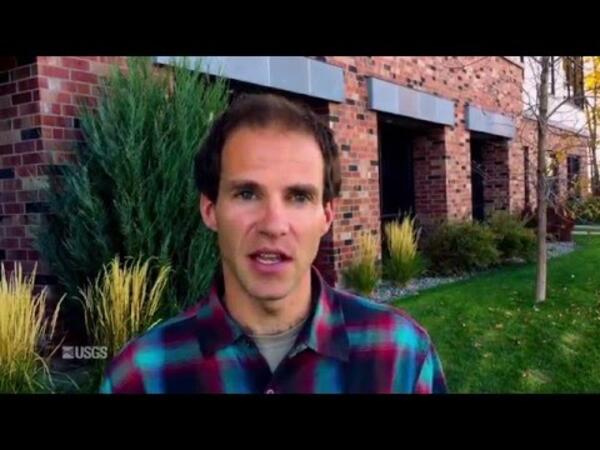
What's the Big Idea?— Turning to eDNA to Detect Invasive Species
What's the Big Idea?— Turning to eDNA to Detect Invasive SpeciesAdam Sepulveda, research zoologist at the USGS Northern Rocky Mountain Science Center, explains a scientists at NOROCK are using environmental DNA — the identification of species through biological information they leave behind in their habitat — to detect invasive species and how this method could change the way scientists find evidence of biodiversity in
What's the Big Idea?— Turning to eDNA to Detect Invasive Species
What's the Big Idea?— Turning to eDNA to Detect Invasive SpeciesAdam Sepulveda, research zoologist at the USGS Northern Rocky Mountain Science Center, explains a scientists at NOROCK are using environmental DNA — the identification of species through biological information they leave behind in their habitat — to detect invasive species and how this method could change the way scientists find evidence of biodiversity in

What's the Big Idea?—Using Weather Equip. to Monitor Animal Movement
What's the Big Idea?—Using Weather Equip. to Monitor Animal MovementRobb Diehl, research ecologist at the USGS Northern Rocky Mountain Science Center, explains how he uses remote sensing technology — particularly weather radar — to better understand how flying animals affect human activities.
Producer: Jacob Massey, USGS
Camera: Paul Laustsen, USGS
What's the Big Idea?—Using Weather Equip. to Monitor Animal Movement
What's the Big Idea?—Using Weather Equip. to Monitor Animal MovementRobb Diehl, research ecologist at the USGS Northern Rocky Mountain Science Center, explains how he uses remote sensing technology — particularly weather radar — to better understand how flying animals affect human activities.
Producer: Jacob Massey, USGS
Camera: Paul Laustsen, USGS

Lava Sampling by HVO Geologist
This Quicktime video shows lava sample collection from the perspective of an HVO geologist.
An animated GIF of the sampling shot can be found at: https://www.usgs.gov/media/images/lava-sampling-0
This Quicktime video shows lava sample collection from the perspective of an HVO geologist.
An animated GIF of the sampling shot can be found at: https://www.usgs.gov/media/images/lava-sampling-0

What's the Deal with Wisconsin's Walleye?
This video was created as part of the Climate Change Science and Management Webinar Series hosted by the U.S. Geological Survey's National Climate Change and Wildlife Science Center and the U.S. Fish and Wildlife Service's National Conservation Training Center.
This video was created as part of the Climate Change Science and Management Webinar Series hosted by the U.S. Geological Survey's National Climate Change and Wildlife Science Center and the U.S. Fish and Wildlife Service's National Conservation Training Center.

Hydrography Webinar Series - Session 4
The USGS Hydrography Webinar Series shares success stories from users, provides information on The National Hydrography Dataset (NHD) and other related products, and provides a forum for users to learn more about Hydrography-related topics.
The USGS Hydrography Webinar Series shares success stories from users, provides information on The National Hydrography Dataset (NHD) and other related products, and provides a forum for users to learn more about Hydrography-related topics.

PubTalk 9/2015 — Coral Reefs, Climate Change, and Atoll Sustainability
PubTalk 9/2015 — Coral Reefs, Climate Change, and Atoll SustainabilityWill Micronesians become the U.S.'s first climate change refugees?
by Curt Storlazzi, USGS Research Geologist and Oceanographer
PubTalk 9/2015 — Coral Reefs, Climate Change, and Atoll Sustainability
PubTalk 9/2015 — Coral Reefs, Climate Change, and Atoll SustainabilityWill Micronesians become the U.S.'s first climate change refugees?
by Curt Storlazzi, USGS Research Geologist and Oceanographer
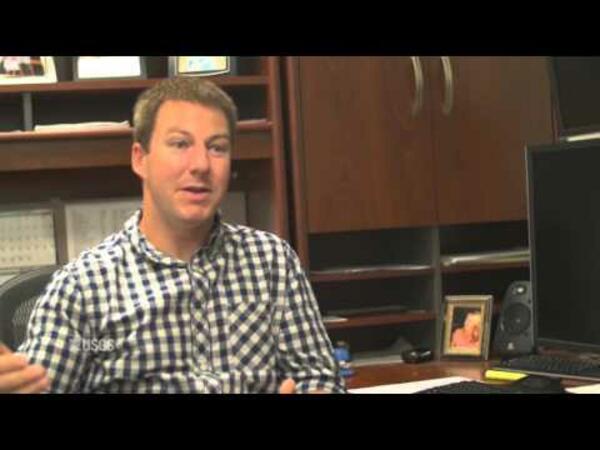
Field Office Chief Craig Painter on UAVs for Better Discharge Data
Field Office Chief Craig Painter on UAVs for Better Discharge DataUSGS field office chief Craig Painter shares his thoughts about the What's the Big Idea? innovation event at Kansas Water Science Center on Sept 2., 2015.
Field Office Chief Craig Painter on UAVs for Better Discharge Data
Field Office Chief Craig Painter on UAVs for Better Discharge DataUSGS field office chief Craig Painter shares his thoughts about the What's the Big Idea? innovation event at Kansas Water Science Center on Sept 2., 2015.

Hydrologist Arin Peters on Real-time Streamgage Cameras
Hydrologist Arin Peters on Real-time Streamgage CamerasUSGS hydrologist Arin Peters shares his thoughts about the What's the Big Idea? innovation event at Kansas Water Science Center on Sept 2., 2015.
Hydrologist Arin Peters on Real-time Streamgage Cameras
Hydrologist Arin Peters on Real-time Streamgage CamerasUSGS hydrologist Arin Peters shares his thoughts about the What's the Big Idea? innovation event at Kansas Water Science Center on Sept 2., 2015.

Peeking into Permafrost
Barter Island sits at the top of the Arctic National Wildlife Refuge in Alaska, and with the Arctic facing quickly rising temperatures, USGS wants to investigate what’s causing the North Slope bluffs to erode so quickly.
Barter Island sits at the top of the Arctic National Wildlife Refuge in Alaska, and with the Arctic facing quickly rising temperatures, USGS wants to investigate what’s causing the North Slope bluffs to erode so quickly.

PubTalk 8/2015 — Yes, Humans Really Are Causing Earthquakes
PubTalk 8/2015 — Yes, Humans Really Are Causing Earthquakesby Justin Rubinstein, USGS Research Geophysicist
PubTalk 8/2015 — Yes, Humans Really Are Causing Earthquakes
PubTalk 8/2015 — Yes, Humans Really Are Causing Earthquakesby Justin Rubinstein, USGS Research Geophysicist

K1 West Transect – 2015
Permanent Site: K1 West Transect; Depth: 6.0 Meters (19.8 Feet); Distance from river mouth: 4.5 Kilometers (2.8 Miles) east; Pre/Post Dam Removal: 4 years post-dam removal; Lat/Long: 48.13592923,-123.51082988; Site Description: This is a shallow site. Sediment is a gravel/sand mixture.
Permanent Site: K1 West Transect; Depth: 6.0 Meters (19.8 Feet); Distance from river mouth: 4.5 Kilometers (2.8 Miles) east; Pre/Post Dam Removal: 4 years post-dam removal; Lat/Long: 48.13592923,-123.51082988; Site Description: This is a shallow site. Sediment is a gravel/sand mixture.