



Saying Goodbye to Doug Beard, CASC Senior Administrator
As CASC Senior Administrator Doug Beard prepares for his next chapter, we reflect on his long and accomplished career with the CASC network.
Dr. T. Douglas Beard never set out to be a public servant. As a kid, he dreamed of becoming a professor, like his favorite Gilligan's Island character. Alas, he was never called upon to make a radio out of coconuts, and he never found his way into academia. Instead, he has spent nearly 30 years working for state and federal agencies, culminating in his current role as a prominent climate leader at the U.S. Geological Survey. As he prepares for a well-deserved retirement, we look back upon Doug’s career as a fish biologist, prolific biodiversity researcher and Senior Administrator of the USGS Climate Adaptation Science Centers.
An Early Call to Service
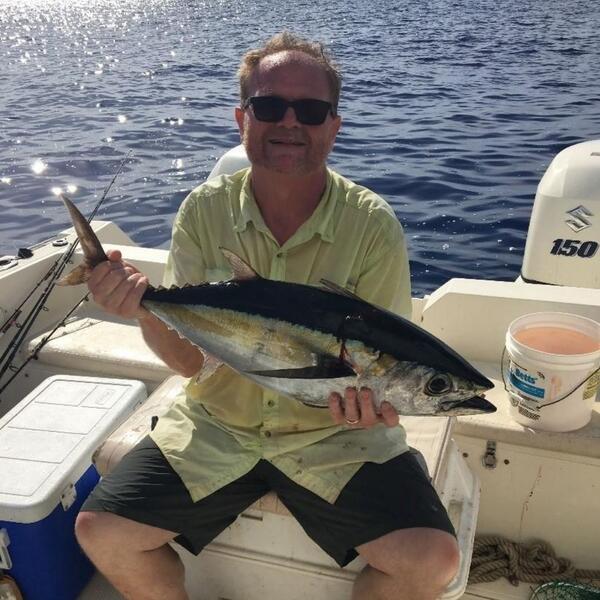
“As I've gotten farther in my career, I’ve realized how much working on behalf of the taxpayers to protect the environment means to me,” Doug says. “As civil servants, we're not bureaucrats. We're trying to ensure that future generations can enjoy the outdoors and go fishing, hunting, birdwatching, hiking, canoeing – whatever their passion is. Everything I was able to do as a kid.”
Doug's childhood outdoors jump-started his lifelong passion for environmental science. Despite advice from his pragmatic father to pursue engineering, happy memories of summers spent fishing led Doug to a position as a staff fisheries biologist with the Wisconsin Department of Natural Resources after getting his doctorate. And watching bald eagles soar over the St. Croix National Scenic Riverway, at a time when the species was experiencing historic population declines due to pesticide poisoning, gave him a unique insight into the power of conservation.
“I saw bald eagles probably every day of the summer when I was a kid. I didn't even realize what was happening to them nationally,” Doug says. “And so, I came to understand that what you grow up with isn’t a given. It takes hard work to provide those opportunities for future generations.”
Doug quickly rose to prominence in the fisheries sphere. He has authored dozens of peer-reviewed publications, organized international science symposiums, given over 100 invited talks, been an editor for two academic journals, and served as President of the World Council of Fisheries Societies. He was inducted into the prestigious American Fisheries Society Fellows Program in 2020, recognizing his “outstanding contributions in leadership, research, teaching and mentoring, resource management, conservation, and/or public outreach.”
Doug spent much of this time drawing attention to the value of inland fisheries, the rivers, lakes, and reservoirs around the world where recreational and commercial anglers alike catch billions of fish each year.
“I’m proud of working with the global community to advance inland fisheries as an important resource that shouldn't be overlooked in discussions of food security, economic security, and other big topics,” he says.
The Start of Something New
In 2009, Doug was called into a meeting that would change his life.
As the Program Coordinator for the USGS Fisheries Aquatic and Endangered Resources Program, he was shocked when he was offered the role of Acting Director for the newly established Department of the Interior Climate Science Centers, which would go on to become the USGS Climate Adaptation Science Centers.
He admits, he was hesitant to leave behind his beloved fisheries, and nervous about the spotlight the fledgling program was under. But he was excited by the challenge of building something from the ground up.
“I got to appreciate climate issues a lot more and realize how much everything's interlinked,” Doug says. “But I think just as importantly, for me, was ability to grow a program from scratch, which is a pretty rare thing in government.”
Joined by the first five CASC employees – Robin O’Malley, Emily Fort, Shawn Carter, Elda Varela Minder, and Nadine Hartke – Doug began developing and implementing a vision of what the CASCs would become. He led early workshops to refine the program’s scope and create a federal-university consortium model to engage regional climate adaptation communities. Under his leadership, the CASC network has grown from just three regional centers to include one National and nine regional centers, has funded more than 900 research projects, and collaboratively supported the science needs of hundreds of natural and cultural resource organizations across the country.

In a 2024 speech giving Doug a USGS Founder’s Award, USGS Ecosystems Mission Area Associate Director Anne Kinsinger described these early efforts: “You stood up a partnership-driven model whose transdisciplinary and inter-organizational structure represented a culture shift from traditional federal science paradigms,” she said.
“Your leadership and willingness to diverge from the status quo has been instrumental to the success and continued growth of the CASC program.”
Speaking to all six founding CASC members, she continued, “You all have helped establish and build a program that has become a trailblazer in applied climate adaptation research and whose partnership-focused actionable science approach now serves as a model for many federal programs.”
A Lasting Legacy
Doug has received numerous accolades for his leadership in the federal climate space, including the 2021 Climate Adaptation Leadership Award (Federal Government category) from the Association of Fish and Wildlife Agencies, recognizing his “outstanding efforts to increase the resilience of America's valuable living natural resources and help sustain the many people, communities, and businesses that depend on them.” He has also been awarded many USGS and DOI recognitions, most recently the Superior Service Award of the Department of the Interior for his leadership role in producing the USGS Climate Science Plan in 2023.
He has also become an important figure on the international stage, injecting USGS science into conversations on global stewardship and biodiversity. He has organized and led multi-national meetings, such as the 2024 World Fisheries Congress, chaired and co-chaired working groups with the Intergovernmental Science-Policy Platform on Biodiversity and Ecosystem Services (IPBES), and been a frequent panelist and attendee of the annual Conference of the Parties (COP) meeting of the United Nations Framework Convention on Climate Change (UNFCCC).
“Doug's understated approach to navigating the complex landscape of science diplomacy is so incredibly effective,” says National CASC Research Fish Biologist Abby Lynch. “He has had an outsized influence on the development of major initiatives at national and international scales.”

There has never been a CASC network without Doug. As he moves on to his next phase, CASC staff reflect on how he has impacted their work and careers.
“Doug has been an inspiration among staff of all experience levels in our program, especially for his patience, political savvy, and charming mid-western demeanor,” says Shawn Carter, Chief Scientist of the National CASC. “His thoughtful and cool-headed leadership have garnered universal support for our program.”
“Doug has been an impactful mentor, role model, colleague, and friend. I am thankful for his guidance and support of my own career, and I hope that I can continue to apply what I've learned from him to support natural resources.” - Abby Lynch, Research Fish Biologist, National CASC
“Doug is an unassuming yet masterful strategist, building and positioning an innovative program that has made countless advancements in knowledge and application to challenging natural resource issues across the Nation,” says Molly Cross, Regional Administrator of the North Central CASC.
Fifteen years after that first unexpected meeting, Doug is still in a bit of disbelief how a “fish guy” like him become a foremost climate expert within the USGS and an international expert in global biodiversity issues.
“It's been an honor to work for the American people,” he says.
Doug, we wish you all the best!