



RAD in the Wild: The Florida Keys
Learn more about a resist-accept-direct workshop focused on management decisions in the Florida Keys.
This case study is a product of the George Mason Fish and Wildlife Adaptation Internship Program with the National CASC.
Climate Impacts in the Florida Keys
The Florida Keys, a tropical cay archipelago located off the southern coast of Florida, is one of the most ecologically unique regions in the United States. From mangrove forests to low lying flats and pockets of upland woodlands, the Keys are home to species found nowhere else on earth. However, rising sea levels and saltwater intrusion threaten the delicate ecosystems that support this region’s unique biodiversity.
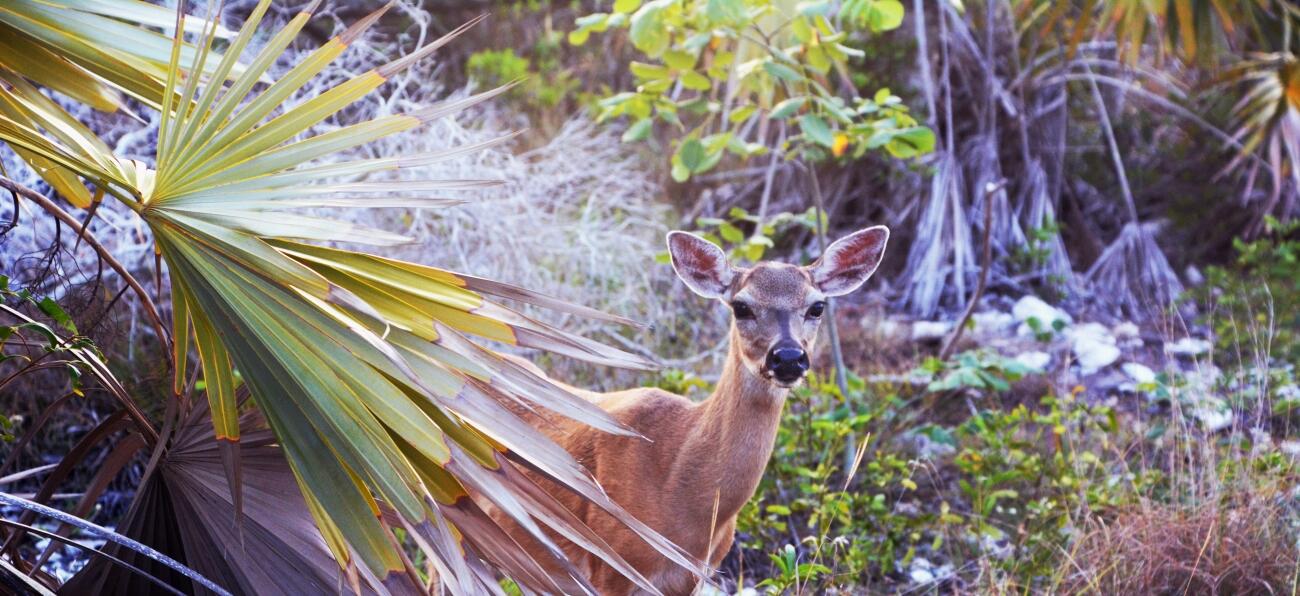
Key deer (Odocoileus virginianus clavium), the smallest subspecies of white-tailed deer, are found only in the upland pine forests of the Florida Keys. Listed as federally endangered, Key deer are emblematic of the ongoing climate concerns in the Keys. In recent years, the U.S. Fish and Wildlife Service (USFWS), state agencies, and local municipalities have increased efforts to conserve Key deer, such as through protecting existing habitat. However, there are growing concerns about climate and non-climate stressors on the survival of this subspecies. For example, sea level rise and hurricanes lead to higher levels of salinity percolating into the few available sources of fresh water, restricting critical drinking water access for Key deer and other wildlife. Human-wildlife interactions also pose a repeated concern, as automobile strikes account for half of Key deer deaths.
Exploring the RAD Framework
During a two-day workshop in 2024, the USFWS, Florida Fish and Wildlife Commission, The Nature Conservancy, and other partner organizations used the RAD (Resist-Accept-Direct) framework to evaluate existing management strategies and explore pathways to enhance the long‑term resilience of state and federally protected species in the Keys, including Key deer.
On the first day of the workshop, activities were focused on establishing a foundation, including defining individual and group objectives, reviewing current climate adaptation challenges, and explaining how RAD would be utilized to develop adaptation strategies and actions. This included demonstrating how RAD can incorporate human dimensions alongside ecological considerations to ensure the decision context is assessed holistically. Throughout the two days, facilitators encouraged participants to express the “why” behind their motivations: why adaptation is needed, why these discussions are difficult, and why it matters. Exposing the underlying “why” behind individuals' opinions and feelings enabled the group to see commonalities and opportunities to connect with one another.
On the second day of the workshop, participants were split into groups focused on individual species. Groups were tasked with developing one or more adaptation pathways — combinations of RAD actions that would get them to where they would like to be in 50 years. This included determining potential trigger points for when a RAD action or pathway should be re-evaluated and, potentially, switched (Lynch et al. 2025). Facilitators employed a variety of activities at each of these stages to direct participants and encourage innovative ideas. The group focused on Key deer identified a range of resist, accept, and direct strategies spanning habitat restoration, acceptance of habitat loss, and potential translocation to mainland Florida. Sea level rise, population thresholds, and continued habitat decline served as primary trigger points, and participants noted uncertainties regarding ecological effects of rising sea levels and risks of hybridization.
At the end of the workshop, each group completed a worksheet outlining next steps, a timeline, and deliverables to maintain momentum from the workshop. For high-priority actions the group wanted to pursue, they identified team leads, team members (both from the workshop and others individuals who would be needed to fill gaps in expertise and organization representation), a timeframe for the next meeting, and preparatory materials. Following the workshop, all groups prepared summary reports.
Lastly, workshop leads assessed the utility of the RAD framework in expanding potential adaptation strategies, actions, and associated trigger points. They found that using RAD generated more adaptation options for every species or taxon group than previous Keys studies they reviewed. They also noted that the adaptation options identified in many of the other Keys studies were similar to those created for the resist category; however, the accept and direct adaptation options from the Keys RAD Workshop were much more divergent than those proposed in other Keys studies. More information can be found in the workshop report.
Lessons Learned
Decision makers identified uncertainties in how quickly climate-driven changes could unfold, but acknowledged the ultimate outcome for many Florida Keys species is likely extinction. As a result, managers are weighing new, complex actions such as the use of conservation introductions or managing for/against species hybridization. However, questions remain about the effectiveness of such actions due to the minimal evidence of some of these more novel approaches, both globally and for species in the Keys.
Participants also noted that one of the challenges during the workshop was labeling strategies as resist, accept, or direct. However, once the group shifted toward examining the intention behind each action (i.e., what outcome does it aim to influence) rather than assigning the most accurate RAD option, they were able to move forward and generate more diverse strategies. This shift enabled participants to move beyond developing primarily conventional resist strategies and to go outside their comfort zone and identify accept and direct approaches, too.
Overall, framing strategies within the RAD framework encouraged broader thinking about long-term ecological trajectories. Many participants found that RAD helped clarify the purpose of each action and how management decisions align with future conditions. Finally, this workshop also demonstrates the value of theRAD framework as a communication tool to help managers explain the intent and rationale behind adaptation actions to their partners, stakeholders, and the public.
Contributors
This case study was written by Alani Arnold, George Mason University Fish and Wildlife Adaptation Intern, with input from Kelly Guilbeau, USFWS. It was developed under the guidance of Abigail Lynch and Jackson Valler with the USGS National Climate Adaptation Science Center.
For more information on the Florida Keys RAD workshop, contact: Kelly Guilbeau (kelly_guilbeau@fws.gov)