



RAD in the Wild: Navigating Ecological Change on Alaska’s Kenai Peninsula
Explore More RAD in the Wild Stories
Explore a case study in the application of the resist-accept-direct (RAD) framework on Alaska's Kenai Peninsula.
This case study is a product of the George Mason Fish and Wildlife Adaptation Internship Program with the National CASC.
Climate Impacts on the Kenai Peninsula
The Kenai Peninsula in southcentral Alaska covers an impressive 24,300 km² and is connected to the mainland by a 16-kilometer-wide mountainous strip of land. The region features a diverse array of ecosystems, including boreal and temperate coastal forests, arctic tundra, mountain tundra, wetlands, inland waters, and glacial landscapes. It sustains diverse wildlife and several Alaska Native communities, many of which depend on local ecosystems for their subsistence and cultural practices. Key attractions on the Kenai Peninsula include the Kenai River, the Kenai National Wildlife Refuge (NWR), Kenai Fjords National Park, and Chugach National Forest.
Wildfire

Climate change is one of the biggest drivers of change on the Kenai Peninsula, with Alaska warming at 2‒4 times the global average rate over the past decade (Hayward et al., 2017; Rantanen et al., 2022) and mean annual available water declining by 75% since 1968 at the Kenai Airport (Berg et al., 2009). The consequences of these changes are evident across the Peninsula. The Swan Lake Fire, which was ignited by lightning on June 5, 2019 during a severe drought, eventually burned 170,000 acres after crossing the alpine tundra, historically considered a fire buffer, and breaching watershed boundaries, indicating a new pattern of fire behavior in the region. On the same day, 128 lightning strikes ignited five other fires across the Peninsula, including the first lightning-caused grassland fire, illustrating how Arctic warming is now fostering conditions for thunderstorms that were previously rare in these systems. Thompson et al. (2021) note that summer fire seasons now encompass spring grassland fires, which became the impetus for the state advancing the start of its official fire season from May 1 to April 1.
Salmon Spawning
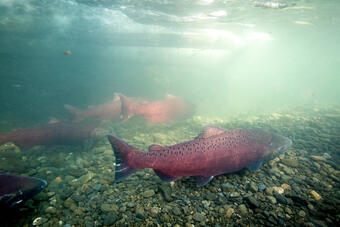
Warming trends also impact freshwater ecosystems, including those that support salmon spawning (Schoen et al., 2017). In non-glacial streams, rising temperatures are creating increasingly stressful conditions for salmon, especially during the summer. By July, stream temperatures can “exceed physiological thresholds for salmonids” (Thompson et al., 2021, p. 765), significantly disrupting the spawning of species such as pink, chum, and Chinook salmon, which typically spawn during July and August (Mauger et al., 2016). Meanwhile, in glacial lakes, “fry abundance, size, and overwinter survival…declined as a result of increasing glacial silt, decreasing euphotic zone, and decreasing copepod biomass” (Thompson et al. 2021, p. 765).
Seafood Harvesting
By 2014, households in Nanwalek and Port Graham, two predominately Sugpiaq communities on the southern Kenai Peninsula, no longer reported harvesting Pacific razor clams (Siliqua patula), which traditionally were among the most targeted resources in the region. In addition to degraded environmental conditions caused by non-climate stressors, Morton et al. (2024) attributed the decline in the consumption of these marine invertebrates in recent years to harmful blooms of the dinoflagellate Alexandrium catanella, which cause paralytic shellfish poisoning, a phenomenon associated with warming water temperatures.
Salmon are also showing signs of shifting availability. While projections suggest pink salmon (Oncorhynchus gorbuscha) productivity in the Kenai Peninsula and Prince William Sound may increase by approximately 26% over the coming decades due to warmer marine waters (Hayward et al. 2017), there has also been a noticeable decrease in household-level consumption of pink salmon across the Suqpiaq and Eyak communities of Chenega, Cordova, Nanwalek, Port Graham, and Tatitlek between 2003 and 2014 (Morton et al. 2024). The authors emphasize that a significant portion of pink salmon caught in the region comes from hatcheries, concealing the declines in wild populations that tribal communities depend on for subsistence and other benefits associated with traditional harvesting. These benefits include encouraging community members to stay active, supporting mental health through a connection with nature, and providing an economic safety net in the face of the high costs of imported food (Shew et al. 2024a).
In addition to supporting dietary needs, these wild resources support local economies, traditional crafts, and spiritual practices rooted in a close relationship with the land and its resources. Climate stressors such as rising air and sea temperatures, ocean acidification, and snowpack retreat, along with non-climate stressors like oil spills (Morton et al. 2024, Table 1), jeopardize the food security and economic resilience of tribal communities as well as the cultural and spiritual connections that come with subsistence living.

Adaptation
In response to intensifying ecological transformation, land managers, biologists, and conservation practitioners across federal, state, Tribal, and non-governmental organizations have begun to use the resist-accept-direct (RAD) framework to help navigate transformative ecological change (Schuurman et al. 2025).
On the Kenai, RAD has slowly taken shape through collaborative efforts among the U.S. Fish and Wildlife Service (USFWS), the U.S. Geological Survey, Alaska Wildlife Alliance (AWA), local universities, and Tribal organizations such as the Chugach Regional Resources Commission (CRRC). Below are some examples of how RAD has been intentionally used to manage natural resources along the Kenai Peninsula.
Resisting ecological change
Peatlands are a defining feature of the Kenai’s wetland ecosystems. They are some of the most important carbon sinks in the world and provide critical ecosystem services such as supporting subsistence species, regulating stream temperatures, reducing erosion, and providing habitats for a wide range of aquatic and terrestrial wildlife. However, these ecosystems are drying on the western peninsula at an alarming rate, losing between 6% and 11% of their surface area per decade since the 1950s (Klein et al., 2005). As peatlands dry, they become increasingly flammable and more likely to transition into shrub-dominated landscapes prone to wildfires.
The AWA and partners decided to implement a resist action that could be scaled up -- the Kenai Beaver Restoration Project. This project is working to restore the ecological role of beavers, whose dams naturally help retain water in the landscape. The project has involved repairing breached dams, installing beaver dam analogs (BDAs), and monitoring three demonstration sites to measure how beaver activity influences peatland hydrology. These efforts aim to not only slow the drying process and reduce fire risk but also to educate the public and decision-makers about the value of beavers as ecosystem engineers in climate adaptation.
Accepting ecological change
While resistance strategies on the Kenai aim to slow or buffer the effects of climate change where feasible, not all ecosystems can be preserved in their historical state. Accepting change involves allowing an ecosystem to adapt without further human intervention.
One such example is the shifting fate of spruce-dominated forests. Sitka spruce dominates the eastern side of the Kenai Peninsula; white and black spruce are prevalent on much of the western peninsula. Although hybrid Lutz spruce (Picea x lutzii) has historically held a competitive advantage on the southern peninsula, specifically in the Caribou Hills, recent climate trends are threatening its future. The combined stresses of increased wildfire frequency and intensified spruce bark beetle outbreaks are beginning to limit its long-term viability.
Rising temperatures and a sustained decline in available water have made the region more vulnerable to bark beetle infestation, contributing to a large-scale outbreak that began in the 1990s (Berg et al. 2006). In the Caribou Hills, an upland region within the broader Kenai Lowlands, Lutz spruce has failed to regenerate following repeated fires, and forests are transitioning to Calamagrostis canadensis grasslands
USFWS managers and scientists used RAD to explore potential options for managing these changing forests on the Kenai NWR. In areas where short fire intervals and drought are reducing the chances of spruce seedling regeneration (Morton et al. 2023), they have opted (at least for the time being) to accept some of these ecological transitions. This decision stems from a combination of factors, including a lack of consensus on how to best guide these novel ecosystems and the complexities of being a multijurisdictional landscape. In particular, federal legislation like the Wilderness Act and the Alaska National Interest Lands Conservation Act (ANILCA) can limit more experimental adaptation responses by the Kenai NWR. These decisions to accept reflect an acknowledgement that some forested systems in the Kenai may not return to their historical state.
Directing ecological change
In some cases, direct strategies can be used to intentionally guide ecosystems toward more resilient or desirable conditions. One opportunity under discussion is the management of novel grassland systems that have emerged in the aftermath of recent wildfires. In these areas where Lutz spruce is failing to regenerate, some ecologists are exploring whether these grasslands could be directed to support forage species such as dall sheep (Ovis dalli) or bison (Bison bison). While bison do not currently occur on the Kenai Peninsula, they were present there during the Pleistocene and exist in other parts of Alaska today (Littel et al. 2022). However, the idea of introducing a species that may be viewed as non-native by some ecologists into federally protected lands has raised concerns (Littel et al., 2022). On the other hand, the State of Alaska is planning to introduce non-native Sitka black-tailed deer to the southern peninsula in response to interest in increasing subsistence resources on tribal lands. Similarly, lodgepole pine, another nonnative species, has been planted by the Ninilchik Native Association in the Caribou Hills.
The USFWS have been using the RAD framework to lay out potential options for managing these novel systems on the Kenai NWR. While there is interest in directing these areas toward a landscape that better supports forage availability and habitats for species such as dall sheep or bison, a lack of consensus on desired ecological trajectories, coupled with scientific uncertainty, cultural considerations, institutional risk aversion, and hesitancy for experimentation, has left most direct strategies on the Kenai in the conceptual stage. In this context, directing ecological change does not yet entail widespread intervention. Instead, directing has supported agencies like the USWFS and their partners to intentionally frame potential desirable outcomes that are grounded in science and consensus among communities and agencies.
Outcomes
While RAD strategies have meaningfully shaped decision-making and cross-agency conversations on the Kenai Peninsula, most RAD-minded management actions remain conceptual or are in the early pilot stage. The Kenai Beaver Restoration Project, an example of a resist strategy, is one of the few field-level interventions being actively pursued. Demonstration sites are evaluating the hydrological impact of beaver dam analogs (as a proxy for beaver dams) in drying peatlands, with further monitoring expected over the next 5-10 years.
Lessons learned
- The RAD framework has helped facilitate structured conversations around ecological change. For example, the 2022 virtual climate adaptation workshop “Approaches to Adapting to Alaska’s Rapidly Warming Climate,” hosted by the AWA, used RAD as its foundational structure to discuss climate adaptation strategies, guiding three days of discussions among 264 participants and 23 expert speakers from federal and state agencies, Tribal organizations, academic institutions, and conservation nonprofits. Organizers used the framework to prompt critical questions about what is being resisted, when to accept it and for how long, and what directing looks like.
- Although RAD has provided a valuable language and structure for cross-sectoral engagement, transitioning from conceptual planning to practice may rely on increased willingness to experiment with pilot projects and be flexible in implementation.
- Disagreement over ecological trajectories, particularly over the development and persistence of novel ecosystems, can limit coordination and delay proactive management.
- The idea of deliberately introducing species (e.g., bison) remains controversial but may gain traction as climate-driven novel ecosystems become more common.
- Tribal perspectives and food sovereignty frameworks are important for future planning, especially where ecological and cultural values intersect. For now, potential direct interventions remain at the strategic planning level, where partners like the USFWS could collaborate with Tribal organizations such as CRRC, and apply RAD to guide some adaptation priorities highlighted in their Tribal-led vulnerability assessments (Shew et al. 2024b; Morton et al. 2024) to support future potential management actions.

Contributors
This case study was written by Melanie Medrano, George Mason University Fish and Wildlife Adaptation Intern, with input from John Morton, Alaska Wildlife Alliance. It was developed under the guidance of Abigail Lynch and Jackson Valler with the USGS National Climate Adaptation Science Center.
For more information on the implementation of RAD on the Kenai Peninsula, contact:
John M. Morton, PhD
Supervisor Biologist, Kenai National Wildlife Refuge (retired, USFWS)
Vice President, Alaska Wildlife Alliance
jmmorton@akwildlife.org
Citations
Alaska Wildlife Alliance. 2024. Kenai Beaver Restoration Project: Annual Report. https://static1.squarespace.com/static/5bc75d83e4afe931ade4f0d8/t/673a8…
Berg, E. E., K. M. Hillman, R. Dial, and A. DeRuwe. 2009. Recent woody invasion of wetlands on the Kenai Peninsula Lowlands, south-central Alaska: a major regime shift after 18,000 years of wet Sphagnum–sedge peat recruitment. Canadian Journal of Forest Research 39:2033–2046.
Berg, E. E., David Henry, J., Fastie, C. L., De Volder, A. D., & Matsuoka, S. M. (2006). Spruce beetle outbreaks on the Kenai Peninsula, Alaska, and Kluane National Park and Reserve, Yukon Territory: Relationship to summer temperatures and regional differences in disturbance regimes. Forest Ecology and Management, 227(3), 219-232. https://doi.org/10.1016/j.foreco.2006.02.038
Hayward, G. H., S. Colt, M. L. McTeague, and T. N. Hollingsworth, editors. 2017. Climate change vulnerability assessment for the Chugach National Forest and the Kenai Peninsula. Gen. Tech. Rep. PNW-GTR-950. Portland, Oregon: U.S. Department of Agriculture, Forest Service, Pacific Northwest Research Station. 340 p.
Littell, J., G. W. Schuurman, J. H. Reynolds, J. M. Morton, and N. Schmitt. 2022. A RADical approach to conservation in Alaska. The Wildlife Professional 16(4):26–30.
Mauger, S., R. Shaftel, J. C. Leppi, and D. J. Rinella. 2017. Summer temperature regimes in southcentral Alaska streams: Watershed drivers of variation and potential implications for Pacific salmon. Canadian Journal of Fisheries and Aquatic Sciences 74(5):702–715.
Morton, J. M., D. E. Wolf, M. L. Bowser, N. Takebayashi, and D. R. Magness. 2023. The dynamics of a changing Lutz spruce (Picea × lutzii) hybrid zone on the Kenai Peninsula, Alaska. Canadian Journal of Forest Research 53(5):365–378. https://doi.org/10.1139/cjfr-2022-0212
Morton, J. M., E. Shew, W. Hetrick, and A. Carl. 2024. Vulnerability of Alaska Native Tribes in the Chugach Region to selected climate and non-climate stressors. General Technical Report PNW-GTR-1021. USDA Forest Service, Pacific Northwest Research Station, Portland, OR. https://doi.org/10.2737/pnw-gtr-1021
Rantanen, M., Karpechko, A. Y., Lipponen, A., Nordling, K., Hyvärinen, O., Ruosteenoja, K., Vihma, T., & Laaksonen, A. (2022). The Arctic has warmed nearly four times faster than the globe since 1979. Communications Earth & Environment, 3(1), 1–10. https://doi.org/10.1038/s43247-022-00498-3
Schoen, ER, MS Wipfli, EJ Trammell, DJ Rinella, AL Floyd, J Grunblatt, MD McCarthy, BE Meyer, JM Morton, JE Powell, A Prakash, MN Reimer, SL Stuefer, H Toniolo, BM Wells & FD Witmer. 2017. Future of Pacific salmon in the face of environmental change: Lessons from one of the world’s remaining productive salmon regions. Fisheries 42:10, 538‒553, https://doi.org/10.1080/03632415.2017.1374251.
Schuurman, G. W., Carr, W.,Hawkins Hoffman, C., Lawrence, D. J., Miller, B. W.,Beever, E. A., Brennan, J., Clifford, K. R., Covington, S., Crausbay, S. D., Cravens, A. E., Gross, J., Hoang, L.,Jackson, S. T., Miller-Rushing, A. J., Morrison, W.,Nelson, E. A., O’Malley, R., Peterson, J. O., …Wilkening, J. L. (2025). Clarifying the role of theresist–accept–direct framework in supporting resourcemanagement planning processes. Conservation Biology,e70062. https://doi.org/10.1111/cobi.70062
Shew, E., A. Carl, W. Hetrick, and J. M. Morton. 2024. Vulnerability of traditional foods and food systems to the impacts of climate change in the Chugach Region. Chugach Regional Resources Commission, Anchorage, AK. 83 pp.
Shew, E., A. Carl, W. Hetrick, and J. M. Morton. 2024. Chugach region climate resilience strategy: Recommendations from the tribal climate cohort. Chugach Regional Resources Commission, Anchorage, AK. 38 pp.
Thompson, L. M., A. J. Lynch, E. A. Beever, A. C. Engman, J. A. Falke, S. T. Jackson, T. J. Krabbenhoft, D. J. Lawrence, D. Limpinsel, R. T. Magill, T. A. Melvin, J. M. Morton, R. A. Newman, J. O. Peterson, M. T. Porath, F. J. Rahel, S. A. Sethi, and J. L. Wilkening. 2021. Responding to ecosystem transformation: Resist, accept, or direct? Fisheries 46(1):7–21.
RAD in the Wild
Explore a case study in the application of the resist-accept-direct (RAD) framework on Alaska's Kenai Peninsula.
This case study is a product of the George Mason Fish and Wildlife Adaptation Internship Program with the National CASC.
Climate Impacts on the Kenai Peninsula
The Kenai Peninsula in southcentral Alaska covers an impressive 24,300 km² and is connected to the mainland by a 16-kilometer-wide mountainous strip of land. The region features a diverse array of ecosystems, including boreal and temperate coastal forests, arctic tundra, mountain tundra, wetlands, inland waters, and glacial landscapes. It sustains diverse wildlife and several Alaska Native communities, many of which depend on local ecosystems for their subsistence and cultural practices. Key attractions on the Kenai Peninsula include the Kenai River, the Kenai National Wildlife Refuge (NWR), Kenai Fjords National Park, and Chugach National Forest.
Wildfire
Climate change is one of the biggest drivers of change on the Kenai Peninsula, with Alaska warming at 2‒4 times the global average rate over the past decade (Hayward et al., 2017; Rantanen et al., 2022) and mean annual available water declining by 75% since 1968 at the Kenai Airport (Berg et al., 2009). The consequences of these changes are evident across the Peninsula. The Swan Lake Fire, which was ignited by lightning on June 5, 2019 during a severe drought, eventually burned 170,000 acres after crossing the alpine tundra, historically considered a fire buffer, and breaching watershed boundaries, indicating a new pattern of fire behavior in the region. On the same day, 128 lightning strikes ignited five other fires across the Peninsula, including the first lightning-caused grassland fire, illustrating how Arctic warming is now fostering conditions for thunderstorms that were previously rare in these systems. Thompson et al. (2021) note that summer fire seasons now encompass spring grassland fires, which became the impetus for the state advancing the start of its official fire season from May 1 to April 1.
Salmon Spawning
Warming trends also impact freshwater ecosystems, including those that support salmon spawning (Schoen et al., 2017). In non-glacial streams, rising temperatures are creating increasingly stressful conditions for salmon, especially during the summer. By July, stream temperatures can “exceed physiological thresholds for salmonids” (Thompson et al., 2021, p. 765), significantly disrupting the spawning of species such as pink, chum, and Chinook salmon, which typically spawn during July and August (Mauger et al., 2016). Meanwhile, in glacial lakes, “fry abundance, size, and overwinter survival…declined as a result of increasing glacial silt, decreasing euphotic zone, and decreasing copepod biomass” (Thompson et al. 2021, p. 765).
Seafood Harvesting
By 2014, households in Nanwalek and Port Graham, two predominately Sugpiaq communities on the southern Kenai Peninsula, no longer reported harvesting Pacific razor clams (Siliqua patula), which traditionally were among the most targeted resources in the region. In addition to degraded environmental conditions caused by non-climate stressors, Morton et al. (2024) attributed the decline in the consumption of these marine invertebrates in recent years to harmful blooms of the dinoflagellate Alexandrium catanella, which cause paralytic shellfish poisoning, a phenomenon associated with warming water temperatures.
Salmon are also showing signs of shifting availability. While projections suggest pink salmon (Oncorhynchus gorbuscha) productivity in the Kenai Peninsula and Prince William Sound may increase by approximately 26% over the coming decades due to warmer marine waters (Hayward et al. 2017), there has also been a noticeable decrease in household-level consumption of pink salmon across the Suqpiaq and Eyak communities of Chenega, Cordova, Nanwalek, Port Graham, and Tatitlek between 2003 and 2014 (Morton et al. 2024). The authors emphasize that a significant portion of pink salmon caught in the region comes from hatcheries, concealing the declines in wild populations that tribal communities depend on for subsistence and other benefits associated with traditional harvesting. These benefits include encouraging community members to stay active, supporting mental health through a connection with nature, and providing an economic safety net in the face of the high costs of imported food (Shew et al. 2024a).
In addition to supporting dietary needs, these wild resources support local economies, traditional crafts, and spiritual practices rooted in a close relationship with the land and its resources. Climate stressors such as rising air and sea temperatures, ocean acidification, and snowpack retreat, along with non-climate stressors like oil spills (Morton et al. 2024, Table 1), jeopardize the food security and economic resilience of tribal communities as well as the cultural and spiritual connections that come with subsistence living.
Adaptation
In response to intensifying ecological transformation, land managers, biologists, and conservation practitioners across federal, state, Tribal, and non-governmental organizations have begun to use the resist-accept-direct (RAD) framework to help navigate transformative ecological change (Schuurman et al. 2025).
On the Kenai, RAD has slowly taken shape through collaborative efforts among the U.S. Fish and Wildlife Service (USFWS), the U.S. Geological Survey, Alaska Wildlife Alliance (AWA), local universities, and Tribal organizations such as the Chugach Regional Resources Commission (CRRC). Below are some examples of how RAD has been intentionally used to manage natural resources along the Kenai Peninsula.
Resisting ecological change
Peatlands are a defining feature of the Kenai’s wetland ecosystems. They are some of the most important carbon sinks in the world and provide critical ecosystem services such as supporting subsistence species, regulating stream temperatures, reducing erosion, and providing habitats for a wide range of aquatic and terrestrial wildlife. However, these ecosystems are drying on the western peninsula at an alarming rate, losing between 6% and 11% of their surface area per decade since the 1950s (Klein et al., 2005). As peatlands dry, they become increasingly flammable and more likely to transition into shrub-dominated landscapes prone to wildfires.
The AWA and partners decided to implement a resist action that could be scaled up -- the Kenai Beaver Restoration Project. This project is working to restore the ecological role of beavers, whose dams naturally help retain water in the landscape. The project has involved repairing breached dams, installing beaver dam analogs (BDAs), and monitoring three demonstration sites to measure how beaver activity influences peatland hydrology. These efforts aim to not only slow the drying process and reduce fire risk but also to educate the public and decision-makers about the value of beavers as ecosystem engineers in climate adaptation.
Accepting ecological change
While resistance strategies on the Kenai aim to slow or buffer the effects of climate change where feasible, not all ecosystems can be preserved in their historical state. Accepting change involves allowing an ecosystem to adapt without further human intervention.
One such example is the shifting fate of spruce-dominated forests. Sitka spruce dominates the eastern side of the Kenai Peninsula; white and black spruce are prevalent on much of the western peninsula. Although hybrid Lutz spruce (Picea x lutzii) has historically held a competitive advantage on the southern peninsula, specifically in the Caribou Hills, recent climate trends are threatening its future. The combined stresses of increased wildfire frequency and intensified spruce bark beetle outbreaks are beginning to limit its long-term viability.
Rising temperatures and a sustained decline in available water have made the region more vulnerable to bark beetle infestation, contributing to a large-scale outbreak that began in the 1990s (Berg et al. 2006). In the Caribou Hills, an upland region within the broader Kenai Lowlands, Lutz spruce has failed to regenerate following repeated fires, and forests are transitioning to Calamagrostis canadensis grasslands
USFWS managers and scientists used RAD to explore potential options for managing these changing forests on the Kenai NWR. In areas where short fire intervals and drought are reducing the chances of spruce seedling regeneration (Morton et al. 2023), they have opted (at least for the time being) to accept some of these ecological transitions. This decision stems from a combination of factors, including a lack of consensus on how to best guide these novel ecosystems and the complexities of being a multijurisdictional landscape. In particular, federal legislation like the Wilderness Act and the Alaska National Interest Lands Conservation Act (ANILCA) can limit more experimental adaptation responses by the Kenai NWR. These decisions to accept reflect an acknowledgement that some forested systems in the Kenai may not return to their historical state.
Directing ecological change
In some cases, direct strategies can be used to intentionally guide ecosystems toward more resilient or desirable conditions. One opportunity under discussion is the management of novel grassland systems that have emerged in the aftermath of recent wildfires. In these areas where Lutz spruce is failing to regenerate, some ecologists are exploring whether these grasslands could be directed to support forage species such as dall sheep (Ovis dalli) or bison (Bison bison). While bison do not currently occur on the Kenai Peninsula, they were present there during the Pleistocene and exist in other parts of Alaska today (Littel et al. 2022). However, the idea of introducing a species that may be viewed as non-native by some ecologists into federally protected lands has raised concerns (Littel et al., 2022). On the other hand, the State of Alaska is planning to introduce non-native Sitka black-tailed deer to the southern peninsula in response to interest in increasing subsistence resources on tribal lands. Similarly, lodgepole pine, another nonnative species, has been planted by the Ninilchik Native Association in the Caribou Hills.
The USFWS have been using the RAD framework to lay out potential options for managing these novel systems on the Kenai NWR. While there is interest in directing these areas toward a landscape that better supports forage availability and habitats for species such as dall sheep or bison, a lack of consensus on desired ecological trajectories, coupled with scientific uncertainty, cultural considerations, institutional risk aversion, and hesitancy for experimentation, has left most direct strategies on the Kenai in the conceptual stage. In this context, directing ecological change does not yet entail widespread intervention. Instead, directing has supported agencies like the USWFS and their partners to intentionally frame potential desirable outcomes that are grounded in science and consensus among communities and agencies.
Outcomes
While RAD strategies have meaningfully shaped decision-making and cross-agency conversations on the Kenai Peninsula, most RAD-minded management actions remain conceptual or are in the early pilot stage. The Kenai Beaver Restoration Project, an example of a resist strategy, is one of the few field-level interventions being actively pursued. Demonstration sites are evaluating the hydrological impact of beaver dam analogs (as a proxy for beaver dams) in drying peatlands, with further monitoring expected over the next 5-10 years.
Lessons learned
- The RAD framework has helped facilitate structured conversations around ecological change. For example, the 2022 virtual climate adaptation workshop “Approaches to Adapting to Alaska’s Rapidly Warming Climate,” hosted by the AWA, used RAD as its foundational structure to discuss climate adaptation strategies, guiding three days of discussions among 264 participants and 23 expert speakers from federal and state agencies, Tribal organizations, academic institutions, and conservation nonprofits. Organizers used the framework to prompt critical questions about what is being resisted, when to accept it and for how long, and what directing looks like.
- Although RAD has provided a valuable language and structure for cross-sectoral engagement, transitioning from conceptual planning to practice may rely on increased willingness to experiment with pilot projects and be flexible in implementation.
- Disagreement over ecological trajectories, particularly over the development and persistence of novel ecosystems, can limit coordination and delay proactive management.
- The idea of deliberately introducing species (e.g., bison) remains controversial but may gain traction as climate-driven novel ecosystems become more common.
- Tribal perspectives and food sovereignty frameworks are important for future planning, especially where ecological and cultural values intersect. For now, potential direct interventions remain at the strategic planning level, where partners like the USFWS could collaborate with Tribal organizations such as CRRC, and apply RAD to guide some adaptation priorities highlighted in their Tribal-led vulnerability assessments (Shew et al. 2024b; Morton et al. 2024) to support future potential management actions.
Contributors
This case study was written by Melanie Medrano, George Mason University Fish and Wildlife Adaptation Intern, with input from John Morton, Alaska Wildlife Alliance. It was developed under the guidance of Abigail Lynch and Jackson Valler with the USGS National Climate Adaptation Science Center.
For more information on the implementation of RAD on the Kenai Peninsula, contact:
John M. Morton, PhD
Supervisor Biologist, Kenai National Wildlife Refuge (retired, USFWS)
Vice President, Alaska Wildlife Alliance
jmmorton@akwildlife.org
Citations
Alaska Wildlife Alliance. 2024. Kenai Beaver Restoration Project: Annual Report. https://static1.squarespace.com/static/5bc75d83e4afe931ade4f0d8/t/673a8…
Berg, E. E., K. M. Hillman, R. Dial, and A. DeRuwe. 2009. Recent woody invasion of wetlands on the Kenai Peninsula Lowlands, south-central Alaska: a major regime shift after 18,000 years of wet Sphagnum–sedge peat recruitment. Canadian Journal of Forest Research 39:2033–2046.
Berg, E. E., David Henry, J., Fastie, C. L., De Volder, A. D., & Matsuoka, S. M. (2006). Spruce beetle outbreaks on the Kenai Peninsula, Alaska, and Kluane National Park and Reserve, Yukon Territory: Relationship to summer temperatures and regional differences in disturbance regimes. Forest Ecology and Management, 227(3), 219-232. https://doi.org/10.1016/j.foreco.2006.02.038
Hayward, G. H., S. Colt, M. L. McTeague, and T. N. Hollingsworth, editors. 2017. Climate change vulnerability assessment for the Chugach National Forest and the Kenai Peninsula. Gen. Tech. Rep. PNW-GTR-950. Portland, Oregon: U.S. Department of Agriculture, Forest Service, Pacific Northwest Research Station. 340 p.
Littell, J., G. W. Schuurman, J. H. Reynolds, J. M. Morton, and N. Schmitt. 2022. A RADical approach to conservation in Alaska. The Wildlife Professional 16(4):26–30.
Mauger, S., R. Shaftel, J. C. Leppi, and D. J. Rinella. 2017. Summer temperature regimes in southcentral Alaska streams: Watershed drivers of variation and potential implications for Pacific salmon. Canadian Journal of Fisheries and Aquatic Sciences 74(5):702–715.
Morton, J. M., D. E. Wolf, M. L. Bowser, N. Takebayashi, and D. R. Magness. 2023. The dynamics of a changing Lutz spruce (Picea × lutzii) hybrid zone on the Kenai Peninsula, Alaska. Canadian Journal of Forest Research 53(5):365–378. https://doi.org/10.1139/cjfr-2022-0212
Morton, J. M., E. Shew, W. Hetrick, and A. Carl. 2024. Vulnerability of Alaska Native Tribes in the Chugach Region to selected climate and non-climate stressors. General Technical Report PNW-GTR-1021. USDA Forest Service, Pacific Northwest Research Station, Portland, OR. https://doi.org/10.2737/pnw-gtr-1021
Rantanen, M., Karpechko, A. Y., Lipponen, A., Nordling, K., Hyvärinen, O., Ruosteenoja, K., Vihma, T., & Laaksonen, A. (2022). The Arctic has warmed nearly four times faster than the globe since 1979. Communications Earth & Environment, 3(1), 1–10. https://doi.org/10.1038/s43247-022-00498-3
Schoen, ER, MS Wipfli, EJ Trammell, DJ Rinella, AL Floyd, J Grunblatt, MD McCarthy, BE Meyer, JM Morton, JE Powell, A Prakash, MN Reimer, SL Stuefer, H Toniolo, BM Wells & FD Witmer. 2017. Future of Pacific salmon in the face of environmental change: Lessons from one of the world’s remaining productive salmon regions. Fisheries 42:10, 538‒553, https://doi.org/10.1080/03632415.2017.1374251.
Schuurman, G. W., Carr, W.,Hawkins Hoffman, C., Lawrence, D. J., Miller, B. W.,Beever, E. A., Brennan, J., Clifford, K. R., Covington, S., Crausbay, S. D., Cravens, A. E., Gross, J., Hoang, L.,Jackson, S. T., Miller-Rushing, A. J., Morrison, W.,Nelson, E. A., O’Malley, R., Peterson, J. O., …Wilkening, J. L. (2025). Clarifying the role of theresist–accept–direct framework in supporting resourcemanagement planning processes. Conservation Biology,e70062. https://doi.org/10.1111/cobi.70062
Shew, E., A. Carl, W. Hetrick, and J. M. Morton. 2024. Vulnerability of traditional foods and food systems to the impacts of climate change in the Chugach Region. Chugach Regional Resources Commission, Anchorage, AK. 83 pp.
Shew, E., A. Carl, W. Hetrick, and J. M. Morton. 2024. Chugach region climate resilience strategy: Recommendations from the tribal climate cohort. Chugach Regional Resources Commission, Anchorage, AK. 38 pp.
Thompson, L. M., A. J. Lynch, E. A. Beever, A. C. Engman, J. A. Falke, S. T. Jackson, T. J. Krabbenhoft, D. J. Lawrence, D. Limpinsel, R. T. Magill, T. A. Melvin, J. M. Morton, R. A. Newman, J. O. Peterson, M. T. Porath, F. J. Rahel, S. A. Sethi, and J. L. Wilkening. 2021. Responding to ecosystem transformation: Resist, accept, or direct? Fisheries 46(1):7–21.