



RAD in the Wild: From Self-Sustaining to Stocked—Walleye of Nelson Lake
Explore More RAD in the Wild Stories
Explore a case study of the application of the resist-accept-direct (RAD) framework to walleye in Nelson Lake, Wisconsin.
This case study is a product of the George Mason Fish and Wildlife Adaptation Internship Program with the National CASC.
Wisconsin's Changing Walleye
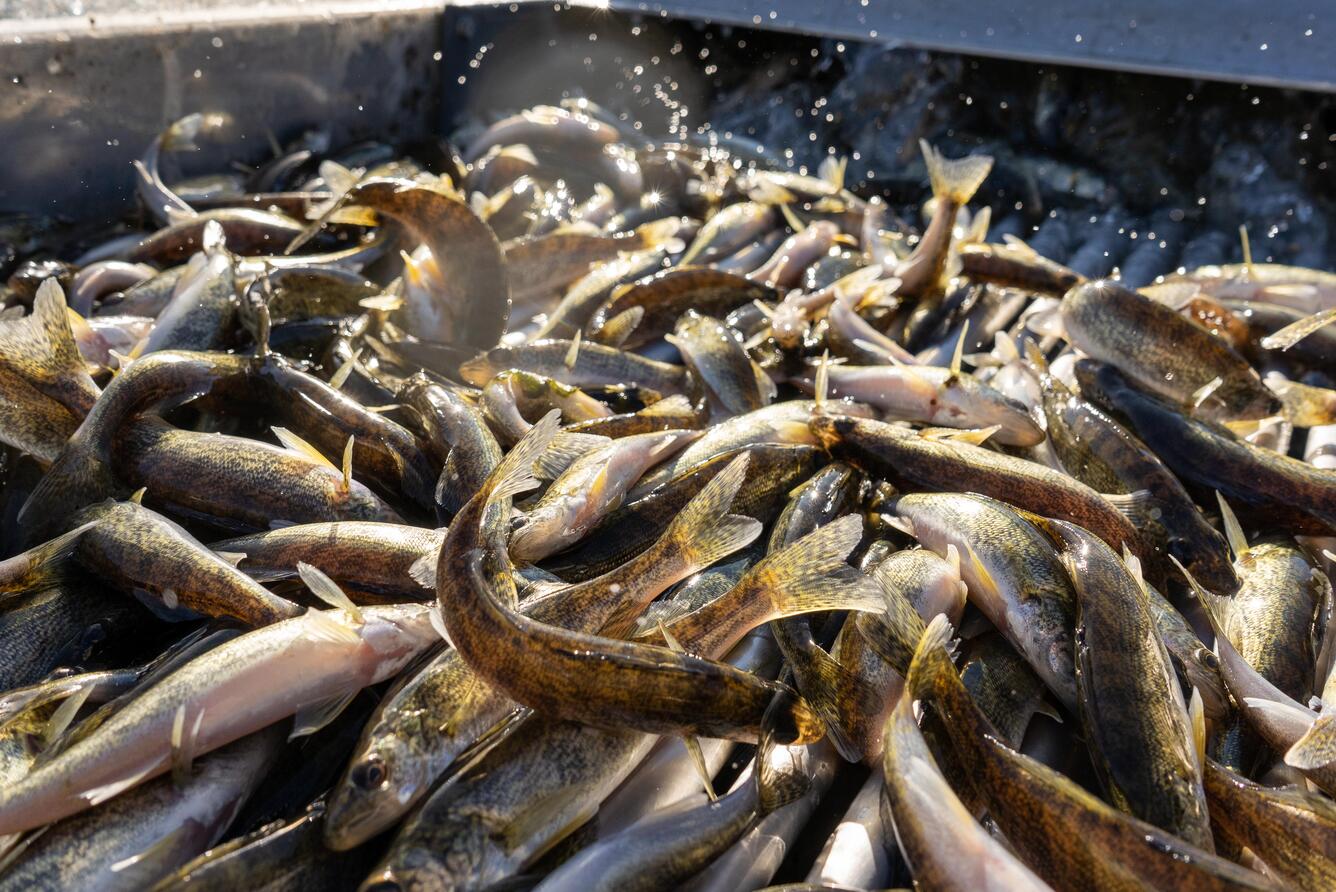
Walleye (Sander vitreus) are native to the Upper Great Lakes region and have long been among the most culturally and economically important fish species in Wisconsin. For the Ojibwe Tribes, walleye are both a source of subsistence and considered a relative, carrying a deep cultural and spiritual significance. Economically, walleye are also central to Wisconsin’s tourism industry, with many northern resorts, guide services, and local businesses built around the popularity of walleye angling. However, since the early 1990s, both climate and non-climate stressors have contributed to population declines of this iconic species.
Historically, Wisconsin had about 600 self-sustaining walleye populations (i.e., able to naturally reproduce and maintain population levels). That number has now fallen to fewer than 300, and modeling work by Dr. Colin Dassow with the Wisconsin Department of Natural Resources (WDNR), CASC researchers, and other partners project a further decline to 100 or fewer self-sustaining populations by 2050.
One northern Wisconsin lake demonstrates how this statewide decline is playing out at the local level. Located in Sawyer County, Wisconsin, Nelson Lake is a 2,176-acre reservoir created in 1937 by damming the Totagatic River for recreational use. From the 1960s through the 1980s, the lake maintained one of the highest self-sustaining populations of adult walleye per acre among lakes in northwestern Wisconsin. However, since the mid-1990s, both walleye density and natural reproduction in Nelson Lake have declined drastically. As a cool-water species, walleye require habitats that remain cool and well-oxygenated to successfully spawn, but the conditions in Nelson Lake have slowly been becoming less suitable as temperatures warm. Additionally, warm-water species, such as largemouth bass and panfish, now dominate the fish community, predating on and competing with young walleye for food and habitat. Shoreline and habitat changes from increased human development have further degraded suitable conditions for walleye reproduction.
These ecological changes are significant given the legal and cultural framework in which Nelson Lake is managed. Nelson Lake is part of the Ceded Territory which covers parts of Minnesota, Wisconsin, and Michigan. This area was described through a series of four major treaties that secured the rights of Ojibwe to hunt, fish, and gather off reservation within the Ceded Territory. The WDNR works closely with the Great Lakes Indian Fish and Wildlife Commission (GLIFWC) within those ceded territories. Together, these agencies have focused efforts to rehabilitate Nelson Lake and restore its walleye population to a self-sustaining fishery.
Adaptation Through RAD
Self-sustaining populations are especially valuable because they can sustain harvest without depleting their numbers and, ideally, require minimal intervention from resource managers. However, as these populations diminish, managers face difficult choices: continue stocking to maintain walleye where natural reproduction may no longer be viable, allow certain lakes to transition away from walleye to new dominant species, or actively steer ecosystems toward new outcomes. This is where the Resist-Accept-Direct (RAD) framework becomes especially useful-- helping decision makers, such as the WDNR and GLIFWC, identify management pathways and strategies to resist change, accept change, or take actions that direct Nelson Lake towards new ecological trajectories.
Resisting Walleye Decline
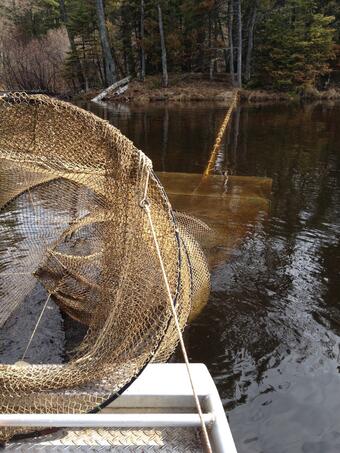
For the past 25 years and before RAD, the WDNR and GLIFWC have primarily resisted walleye population decline in Nelson Lake, largely due to its cultural importance to both Ojibwe and non-Tribal communities. For the Ojibwe, efforts to restore a self-sustaining walleye population go far beyond subsistence. Walleye are considered brothers and sisters, making their well-being a matter of deep cultural and spiritual concern. For non-Tribal communities, like recreational anglers, walleye is preferred over other sport fish species like bluegill, crappie, and largemouth bass. One of the most popular resisting approaches is stocking, and over the years, at least a quarter of a million walleye have been released into the lake. However, stocking has become increasingly expensive and has not succeeded in restarting a self-sustaining walleye population.
In addition to stocking, the WDNR has relied on habitat improvements to resist walleye decline. Habitat projects have also aimed to restore or create spawning grounds where natural habitat has been lost or degraded over time due to land development.
Accepting Walleye Decline
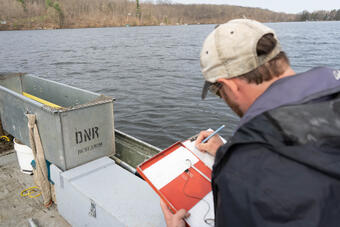
In 2024, the WDNR conducted a broad stakeholder survey to help reassess the longstanding management of walleye at Nelson Lake. Despite more than two decades of continued stocking efforts, the WDNR has not succeeded in restoring walleye abundance. As a result, this prompted managers to use the RAD framework to assess stakeholder openness to alternative walleye management strategies. A questionnaire was designed presenting potential management options that each aligned with one of the three RAD pathways: continuing to prioritize walleye rehabilitation as resist, shifting effort toward other species as accept, and exploring new fishery opportunities as direct. Although these labels were not shown to respondents, WDNR managers collected responses and mapped them onto the RAD pathways. This allowed the survey to function as a RAD decision-support tool to help identify potential RAD switch points.
The stakeholder responses revealed a nearly even split between the accept and resist pathways: 45.7% supported focusing future time and effort in other areas of the fishery (e.g., pike, panfish, bass), while 44.8% preferred to continue investing in walleye fisheries, even if it meant repeating past actions. This shift is particularly noteworthy when compared to the last stakeholder survey in 2004, in which walleye was identified as the top species of interest. In this latest survey, however, black crappie was the leading focus. Interpreted through a RAD lens used by WDNR, this close split suggests that Nelson Lake may be approaching a potential accept switch point, as a substantial portion of community stakeholders appear more open to allow walleye abundance to decline rather than “staying the course” with long-term stocking. However, these shifting community perspectives do not reflect those of the Ojibwe Tribes, for whom walleye hold unique cultural, spiritual, and subsistence value. Because other species are generally of secondary importance for the Ojibwe, any RAD switch point that reduces management focus on walleye will need careful consideration of Tribal treaty rights, values, and perspectives to ensure that it is culturally informed.
Some accept strategies emerging from the WDNR include stopping walleye stocking to allow other species take their place, adjusting fishing regulations to promote dominant species, and allowing increased harvesting of walleye while stocks last (Colin Dassow, Wisconsin Department of Natural Resources, personal communication).
Directing Walleye Decline
Compared to resisting or accepting walleye decline, directing strategies at Nelson Lake remain in the early stages of ideation. WDNR managers acknowledge that while a range of potential options could be explored, these ideas are still largely conceptual. Therefore, to date, no formal direct strategies have been implemented or tested, and discussions remain focused on identifying the most adequate new outlook for Nelson Lake walleye. Thus far, direct strategies have been the least chosen pathway for fisheries management in Wisconsin, and can be difficult to consider given how much focus is predicated on goals anchored in a past ecosystem state and that direct strategies may require intentionally managing away from the historical baseline and for an uncertain future.
Outcomes
Nelson Lake has reached a critical point where managers are deciding whether to continue resisting change in walleye management, accept ecological shifts in walleye fishery, or begin directing the fishery toward a new outlook. Decades of resist strategies, particularly intensive stocking, have been continuously monitored by the WDNR and GLIFWC and have proven ineffective at restoring a self-sustaining walleye population. Although Nelson Lake does not yet have a formal RAD plan with defined triggers for pathway shifts, using the RAD framework to structure the 2024 stakeholder survey has prompted managers to reevaluate walleye management actions after a longstanding history of resisting. As a result, the WDNR is more open to exploring new approaches, such as accepting walleye decline or prioritizing other fisheries. This shift is largely driven by evolving stakeholder priorities and a growing willingness in the community to consider alternative management strategies.
Lessons Learned
- Social attitudes can help influence potential future management actions. At Nelson Lake, angler preferences, not ecological thresholds, signaled that an accept pathway could now be viable even though walleye declines have been evident for decades despite management actions.
- Determining RAD switch points requires more than ecological monitoring. Stakeholder engagement and expanded cross-organizational partnerships are critical for navigating when to switch strategies.
- The walleye fishery in Nelson Lake demonstrates how resisting without predefined triggers for reevaluation may result in continued implementation of management actions that no longer coincide with new management objectives or stakeholder values. Framing the 2024 survey in terms of RAD options helped WDNR and local stakeholders consider moving away from a walleye-centered fishery. At the same time, the process also revealed information gaps, such as the absence of Ojibwe Tribal perspectives, highlighting the importance of seeking the input of rightsholders before a new outlook is established.
Contributors
This case study was written by Melanie Medrano, George Mason University Fish and Wildlife Adaptation Intern, with input from Colin Dassow, WDNR. It was developed under the guidance of Abigail Lynch and Jackson Valler with the USGS National Climate Adaptation Science Center. The case draws from a range of scientific literature and management reports cited below.
For more information on the implementation of RAD on Nelson Lake walleye fishery, contact:
Colin Dassow, PhD
Northern Fisheries Research Scientist, Wisconsin Department of Natural Resources
colin.dassow@wisconsin.gov
Citations
Dassow, C. J., Latzka, A.W., Lynch, A. J., Sass, G. G., Tingley, R. W., and Paukert, C. P. 2022. A Resist-Accept-Direct decision-support tool for walleye Sander vitreus (Mitchill) management in Wisconsin. Fisheries Management and Ecology, 29(4), 378-391. https://doi.org/10.1111/fme.12548
Feiner, Z. S., Shultz, A. D., Sass, G. G., Trudeau, A., Mitro, M. G., Dassow, C. J., Latzka, A. W., Isermann, D. A., Maitland, B. M., Homola, J. J., Embke, H. S., and Preul, M. (2022). Resist-accept-direct (RAD) considerations for climate change adaptation in fisheries: The Wisconsin experience. Fisheries Management and Ecology, 29(4), 346-363. https://doi.org/10.1111/fme.12549
Pratt, F.B., and Neuswanger, D. J. 2004. Fishery management plan for Nelson Lake, Sawyer County, Wisconsin. Wisconsin Department of Natural Resources, Hayward, Wisconsin, 14 pp. https://dnr.wisconsin.gov/sites/default/files/topic/Watersheds/nelson.pdf
Lynch, A. J., Ashander, J.D., Ciocco, T. W., Cravens, A. E., Dassow, C. J., Dee, L. E., Dunham, J. B., Eaton, M. J., Embke, H. S., Hennessy, J., Latzka, A. W., Lawrence, D. J., Littell, J. S., Miller, B. W., Palasti, L. A., Runge, M. C., Sass, G. G., Shultz, A. D., Siegel, K. J., Svancara L. K., Thompson, L. M., Thurman, L.L., Valler, J. B., and Yocum, H. M. 2025. RAD (Resist-Accept-Direct) switch points and triggers for adaptation planning. Journal of Environmental Management, 392, 126419. https://doi.org/10.1016/j.jenvman.2025.126419
Nelson Lake Association. 2024. Spring 2024 newsletter. Nelson Lake Association, Hayward, Wisconsin.https://www.nelsonlakeassociation.org/wp-content/uploads/2024/06/news-spring-2024.pdf
RAD in the Wild
Explore a case study of the application of the resist-accept-direct (RAD) framework to walleye in Nelson Lake, Wisconsin.
This case study is a product of the George Mason Fish and Wildlife Adaptation Internship Program with the National CASC.
Wisconsin's Changing Walleye
Walleye (Sander vitreus) are native to the Upper Great Lakes region and have long been among the most culturally and economically important fish species in Wisconsin. For the Ojibwe Tribes, walleye are both a source of subsistence and considered a relative, carrying a deep cultural and spiritual significance. Economically, walleye are also central to Wisconsin’s tourism industry, with many northern resorts, guide services, and local businesses built around the popularity of walleye angling. However, since the early 1990s, both climate and non-climate stressors have contributed to population declines of this iconic species.
Historically, Wisconsin had about 600 self-sustaining walleye populations (i.e., able to naturally reproduce and maintain population levels). That number has now fallen to fewer than 300, and modeling work by Dr. Colin Dassow with the Wisconsin Department of Natural Resources (WDNR), CASC researchers, and other partners project a further decline to 100 or fewer self-sustaining populations by 2050.
One northern Wisconsin lake demonstrates how this statewide decline is playing out at the local level. Located in Sawyer County, Wisconsin, Nelson Lake is a 2,176-acre reservoir created in 1937 by damming the Totagatic River for recreational use. From the 1960s through the 1980s, the lake maintained one of the highest self-sustaining populations of adult walleye per acre among lakes in northwestern Wisconsin. However, since the mid-1990s, both walleye density and natural reproduction in Nelson Lake have declined drastically. As a cool-water species, walleye require habitats that remain cool and well-oxygenated to successfully spawn, but the conditions in Nelson Lake have slowly been becoming less suitable as temperatures warm. Additionally, warm-water species, such as largemouth bass and panfish, now dominate the fish community, predating on and competing with young walleye for food and habitat. Shoreline and habitat changes from increased human development have further degraded suitable conditions for walleye reproduction.
These ecological changes are significant given the legal and cultural framework in which Nelson Lake is managed. Nelson Lake is part of the Ceded Territory which covers parts of Minnesota, Wisconsin, and Michigan. This area was described through a series of four major treaties that secured the rights of Ojibwe to hunt, fish, and gather off reservation within the Ceded Territory. The WDNR works closely with the Great Lakes Indian Fish and Wildlife Commission (GLIFWC) within those ceded territories. Together, these agencies have focused efforts to rehabilitate Nelson Lake and restore its walleye population to a self-sustaining fishery.
Adaptation Through RAD
Self-sustaining populations are especially valuable because they can sustain harvest without depleting their numbers and, ideally, require minimal intervention from resource managers. However, as these populations diminish, managers face difficult choices: continue stocking to maintain walleye where natural reproduction may no longer be viable, allow certain lakes to transition away from walleye to new dominant species, or actively steer ecosystems toward new outcomes. This is where the Resist-Accept-Direct (RAD) framework becomes especially useful-- helping decision makers, such as the WDNR and GLIFWC, identify management pathways and strategies to resist change, accept change, or take actions that direct Nelson Lake towards new ecological trajectories.
Resisting Walleye Decline
For the past 25 years and before RAD, the WDNR and GLIFWC have primarily resisted walleye population decline in Nelson Lake, largely due to its cultural importance to both Ojibwe and non-Tribal communities. For the Ojibwe, efforts to restore a self-sustaining walleye population go far beyond subsistence. Walleye are considered brothers and sisters, making their well-being a matter of deep cultural and spiritual concern. For non-Tribal communities, like recreational anglers, walleye is preferred over other sport fish species like bluegill, crappie, and largemouth bass. One of the most popular resisting approaches is stocking, and over the years, at least a quarter of a million walleye have been released into the lake. However, stocking has become increasingly expensive and has not succeeded in restarting a self-sustaining walleye population.
In addition to stocking, the WDNR has relied on habitat improvements to resist walleye decline. Habitat projects have also aimed to restore or create spawning grounds where natural habitat has been lost or degraded over time due to land development.
Accepting Walleye Decline
In 2024, the WDNR conducted a broad stakeholder survey to help reassess the longstanding management of walleye at Nelson Lake. Despite more than two decades of continued stocking efforts, the WDNR has not succeeded in restoring walleye abundance. As a result, this prompted managers to use the RAD framework to assess stakeholder openness to alternative walleye management strategies. A questionnaire was designed presenting potential management options that each aligned with one of the three RAD pathways: continuing to prioritize walleye rehabilitation as resist, shifting effort toward other species as accept, and exploring new fishery opportunities as direct. Although these labels were not shown to respondents, WDNR managers collected responses and mapped them onto the RAD pathways. This allowed the survey to function as a RAD decision-support tool to help identify potential RAD switch points.
The stakeholder responses revealed a nearly even split between the accept and resist pathways: 45.7% supported focusing future time and effort in other areas of the fishery (e.g., pike, panfish, bass), while 44.8% preferred to continue investing in walleye fisheries, even if it meant repeating past actions. This shift is particularly noteworthy when compared to the last stakeholder survey in 2004, in which walleye was identified as the top species of interest. In this latest survey, however, black crappie was the leading focus. Interpreted through a RAD lens used by WDNR, this close split suggests that Nelson Lake may be approaching a potential accept switch point, as a substantial portion of community stakeholders appear more open to allow walleye abundance to decline rather than “staying the course” with long-term stocking. However, these shifting community perspectives do not reflect those of the Ojibwe Tribes, for whom walleye hold unique cultural, spiritual, and subsistence value. Because other species are generally of secondary importance for the Ojibwe, any RAD switch point that reduces management focus on walleye will need careful consideration of Tribal treaty rights, values, and perspectives to ensure that it is culturally informed.
Some accept strategies emerging from the WDNR include stopping walleye stocking to allow other species take their place, adjusting fishing regulations to promote dominant species, and allowing increased harvesting of walleye while stocks last (Colin Dassow, Wisconsin Department of Natural Resources, personal communication).
Directing Walleye Decline
Compared to resisting or accepting walleye decline, directing strategies at Nelson Lake remain in the early stages of ideation. WDNR managers acknowledge that while a range of potential options could be explored, these ideas are still largely conceptual. Therefore, to date, no formal direct strategies have been implemented or tested, and discussions remain focused on identifying the most adequate new outlook for Nelson Lake walleye. Thus far, direct strategies have been the least chosen pathway for fisheries management in Wisconsin, and can be difficult to consider given how much focus is predicated on goals anchored in a past ecosystem state and that direct strategies may require intentionally managing away from the historical baseline and for an uncertain future.
Outcomes
Nelson Lake has reached a critical point where managers are deciding whether to continue resisting change in walleye management, accept ecological shifts in walleye fishery, or begin directing the fishery toward a new outlook. Decades of resist strategies, particularly intensive stocking, have been continuously monitored by the WDNR and GLIFWC and have proven ineffective at restoring a self-sustaining walleye population. Although Nelson Lake does not yet have a formal RAD plan with defined triggers for pathway shifts, using the RAD framework to structure the 2024 stakeholder survey has prompted managers to reevaluate walleye management actions after a longstanding history of resisting. As a result, the WDNR is more open to exploring new approaches, such as accepting walleye decline or prioritizing other fisheries. This shift is largely driven by evolving stakeholder priorities and a growing willingness in the community to consider alternative management strategies.
Lessons Learned
- Social attitudes can help influence potential future management actions. At Nelson Lake, angler preferences, not ecological thresholds, signaled that an accept pathway could now be viable even though walleye declines have been evident for decades despite management actions.
- Determining RAD switch points requires more than ecological monitoring. Stakeholder engagement and expanded cross-organizational partnerships are critical for navigating when to switch strategies.
- The walleye fishery in Nelson Lake demonstrates how resisting without predefined triggers for reevaluation may result in continued implementation of management actions that no longer coincide with new management objectives or stakeholder values. Framing the 2024 survey in terms of RAD options helped WDNR and local stakeholders consider moving away from a walleye-centered fishery. At the same time, the process also revealed information gaps, such as the absence of Ojibwe Tribal perspectives, highlighting the importance of seeking the input of rightsholders before a new outlook is established.
Contributors
This case study was written by Melanie Medrano, George Mason University Fish and Wildlife Adaptation Intern, with input from Colin Dassow, WDNR. It was developed under the guidance of Abigail Lynch and Jackson Valler with the USGS National Climate Adaptation Science Center. The case draws from a range of scientific literature and management reports cited below.
For more information on the implementation of RAD on Nelson Lake walleye fishery, contact:
Colin Dassow, PhD
Northern Fisheries Research Scientist, Wisconsin Department of Natural Resources
colin.dassow@wisconsin.gov
Citations
Dassow, C. J., Latzka, A.W., Lynch, A. J., Sass, G. G., Tingley, R. W., and Paukert, C. P. 2022. A Resist-Accept-Direct decision-support tool for walleye Sander vitreus (Mitchill) management in Wisconsin. Fisheries Management and Ecology, 29(4), 378-391. https://doi.org/10.1111/fme.12548
Feiner, Z. S., Shultz, A. D., Sass, G. G., Trudeau, A., Mitro, M. G., Dassow, C. J., Latzka, A. W., Isermann, D. A., Maitland, B. M., Homola, J. J., Embke, H. S., and Preul, M. (2022). Resist-accept-direct (RAD) considerations for climate change adaptation in fisheries: The Wisconsin experience. Fisheries Management and Ecology, 29(4), 346-363. https://doi.org/10.1111/fme.12549
Pratt, F.B., and Neuswanger, D. J. 2004. Fishery management plan for Nelson Lake, Sawyer County, Wisconsin. Wisconsin Department of Natural Resources, Hayward, Wisconsin, 14 pp. https://dnr.wisconsin.gov/sites/default/files/topic/Watersheds/nelson.pdf
Lynch, A. J., Ashander, J.D., Ciocco, T. W., Cravens, A. E., Dassow, C. J., Dee, L. E., Dunham, J. B., Eaton, M. J., Embke, H. S., Hennessy, J., Latzka, A. W., Lawrence, D. J., Littell, J. S., Miller, B. W., Palasti, L. A., Runge, M. C., Sass, G. G., Shultz, A. D., Siegel, K. J., Svancara L. K., Thompson, L. M., Thurman, L.L., Valler, J. B., and Yocum, H. M. 2025. RAD (Resist-Accept-Direct) switch points and triggers for adaptation planning. Journal of Environmental Management, 392, 126419. https://doi.org/10.1016/j.jenvman.2025.126419
Nelson Lake Association. 2024. Spring 2024 newsletter. Nelson Lake Association, Hayward, Wisconsin.https://www.nelsonlakeassociation.org/wp-content/uploads/2024/06/news-spring-2024.pdf