



Expedition Recap - Hawaiʻi Abyssal Nodules and Associated Ecosystems
Map of expedition study area
In Fall 2025 the Hawaiʻi Abyssal Nodules and Associated Ecosystems Expedition, led by USGS scientists, investigated the geology, minerals, and environmental setting of the deep seabed offshore Moku o Keawe (Hawaiʻi Island) in the U.S. Exclusive Economic Zone. This work is part of ongoing collaborative efforts with BOEM and NOAA.
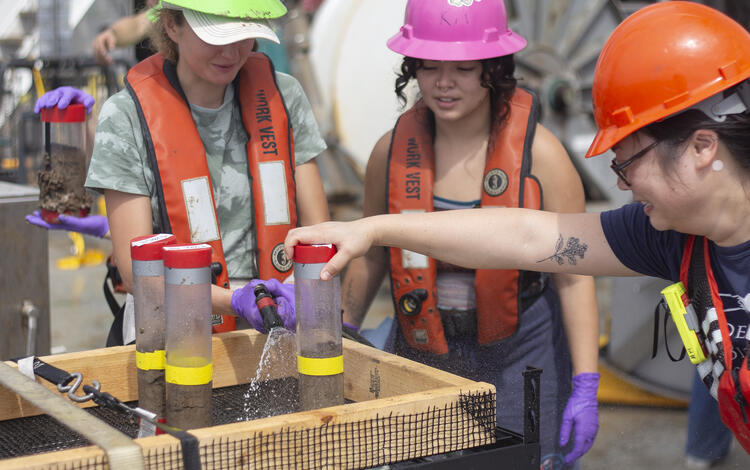
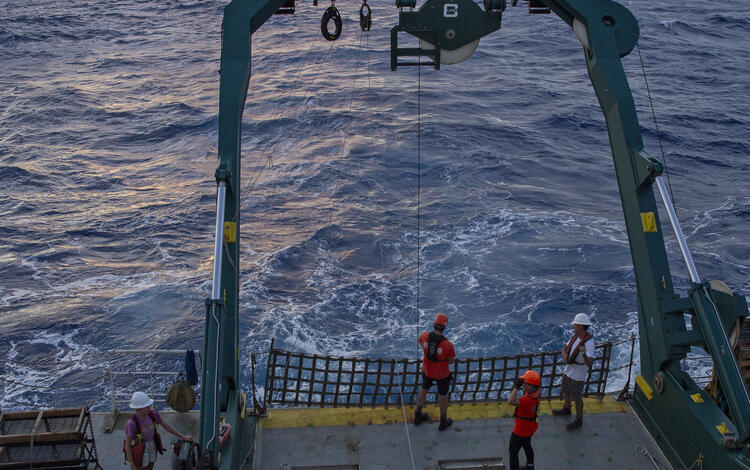
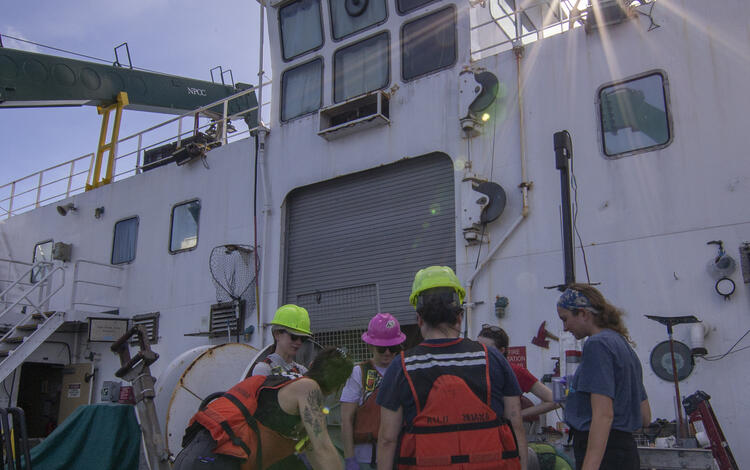
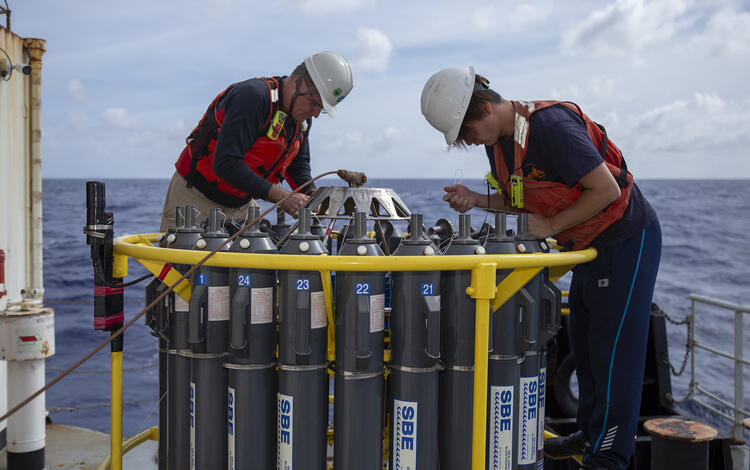
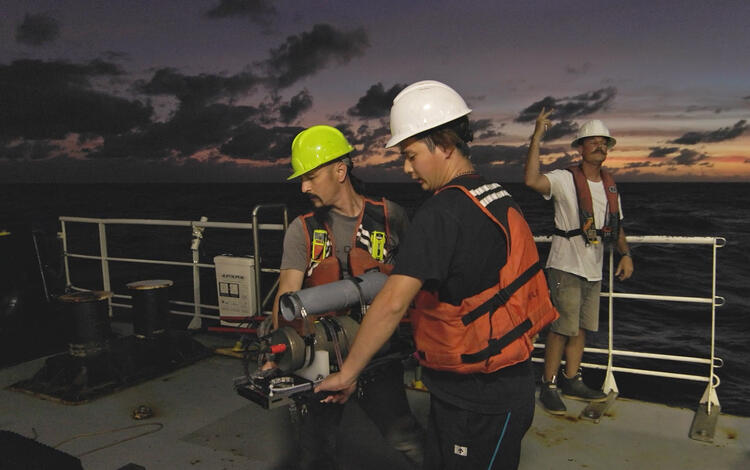
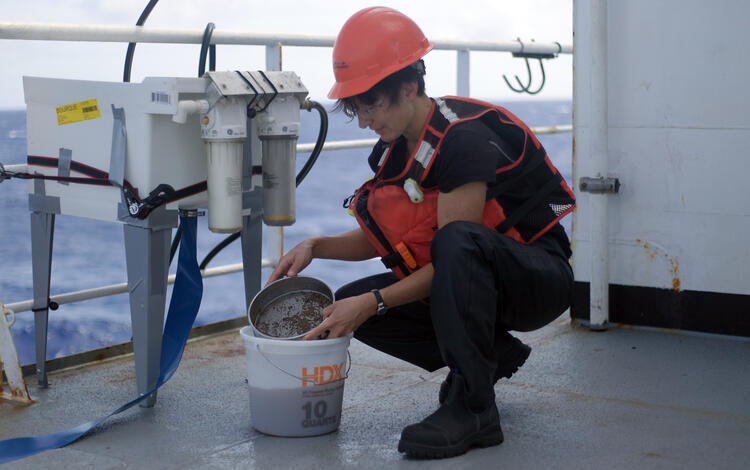
Scientists from USGS, the University of Hawaiʻi at Mānoa, Scripps Institution of Oceanography, the Japan Agency for Marine-Earth Science and Technology, and the Bureau of Ocean Energy Management conducted ship-based research in the deep waters and seafloor far offshore the Hawaiian Islands in late 2025. The team, with its broad range of expertise in biology, geology, and oceanography, set out to study seabed minerals and their environmental setting—the microbes and animals that coexist with them and the characteristics of the surrounding sediments and seawater—in the deepest and least scientifically characterized parts of the ocean, known as the abyssal plains. Data from this expedition will improve USGS global prospective maps and models for abyssal manganese nodule distribution and address data gaps regarding abyssal plain ecosystem structure and continuity.
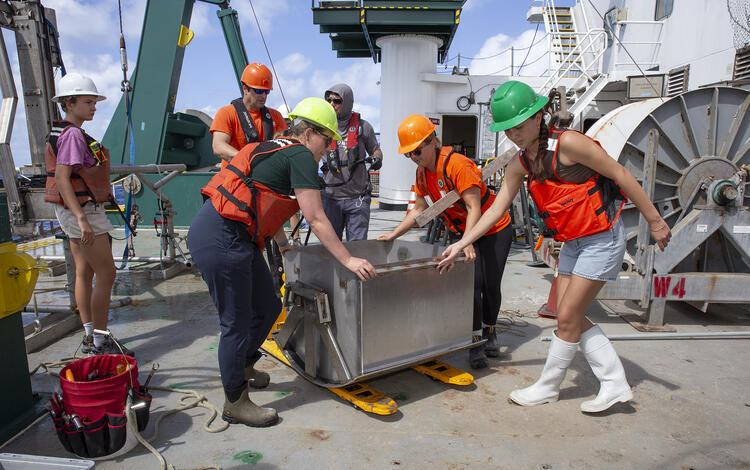
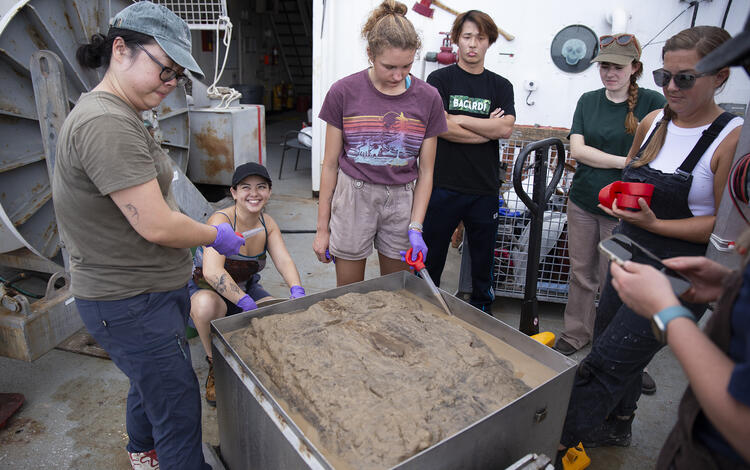
"This was a completely unexplored region of the deep sea. Though we hoped to find manganese nodules and deep-sea fauna in at least in some of the box cores we collected here, we actually didn't find any nodules. We also found a lot of heterogeneity in the sediment types, and not as much biological density as we expected, as well," said USGS Research Oceanographer Kira Mizell, Chief Scientist of the expedition.
"We know from studying nodules in regions like the Clarion-Clipperton Zone, where they're really well understood, that faunal density is very high, and there are some assumptions about how that expands out into other regions," said Mizell. "So, this was a unique opportunity to work in a region where we have some models that tell us what might occur here, but we actually had the chance to explore somewhere completely new. While our scientists were really excited for and prepared to study nodules from a new region of the global ocean, and to find lots of deep-sea fauna, it’s also really rewarding to gather new information—especially in inclusive and responsible ways, like we were able to on this expedition—that is important not only to improving scientific understanding, but that also supports responsible resource management."
Visit the expedition webpage for more information on the background and objectives of this effort.
Related

Global Seabed Mineral Resources
Related