



Fate of barrier islands facing rising seas tied to underwater shape, new models show
Barrier islands—long, narrow strips of sand that line many coasts around the world—serve as a first line of defense against storms and rising seas. These dynamic landforms are heavily influenced by wind and waves, and new research suggests that seafloor features just offshore of barrier islands may play a bigger role in their survival than previously understood.
USGS scientists have developed a new modeling approach, the Articulated Barrier Shoreface (ABSF) model, that shows how underwater features influence whether barrier islands persist—or disappear—over time.
Looking Beneath the Waves
A key but often overlooked part of the coastal system is the shoreface—the underwater zone extending from the beach to deeper waters where waves no longer move sediment. This region acts as a reservoir of sand that can be exchanged with the beach and dunes, especially during storms.
Until now, many models treated the shoreface as a single, uniform layer. The ABSF model breaks it into multiple interacting parts, allowing scientists to better simulate how sand moves between shallow and deeper regions.
Sand Supply Drives Survival
The study highlights two critical factors that determine how barrier islands respond to sea-level rise and storms:
- Storm-driven sand transport: Strong storms can push sand from the shoreface onto the island, helping it maintain elevation.
- Shoreface depth: Deeper shorefaces make it harder for sand to return to the beach system.
When these factors are favorable, barrier islands can “keep up” with rising seas by shifting landward and redistributing sand. But when they are not, sand fails to reach the islands, leading to a net loss of sediment.
An Overlooked Lag Effect
One of the study’s most important findings is a kind of disconnect within the shoreface itself.
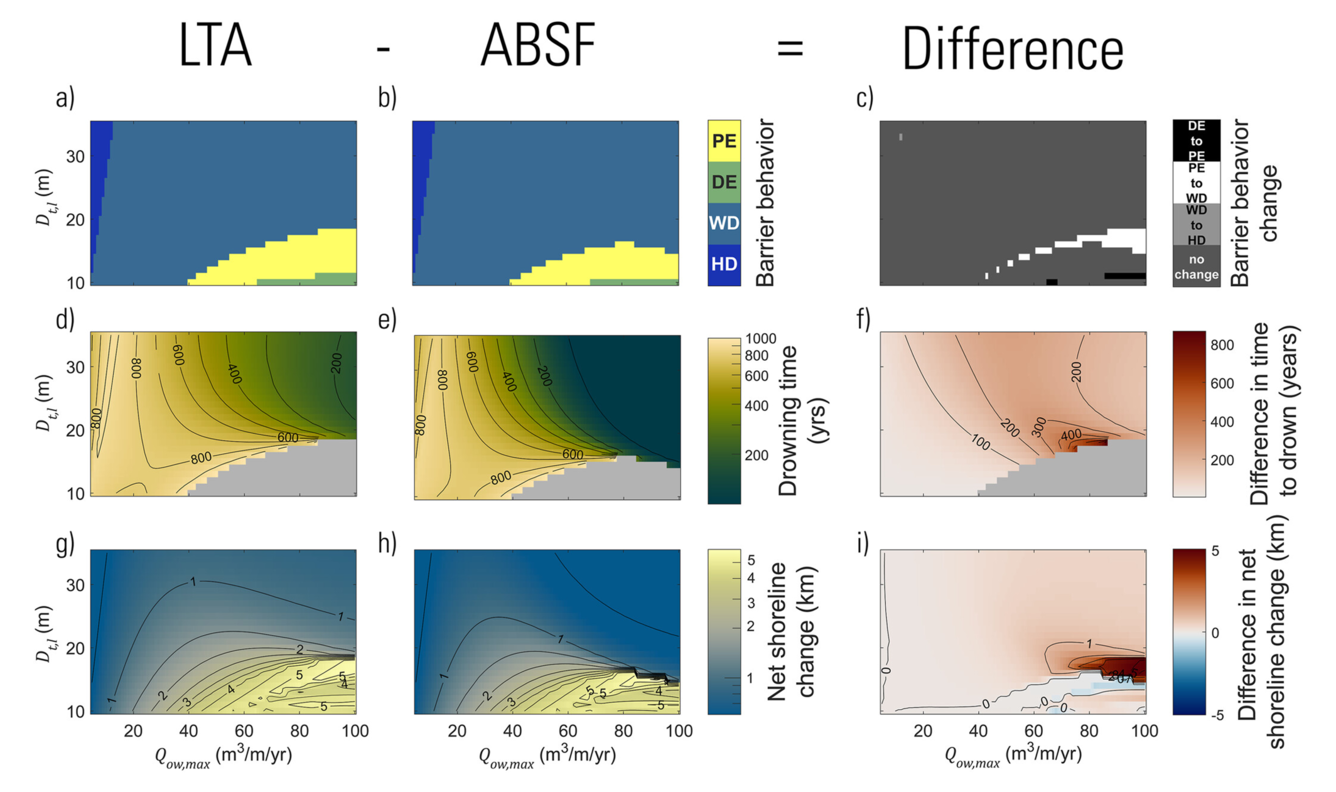
Changes in the deeper part of the shoreface occur more slowly than in the shallow region closer to shore. As sea levels rise, this lag can trap sand offshore—effectively stranding it beyond the reach of waves and storms that would normally move it back onto the island.
This stranded sand reduces the amount of material available to sustain beaches and dunes.
Faster Drowning Than Expected
Compared to older models, the ABSF approach suggests that barrier islands may drown more frequently and more quickly than previously predicted.
Without sufficient sand returning from the shoreface, islands lose their ability to maintain elevation and width. Over time, this can lead to increased overwash, fragmentation, and eventual submergence.
Why It Matters
Barrier islands protect coastal communities and ecosystems by absorbing wave energy and storm surge. Understanding the processes that control their stability is essential for:
- Coastal hazard planning
- Infrastructure protection
- Ecosystem conservation
- Climate adaptation strategies
By showing that offshore sand dynamics can limit island resilience, the study underscores the need to consider the entire coastal system—from dunes to deep shoreface—when predicting future shoreline change.
Read the study, Modeling the Influence of Upper and Lower Shoreface Dynamics on Barrier Island Evolution, in JGR Earth Surface.
Related

Coastal Sediment Availability and Flux (CSAF)
Related