



Cyanotoxins and Harmful Algal blooms
Cyanotoxins and Harmful Algal blooms
Filter Total Items: 28

Geospatial Analyses and Applications Core Technology Team
About the Research The Geospatial Analyses and Applications Core Technology Team (CTT) as part of the Environmental Health Program collaborates with teams across USGS to develop and apply geospatial analytical methods to answer broad-scale questions about source-sink and cause-effect relationships between contaminants and vulnerable communities.

Toxin Producing Algae Across U.S. Landscapes—Are They Gaining a Foothold?
There are still many unknowns related to the occurrence and potential range of various types of algae in inland waters. To fill some of these gaps, scientists at the U.S. Geological Survey (USGS) recently published a review and synthesis of toxic algae in inland waters of the conterminous United States.

Web-Based Tool Developed through Multiagency Effort Allows Visualization of Cyanobacteria Blooms in Lakes and Reservoirs—Steps Toward Public Awareness and Exposure Prevention
A web-based application tool utilizing satellite data—CyANWeb—developed through collaborative interagency efforts was released as part of the Cyanobacteria Assessment Network (CyAN) to help Federal, State, Tribal, and local partners identify when cyanobacterial blooms may be forming. Available through a web browser or as an application, the tool can access, download, and provide data to notify...
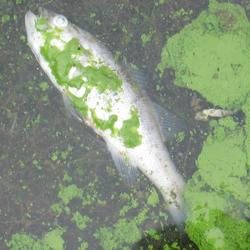
Toxins and Harmful Algal Blooms Science Team
The team develops advanced methods to study factors driving algal toxin production, how and where wildlife or humans are exposed to toxins, and ecotoxicology. That information is used to develop decision tools to understand if toxin exposure leads to adverse health effects in order to protect human and wildlife health.
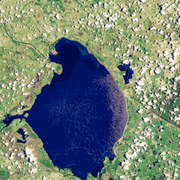
Satellite Data Used to Estimate and Rank Cyanobacterial Bloom Magnitude in Florida and Ohio Lakes—Developing Tools to Protect Human and Wildlife Health from Cyanotoxin Exposure
Cyanobacterial bloom magnitude during 2003–11 was quantified and ranked in Florida and Ohio lakes with a newly developed modelling tool that allows for the use of multiple satellite data sources and user-defined thresholds. This tool was designed to identify the magnitude of algal blooms, but one metric alone cannot adequately represent the severity of a bloom of interest in terms of toxicity. The...

Mixtures of Algal Toxins Present Prior to and After Formation of Visible Algal Blooms—Science to Inform the Timing of Algal Toxin Exposure
Cyanobacteria with toxin-producing potential, genes indicating an ability for toxin synthesis, or cyanotoxins were present before and after formation of a visible algal bloom in Kabetogama Lake, a popular recreation area in Voyageurs National Park that lies along the border of Minnesota and Canada. The temporal patterns observed in this study indicate that sampling only when there is a visible...

Understanding Drivers of Cyanotoxin Production in the Lake Okeechobee Waterway
The U.S. Geological Survey (USGS) and other researchers combined field and laboratory approaches in two studies to understand the factors that drive cyanobacterial bloom development and associated cyanotoxin production in Lake Okeechobee, the St. Lucie River and Estuary, and the Indian River Lagoon in response to the large-scale Lake Okeechobee cyanobacteria bloom in 2016.

Can There be Unintended Benefits when Wastewater Treatment Infrastructure is Upgraded?
Science from the U.S. Geological Survey (USGS) and other entities has shown that a mixture of natural and synthetic estrogens and other similar chemicals are discharged from wastewater treatment plants (WWTPs) to streams and rivers.

Are Naturally Occurring Algal Toxins in Water Resources a Health Hazard?
A growing number of human gastrointestinal, respiratory, dermatologic, and neurologic effects, as well as dog and livestock illnesses and deaths, in the United States have been linked to exposures to algal blooms in recreational lakes and stock ponds. Some of the blooms contain cyanobacteria, which have the potential to produce cyanotoxins in freshwater systems. However, the connection between...

Michigan Bacteriological Research Laboratory
Microbiologists at the Michigan Bacteriological Research Laboratory (MI-BaRL) use a wide array of traditional and modern molecular approaches to evaluate microbial pathogens and antimicrobial resistance pathways in the environment.

Environmental Chemistry Core Technology Team
About the Research The Environmental Chemistry Laboratory Core Technology Team (CTT) as part of the Environmental Health Program develops and applies innovative methods of sampling and analysis to answer critical questions about the occurrence, distribution, fate and transport, and biological exposure of chemical in all environmental matrices (water, air, tissues, sediments, and others).

Understanding Associations between Mussel Productivity and Cyanotoxins in Lake Erie
Study findings indicate that cyanobacteria and cyanotoxins were not associated with mussel mortality at the concentrations present in Lake Erie during a recent study (2013-15), but mussel growth was lower at sites with greater microcystin concentrations.