



Arkansas Cooperative Fish and Wildlife Research Unit
The Arkansas Cooperative Fish and Wildlife Research Unit (est. 1988) is a partnership among the Arkansas Game and Fish Commission, University of Arkansas, the U.S. Geological Survey, the U.S. Fish and Wildlife Service, and the Wildlife Management Institute.
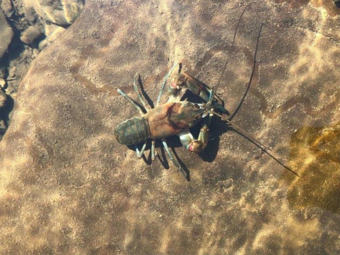
Research at the Arkansas Cooperative Fish and Wildlife Research Unit focuses on management related issues and provide our Cooperators with practical information needed to better manage natural resources in Arkansas and the region. Areas of emphasis include tail-water fishery management, invasive species early detection and control, grassland restoration and management, crayfish life history and management, landscape resilience, stable isotope research, resource selection, and wetland ecology. The research may be of local, regional, national, or international interest and is approved as directed by the Coordinating Committee overseeing each unit.
As part of our mission, Unit scientists teach graduate level courses, mentor graduate students, and conduct workshops for our cooperators. By combining teaching, research and technical assistance, the Arkansas Cooperative Fish and Wildlife Research Unit provides students not only with an opportunity to pursue a graduate degree, but also receive scientific training and applied work experience.
Students in the Arkansas Unit Program can pursue a M.S. or Ph.D. degree through the Department of Biological Sciences at the University of Arkansas at Fayetteville. Students working with Dan Magoulick generally pursue projects in aquatic ecology and Caleb Roberts' lab focuses on a wide range of topics related to invasive species and landscape ecology.
The Arkansas Cooperative Fish and Wildlife Research Unit (est. 1988) is a partnership among the Arkansas Game and Fish Commission, University of Arkansas, the U.S. Geological Survey, the U.S. Fish and Wildlife Service, and the Wildlife Management Institute.
Research at the Arkansas Cooperative Fish and Wildlife Research Unit focuses on management related issues and provide our Cooperators with practical information needed to better manage natural resources in Arkansas and the region. Areas of emphasis include tail-water fishery management, invasive species early detection and control, grassland restoration and management, crayfish life history and management, landscape resilience, stable isotope research, resource selection, and wetland ecology. The research may be of local, regional, national, or international interest and is approved as directed by the Coordinating Committee overseeing each unit.
As part of our mission, Unit scientists teach graduate level courses, mentor graduate students, and conduct workshops for our cooperators. By combining teaching, research and technical assistance, the Arkansas Cooperative Fish and Wildlife Research Unit provides students not only with an opportunity to pursue a graduate degree, but also receive scientific training and applied work experience.
Students in the Arkansas Unit Program can pursue a M.S. or Ph.D. degree through the Department of Biological Sciences at the University of Arkansas at Fayetteville. Students working with Dan Magoulick generally pursue projects in aquatic ecology and Caleb Roberts' lab focuses on a wide range of topics related to invasive species and landscape ecology.