



Georgia Cooperative Fish and Wildlife Research Unit
The Georgia Cooperative Fish and Wildlife Unit (est. 1979) is a partnership among the Georgia Department of Natural Resources, the University of Georgia, the U.S. Geological Survey, the U.S. Fish and Wildlife Service and the Wildlife Management Institute.
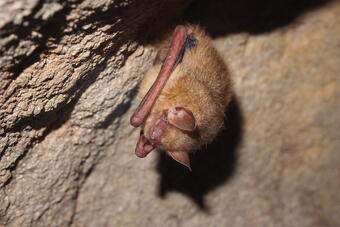
The Georgia Unit conducts research on a variety of topics including broad areas of life history, population dynamics, ecology, and management of important game and non-game fish and wildlife through the region. Recent research has been in partnership with a variety of agencies including the GA Department of Natural Resources, GA Power Company, National Fish and Wildlife Foundation, Nemours Wildlife Foundation, U.S. Army Corps of Engineers, U.S. Fish and Wildlife Service, and the U.S. Geological Survey.
Scientists at the GA Unit teach graduate level courses in:
- Estimation of Parameters of Wildlife Populations
- Quantitative Approaches to Conservation Biology
- Scientific Communication for Natural Resource Professionals
- Fish and Wildlife Seminars
The Unit provides technical assistance to its Cooperators and other natural resource agencies, as requested. Assistance includes but is not limited to workshops, technical consultations on project design and implementation, field assistance with sampling, and expert opinion on pressing natural resource issues.
American alligator demographic and harvest data from Georgetown County, South Carolina, 1979-2017 American alligator demographic and harvest data from Georgetown County, South Carolina, 1979-2017
Using demographic estimation and power analysis to inform monitoring efforts and detect declines in freshwater mussels Using demographic estimation and power analysis to inform monitoring efforts and detect declines in freshwater mussels
Habitat and landscape variables affecting Corbicula fluminea presence in the upper Savannah River drainage (USA) Habitat and landscape variables affecting Corbicula fluminea presence in the upper Savannah River drainage (USA)
Using structured decision-making to develop a communications strategy for the U.S. Geological Survey Cooperative Research Units Program Using structured decision-making to develop a communications strategy for the U.S. Geological Survey Cooperative Research Units Program
Seasonal and annual survival of acoustically tagged juvenile Gulf sturgeon in the Apalachicola River, Florida, USA Seasonal and annual survival of acoustically tagged juvenile Gulf sturgeon in the Apalachicola River, Florida, USA
Climate change and water quality influence on juvenile Atlantic sturgeon aggregation in the Altamaha River, Georgia Climate change and water quality influence on juvenile Atlantic sturgeon aggregation in the Altamaha River, Georgia
Using structured decision making to evaluate the tradeoffs of selective fish passage Using structured decision making to evaluate the tradeoffs of selective fish passage
Waterfowl move less in heterogeneous and human-populated landscapes, with implications for spread of avian influenza viruses Waterfowl move less in heterogeneous and human-populated landscapes, with implications for spread of avian influenza viruses
Estimating the power of a standardized monitoring program for sportfish in Georgia, USA Estimating the power of a standardized monitoring program for sportfish in Georgia, USA
Participatory modelling to support evaluation of management actions for recreational fisheries Participatory modelling to support evaluation of management actions for recreational fisheries
Host responses and viral traits interact to shape the impacts of climate warming on highly pathogenic avian influenza in migratory waterfowl Host responses and viral traits interact to shape the impacts of climate warming on highly pathogenic avian influenza in migratory waterfowl
Ten lessons for controlling invasive species: Wisdom from the long-standing sea lamprey control program on the Laurentian Great Lakes Ten lessons for controlling invasive species: Wisdom from the long-standing sea lamprey control program on the Laurentian Great Lakes
Landscape changes elevate the risk of avian influenza virus diversification and emergence in the East Asian–Australasian Flyway Landscape changes elevate the risk of avian influenza virus diversification and emergence in the East Asian–Australasian Flyway
The Georgia Cooperative Fish and Wildlife Unit (est. 1979) is a partnership among the Georgia Department of Natural Resources, the University of Georgia, the U.S. Geological Survey, the U.S. Fish and Wildlife Service and the Wildlife Management Institute.
The Georgia Unit conducts research on a variety of topics including broad areas of life history, population dynamics, ecology, and management of important game and non-game fish and wildlife through the region. Recent research has been in partnership with a variety of agencies including the GA Department of Natural Resources, GA Power Company, National Fish and Wildlife Foundation, Nemours Wildlife Foundation, U.S. Army Corps of Engineers, U.S. Fish and Wildlife Service, and the U.S. Geological Survey.
Scientists at the GA Unit teach graduate level courses in:
- Estimation of Parameters of Wildlife Populations
- Quantitative Approaches to Conservation Biology
- Scientific Communication for Natural Resource Professionals
- Fish and Wildlife Seminars
The Unit provides technical assistance to its Cooperators and other natural resource agencies, as requested. Assistance includes but is not limited to workshops, technical consultations on project design and implementation, field assistance with sampling, and expert opinion on pressing natural resource issues.