



North Carolina Cooperative Fish and Wildlife Research Unit
The North Carolina Cooperative Fish and Wildlife Research Unit (est. 1962) is a partnership among the North Carolina Wildlife Resources Commission, North Carolina State University, the U.S. Geological Survey, the U.S. Fish and Wildlife Service, and the Wildlife Management Institute.
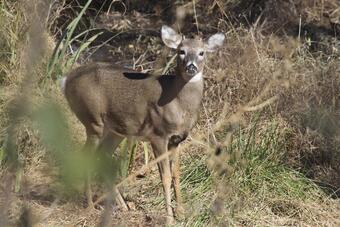
Research at the North Carolina Unit aims to address questions in fisheries and wildlife conservation and management that are of interest to state and federal natural resource management agencies, conservation organizations, and private land owners. Areas of emphasis include conserving and managing rare and endangered fish and wildlife on public lands, understanding the factors that affect fish population size and community composition, developing habitat models to explain why species of fish and wildlife live where they do, and developing new approaches to estimating species diversity and abundance.
Most of the research projects undertaken by the NC Unit are field oriented and conducted by graduate students in close cooperation with Unit, other University, and agency biologists. These projects address the research and technical needs of the U.S. Geological Survey, U.S. Fish and Wildlife Service, National Park Service, NC Wildlife Resources Commission, NC State University, and other State and Federal agencies and private organizations. The NC Unit also facilitates and administers funding for research conducted by cooperating faculty at NC State University to address research needs by State and Federal cooperating agencies.
North Carolina Unit scientists offer educational instruction in multiple forms. They instruct university graduate-level courses in their topical areas of expertise; they advise graduate students in their thesis and dissertation research; and they conduct and organize professional workshops and symposia on special topics.
The North Carolina Cooperative Fish and Wildlife Research Unit (est. 1962) is a partnership among the North Carolina Wildlife Resources Commission, North Carolina State University, the U.S. Geological Survey, the U.S. Fish and Wildlife Service, and the Wildlife Management Institute.
Research at the North Carolina Unit aims to address questions in fisheries and wildlife conservation and management that are of interest to state and federal natural resource management agencies, conservation organizations, and private land owners. Areas of emphasis include conserving and managing rare and endangered fish and wildlife on public lands, understanding the factors that affect fish population size and community composition, developing habitat models to explain why species of fish and wildlife live where they do, and developing new approaches to estimating species diversity and abundance.
Most of the research projects undertaken by the NC Unit are field oriented and conducted by graduate students in close cooperation with Unit, other University, and agency biologists. These projects address the research and technical needs of the U.S. Geological Survey, U.S. Fish and Wildlife Service, National Park Service, NC Wildlife Resources Commission, NC State University, and other State and Federal agencies and private organizations. The NC Unit also facilitates and administers funding for research conducted by cooperating faculty at NC State University to address research needs by State and Federal cooperating agencies.
North Carolina Unit scientists offer educational instruction in multiple forms. They instruct university graduate-level courses in their topical areas of expertise; they advise graduate students in their thesis and dissertation research; and they conduct and organize professional workshops and symposia on special topics.