



Fish and wildlife research is essential for understanding ecosystems and protecting biodiversity. It provides the data needed to manage habitats, conserve species, and address challenges like climate change and invasive species. By studying these natural systems, we ensure healthy environments that support both wildlife and human communities.
New Behaviors
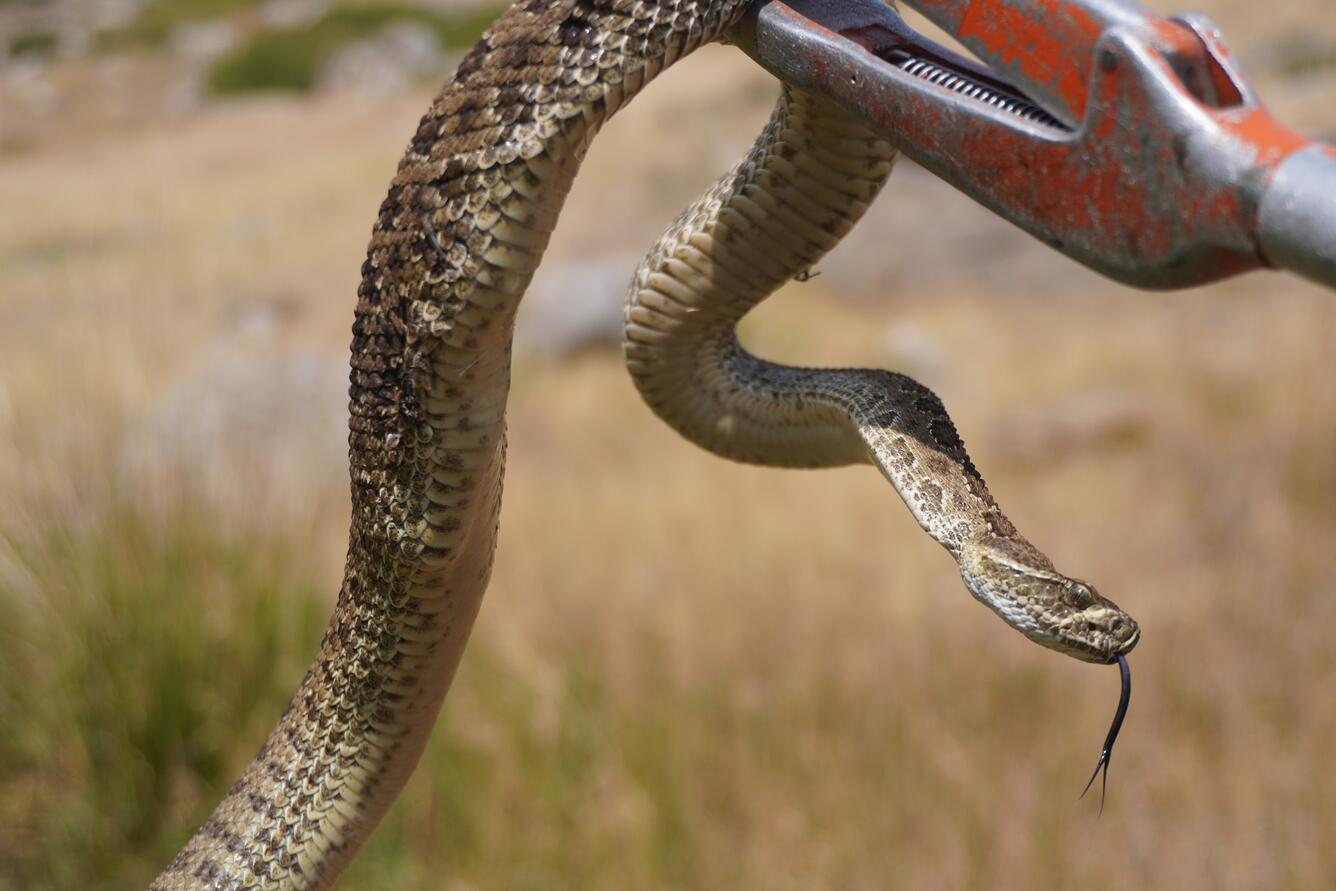
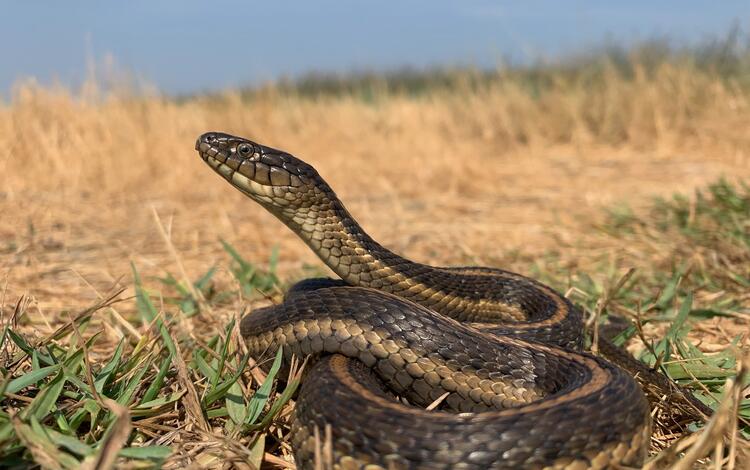
Prairie rattlesnakes (Crotalus viridis) may gather to shed skin - a newly documented behavior observed by researchers at the Idaho Cooperative Fish and Wildlife Research Unit. Dr. Courtney Conway, and graduate student Emily Martin, initially set out to document Prairie rattlesnake movement and survival effects of translocations and ended up observing a unique behavior of these typically solitary animals – they get-together when they shed their skin! Evaluating new behaviors has big implications for managers seeking to understand how snakes adjust and move after they've been translocated to a new area. The project was supported by a National Science Foundation GRFP fellowship to Emily Martin and by Jackson Fork Ranch and Joe Ricketts.
A Fisheries First
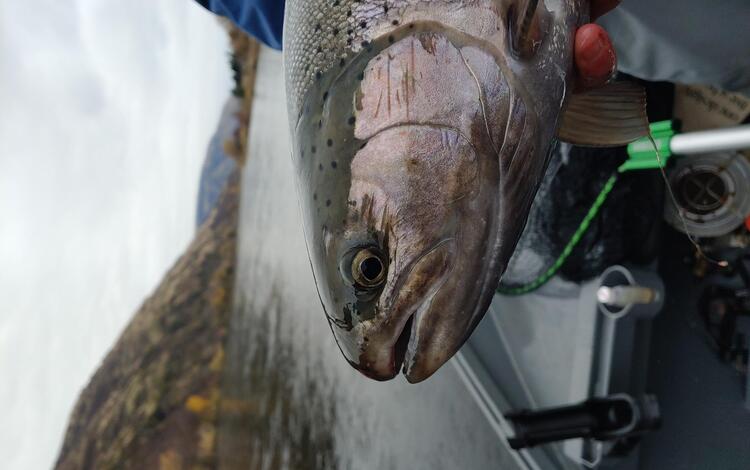
In the first of its kind, an international effort to develop and publish standardized sampling methods for North American freshwater fisheries was spearheaded by Dr. Scott Bonar and his lab at the Arizona Cooperative Fish and Wildlife Research Unit. Involving over 500 fisheries professionals from almost 200 agencies across North America, the standardized methods are wide ranging and were published in the American Fisheries Society’s Standard Methods for Sampling North American Freshwater Fishes first and second editions.
Because fish inhabit such a large variety of environments, the standards outlined by Dr. Bonar and his collaborators include how to sample fish in many habitats; ponds, reservoirs, natural lakes, streams and rivers containing cold and warmwater fishes, and even the Great Lakes which support one of our nation’s greatest freshwater fisheries.
Since publication, the standardized methods outlined by Dr. Scott Bonar and his collaborators are being increasingly adopted across North America. As methodology becomes more standardized, comparisons within and among populations can become stronger and lead to more consistent insights for those evaluating trends and setting harvest goals.

All About AI
In the southeastern US, declines in savanna ecosystems and associated upland game birds such as Northern Bobwhite and Wild Turkey has motivated restoration efforts from agencies, private landowners, and conservation organizations spanning local to regional scales.
The Arkansas Cooperative Fish & Wildlife Research Unit is conducting cutting-edge research using machine learning to rapidly quantify upland game bird responses to savanna restoration. Specifically, we are 1) collecting audio data on private lands pre- and post-restoration, 2) using BirdNET, a machine learning algorithm, to identify all birds, 3) creating customized automated audio classifiers to improve accuracy of machine learning algorithms, and 4) using machine learning outputs to show how game birds are returning to populations that are sustainably huntable. Additionally, we plan to use machine learning in conjunction with game cameras and timelapse cameras to rapidly quantify wild turkey productivity and abundance responses to savanna restoration.
Outcomes of this project will be used to directly communicate restoration successes to landowners and to create communication materials that encourage enrollment into conservation programs like the Open Pines Regional Conservation Partnership Program. Lastly, our results can help advance science that helps cooperators learn how best to prioritize and implement restoration to produce optimal results for private landowners.


Iowa Cooperative Fish and Wildlife Research Unit
California Cooperative Fish and Wildlife Research Unit
Arkansas Cooperative Fish and Wildlife Research Unit
Arizona Cooperative Fish and Wildlife Research Unit
Alaska Cooperative Fish and Wildlife Research Unit
Alabama Cooperative Fish and Wildlife Research Unit
Pennsylvania Cooperative Fish and Wildlife Research Unit
Fish and wildlife research is essential for understanding ecosystems and protecting biodiversity. It provides the data needed to manage habitats, conserve species, and address challenges like climate change and invasive species. By studying these natural systems, we ensure healthy environments that support both wildlife and human communities.
New Behaviors
Prairie rattlesnakes (Crotalus viridis) may gather to shed skin - a newly documented behavior observed by researchers at the Idaho Cooperative Fish and Wildlife Research Unit. Dr. Courtney Conway, and graduate student Emily Martin, initially set out to document Prairie rattlesnake movement and survival effects of translocations and ended up observing a unique behavior of these typically solitary animals – they get-together when they shed their skin! Evaluating new behaviors has big implications for managers seeking to understand how snakes adjust and move after they've been translocated to a new area. The project was supported by a National Science Foundation GRFP fellowship to Emily Martin and by Jackson Fork Ranch and Joe Ricketts.
A Fisheries First
In the first of its kind, an international effort to develop and publish standardized sampling methods for North American freshwater fisheries was spearheaded by Dr. Scott Bonar and his lab at the Arizona Cooperative Fish and Wildlife Research Unit. Involving over 500 fisheries professionals from almost 200 agencies across North America, the standardized methods are wide ranging and were published in the American Fisheries Society’s Standard Methods for Sampling North American Freshwater Fishes first and second editions.
Because fish inhabit such a large variety of environments, the standards outlined by Dr. Bonar and his collaborators include how to sample fish in many habitats; ponds, reservoirs, natural lakes, streams and rivers containing cold and warmwater fishes, and even the Great Lakes which support one of our nation’s greatest freshwater fisheries.
Since publication, the standardized methods outlined by Dr. Scott Bonar and his collaborators are being increasingly adopted across North America. As methodology becomes more standardized, comparisons within and among populations can become stronger and lead to more consistent insights for those evaluating trends and setting harvest goals.
All About AI
In the southeastern US, declines in savanna ecosystems and associated upland game birds such as Northern Bobwhite and Wild Turkey has motivated restoration efforts from agencies, private landowners, and conservation organizations spanning local to regional scales.
The Arkansas Cooperative Fish & Wildlife Research Unit is conducting cutting-edge research using machine learning to rapidly quantify upland game bird responses to savanna restoration. Specifically, we are 1) collecting audio data on private lands pre- and post-restoration, 2) using BirdNET, a machine learning algorithm, to identify all birds, 3) creating customized automated audio classifiers to improve accuracy of machine learning algorithms, and 4) using machine learning outputs to show how game birds are returning to populations that are sustainably huntable. Additionally, we plan to use machine learning in conjunction with game cameras and timelapse cameras to rapidly quantify wild turkey productivity and abundance responses to savanna restoration.
Outcomes of this project will be used to directly communicate restoration successes to landowners and to create communication materials that encourage enrollment into conservation programs like the Open Pines Regional Conservation Partnership Program. Lastly, our results can help advance science that helps cooperators learn how best to prioritize and implement restoration to produce optimal results for private landowners.
Iowa Cooperative Fish and Wildlife Research Unit
California Cooperative Fish and Wildlife Research Unit
Arkansas Cooperative Fish and Wildlife Research Unit
Arizona Cooperative Fish and Wildlife Research Unit
Alaska Cooperative Fish and Wildlife Research Unit
Alabama Cooperative Fish and Wildlife Research Unit