



Health Effects
Health Effects
Filter Total Items: 104

USGS Scientists Measure New Bacterial Nitrogen Removal Process in Groundwater
For the first time, U.S. Geological Survey (USGS), Virginia Institute of Marine Science, and the University of Connecticut scientists have detected active anammox bacteria in groundwater.

Bacterial Pathogen Genes in Streams related to Animal Type and Hydrologic Conditions
A U.S. Geological Survey (USGS) study elucidates the influence of animal type and environmental variables on bacterial pathogen occurrence in streams under typical watershed conditions.

Persistent Contaminant Threats Following Hurricane Sandy—Establishing Baselines and Assessing Impacts
Potential long-term contaminant threats resulting from compromised infrastructure, beach erosion, and sediment disturbance were evaluated in the coastal environments of New Jersey and New York in the aftermath of Hurricane Sandy.
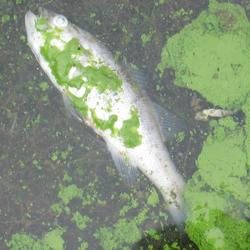
New Study on Cyanotoxins in Lakes and Reservoirs Provides Insights into Assessing Health Risks
Newly published study provides new evidence of the widespread occurrence of cyanotoxins in lakes and reservoirs of the United States and offers new insights into measures used for assessing potential recreational health risks.

Iodinated Disinfection Byproducts found in Dairy-Impacted Wastewaters and Streams
Iodinated disinfection byproducts were found at stream locations downstream from treated discharge from wastewater treatment plants that receive dairy waste and in the wastewaters directly from dairy facilities.

Indication of Unconventional Oil and Gas Wastewaters Found in Local Surface Waters
Evidence indicating the presence of wastewaters from unconventional oil and gas (UOG) production was found in surface waters and surficial sediments near an UOG disposal facility in West Virginia.

Importance of Lake Sediments in Removal of Cyanobacteria, Viruses, and Dissolved Organic Carbon
U.S. Geological Survey (USGS) scientists determined that the colmation layer (top 25 centimeters of lake sediments) was highly effective in removing cyanobacteria, viruses, and dissolved organic carbon during water passage through the lake bottom to aquifer sediments.

U.S. Geological Survey Scientists Complete First Systematic Regional Survey of Algal Toxins in Streams of the Southeastern United States
U.S. Geological Survey (USGS) scientists detected microcystin—an algal toxin—in 39 percent of 75 streams assessed in the southeastern United States. These results will inform and become part of a larger, systematic national survey of algal toxins in small streams of the United States.

North American and European Atmospheric Mercury Declines Explained by Local and Regional Emission Reductions
Recent findings from a consortium of university, State, and U.S. Geological Survey (USGS) scientists indicate that declining atmospheric concentrations of mercury (Hg) can be explained by the phaseout of mercury in many commercial products and by reduced emissions from utilities over the past two decades.

Remote Sensing Provides a National View of Cyanobacteria Blooms
Four Federal agencies, including the U.S. Geological Survey (USGS), are collaborating to transform satellite data into information managers can use to protect ecological and human health from freshwater contaminated by harmful algal blooms.

Ethanol-Containing Fuel Spills Enhanced Natural Trace Element Release from Sediments in an Experimental Setting
Experimental field research simulating hydrocarbon spills by researchers from the U.S. Geological Survey (USGS), Virginia Tech, and the University of St. Thomas showed that mixed ethanol and petroleum-based fuels increased the rate by which arsenic and other natural trace elements are released from aquifer sediments to groundwater when compared to petroleum-based fuels alone.

Complex Mixtures, Complex Responses—Using Comprehensive Approaches to Assess Pharmaceutical Effects on Fish
The occurrence of complex mixtures of prescription pharmaceuticals in streams and rivers around the globe has raised concerns about potential unintended adverse effects on aquatic organisms. The deleterious effects (for example, alteration of fish behavior) observed in this study confirm that effluents containing pharmaceuticals can adversely affect fish in ways that are central to sustaining...