
David Douglas
Satellite remote sensing of landscape features that possess high-frequency dynamics, such as sea ice distribution and vegetation phenology, and spatial analyses of how wildlife migrations are influenced by habitat and weather dynamics.
My projects aim to pioneer new analytical avenues in applied wildlife research by combining remote sensing with traditional wildlife studies to answer questions about habitat use and animal movements at landscape scales. The studies I engage align with Department of Interior priorities in the Arctic by addressing a growing need to understand how changes in climate or land use practices affect wildlife migrations, habitat availability, habitat quality, and population dynamics. Climate is the overarching force that controls wildlife habitat resources in the Arctic, so understanding linkages between the physical and biological environment is critical for making informed management decisions in the face of accelerating warming and expanding human activities. My expertise includes tracking wildlife by satellite, monitoring sea ice and vegetation changes by satellite, and the implications of future climate change on Arctic wildlife in general.
Professional Experience
1986 - Present Research Wildlife Biologist USGS Alaska Science Center, Anchorage, Alaska
1985 - 1986 Biological Technician Arctic National Wildlife Refuge, Fairbanks, Alaska
1980 - 1984 Biological Technician US Forest Service, Region 4, Ogden, Utah
Education and Certifications
M.S. 1986 Washington State University, Pullman, WA Wildlife Biology
B.A. 1982 Utah State University, Logan, UT Biology
Affiliations and Memberships*
American Geophysical Union (AGU)
Science and Products
Tracking Data for Bar-tailed Godwits (Limosa lapponica)
Tracking Data for Red-faced Cormorants (Phalacrocorax urile)
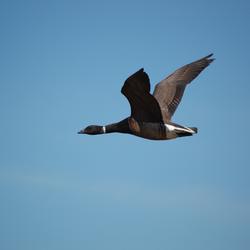
Tracking Data for Black Brant (Branta bernicla nigricans)
Tracking Data for Pacific Walrus (Odobenus rosmarus divergens)
Tracking Data for Spectacled Eiders (Somateria fischeri)
Tracking Data for Three Large-bodied Gull Species and Hybrids (Larus spp.)
Tracking Data for Buff-breasted Sandpipers (Calidris subruficollis) Tracking Data for Buff-breasted Sandpipers (Calidris subruficollis)
SUPERSEDED: Pacific Walrus Coastal Haulout Occurrences Interpreted from Satellite Imagery, 2023 SUPERSEDED: Pacific Walrus Coastal Haulout Occurrences Interpreted from Satellite Imagery, 2023
U.S. Fish and Wildlife Service Tracking Data for Steller's Eiders (Polysticta stelleri) U.S. Fish and Wildlife Service Tracking Data for Steller's Eiders (Polysticta stelleri)
Polar Bear Continuous Time-Correlated Random Walk (CTCRW) Location Data Derived from Satellite Location Data, Chukchi and Beaufort Seas, July-November 1985-2017 Polar Bear Continuous Time-Correlated Random Walk (CTCRW) Location Data Derived from Satellite Location Data, Chukchi and Beaufort Seas, July-November 1985-2017
Pacific Walrus Coastal Haulout Occurrences Interpreted from Satellite Imagery Pacific Walrus Coastal Haulout Occurrences Interpreted from Satellite Imagery
Bivalve Shell Growth Indices, Chukchi Sea, Alaska, 1867-2015 Bivalve Shell Growth Indices, Chukchi Sea, Alaska, 1867-2015
Incremental evolution of modeling a prognosis for polar bears in a rapidly changing Arctic Incremental evolution of modeling a prognosis for polar bears in a rapidly changing Arctic
Forecasts of polar bear (Ursus maritimus) land use in the southern Beaufort and Chukchi Seas, 2040–65 Forecasts of polar bear (Ursus maritimus) land use in the southern Beaufort and Chukchi Seas, 2040–65
Pacific Barrow’s Goldeneye refine migratory phenology in response to overwintering temperatures and annual snow melt Pacific Barrow’s Goldeneye refine migratory phenology in response to overwintering temperatures and annual snow melt
High winds and melting sea ice trigger landward movement in a polar bear population of concern High winds and melting sea ice trigger landward movement in a polar bear population of concern
Observed and forecasted changes in land use by polar bears in the Beaufort and Chukchi Seas, 1985–2040 Observed and forecasted changes in land use by polar bears in the Beaufort and Chukchi Seas, 1985–2040
Modeling the spatial and temporal dynamics of land-based polar bear denning in Alaska Modeling the spatial and temporal dynamics of land-based polar bear denning in Alaska
Science and Products
Tracking Data for Bar-tailed Godwits (Limosa lapponica)
Tracking Data for Red-faced Cormorants (Phalacrocorax urile)
Tracking Data for Black Brant (Branta bernicla nigricans)
Tracking Data for Pacific Walrus (Odobenus rosmarus divergens)
Tracking Data for Spectacled Eiders (Somateria fischeri)
Tracking Data for Three Large-bodied Gull Species and Hybrids (Larus spp.)
Tracking Data for Buff-breasted Sandpipers (Calidris subruficollis) Tracking Data for Buff-breasted Sandpipers (Calidris subruficollis)
SUPERSEDED: Pacific Walrus Coastal Haulout Occurrences Interpreted from Satellite Imagery, 2023 SUPERSEDED: Pacific Walrus Coastal Haulout Occurrences Interpreted from Satellite Imagery, 2023
U.S. Fish and Wildlife Service Tracking Data for Steller's Eiders (Polysticta stelleri) U.S. Fish and Wildlife Service Tracking Data for Steller's Eiders (Polysticta stelleri)
Polar Bear Continuous Time-Correlated Random Walk (CTCRW) Location Data Derived from Satellite Location Data, Chukchi and Beaufort Seas, July-November 1985-2017 Polar Bear Continuous Time-Correlated Random Walk (CTCRW) Location Data Derived from Satellite Location Data, Chukchi and Beaufort Seas, July-November 1985-2017
Pacific Walrus Coastal Haulout Occurrences Interpreted from Satellite Imagery Pacific Walrus Coastal Haulout Occurrences Interpreted from Satellite Imagery
Bivalve Shell Growth Indices, Chukchi Sea, Alaska, 1867-2015 Bivalve Shell Growth Indices, Chukchi Sea, Alaska, 1867-2015
Incremental evolution of modeling a prognosis for polar bears in a rapidly changing Arctic Incremental evolution of modeling a prognosis for polar bears in a rapidly changing Arctic
Forecasts of polar bear (Ursus maritimus) land use in the southern Beaufort and Chukchi Seas, 2040–65 Forecasts of polar bear (Ursus maritimus) land use in the southern Beaufort and Chukchi Seas, 2040–65
Pacific Barrow’s Goldeneye refine migratory phenology in response to overwintering temperatures and annual snow melt Pacific Barrow’s Goldeneye refine migratory phenology in response to overwintering temperatures and annual snow melt
High winds and melting sea ice trigger landward movement in a polar bear population of concern High winds and melting sea ice trigger landward movement in a polar bear population of concern
Observed and forecasted changes in land use by polar bears in the Beaufort and Chukchi Seas, 1985–2040 Observed and forecasted changes in land use by polar bears in the Beaufort and Chukchi Seas, 1985–2040
Modeling the spatial and temporal dynamics of land-based polar bear denning in Alaska Modeling the spatial and temporal dynamics of land-based polar bear denning in Alaska
*Disclaimer: Listing outside positions with professional scientific organizations on this Staff Profile are for informational purposes only and do not constitute an endorsement of those professional scientific organizations or their activities by the USGS, Department of the Interior, or U.S. Government