



Keith A Loftin, Ph.D.
Products and information related to Keith Loftin.
Algal and Other Environmental Toxins Laboratory (AET)
USGS Environmental Health Program Toxins and Harmful Algal Bloom Integrated Science Team
Dr. Keith Loftin received his B.S. in Polymers and Coatings Chemistry (1998), his M.S. in Environmental Engineering (2001), and PhD. in Civil Engineering with an Environmental Engineering Emphasis (2006) all from Missouri Science and Technology University. He has been with the US Geological Survey since 2004 where he started with the Organic Geochemistry Research Laboratory at the Kansas Water Science Center. He started and supervised the Algal and Other Environmental Toxins Laboratory also at the Kansas Water Science Center (2016-2023) and started and co-leads the USGS Environmental Health Program Toxins and Harmful Algal Bloom Integrated Science Team (2017-Present).
Dr. Loftin’s research started out focused on analytical methods development and occurrence, fate, and transport of antibiotics, pesticides, herbicides and insecticides. However, he started researching algae and cyanobacteria and the toxins they produce in 2005. His research and that of the EHP Toxins and Harmful Algal Bloom Integrated Science Teams has been focused on toxin exposure and effects, understanding the causes, controls, fate, prevention and mitigation of toxins and the organisms that produce them, advancing laboratory, field, and remote sensing methods, and developing decision support tools and socioeconomics related to his research. To accomplish this work, Dr. Loftin collaborates with numerous stakeholders including State and Federal Agencies, Tribes, local jurisdictions, and universities.
Dr. Loftin has received several awards including the Rudolf Hering Medal (2003),and EPA Bronze Medal (2011) for his work on cyanotoxins in the 2007 National Lakes Assessment, EPA’s Office of Water’s Achievement in Science and Technology Award (2015) for developing pioneering methods and metrics related to algal toxin research in the 2011 National Wetlands Condition Assessment, and an EPA Silver Medal (2021) for his contributions building the Cyanobacteria Assessment Network (CyAN) with EPA, NASA, and NOAA.
Science and Products
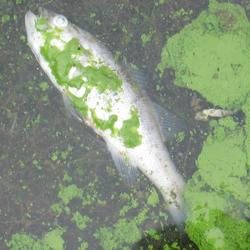
Toxins and Harmful Algal Blooms Science Team
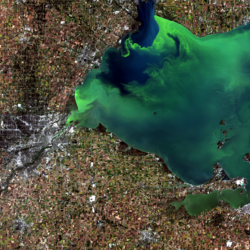
Beyond Microcystins: A New Look at Cyanotoxins in Lake Erie

Exploring the Link Between Cyanobacteria Blooms and Respiratory Health
Tracking Toxins at the Coastline: A National Look at Harmful Algal Toxins in U.S. Coastal Waters
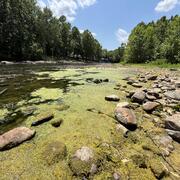
Leveraging UV Light for Effective Algal Toxin Removal in Drinking Water

Algal and Environmental Toxins Research Laboratory — Lawrence, Kansas
Decoding Harmful Algal Blooms: Unraveling the Mystery

Understanding Algal Bloom Dynamics in Lake Okeechobee

FY26 Capabilities and Services

Collaborative Science Provides Understanding of Contaminants in Bottled Water-an Increasingly Common Alternate Drinking Water Source

Web-Based Tool Developed through Multiagency Effort Allows Visualization of Cyanobacteria Blooms in Lakes and Reservoirs—Steps Toward Public Awareness and Exposure Prevention

Characterization of Potentially Toxic CyanoHAB Initiation in Slow-Moving Streams, Wetlands, and Oxbows
Toxins and Harmful Algal Blooms Science Team
Science and Products
Toxins and Harmful Algal Blooms Science Team
Beyond Microcystins: A New Look at Cyanotoxins in Lake Erie
Exploring the Link Between Cyanobacteria Blooms and Respiratory Health
Tracking Toxins at the Coastline: A National Look at Harmful Algal Toxins in U.S. Coastal Waters
Leveraging UV Light for Effective Algal Toxin Removal in Drinking Water
Algal and Environmental Toxins Research Laboratory — Lawrence, Kansas
Decoding Harmful Algal Blooms: Unraveling the Mystery
Understanding Algal Bloom Dynamics in Lake Okeechobee
FY26 Capabilities and Services
Collaborative Science Provides Understanding of Contaminants in Bottled Water-an Increasingly Common Alternate Drinking Water Source
Web-Based Tool Developed through Multiagency Effort Allows Visualization of Cyanobacteria Blooms in Lakes and Reservoirs—Steps Toward Public Awareness and Exposure Prevention
Characterization of Potentially Toxic CyanoHAB Initiation in Slow-Moving Streams, Wetlands, and Oxbows