



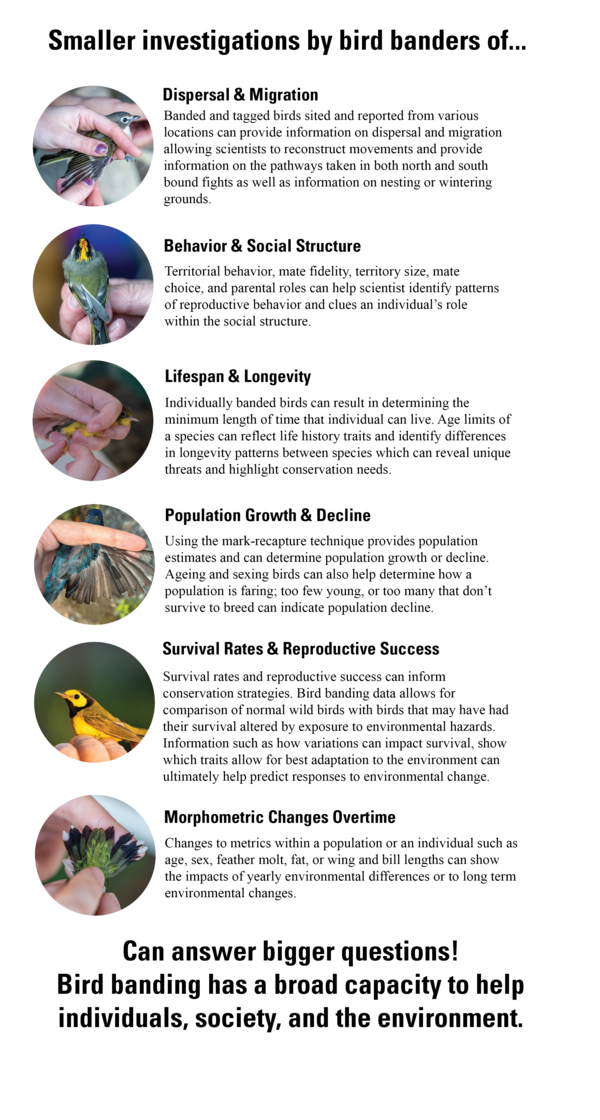
A graphic depiction of what banders can learn from banding information.
Kyra Harvey
Kyra Harvey is a biologist at the Bird Banding Laboratory (BBL), at the Eastern Ecological Science Center located in Laurel, MD.
Kyra has been with the BBL since 2020, and curates bird banding, encounter, and recapture reports within the North American Bird Banding Program's database. She is the outreach coordinator and the BBL's website content manager. Other duties include: Bander Portal support and staffs the MAPS station and the long-term fall migration monitoring station at the Patuxent Research Refuge.
Science and Products

Bird Banding Laboratory
The Bird Banding Laboratory is an integrated scientific program established in 1920 to support the collection, archiving, management, and dissemination of information from banded and marked birds in North America. This information allows for developing effective bird science, management, and conservation. Since 1923, the lab has collaborated with the Canada’s Bird Banding Office to administer the...
WhyDoWeBandBirds
A graphic depiction of what banders can learn from banding information.

Sparrows of the Bird Banding Lab's Fall Migration Station
Sparrows of the Bird Banding Lab's Fall Migration StationThe sparrows pictured here represent the main sparrow species the EESC Bird Banding Lab’s Fall Migration Station sees each year. And last year, the White-throated Sparrow was the most numerous species banded at the station.
Sparrows of the Bird Banding Lab's Fall Migration Station
Sparrows of the Bird Banding Lab's Fall Migration StationThe sparrows pictured here represent the main sparrow species the EESC Bird Banding Lab’s Fall Migration Station sees each year. And last year, the White-throated Sparrow was the most numerous species banded at the station.

Collision dots from the inside of an office at EESC Gabrielson.
Collision dots from the inside of an office at EESC Gabrielson.The view of the collision dots from the inside of an office at EESC Gabrielson building.
Collision dots from the inside of an office at EESC Gabrielson.
Collision dots from the inside of an office at EESC Gabrielson.The view of the collision dots from the inside of an office at EESC Gabrielson building.

Dots installed at EESC Gabrielson windows in a 2x2 inch pattern.
Dots installed at EESC Gabrielson windows in a 2x2 inch pattern.Vinyl “dots” installed on the glass at EESC Gabrielson building in a 2x2 inch grid pattern.
Dots installed at EESC Gabrielson windows in a 2x2 inch pattern.
Dots installed at EESC Gabrielson windows in a 2x2 inch pattern.Vinyl “dots” installed on the glass at EESC Gabrielson building in a 2x2 inch grid pattern.

Windows with bird collision “dots” to prevent bird collisions.
Windows with bird collision “dots” to prevent bird collisions.Front left side windows of EESC Gabrielson building replaced with bird collision deterrent “dots” to prevent bird collisions with glass.
Windows with bird collision “dots” to prevent bird collisions.
Windows with bird collision “dots” to prevent bird collisions.Front left side windows of EESC Gabrielson building replaced with bird collision deterrent “dots” to prevent bird collisions with glass.

Employee Spotlight: Kyra Harvey Employee Spotlight: Kyra Harvey
An introduction to the Bird Banding Laboratory’s newest staff member.
Science and Products
Bird Banding Laboratory
The Bird Banding Laboratory is an integrated scientific program established in 1920 to support the collection, archiving, management, and dissemination of information from banded and marked birds in North America. This information allows for developing effective bird science, management, and conservation. Since 1923, the lab has collaborated with the Canada’s Bird Banding Office to administer the...
WhyDoWeBandBirds
A graphic depiction of what banders can learn from banding information.
A graphic depiction of what banders can learn from banding information.
Sparrows of the Bird Banding Lab's Fall Migration Station
Sparrows of the Bird Banding Lab's Fall Migration StationThe sparrows pictured here represent the main sparrow species the EESC Bird Banding Lab’s Fall Migration Station sees each year. And last year, the White-throated Sparrow was the most numerous species banded at the station.
Sparrows of the Bird Banding Lab's Fall Migration Station
Sparrows of the Bird Banding Lab's Fall Migration StationThe sparrows pictured here represent the main sparrow species the EESC Bird Banding Lab’s Fall Migration Station sees each year. And last year, the White-throated Sparrow was the most numerous species banded at the station.
Collision dots from the inside of an office at EESC Gabrielson.
Collision dots from the inside of an office at EESC Gabrielson.The view of the collision dots from the inside of an office at EESC Gabrielson building.
Collision dots from the inside of an office at EESC Gabrielson.
Collision dots from the inside of an office at EESC Gabrielson.The view of the collision dots from the inside of an office at EESC Gabrielson building.
Dots installed at EESC Gabrielson windows in a 2x2 inch pattern.
Dots installed at EESC Gabrielson windows in a 2x2 inch pattern.Vinyl “dots” installed on the glass at EESC Gabrielson building in a 2x2 inch grid pattern.
Dots installed at EESC Gabrielson windows in a 2x2 inch pattern.
Dots installed at EESC Gabrielson windows in a 2x2 inch pattern.Vinyl “dots” installed on the glass at EESC Gabrielson building in a 2x2 inch grid pattern.
Windows with bird collision “dots” to prevent bird collisions.
Windows with bird collision “dots” to prevent bird collisions.Front left side windows of EESC Gabrielson building replaced with bird collision deterrent “dots” to prevent bird collisions with glass.
Windows with bird collision “dots” to prevent bird collisions.
Windows with bird collision “dots” to prevent bird collisions.Front left side windows of EESC Gabrielson building replaced with bird collision deterrent “dots” to prevent bird collisions with glass.
Employee Spotlight: Kyra Harvey Employee Spotlight: Kyra Harvey
An introduction to the Bird Banding Laboratory’s newest staff member.