



Jonathan Felis sets up a time-lapse camera on the top of Gull Island to monitor the reproductive success of breeding Common Murres. Gull Island is located in Kachemak Bay, Alaska.
Sarah K Schoen
Population and community ecology, foraging biology, conservation, biogeography, animal behavior, food webs, and experiential education.
Science and Products
Below are other science projects associated with this project.

Seabirds and Forage Fish Ecology
Alaska's coastal and offshore waters provide foraging habitat for an estimated 100 million birds comprising more than 90 different species; from loons and seaducks that nest inland, to petrels and puffins that breed on islands off shore. All these birds depend on the sea to provide a wide variety of food types— from clams, crabs and urchins nearshore— to krill, forage fish, and squid offshore. The...

Harmful Algal Bloom Toxins in Alaska Seabirds
Elevated ocean temperatures are linked to the development of harmful algal blooms (HABs). Toxins from these blooms may pose health threats to marine organisms, including seabirds. Since 2015, the USGS has worked with a variety of stakeholders to develop testing methods and research projects to better understand the geographic extent, timing and impacts of algal toxins in Alaska marine ecosystems...

North Pacific Pelagic Seabird Database
The North Pacific Pelagic Seabird Database (NPPSD) contains survey transect data designed and conducted by numerous partners primarily to census seabirds at sea. The NPPSD includes more than 486,000 transect segments and includes observations of over 20 million birds of 258 species collected over the span of 50 years (from 1973 to 2022).
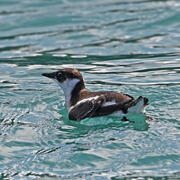
Tracking Data for Marbled Murrelet (Brachyramphus marmoratus)
Available here are tracking data for the Marbled Murrelet, a seabird species that forages in coastal marine waters and nests in old-growth forests of Alaska, Canada, and the western United States.

Detecting Long-term Changes in Forage Fish Populations in Prince William Sound, Alaska
Forage fish are small pelagic schooling fish that play a key role in transferring energy between plankton and top marine predators. Many seabirds, marine mammals, and commercial fish species depend on forage fish to grow and survive.

Tidewater Glacier Influence on Marine Ecosystems
Where glaciers meet the sea in the Gulf of Alaska (GOA), they create unique and productive marine habitats. Ringed by the continent’s tallest coastal mountains, 20% of the GOA coastal watershed is covered by glacial ice and the annual freshwater discharge into the GOA from glacial melt is comparable to that of the Mississippi river.

Seabird Die-offs in Alaska
Beginning in 2015, large numbers of dead seabirds have been appearing on beaches in most marine areas of Alaska. Although seabird die-offs are known to occur sporadically (e.g. 1970, 1989, 1993, 1997/1998, and 2004) in Alaska, these recent die-offs have been distinguished from past events by their increased frequency, duration, geographic extent, and number of different species involved.

Cook Inlet Seabird and Forage Fish Study
A massive die-off of Common Murres was documented in the Gulf of Alaska (GOA) during the fall and winter of 2015-2016 in association with a record-breaking marine heat wave in the GOA.

Use and History of the North Pacific Pelagic Seabird Database (NPPSD)
Data on the distribution and abundance of seabirds at sea have been used for many decades to assist in understanding the marine ecology of seabirds away from their breeding colonies, measure population status and trends, assess the impact of human activities on ocean habitats and fish stocks, and to identify critical marine habitats for seabirds.

Condition of Forage Fish in Prince William Sound During the Marine Heatwave
Changes in the body condition of a key forage fish species, Pacific sand lance ( Ammodytes personatus), are examined to understand how energy transfer to predators may have been disrupted during the recent marine heatwave in the North Pacific (late 2013 to mid 2016).

NPPSD Sampling Effort Maps
Maps showing the sampling extent in the North Pacific Pelagic Seabird Database (NPPSD).
Below are the media items associated with this project.
Filter Total Items: 134

Setting up a time-lapse camera, Alaska
Jonathan Felis sets up a time-lapse camera on the top of Gull Island to monitor the reproductive success of breeding Common Murres. Gull Island is located in Kachemak Bay, Alaska.

Horned Puffin, near Chisik Island in Lower Cook Inlet, Alaska
Horned Puffin, near Chisik Island in Lower Cook Inlet, AlaskaHorned Puffin, one of the species affected by a recent seabird die-off in the Pribilof Islands, AK. Near Chisik Island in Lower Cook Inlet, Alaska
Horned Puffin, near Chisik Island in Lower Cook Inlet, Alaska
Horned Puffin, near Chisik Island in Lower Cook Inlet, AlaskaHorned Puffin, one of the species affected by a recent seabird die-off in the Pribilof Islands, AK. Near Chisik Island in Lower Cook Inlet, Alaska

A Horned Puffin flying over the water
A Horned Puffin flying over the water
A Horned Puffin flying over the water

A Horned Puffin flying
A Horned Puffin flying

Cabin Bay on Naked Island in Prince William Sound
A scenic of Cabin Bay on Naked Island in Prince William Sound
A scenic of Cabin Bay on Naked Island in Prince William Sound

Three Arctic Terns sitting on a log in Prince William Sound
Three Arctic Terns sitting on a log in Prince William SoundThree Arctic Terns sitting on a log floating in the water in Prince William Sound.
Three Arctic Terns sitting on a log in Prince William Sound
Three Arctic Terns sitting on a log in Prince William SoundThree Arctic Terns sitting on a log floating in the water in Prince William Sound.

Schools of Pacific sand lance in Cabin Bay, Prince William Sound
Schools of Pacific sand lance in Cabin Bay, Prince William SoundSchools (shadows along the shore) of Pacific sand lance in Cabin Bay, Prince William Sound
Schools of Pacific sand lance in Cabin Bay, Prince William Sound
Schools of Pacific sand lance in Cabin Bay, Prince William SoundSchools (shadows along the shore) of Pacific sand lance in Cabin Bay, Prince William Sound

Kittlitz’s Murrelet in flight
A Kittlitz’s Murrelet flying over waters of Prince William Sound, Alaska. You can see the reflection of the Kittlitz’s Murrelet in the water below.
A Kittlitz’s Murrelet flying over waters of Prince William Sound, Alaska. You can see the reflection of the Kittlitz’s Murrelet in the water below.

Kittlitz’s Murrelet taking off
A Kittlitz’s Murrelet patters across the water to take flight in Prince William Sound, Alaska.
A Kittlitz’s Murrelet patters across the water to take flight in Prince William Sound, Alaska.
Kittlitz’s Murrelet in flight
A Kittlitz’s Murrelet flying over waters of Prince William Sound, Alaska. You can see the reflection of the Kittlitz’s Murrelet in the water below.
A Kittlitz’s Murrelet flying over waters of Prince William Sound, Alaska. You can see the reflection of the Kittlitz’s Murrelet in the water below.
Kittlitz’s Murrelet in flight
A Kittlitz’s Murrelet flying over waters of Prince William Sound, Alaska. You can see the reflection of the Kittlitz’s Murrelet in the water below.
A Kittlitz’s Murrelet flying over waters of Prince William Sound, Alaska. You can see the reflection of the Kittlitz’s Murrelet in the water below.

Black-legged Kittiwake captured 2 Pacific sand lance
Black-legged Kittiwake captured 2 Pacific sand lanceBlack-legged Kittiwake captured 2 Pacific sand lance.
Black-legged Kittiwake captured 2 Pacific sand lance
Black-legged Kittiwake captured 2 Pacific sand lanceBlack-legged Kittiwake captured 2 Pacific sand lance.

Black-legged Kittiwake foraging on Pacific sand lance
Black-legged Kittiwake foraging on Pacific sand lanceBlack-legged Kittiwakes foraging on Pacific sand lance.
Black-legged Kittiwake foraging on Pacific sand lance
Black-legged Kittiwake foraging on Pacific sand lanceBlack-legged Kittiwakes foraging on Pacific sand lance.

Black-legged Kittiwakes foraging on Pacific sand lance
Black-legged Kittiwakes foraging on Pacific sand lanceBlack-legged Kittiwakes foraging on Pacific sand lance
Black-legged Kittiwakes foraging on Pacific sand lance
Black-legged Kittiwakes foraging on Pacific sand lanceBlack-legged Kittiwakes foraging on Pacific sand lance

A banded Black-legged Kittiwake taking off
A banded Black-legged Kittiwake taking off with a juvenile Pacific herring near Little Green Island in Prince William Sound, Alaska.
A banded Black-legged Kittiwake taking off with a juvenile Pacific herring near Little Green Island in Prince William Sound, Alaska.

A banded Black-legged Kittiwake foraging
A banded Black-legged Kittiwake foraging near Little Green Island in Prince William Sound, Alaska.
A banded Black-legged Kittiwake foraging near Little Green Island in Prince William Sound, Alaska.

Euphausids and a shrimp from a trawl catch
Euphausids (also known as krill) and a shrimp from a trawl catch. Some of the most important forage fish species in this region include Pacific capelin, sand lance, herring and, even though they aren’t fish, euphausiids (also known as krill).
Euphausids (also known as krill) and a shrimp from a trawl catch. Some of the most important forage fish species in this region include Pacific capelin, sand lance, herring and, even though they aren’t fish, euphausiids (also known as krill).

Cassin’s Auklet decomposes on the beach west of Cape Grieg
Cassin’s Auklet decomposes on the beach west of Cape GriegA Cassin’s Auklet decomposes on the beach west of Cape Grieg following a die-off in 2015/2016. West of Cape Grieg, Alaska Peninsula.
Cassin’s Auklet decomposes on the beach west of Cape Grieg
Cassin’s Auklet decomposes on the beach west of Cape GriegA Cassin’s Auklet decomposes on the beach west of Cape Grieg following a die-off in 2015/2016. West of Cape Grieg, Alaska Peninsula.

A Common Murre carcass decomposes
A Common Murre carcass decomposes along the Alaska Peninsula following the massive die-off of murres in 2015/2016. Portage Bay, Alaska Peninsula.
A Common Murre carcass decomposes along the Alaska Peninsula following the massive die-off of murres in 2015/2016. Portage Bay, Alaska Peninsula.

Tony DeGange searches for Common Murre carcasses
Retired USGS biologist Tony DeGange searches for Common Murre carcasses along the Alaska Peninsula following the massive die-off of murres in 2015/2016. Puale Bay, Alaska Peninsula
Retired USGS biologist Tony DeGange searches for Common Murre carcasses along the Alaska Peninsula following the massive die-off of murres in 2015/2016. Puale Bay, Alaska Peninsula

Tony DeGange searches for Common Murre carcasses above the high tide
Tony DeGange searches for Common Murre carcasses above the high tideRetired USGS biologist Tony DeGange searches for Common Murre carcasses above the high tide line on the Alaska Peninsula following the massive die-off of murres in 2015/2016. Wide Bay, Alaska Peninsula
Tony DeGange searches for Common Murre carcasses above the high tide
Tony DeGange searches for Common Murre carcasses above the high tideRetired USGS biologist Tony DeGange searches for Common Murre carcasses above the high tide line on the Alaska Peninsula following the massive die-off of murres in 2015/2016. Wide Bay, Alaska Peninsula
Science and Products
Below are other science projects associated with this project.
Seabirds and Forage Fish Ecology
Alaska's coastal and offshore waters provide foraging habitat for an estimated 100 million birds comprising more than 90 different species; from loons and seaducks that nest inland, to petrels and puffins that breed on islands off shore. All these birds depend on the sea to provide a wide variety of food types— from clams, crabs and urchins nearshore— to krill, forage fish, and squid offshore. The...
Harmful Algal Bloom Toxins in Alaska Seabirds
Elevated ocean temperatures are linked to the development of harmful algal blooms (HABs). Toxins from these blooms may pose health threats to marine organisms, including seabirds. Since 2015, the USGS has worked with a variety of stakeholders to develop testing methods and research projects to better understand the geographic extent, timing and impacts of algal toxins in Alaska marine ecosystems...
North Pacific Pelagic Seabird Database
The North Pacific Pelagic Seabird Database (NPPSD) contains survey transect data designed and conducted by numerous partners primarily to census seabirds at sea. The NPPSD includes more than 486,000 transect segments and includes observations of over 20 million birds of 258 species collected over the span of 50 years (from 1973 to 2022).
Tracking Data for Marbled Murrelet (Brachyramphus marmoratus)
Available here are tracking data for the Marbled Murrelet, a seabird species that forages in coastal marine waters and nests in old-growth forests of Alaska, Canada, and the western United States.
Detecting Long-term Changes in Forage Fish Populations in Prince William Sound, Alaska
Forage fish are small pelagic schooling fish that play a key role in transferring energy between plankton and top marine predators. Many seabirds, marine mammals, and commercial fish species depend on forage fish to grow and survive.
Tidewater Glacier Influence on Marine Ecosystems
Where glaciers meet the sea in the Gulf of Alaska (GOA), they create unique and productive marine habitats. Ringed by the continent’s tallest coastal mountains, 20% of the GOA coastal watershed is covered by glacial ice and the annual freshwater discharge into the GOA from glacial melt is comparable to that of the Mississippi river.
Seabird Die-offs in Alaska
Beginning in 2015, large numbers of dead seabirds have been appearing on beaches in most marine areas of Alaska. Although seabird die-offs are known to occur sporadically (e.g. 1970, 1989, 1993, 1997/1998, and 2004) in Alaska, these recent die-offs have been distinguished from past events by their increased frequency, duration, geographic extent, and number of different species involved.
Cook Inlet Seabird and Forage Fish Study
A massive die-off of Common Murres was documented in the Gulf of Alaska (GOA) during the fall and winter of 2015-2016 in association with a record-breaking marine heat wave in the GOA.
Use and History of the North Pacific Pelagic Seabird Database (NPPSD)
Data on the distribution and abundance of seabirds at sea have been used for many decades to assist in understanding the marine ecology of seabirds away from their breeding colonies, measure population status and trends, assess the impact of human activities on ocean habitats and fish stocks, and to identify critical marine habitats for seabirds.
Condition of Forage Fish in Prince William Sound During the Marine Heatwave
Changes in the body condition of a key forage fish species, Pacific sand lance ( Ammodytes personatus), are examined to understand how energy transfer to predators may have been disrupted during the recent marine heatwave in the North Pacific (late 2013 to mid 2016).
NPPSD Sampling Effort Maps
Maps showing the sampling extent in the North Pacific Pelagic Seabird Database (NPPSD).
Below are the media items associated with this project.
Filter Total Items: 134
Setting up a time-lapse camera, Alaska
Jonathan Felis sets up a time-lapse camera on the top of Gull Island to monitor the reproductive success of breeding Common Murres. Gull Island is located in Kachemak Bay, Alaska.
Jonathan Felis sets up a time-lapse camera on the top of Gull Island to monitor the reproductive success of breeding Common Murres. Gull Island is located in Kachemak Bay, Alaska.
Horned Puffin, near Chisik Island in Lower Cook Inlet, Alaska
Horned Puffin, near Chisik Island in Lower Cook Inlet, AlaskaHorned Puffin, one of the species affected by a recent seabird die-off in the Pribilof Islands, AK. Near Chisik Island in Lower Cook Inlet, Alaska
Horned Puffin, near Chisik Island in Lower Cook Inlet, Alaska
Horned Puffin, near Chisik Island in Lower Cook Inlet, AlaskaHorned Puffin, one of the species affected by a recent seabird die-off in the Pribilof Islands, AK. Near Chisik Island in Lower Cook Inlet, Alaska
A Horned Puffin flying over the water
A Horned Puffin flying over the water
A Horned Puffin flying over the water
A Horned Puffin flying
A Horned Puffin flying
Cabin Bay on Naked Island in Prince William Sound
A scenic of Cabin Bay on Naked Island in Prince William Sound
A scenic of Cabin Bay on Naked Island in Prince William Sound
Three Arctic Terns sitting on a log in Prince William Sound
Three Arctic Terns sitting on a log in Prince William SoundThree Arctic Terns sitting on a log floating in the water in Prince William Sound.
Three Arctic Terns sitting on a log in Prince William Sound
Three Arctic Terns sitting on a log in Prince William SoundThree Arctic Terns sitting on a log floating in the water in Prince William Sound.
Schools of Pacific sand lance in Cabin Bay, Prince William Sound
Schools of Pacific sand lance in Cabin Bay, Prince William SoundSchools (shadows along the shore) of Pacific sand lance in Cabin Bay, Prince William Sound
Schools of Pacific sand lance in Cabin Bay, Prince William Sound
Schools of Pacific sand lance in Cabin Bay, Prince William SoundSchools (shadows along the shore) of Pacific sand lance in Cabin Bay, Prince William Sound
Kittlitz’s Murrelet in flight
A Kittlitz’s Murrelet flying over waters of Prince William Sound, Alaska. You can see the reflection of the Kittlitz’s Murrelet in the water below.
A Kittlitz’s Murrelet flying over waters of Prince William Sound, Alaska. You can see the reflection of the Kittlitz’s Murrelet in the water below.
Kittlitz’s Murrelet taking off
A Kittlitz’s Murrelet patters across the water to take flight in Prince William Sound, Alaska.
A Kittlitz’s Murrelet patters across the water to take flight in Prince William Sound, Alaska.
Kittlitz’s Murrelet in flight
A Kittlitz’s Murrelet flying over waters of Prince William Sound, Alaska. You can see the reflection of the Kittlitz’s Murrelet in the water below.
A Kittlitz’s Murrelet flying over waters of Prince William Sound, Alaska. You can see the reflection of the Kittlitz’s Murrelet in the water below.
Kittlitz’s Murrelet in flight
A Kittlitz’s Murrelet flying over waters of Prince William Sound, Alaska. You can see the reflection of the Kittlitz’s Murrelet in the water below.
A Kittlitz’s Murrelet flying over waters of Prince William Sound, Alaska. You can see the reflection of the Kittlitz’s Murrelet in the water below.
Black-legged Kittiwake captured 2 Pacific sand lance
Black-legged Kittiwake captured 2 Pacific sand lanceBlack-legged Kittiwake captured 2 Pacific sand lance.
Black-legged Kittiwake captured 2 Pacific sand lance
Black-legged Kittiwake captured 2 Pacific sand lanceBlack-legged Kittiwake captured 2 Pacific sand lance.
Black-legged Kittiwake foraging on Pacific sand lance
Black-legged Kittiwake foraging on Pacific sand lanceBlack-legged Kittiwakes foraging on Pacific sand lance.
Black-legged Kittiwake foraging on Pacific sand lance
Black-legged Kittiwake foraging on Pacific sand lanceBlack-legged Kittiwakes foraging on Pacific sand lance.
Black-legged Kittiwakes foraging on Pacific sand lance
Black-legged Kittiwakes foraging on Pacific sand lanceBlack-legged Kittiwakes foraging on Pacific sand lance
Black-legged Kittiwakes foraging on Pacific sand lance
Black-legged Kittiwakes foraging on Pacific sand lanceBlack-legged Kittiwakes foraging on Pacific sand lance
A banded Black-legged Kittiwake taking off
A banded Black-legged Kittiwake taking off with a juvenile Pacific herring near Little Green Island in Prince William Sound, Alaska.
A banded Black-legged Kittiwake taking off with a juvenile Pacific herring near Little Green Island in Prince William Sound, Alaska.
A banded Black-legged Kittiwake foraging
A banded Black-legged Kittiwake foraging near Little Green Island in Prince William Sound, Alaska.
A banded Black-legged Kittiwake foraging near Little Green Island in Prince William Sound, Alaska.
Euphausids and a shrimp from a trawl catch
Euphausids (also known as krill) and a shrimp from a trawl catch. Some of the most important forage fish species in this region include Pacific capelin, sand lance, herring and, even though they aren’t fish, euphausiids (also known as krill).
Euphausids (also known as krill) and a shrimp from a trawl catch. Some of the most important forage fish species in this region include Pacific capelin, sand lance, herring and, even though they aren’t fish, euphausiids (also known as krill).
Cassin’s Auklet decomposes on the beach west of Cape Grieg
Cassin’s Auklet decomposes on the beach west of Cape GriegA Cassin’s Auklet decomposes on the beach west of Cape Grieg following a die-off in 2015/2016. West of Cape Grieg, Alaska Peninsula.
Cassin’s Auklet decomposes on the beach west of Cape Grieg
Cassin’s Auklet decomposes on the beach west of Cape GriegA Cassin’s Auklet decomposes on the beach west of Cape Grieg following a die-off in 2015/2016. West of Cape Grieg, Alaska Peninsula.
A Common Murre carcass decomposes
A Common Murre carcass decomposes along the Alaska Peninsula following the massive die-off of murres in 2015/2016. Portage Bay, Alaska Peninsula.
A Common Murre carcass decomposes along the Alaska Peninsula following the massive die-off of murres in 2015/2016. Portage Bay, Alaska Peninsula.
Tony DeGange searches for Common Murre carcasses
Retired USGS biologist Tony DeGange searches for Common Murre carcasses along the Alaska Peninsula following the massive die-off of murres in 2015/2016. Puale Bay, Alaska Peninsula
Retired USGS biologist Tony DeGange searches for Common Murre carcasses along the Alaska Peninsula following the massive die-off of murres in 2015/2016. Puale Bay, Alaska Peninsula
Tony DeGange searches for Common Murre carcasses above the high tide
Tony DeGange searches for Common Murre carcasses above the high tideRetired USGS biologist Tony DeGange searches for Common Murre carcasses above the high tide line on the Alaska Peninsula following the massive die-off of murres in 2015/2016. Wide Bay, Alaska Peninsula
Tony DeGange searches for Common Murre carcasses above the high tide
Tony DeGange searches for Common Murre carcasses above the high tideRetired USGS biologist Tony DeGange searches for Common Murre carcasses above the high tide line on the Alaska Peninsula following the massive die-off of murres in 2015/2016. Wide Bay, Alaska Peninsula
*Disclaimer: Listing outside positions with professional scientific organizations on this Staff Profile are for informational purposes only and do not constitute an endorsement of those professional scientific organizations or their activities by the USGS, Department of the Interior, or U.S. Government