
Tonie Rocke
Tonie Rocke is a Research Epidemiologist at the National Wildlife Health Center.
Science and Products
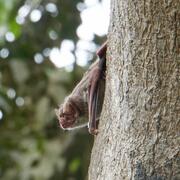
Dynamics of Rabies Transmission in Vampire Bats and Potential for Control Through Vaccination
Vampire bats are the primary spreader of rabies, a lethal disease that harms livestock and people across Latin America. Growth of the livestock industry and environmental changes in this region are leading to the expansion of vampire bats’ habitat range, and it is considered likely this species will move into the southern United States.
White-nose Syndrome Vaccine Updates
Since its emergence in 2006, white-nose syndrome (WNS) continues to spread in North America and has substantially impacted hibernating bat populations, contributing to declines of over 90% in northern long-eared ( Myotis septentrionalis), little brown ( Myotis lucifugus), and tri-colored bat ( Perimyotis subflavus) populations. We are developing tools and management strategies to protect bat...
Field trials for testing of white-nose syndrome vaccine candidates
White-nose syndrome (WNS), caused by the fungus Pseudogymnoascus destructans (Pd), continues to decimate bat populations in North America, and efforts to develop treatment options have intensified. One potential method for controlling WNS is vaccination of bats with specific antigens to elicit a protective immune response.
Development of SARS-CoV-2 vaccine to support black-footed ferret conservation
The SARS-CoV-2 virus is known to infect and cause severe disease, such as respiratory distress and death, in mustelids, including farm-raised mink ( Mustela lutreola and Neovison vison) and domestic ferrets ( M. putorius). This raised concern that the virus may also pose a threat to endangered black-footed ferrets ( Mustela nigripes) managed in captivity for breeding and recovery purposes.
Modeling the response of cave hibernating Myotis species to white-nose syndrome mitigation tactics
Bat Research Research collaboration: Robin Russell (NWHC), Tonie Rocke (NWHC), Wayne Thogmartin (UMESC), Evan Grant (EESC) White-nose syndrome is a fungal disease devastating cave-hibernating bat species ( Myotis spp.) in the eastern United States. Several mitigation tactics have been proposed to alleviate the effects of white-nose syndrome on bats including probiotics and vaccination. Questions...
Vaccines
The USGS National Wildlife Health Center (NWHC) works on developing various disease management tools, including the development of vaccines. Our current work focuses on vaccines for sylvatic plague, white-nose syndrome, and rabies as disease control strategies.
Sylvatic Plague
Sylvatic plague, caused by Yersinia pestis, is a bacterial disease transmitted by fleas that afflicts many mammalian species, including humans.
White-Nose Syndrome
White-nose syndrome (WNS) is an emergent disease of hibernating bats that has spread from the northeastern across United States at an alarming rate.
Vector-Borne Diseases
Vector-borne diseases are transmitted from one animal to another by vectors, including insects, such as mosquitoes or fleas, and arachnids, such as ticks. The USGS National Wildlife Health Center investigates wildlife diseases, including vector-borne diseases, such as West Nile virus and sylvatic plague.
Filter Total Items: 16
No Result Found
Filter Total Items: 139
Infectivity of attenuated poxvirus vaccine vectors and immunogenicity of a raccoonpox vectored rabies vaccine in the Brazilian Free-tailed bat (Tadarida brasiliensis) Infectivity of attenuated poxvirus vaccine vectors and immunogenicity of a raccoonpox vectored rabies vaccine in the Brazilian Free-tailed bat (Tadarida brasiliensis)
Bats (Order Chiroptera) are an abundant group of mammals with tremendous ecological value as insectivores and plant dispersers, but their role as reservoirs of zoonotic diseases has received more attention in the last decade. With the goal of managing disease in free-ranging bats, we tested modified vaccinia Ankara (MVA) and raccoon poxvirus (RCN) as potential vaccine vectors in the...
Authors
Benjamin Stading, Jorge E. Osorio, Andres Velasco-Villa, Michael Smotherman, Brock Kingstad-Bakke, Tonie E. Rocke
Genetic variation at the MHC DRB1 locus is similar across Gunnison's prairie dog (Cynomys gunnisoni) colonies regardless of plague history Genetic variation at the MHC DRB1 locus is similar across Gunnison's prairie dog (Cynomys gunnisoni) colonies regardless of plague history
Yersinia pestis was introduced to North America around 1900 and leads to nearly 100% mortality in prairie dog (Cynomys spp.) colonies during epizootic events, which suggests this pathogen may exert a strong selective force. We characterized genetic diversity at an MHC class II locus (DRB1) in Gunnison's prairie dog (C. gunnisoni) and quantified population genetic structure at the...
Authors
Kacy R. Cobble, Katy J. Califf, Nathan E. Stone, Megan M. Shuey, Dawn Birdsell, Rebecca E. Colman, James M. Schupp, Maliha Aziz, Roger Van Andel, Tonie E. Rocke, David M. Wagner, Joseph D. Busch
Evaluation of Yersinia pestis transmission pathways for sylvatic plague in prairie dog populations in the western U.S. Evaluation of Yersinia pestis transmission pathways for sylvatic plague in prairie dog populations in the western U.S.
Sylvatic plague, caused by the bacterium Yersinia pestis, is periodically responsible for large die-offs in rodent populations that can spillover and cause human mortalities. In the western US, prairie dog populations experience nearly 100% mortality during plague outbreaks, suggesting that multiple transmission pathways combine to amplify plague dynamics. Several alternate pathways in...
Authors
Katherine L. D. Richgels, Robin E. Russell, Gebbiena Bron, Tonie E. Rocke
VNTR diversity in Yersinia pestis isolates from an animal challenge study reveals the potential for in vitro mutations during laboratory cultivation VNTR diversity in Yersinia pestis isolates from an animal challenge study reveals the potential for in vitro mutations during laboratory cultivation
Underlying mutation rates and other evolutionary forces shape the population structure of bacteria in nature. Although easily overlooked, similar forces are at work in the laboratory and may influence observed mutations. Here, we investigated tissue samples and Yersinia pestis isolates from a rodent laboratory challenge with strain CO92 using whole genome sequencing and multi-locus...
Authors
Amy J. Vogler, Roxanne Nottingham, Joseph D. Busch, Jason W. Sahl, Megan M. Shuey, Jeffrey T. Foster, James M. Schupp, Susan Smith, Tonie E. Rocke, Paul Klein, David M. Wagner
Laboratory investigations of African Pouched Rats (Cricetomys gambianus) as a potential reservoir host species for Monkeypox Virus Laboratory investigations of African Pouched Rats (Cricetomys gambianus) as a potential reservoir host species for Monkeypox Virus
Monkeypox is a zoonotic disease endemic to central and western Africa, where it is a major public health concern. Although Monkeypox virus (MPXV) and monkeypox disease in humans have been well characterized, little is known about its natural history, or its maintenance in animal populations of sylvatic reservoir(s). In 2003, several species of rodents imported from Ghana were involved in...
Authors
Christina L. Hutson, Yoshinori J. Nakazawa, Joshua Self, Victoria A. Olson, Russell L. Regnery, Zachary Braden, Sonja Weiss, Jean Malekani, Eddie Jackson, Mallory Tate, Kevin L. Karem, Tonie E. Rocke, Jorge E. Osorio, Inger K. Damon, Darin S. Carroll
Further assessment of Monkeypox Virus infection in Gambian pouched rats (Cricetomys gambianus) using in vivo bioluminescent imaging Further assessment of Monkeypox Virus infection in Gambian pouched rats (Cricetomys gambianus) using in vivo bioluminescent imaging
Monkeypox is a zoonosis clinically similar to smallpox in humans. Recent evidence has shown a potential risk of increased incidence in central Africa. Despite attempts to isolate the virus from wild rodents and other small mammals, no reservoir host has been identified. In 2003,Monkeypox virus (MPXV) was accidentally introduced into the U.S. via the pet trade and was associated with the...
Authors
Elizabeth Falendysz, Juan G. Lopera, Faye Lorenzsonn, Johanna S. Salzer, Christina L. Hutson, Jeffrey Doty, Nadia Gallardo-Romero, Darin S. Carroll, Jorge E. Osorio, Tonie E. Rocke
Apparent field safety of a raccoon poxvirus-vectored plague vaccine in free-ranging prairie dogs (Cynomys spp.), Colorado, USA Apparent field safety of a raccoon poxvirus-vectored plague vaccine in free-ranging prairie dogs (Cynomys spp.), Colorado, USA
Prairie dogs (Cynomys spp.) suffer high rates of mortality from plague. An oral sylvatic plague vaccine using the raccoon poxvirus vector (designated RCN-F1/V307) has been developed for prairie dogs. This vaccine is incorporated into palatable bait along with rhodamine B as a biomarker. We conducted trials in August and September 2012 to demonstrate uptake and apparent safety of the RCN...
Authors
Daniel W. Tripp, Tonie E. Rocke, Sean P. Streich, Rachel C. Abbott, Jorge E. Osorio, Michael W. Miller
Age at vaccination may influence response to sylvatic plague vaccine (SPV) in Gunnison’s prairie dogs (Cynomys gunnisoni) Age at vaccination may influence response to sylvatic plague vaccine (SPV) in Gunnison’s prairie dogs (Cynomys gunnisoni)
Gunnison’s prairie dogs (Cynomys gunnisoni) have been considered at greater risk from Yersinia pestis (plague) infection in the montane portion of their range compared to populations at lower elevations, possibly due to factors related to flea transmission of the bacteria or greater host susceptibility. To test the latter hypothesis and determine whether vaccination against plague with...
Authors
Tonie E. Rocke, Daniel W. Tripp, Faye Lorenzsonn, Elizabeth A. Falendysz, Susan Smith, Judy L. Williamson, Rachel C. Abbott
Attenuation of monkeypox virus by deletion of genomic regions Attenuation of monkeypox virus by deletion of genomic regions
Monkeypox virus (MPXV) is an emerging pathogen from Africa that causes disease similar to smallpox. Two clades with different geographic distributions and virulence have been described. Here, we utilized bioinformatic tools to identify genomic regions in MPXV containing multiple virulence genes and explored their roles in pathogenicity; two selected regions were then deleted singularly...
Authors
Juan G. Lopera, Elizabeth A. Falendysz, Tonie E. Rocke, Jorge E. Osorio
Clostridium botulinum Clostridium botulinum
No abstract available.
Authors
Tonie E. Rocke, Rachel C. Abbott
Evaluation of monkeypox virus infection of prairie dogs (Cynomys ludovicianus) using in vivo bioluminescent imaging Evaluation of monkeypox virus infection of prairie dogs (Cynomys ludovicianus) using in vivo bioluminescent imaging
Monkeypox (MPX) is a re-emerging zoonotic disease that is endemic in Central and West Africa, where it can cause a smallpox-like disease in humans. Despite many epidemiologic and field investigations of MPX, no definitive reservoir species has been identified. Using recombinant viruses expressing the firefly luciferase (luc) gene, we previously demonstrated the suitability of in vivo
Authors
Elizabeth A. Falendysz, Angela M. Londono-Navas, Carol U. Meteyer, Nicola Pussini, Juan G. Lopera, Jorge E. Osorio, Tonie E. Rocke
Managing prairie dogs by managing plague: a vaccine for the future? Managing prairie dogs by managing plague: a vaccine for the future?
The Black-footed Ferret Recovery Implementation Team Executive Committee is conducting a project to develop, and (hopefully) eventually implement, a plague vaccination program for prairie dogs. The project is a component of the Western Association of Fish and Wildlife Agencies Grasslands Conservation Initiative. An effective, field-worthy vaccine against plague could be the biggest...
Authors
Terry B. Johnson, Tonie E. Rocke, Pete Gober, Bill E. Van Pelt, Michael W. Miller, Daniel W. Tripp, Rachel C. Abbott, David L. Bergman
Science and Products
Dynamics of Rabies Transmission in Vampire Bats and Potential for Control Through Vaccination
Vampire bats are the primary spreader of rabies, a lethal disease that harms livestock and people across Latin America. Growth of the livestock industry and environmental changes in this region are leading to the expansion of vampire bats’ habitat range, and it is considered likely this species will move into the southern United States.
White-nose Syndrome Vaccine Updates
Since its emergence in 2006, white-nose syndrome (WNS) continues to spread in North America and has substantially impacted hibernating bat populations, contributing to declines of over 90% in northern long-eared ( Myotis septentrionalis), little brown ( Myotis lucifugus), and tri-colored bat ( Perimyotis subflavus) populations. We are developing tools and management strategies to protect bat...
Field trials for testing of white-nose syndrome vaccine candidates
White-nose syndrome (WNS), caused by the fungus Pseudogymnoascus destructans (Pd), continues to decimate bat populations in North America, and efforts to develop treatment options have intensified. One potential method for controlling WNS is vaccination of bats with specific antigens to elicit a protective immune response.
Development of SARS-CoV-2 vaccine to support black-footed ferret conservation
The SARS-CoV-2 virus is known to infect and cause severe disease, such as respiratory distress and death, in mustelids, including farm-raised mink ( Mustela lutreola and Neovison vison) and domestic ferrets ( M. putorius). This raised concern that the virus may also pose a threat to endangered black-footed ferrets ( Mustela nigripes) managed in captivity for breeding and recovery purposes.
Modeling the response of cave hibernating Myotis species to white-nose syndrome mitigation tactics
Bat Research Research collaboration: Robin Russell (NWHC), Tonie Rocke (NWHC), Wayne Thogmartin (UMESC), Evan Grant (EESC) White-nose syndrome is a fungal disease devastating cave-hibernating bat species ( Myotis spp.) in the eastern United States. Several mitigation tactics have been proposed to alleviate the effects of white-nose syndrome on bats including probiotics and vaccination. Questions...
Vaccines
The USGS National Wildlife Health Center (NWHC) works on developing various disease management tools, including the development of vaccines. Our current work focuses on vaccines for sylvatic plague, white-nose syndrome, and rabies as disease control strategies.
Sylvatic Plague
Sylvatic plague, caused by Yersinia pestis, is a bacterial disease transmitted by fleas that afflicts many mammalian species, including humans.
White-Nose Syndrome
White-nose syndrome (WNS) is an emergent disease of hibernating bats that has spread from the northeastern across United States at an alarming rate.
Vector-Borne Diseases
Vector-borne diseases are transmitted from one animal to another by vectors, including insects, such as mosquitoes or fleas, and arachnids, such as ticks. The USGS National Wildlife Health Center investigates wildlife diseases, including vector-borne diseases, such as West Nile virus and sylvatic plague.
Filter Total Items: 16
No Result Found
Filter Total Items: 139
Infectivity of attenuated poxvirus vaccine vectors and immunogenicity of a raccoonpox vectored rabies vaccine in the Brazilian Free-tailed bat (Tadarida brasiliensis) Infectivity of attenuated poxvirus vaccine vectors and immunogenicity of a raccoonpox vectored rabies vaccine in the Brazilian Free-tailed bat (Tadarida brasiliensis)
Bats (Order Chiroptera) are an abundant group of mammals with tremendous ecological value as insectivores and plant dispersers, but their role as reservoirs of zoonotic diseases has received more attention in the last decade. With the goal of managing disease in free-ranging bats, we tested modified vaccinia Ankara (MVA) and raccoon poxvirus (RCN) as potential vaccine vectors in the...
Authors
Benjamin Stading, Jorge E. Osorio, Andres Velasco-Villa, Michael Smotherman, Brock Kingstad-Bakke, Tonie E. Rocke
Genetic variation at the MHC DRB1 locus is similar across Gunnison's prairie dog (Cynomys gunnisoni) colonies regardless of plague history Genetic variation at the MHC DRB1 locus is similar across Gunnison's prairie dog (Cynomys gunnisoni) colonies regardless of plague history
Yersinia pestis was introduced to North America around 1900 and leads to nearly 100% mortality in prairie dog (Cynomys spp.) colonies during epizootic events, which suggests this pathogen may exert a strong selective force. We characterized genetic diversity at an MHC class II locus (DRB1) in Gunnison's prairie dog (C. gunnisoni) and quantified population genetic structure at the...
Authors
Kacy R. Cobble, Katy J. Califf, Nathan E. Stone, Megan M. Shuey, Dawn Birdsell, Rebecca E. Colman, James M. Schupp, Maliha Aziz, Roger Van Andel, Tonie E. Rocke, David M. Wagner, Joseph D. Busch
Evaluation of Yersinia pestis transmission pathways for sylvatic plague in prairie dog populations in the western U.S. Evaluation of Yersinia pestis transmission pathways for sylvatic plague in prairie dog populations in the western U.S.
Sylvatic plague, caused by the bacterium Yersinia pestis, is periodically responsible for large die-offs in rodent populations that can spillover and cause human mortalities. In the western US, prairie dog populations experience nearly 100% mortality during plague outbreaks, suggesting that multiple transmission pathways combine to amplify plague dynamics. Several alternate pathways in...
Authors
Katherine L. D. Richgels, Robin E. Russell, Gebbiena Bron, Tonie E. Rocke
VNTR diversity in Yersinia pestis isolates from an animal challenge study reveals the potential for in vitro mutations during laboratory cultivation VNTR diversity in Yersinia pestis isolates from an animal challenge study reveals the potential for in vitro mutations during laboratory cultivation
Underlying mutation rates and other evolutionary forces shape the population structure of bacteria in nature. Although easily overlooked, similar forces are at work in the laboratory and may influence observed mutations. Here, we investigated tissue samples and Yersinia pestis isolates from a rodent laboratory challenge with strain CO92 using whole genome sequencing and multi-locus...
Authors
Amy J. Vogler, Roxanne Nottingham, Joseph D. Busch, Jason W. Sahl, Megan M. Shuey, Jeffrey T. Foster, James M. Schupp, Susan Smith, Tonie E. Rocke, Paul Klein, David M. Wagner
Laboratory investigations of African Pouched Rats (Cricetomys gambianus) as a potential reservoir host species for Monkeypox Virus Laboratory investigations of African Pouched Rats (Cricetomys gambianus) as a potential reservoir host species for Monkeypox Virus
Monkeypox is a zoonotic disease endemic to central and western Africa, where it is a major public health concern. Although Monkeypox virus (MPXV) and monkeypox disease in humans have been well characterized, little is known about its natural history, or its maintenance in animal populations of sylvatic reservoir(s). In 2003, several species of rodents imported from Ghana were involved in...
Authors
Christina L. Hutson, Yoshinori J. Nakazawa, Joshua Self, Victoria A. Olson, Russell L. Regnery, Zachary Braden, Sonja Weiss, Jean Malekani, Eddie Jackson, Mallory Tate, Kevin L. Karem, Tonie E. Rocke, Jorge E. Osorio, Inger K. Damon, Darin S. Carroll
Further assessment of Monkeypox Virus infection in Gambian pouched rats (Cricetomys gambianus) using in vivo bioluminescent imaging Further assessment of Monkeypox Virus infection in Gambian pouched rats (Cricetomys gambianus) using in vivo bioluminescent imaging
Monkeypox is a zoonosis clinically similar to smallpox in humans. Recent evidence has shown a potential risk of increased incidence in central Africa. Despite attempts to isolate the virus from wild rodents and other small mammals, no reservoir host has been identified. In 2003,Monkeypox virus (MPXV) was accidentally introduced into the U.S. via the pet trade and was associated with the...
Authors
Elizabeth Falendysz, Juan G. Lopera, Faye Lorenzsonn, Johanna S. Salzer, Christina L. Hutson, Jeffrey Doty, Nadia Gallardo-Romero, Darin S. Carroll, Jorge E. Osorio, Tonie E. Rocke
Apparent field safety of a raccoon poxvirus-vectored plague vaccine in free-ranging prairie dogs (Cynomys spp.), Colorado, USA Apparent field safety of a raccoon poxvirus-vectored plague vaccine in free-ranging prairie dogs (Cynomys spp.), Colorado, USA
Prairie dogs (Cynomys spp.) suffer high rates of mortality from plague. An oral sylvatic plague vaccine using the raccoon poxvirus vector (designated RCN-F1/V307) has been developed for prairie dogs. This vaccine is incorporated into palatable bait along with rhodamine B as a biomarker. We conducted trials in August and September 2012 to demonstrate uptake and apparent safety of the RCN...
Authors
Daniel W. Tripp, Tonie E. Rocke, Sean P. Streich, Rachel C. Abbott, Jorge E. Osorio, Michael W. Miller
Age at vaccination may influence response to sylvatic plague vaccine (SPV) in Gunnison’s prairie dogs (Cynomys gunnisoni) Age at vaccination may influence response to sylvatic plague vaccine (SPV) in Gunnison’s prairie dogs (Cynomys gunnisoni)
Gunnison’s prairie dogs (Cynomys gunnisoni) have been considered at greater risk from Yersinia pestis (plague) infection in the montane portion of their range compared to populations at lower elevations, possibly due to factors related to flea transmission of the bacteria or greater host susceptibility. To test the latter hypothesis and determine whether vaccination against plague with...
Authors
Tonie E. Rocke, Daniel W. Tripp, Faye Lorenzsonn, Elizabeth A. Falendysz, Susan Smith, Judy L. Williamson, Rachel C. Abbott
Attenuation of monkeypox virus by deletion of genomic regions Attenuation of monkeypox virus by deletion of genomic regions
Monkeypox virus (MPXV) is an emerging pathogen from Africa that causes disease similar to smallpox. Two clades with different geographic distributions and virulence have been described. Here, we utilized bioinformatic tools to identify genomic regions in MPXV containing multiple virulence genes and explored their roles in pathogenicity; two selected regions were then deleted singularly...
Authors
Juan G. Lopera, Elizabeth A. Falendysz, Tonie E. Rocke, Jorge E. Osorio
Clostridium botulinum Clostridium botulinum
No abstract available.
Authors
Tonie E. Rocke, Rachel C. Abbott
Evaluation of monkeypox virus infection of prairie dogs (Cynomys ludovicianus) using in vivo bioluminescent imaging Evaluation of monkeypox virus infection of prairie dogs (Cynomys ludovicianus) using in vivo bioluminescent imaging
Monkeypox (MPX) is a re-emerging zoonotic disease that is endemic in Central and West Africa, where it can cause a smallpox-like disease in humans. Despite many epidemiologic and field investigations of MPX, no definitive reservoir species has been identified. Using recombinant viruses expressing the firefly luciferase (luc) gene, we previously demonstrated the suitability of in vivo
Authors
Elizabeth A. Falendysz, Angela M. Londono-Navas, Carol U. Meteyer, Nicola Pussini, Juan G. Lopera, Jorge E. Osorio, Tonie E. Rocke
Managing prairie dogs by managing plague: a vaccine for the future? Managing prairie dogs by managing plague: a vaccine for the future?
The Black-footed Ferret Recovery Implementation Team Executive Committee is conducting a project to develop, and (hopefully) eventually implement, a plague vaccination program for prairie dogs. The project is a component of the Western Association of Fish and Wildlife Agencies Grasslands Conservation Initiative. An effective, field-worthy vaccine against plague could be the biggest...
Authors
Terry B. Johnson, Tonie E. Rocke, Pete Gober, Bill E. Van Pelt, Michael W. Miller, Daniel W. Tripp, Rachel C. Abbott, David L. Bergman