
Tonie Rocke
Tonie Rocke is a Research Epidemiologist at the National Wildlife Health Center.
Science and Products
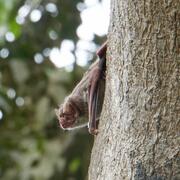
Dynamics of Rabies Transmission in Vampire Bats and Potential for Control Through Vaccination
Vampire bats are the primary spreader of rabies, a lethal disease that harms livestock and people across Latin America. Growth of the livestock industry and environmental changes in this region are leading to the expansion of vampire bats’ habitat range, and it is considered likely this species will move into the southern United States.
White-nose Syndrome Vaccine Updates
Since its emergence in 2006, white-nose syndrome (WNS) continues to spread in North America and has substantially impacted hibernating bat populations, contributing to declines of over 90% in northern long-eared ( Myotis septentrionalis), little brown ( Myotis lucifugus), and tri-colored bat ( Perimyotis subflavus) populations. We are developing tools and management strategies to protect bat...
Field trials for testing of white-nose syndrome vaccine candidates
White-nose syndrome (WNS), caused by the fungus Pseudogymnoascus destructans (Pd), continues to decimate bat populations in North America, and efforts to develop treatment options have intensified. One potential method for controlling WNS is vaccination of bats with specific antigens to elicit a protective immune response.
Development of SARS-CoV-2 vaccine to support black-footed ferret conservation
The SARS-CoV-2 virus is known to infect and cause severe disease, such as respiratory distress and death, in mustelids, including farm-raised mink ( Mustela lutreola and Neovison vison) and domestic ferrets ( M. putorius). This raised concern that the virus may also pose a threat to endangered black-footed ferrets ( Mustela nigripes) managed in captivity for breeding and recovery purposes.
Modeling the response of cave hibernating Myotis species to white-nose syndrome mitigation tactics
Bat Research Research collaboration: Robin Russell (NWHC), Tonie Rocke (NWHC), Wayne Thogmartin (UMESC), Evan Grant (EESC) White-nose syndrome is a fungal disease devastating cave-hibernating bat species ( Myotis spp.) in the eastern United States. Several mitigation tactics have been proposed to alleviate the effects of white-nose syndrome on bats including probiotics and vaccination. Questions...
Vaccines
The USGS National Wildlife Health Center (NWHC) works on developing various disease management tools, including the development of vaccines. Our current work focuses on vaccines for sylvatic plague, white-nose syndrome, and rabies as disease control strategies.
Sylvatic Plague
Sylvatic plague, caused by Yersinia pestis, is a bacterial disease transmitted by fleas that afflicts many mammalian species, including humans.
White-Nose Syndrome
White-nose syndrome (WNS) is an emergent disease of hibernating bats that has spread from the northeastern across United States at an alarming rate.
Vector-Borne Diseases
Vector-borne diseases are transmitted from one animal to another by vectors, including insects, such as mosquitoes or fleas, and arachnids, such as ticks. The USGS National Wildlife Health Center investigates wildlife diseases, including vector-borne diseases, such as West Nile virus and sylvatic plague.
Filter Total Items: 16
No Result Found
Filter Total Items: 139
Antigenic profiling of Yersinia pestis infection in the Wyoming coyote (Canis latrans) Antigenic profiling of Yersinia pestis infection in the Wyoming coyote (Canis latrans)
Although Yersinia pestis is classified as a "high-virulence" pathogen, some host species are variably susceptible to disease. Coyotes (Canis latrans) exhibit mild, if any, symptoms during infection, but antibody production occurs postinfection. This immune response has been reported to be against the F1 capsule, although little subsequent characterization has been conducted. To further...
Authors
G. Vernati, W.H. Edwards, Tonie E. Rocke, S.F. Little, G.P. Andrews
Degradation of the disease-associated prion protein by a serine protease from lichens Degradation of the disease-associated prion protein by a serine protease from lichens
The disease-associated prion protein (PrP(TSE)), the probable etiological agent of the transmissible spongiform encephalopathies (TSEs), is resistant to degradation and can persist in the environment. Lichens, mutualistic symbioses containing fungi, algae, bacteria and occasionally cyanobacteria, are ubiquitous in the environment and have evolved unique biological activities allowing...
Authors
C.J. Johnson, J. P. Bennett, S.M. Biro, J.C. Duque-Velasquez, C.M. Rodriguez, R. A. Bessen, Tonie E. Rocke
Degradation of the disease-associated prion protein by a serine protease from lichens. Degradation of the disease-associated prion protein by a serine protease from lichens.
The disease-associated prion protein (PrPTSE), the probable etiological agent of the transmissible spongiform encephalopathies (TSEs), is resistant to degradation and can persist in the environment. Lichens, mutualistic symbioses containing fungi, algae, bacteria and occasionally cyanobacteria, are ubiquitous in the environment and have evolved unique biological activities allowing their...
Authors
Christopher J. Johnson, James P. Bennett, S.M. Biro, J. C. Duque-Velasquez, Cynthia M. Rodriguez, R. A. Bessen, Tonie E. Rocke
Use of Rhodamine B as a biomarker for oral plague vaccination of prairie dogs Use of Rhodamine B as a biomarker for oral plague vaccination of prairie dogs
Oral vaccination against Yersinia pestis could provide a feasible approach for controlling plague in prairie dogs (Cynomys spp.) for conservation and public health purposes. Biomarkers are useful in wildlife vaccination programs to demonstrate exposure to vaccine baits. Rhodamine B (RB) was tested as a potential biomarker for oral plague vaccination because it allows nonlethal sampling...
Authors
Julia Rodriguez-Ramos Fernandez, Tonie E. Rocke
Proposed link between paralytic syndrome and thiamine deficiency in Swedish gulls not substantiated Proposed link between paralytic syndrome and thiamine deficiency in Swedish gulls not substantiated
No abstract available.
Authors
Tonie E. Rocke, Ian Barker
Consumption of baits containing raccoon pox-based plague vaccines protects black-tailed prairie dogs (Cynomys ludovicianus) Consumption of baits containing raccoon pox-based plague vaccines protects black-tailed prairie dogs (Cynomys ludovicianus)
Baits containing recombinant raccoon poxvirus (RCN) expressing plague antigens (fraction 1 [F1] and a truncated form of the V protein-V307) were offered for voluntary consumption several times over the course of several months to a group of 16 black-tailed prairie dogs (Cynomys ludovicianus). For comparison, another group of prairie dogs (n = 12) was injected subcutaneously (SC) (prime...
Authors
Tonie E. Rocke, Nicola Pussini, Susan Smith, Judy L. Williamson, Bradford Powell, Jorge E. Osorio
Enzootic plague reduces black-footed ferret (Mustela nigripes) survival in Montana Enzootic plague reduces black-footed ferret (Mustela nigripes) survival in Montana
Black-footed ferrets (Mustela nigripes) require extensive prairie dog colonies (Cynomys spp.) to provide habitat and prey. Epizootic plague kills both prairie dogs and ferrets and is a major factor limiting recovery of the highly endangered ferret. In addition to epizootics, we hypothesized that enzootic plague, that is, presence of disease-causing Yersinia pestis without any noticeable...
Authors
Marc R. Matchett, Dean E. Biggins, Valerie Carlson, Bradford Powell, Tonie E. Rocke
Further development of raccoon poxvirus-vectored vaccines against plague (Yersinia pestis) Further development of raccoon poxvirus-vectored vaccines against plague (Yersinia pestis)
In previous studies, we demonstrated protection against plague in mice and prairie dogs using a raccoon pox (RCN) virus-vectored vaccine that expressed the F1 capsular antigen of Yersinia pestis. In order to improve vaccine efficacy, we have now constructed additional RCN-plague vaccines containing two different forms of the lcrV (V) gene, including full-length (Vfull) and a truncated...
Authors
Tonie E. Rocke, Keith P. Iams, S. Dawe, Susan Smith, Judy L. Williamson, Dennis M. Heisey, Jorge E. Osorio
Comparison of monkeypox viruses pathogenesis in mice by in vivo imaging Comparison of monkeypox viruses pathogenesis in mice by in vivo imaging
Monkeypox viruses (MPXV) cause human monkeypox, a zoonotic smallpox-like disease endemic to Africa, and are of worldwide public health and biodefense concern. Using viruses from the Congo (MPXV-2003-Congo-358) and West African (MPXV-2003-USA-044) clades, we constructed recombinant viruses that express the luciferase gene (MPXV-Congo/Luc+and MPXV-USA-Luc+) and compared their viral...
Authors
Jorge E. Osorio, Keith P. Iams, Carol U. Meteyer, Tonie E. Rocke
Attempts to identify Clostridium botulinum toxin in milk from three experimentally intoxicated Holstein cows Attempts to identify Clostridium botulinum toxin in milk from three experimentally intoxicated Holstein cows
Three adult lactating Holstein cows were injected in the subcutaneous abdominal vein with 175 ng/kg of body weight of Clostridium botulinum type C toxin (451 cow median toxic doses) to determine if this botulinum toxin crosses the blood–milk barrier. Whole blood (in sodium heparin) and clotted blood serum samples were taken at 0 min, 10 min, and 3, 6, 9, and 12 h postinoculation. Milk...
Authors
R.B. Moeller, B. Puschner, R.L. Walker, Tonie E. Rocke, S.R. Smith, J.S. Cullor, A.A. Ardans
Protecting Black-Footed Ferrets and Prairie Dogs against sylvatic plague Protecting Black-Footed Ferrets and Prairie Dogs against sylvatic plague
Scientists at the USGS National Wildlife Health Center (NWHC), in collaboration with colleagues at other federal agencies and the University of Wisconsin, are developing and testing vaccines that can be used to protect black-footed ferrets and prairie dogs against plague. The black-footed ferret is commonly regarded as the most endangered mammal in North America, and sylvatic plague is a...
Authors
Tonie E. Rocke
Immunization of black-tailed prairie dog against plague through consumption of vaccine-laden baits Immunization of black-tailed prairie dog against plague through consumption of vaccine-laden baits
Prairie dogs (Cynomys spp.) are highly susceptible to Yersinia pestis and, along with other wild rodents, are significant reservoirs of plague for other wildlife and humans in the western United States. A recombinant raccoon poxvirus, expressing the F1 antigen of Y. pestis, was incorporated into a palatable bait and offered to three groups (n=18, 19, and 20) of black-tailed prairie dogs...
Authors
Tonie E. Rocke, Susan Smith, D.T. Stinchcomb, Jorge E. Osorio
Science and Products
Dynamics of Rabies Transmission in Vampire Bats and Potential for Control Through Vaccination
Vampire bats are the primary spreader of rabies, a lethal disease that harms livestock and people across Latin America. Growth of the livestock industry and environmental changes in this region are leading to the expansion of vampire bats’ habitat range, and it is considered likely this species will move into the southern United States.
White-nose Syndrome Vaccine Updates
Since its emergence in 2006, white-nose syndrome (WNS) continues to spread in North America and has substantially impacted hibernating bat populations, contributing to declines of over 90% in northern long-eared ( Myotis septentrionalis), little brown ( Myotis lucifugus), and tri-colored bat ( Perimyotis subflavus) populations. We are developing tools and management strategies to protect bat...
Field trials for testing of white-nose syndrome vaccine candidates
White-nose syndrome (WNS), caused by the fungus Pseudogymnoascus destructans (Pd), continues to decimate bat populations in North America, and efforts to develop treatment options have intensified. One potential method for controlling WNS is vaccination of bats with specific antigens to elicit a protective immune response.
Development of SARS-CoV-2 vaccine to support black-footed ferret conservation
The SARS-CoV-2 virus is known to infect and cause severe disease, such as respiratory distress and death, in mustelids, including farm-raised mink ( Mustela lutreola and Neovison vison) and domestic ferrets ( M. putorius). This raised concern that the virus may also pose a threat to endangered black-footed ferrets ( Mustela nigripes) managed in captivity for breeding and recovery purposes.
Modeling the response of cave hibernating Myotis species to white-nose syndrome mitigation tactics
Bat Research Research collaboration: Robin Russell (NWHC), Tonie Rocke (NWHC), Wayne Thogmartin (UMESC), Evan Grant (EESC) White-nose syndrome is a fungal disease devastating cave-hibernating bat species ( Myotis spp.) in the eastern United States. Several mitigation tactics have been proposed to alleviate the effects of white-nose syndrome on bats including probiotics and vaccination. Questions...
Vaccines
The USGS National Wildlife Health Center (NWHC) works on developing various disease management tools, including the development of vaccines. Our current work focuses on vaccines for sylvatic plague, white-nose syndrome, and rabies as disease control strategies.
Sylvatic Plague
Sylvatic plague, caused by Yersinia pestis, is a bacterial disease transmitted by fleas that afflicts many mammalian species, including humans.
White-Nose Syndrome
White-nose syndrome (WNS) is an emergent disease of hibernating bats that has spread from the northeastern across United States at an alarming rate.
Vector-Borne Diseases
Vector-borne diseases are transmitted from one animal to another by vectors, including insects, such as mosquitoes or fleas, and arachnids, such as ticks. The USGS National Wildlife Health Center investigates wildlife diseases, including vector-borne diseases, such as West Nile virus and sylvatic plague.
Filter Total Items: 16
No Result Found
Filter Total Items: 139
Antigenic profiling of Yersinia pestis infection in the Wyoming coyote (Canis latrans) Antigenic profiling of Yersinia pestis infection in the Wyoming coyote (Canis latrans)
Although Yersinia pestis is classified as a "high-virulence" pathogen, some host species are variably susceptible to disease. Coyotes (Canis latrans) exhibit mild, if any, symptoms during infection, but antibody production occurs postinfection. This immune response has been reported to be against the F1 capsule, although little subsequent characterization has been conducted. To further...
Authors
G. Vernati, W.H. Edwards, Tonie E. Rocke, S.F. Little, G.P. Andrews
Degradation of the disease-associated prion protein by a serine protease from lichens Degradation of the disease-associated prion protein by a serine protease from lichens
The disease-associated prion protein (PrP(TSE)), the probable etiological agent of the transmissible spongiform encephalopathies (TSEs), is resistant to degradation and can persist in the environment. Lichens, mutualistic symbioses containing fungi, algae, bacteria and occasionally cyanobacteria, are ubiquitous in the environment and have evolved unique biological activities allowing...
Authors
C.J. Johnson, J. P. Bennett, S.M. Biro, J.C. Duque-Velasquez, C.M. Rodriguez, R. A. Bessen, Tonie E. Rocke
Degradation of the disease-associated prion protein by a serine protease from lichens. Degradation of the disease-associated prion protein by a serine protease from lichens.
The disease-associated prion protein (PrPTSE), the probable etiological agent of the transmissible spongiform encephalopathies (TSEs), is resistant to degradation and can persist in the environment. Lichens, mutualistic symbioses containing fungi, algae, bacteria and occasionally cyanobacteria, are ubiquitous in the environment and have evolved unique biological activities allowing their...
Authors
Christopher J. Johnson, James P. Bennett, S.M. Biro, J. C. Duque-Velasquez, Cynthia M. Rodriguez, R. A. Bessen, Tonie E. Rocke
Use of Rhodamine B as a biomarker for oral plague vaccination of prairie dogs Use of Rhodamine B as a biomarker for oral plague vaccination of prairie dogs
Oral vaccination against Yersinia pestis could provide a feasible approach for controlling plague in prairie dogs (Cynomys spp.) for conservation and public health purposes. Biomarkers are useful in wildlife vaccination programs to demonstrate exposure to vaccine baits. Rhodamine B (RB) was tested as a potential biomarker for oral plague vaccination because it allows nonlethal sampling...
Authors
Julia Rodriguez-Ramos Fernandez, Tonie E. Rocke
Proposed link between paralytic syndrome and thiamine deficiency in Swedish gulls not substantiated Proposed link between paralytic syndrome and thiamine deficiency in Swedish gulls not substantiated
No abstract available.
Authors
Tonie E. Rocke, Ian Barker
Consumption of baits containing raccoon pox-based plague vaccines protects black-tailed prairie dogs (Cynomys ludovicianus) Consumption of baits containing raccoon pox-based plague vaccines protects black-tailed prairie dogs (Cynomys ludovicianus)
Baits containing recombinant raccoon poxvirus (RCN) expressing plague antigens (fraction 1 [F1] and a truncated form of the V protein-V307) were offered for voluntary consumption several times over the course of several months to a group of 16 black-tailed prairie dogs (Cynomys ludovicianus). For comparison, another group of prairie dogs (n = 12) was injected subcutaneously (SC) (prime...
Authors
Tonie E. Rocke, Nicola Pussini, Susan Smith, Judy L. Williamson, Bradford Powell, Jorge E. Osorio
Enzootic plague reduces black-footed ferret (Mustela nigripes) survival in Montana Enzootic plague reduces black-footed ferret (Mustela nigripes) survival in Montana
Black-footed ferrets (Mustela nigripes) require extensive prairie dog colonies (Cynomys spp.) to provide habitat and prey. Epizootic plague kills both prairie dogs and ferrets and is a major factor limiting recovery of the highly endangered ferret. In addition to epizootics, we hypothesized that enzootic plague, that is, presence of disease-causing Yersinia pestis without any noticeable...
Authors
Marc R. Matchett, Dean E. Biggins, Valerie Carlson, Bradford Powell, Tonie E. Rocke
Further development of raccoon poxvirus-vectored vaccines against plague (Yersinia pestis) Further development of raccoon poxvirus-vectored vaccines against plague (Yersinia pestis)
In previous studies, we demonstrated protection against plague in mice and prairie dogs using a raccoon pox (RCN) virus-vectored vaccine that expressed the F1 capsular antigen of Yersinia pestis. In order to improve vaccine efficacy, we have now constructed additional RCN-plague vaccines containing two different forms of the lcrV (V) gene, including full-length (Vfull) and a truncated...
Authors
Tonie E. Rocke, Keith P. Iams, S. Dawe, Susan Smith, Judy L. Williamson, Dennis M. Heisey, Jorge E. Osorio
Comparison of monkeypox viruses pathogenesis in mice by in vivo imaging Comparison of monkeypox viruses pathogenesis in mice by in vivo imaging
Monkeypox viruses (MPXV) cause human monkeypox, a zoonotic smallpox-like disease endemic to Africa, and are of worldwide public health and biodefense concern. Using viruses from the Congo (MPXV-2003-Congo-358) and West African (MPXV-2003-USA-044) clades, we constructed recombinant viruses that express the luciferase gene (MPXV-Congo/Luc+and MPXV-USA-Luc+) and compared their viral...
Authors
Jorge E. Osorio, Keith P. Iams, Carol U. Meteyer, Tonie E. Rocke
Attempts to identify Clostridium botulinum toxin in milk from three experimentally intoxicated Holstein cows Attempts to identify Clostridium botulinum toxin in milk from three experimentally intoxicated Holstein cows
Three adult lactating Holstein cows were injected in the subcutaneous abdominal vein with 175 ng/kg of body weight of Clostridium botulinum type C toxin (451 cow median toxic doses) to determine if this botulinum toxin crosses the blood–milk barrier. Whole blood (in sodium heparin) and clotted blood serum samples were taken at 0 min, 10 min, and 3, 6, 9, and 12 h postinoculation. Milk...
Authors
R.B. Moeller, B. Puschner, R.L. Walker, Tonie E. Rocke, S.R. Smith, J.S. Cullor, A.A. Ardans
Protecting Black-Footed Ferrets and Prairie Dogs against sylvatic plague Protecting Black-Footed Ferrets and Prairie Dogs against sylvatic plague
Scientists at the USGS National Wildlife Health Center (NWHC), in collaboration with colleagues at other federal agencies and the University of Wisconsin, are developing and testing vaccines that can be used to protect black-footed ferrets and prairie dogs against plague. The black-footed ferret is commonly regarded as the most endangered mammal in North America, and sylvatic plague is a...
Authors
Tonie E. Rocke
Immunization of black-tailed prairie dog against plague through consumption of vaccine-laden baits Immunization of black-tailed prairie dog against plague through consumption of vaccine-laden baits
Prairie dogs (Cynomys spp.) are highly susceptible to Yersinia pestis and, along with other wild rodents, are significant reservoirs of plague for other wildlife and humans in the western United States. A recombinant raccoon poxvirus, expressing the F1 antigen of Y. pestis, was incorporated into a palatable bait and offered to three groups (n=18, 19, and 20) of black-tailed prairie dogs...
Authors
Tonie E. Rocke, Susan Smith, D.T. Stinchcomb, Jorge E. Osorio