



River DroughtCast
Streamflow provides the foundation for much of America's water security, supporting everything from crop irrigation and city water supplies to power generation and aquatic habitats. Streamflow droughts threaten all these vital functions, yet communities have historically managed water resources with limited advance notification.
River DroughtCast is a new machine learning system that predicts streamflow droughts — specifically “streamflow” droughts when rivers and streams drop to unusually low levels— up to 90 days in advance. Each prediction comes with uncertainty information to help users understand the confidence level of the forecast. This is the first tool of its kind to provide early notice for river and stream conditions that directly affect America's water supplies.
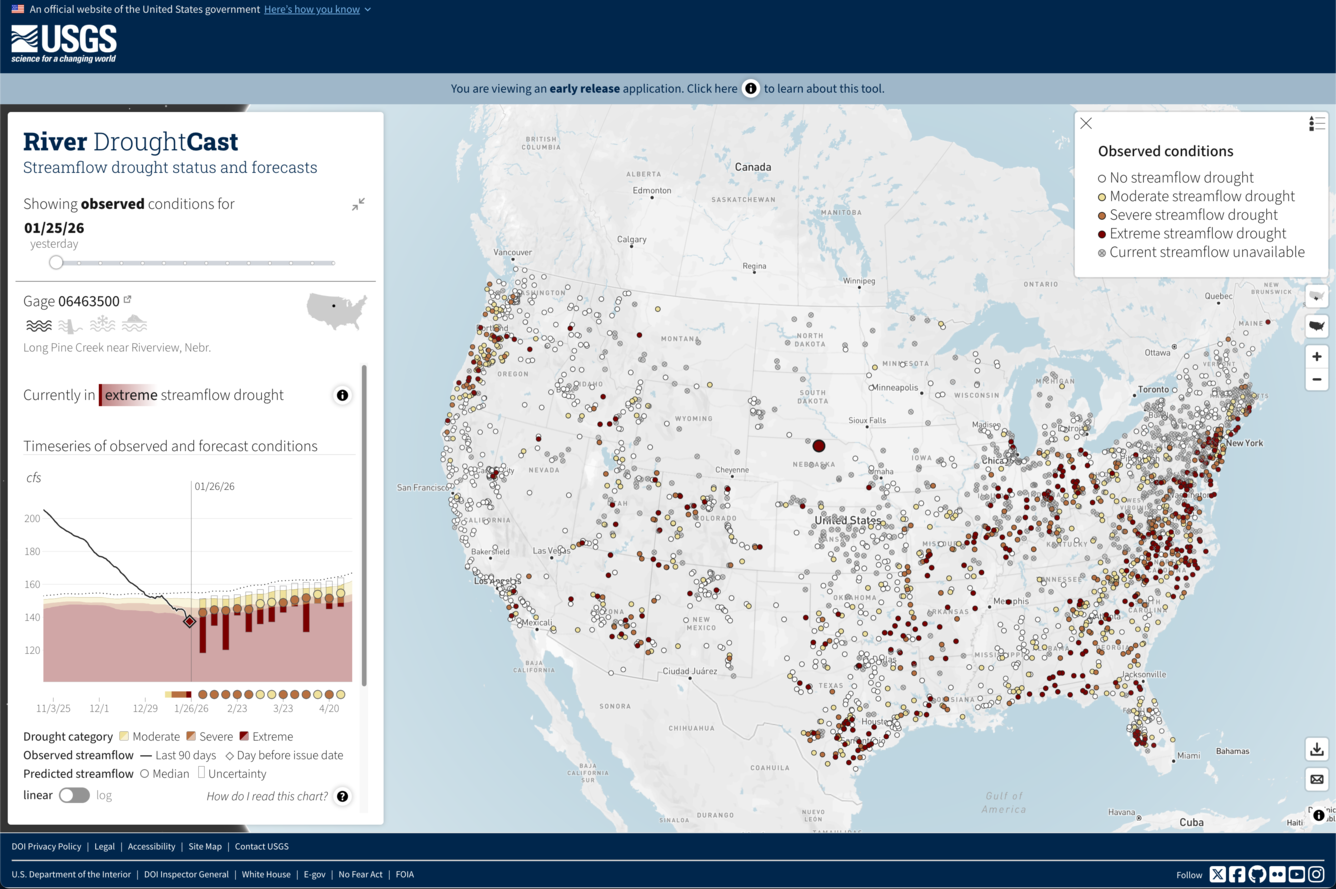
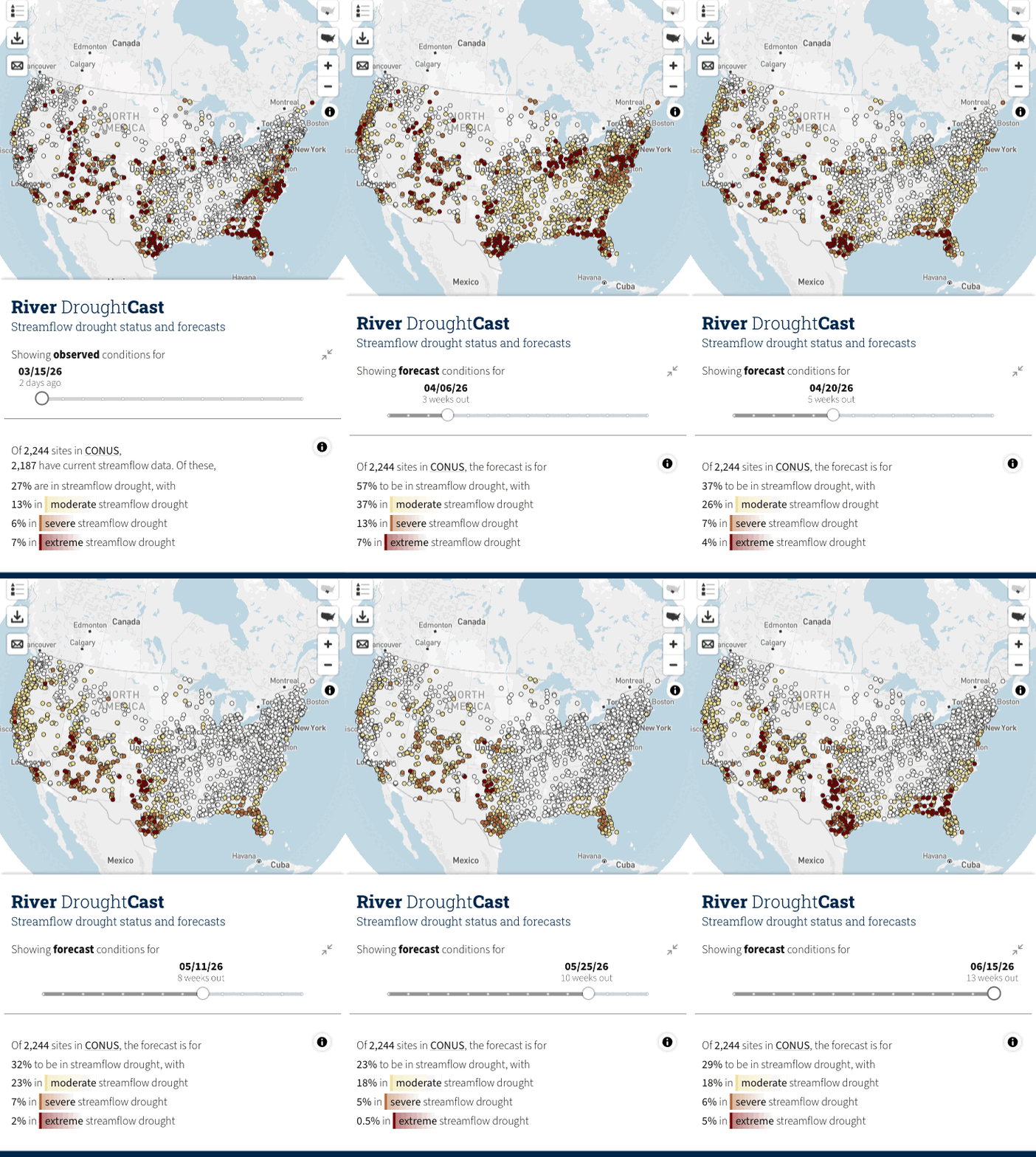
Users can explore current conditions and forecasts through an interactive online map, view details for sites of interest, and download detailed data for planning purposes. The system updates daily with fresh predictions based on the latest conditions. The tool complements existing forecasting systems from other agencies, contributing to a critical gap in the 30 to 90-day timeframe when advance planning proves most valuable for water resource decisions.
Municipal water managers can now adjust reservoir operations weeks in advance. With advanced notification, farmers relying on surface water irrigation can modify planting schedules and shift to more drought-resistant crops. Recreation managers gain the ability to prepare for potential impacts to boating, fishing and other water-dependent activities. Emergency responders can prepare drought contingency measures before water shortages develop.
Related
Related Science
Drought Prediction Science
Related
Related Science