



On Thursday, February 26, USGS Hawaiian Volcano Observatory scientists completed a monitoring helicopter overflight of Halema‘uma‘u crater at the summit of Kīlauea.
Images
Kīlauea images of eruptive activity, field work, and more.
Filter Total Items: 3024
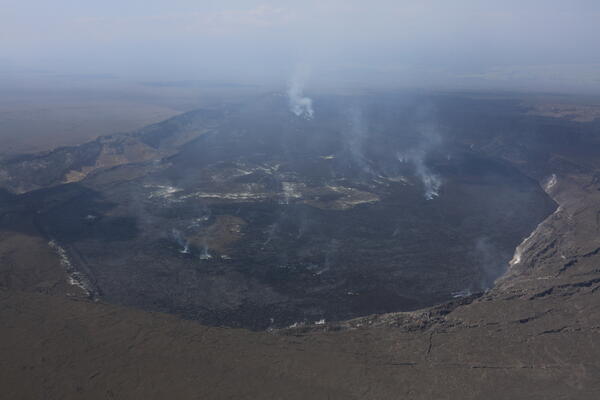
February 26, 2026 — Overview of Halema‘uma‘u
On Thursday, February 26, USGS Hawaiian Volcano Observatory scientists completed a monitoring helicopter overflight of Halema‘uma‘u crater at the summit of Kīlauea.
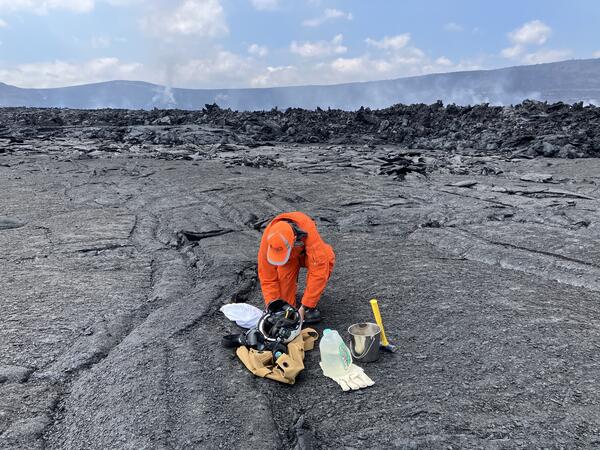
February 26, 2026 — Sampling on Halemaʻumaʻu crater floor, Kīlauea summit
February 26, 2026 — Sampling on Halemaʻumaʻu crater floor, Kīlauea summitAt the end of their Kīlauea summit overflight on Thursday, February 26, two USGS Hawaiian Volcano Observatory geologists were dropped off on the floor of Halema‘uma‘u crater to sample lava from summit eruption episode 42 on February 15.
February 26, 2026 — Sampling on Halemaʻumaʻu crater floor, Kīlauea summit
February 26, 2026 — Sampling on Halemaʻumaʻu crater floor, Kīlauea summitAt the end of their Kīlauea summit overflight on Thursday, February 26, two USGS Hawaiian Volcano Observatory geologists were dropped off on the floor of Halema‘uma‘u crater to sample lava from summit eruption episode 42 on February 15.
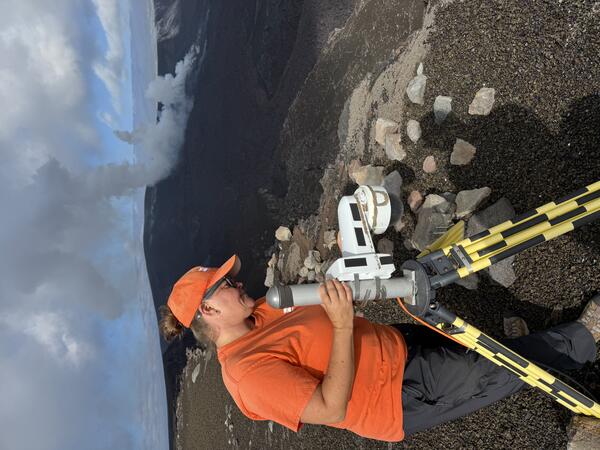
February 26, 2026 — Updating the V3 livestreaming camera, Kīlauea summit
February 26, 2026 — Updating the V3 livestreaming camera, Kīlauea summitOn February 26, 2026, USGS Hawaiian Volcano Observatory staff visited and serviced the V3 livestreaming camera on the south rim of Halemaʻumaʻu crater, at the summit of Kīlauea. USGS photo by M. Patrick.
February 26, 2026 — Updating the V3 livestreaming camera, Kīlauea summit
February 26, 2026 — Updating the V3 livestreaming camera, Kīlauea summitOn February 26, 2026, USGS Hawaiian Volcano Observatory staff visited and serviced the V3 livestreaming camera on the south rim of Halemaʻumaʻu crater, at the summit of Kīlauea. USGS photo by M. Patrick.
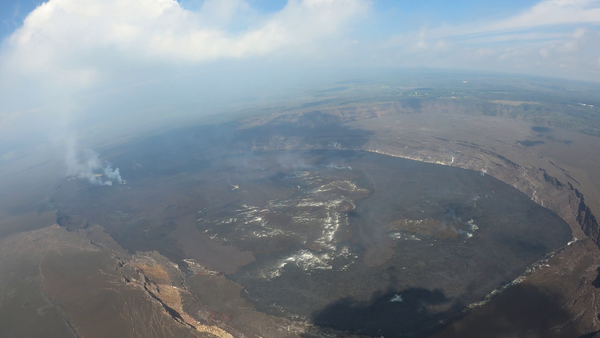
February 26, 2026 — Halemaʻumaʻu overflight, Kīlauea summit
February 26, 2026 — Halemaʻumaʻu overflight, Kīlauea summitUSGS Hawaiian Volcano Observatory (HVO) geologists on a routine KILAUEA summit monitoring helicopter overflight on Thursday, February 26, collected visual and thermal images to map out the changes on the crater floor following episode 42 lava fountaining at KILAUEA summit that took place on February 15, 2026.
February 26, 2026 — Halemaʻumaʻu overflight, Kīlauea summit
February 26, 2026 — Halemaʻumaʻu overflight, Kīlauea summitUSGS Hawaiian Volcano Observatory (HVO) geologists on a routine KILAUEA summit monitoring helicopter overflight on Thursday, February 26, collected visual and thermal images to map out the changes on the crater floor following episode 42 lava fountaining at KILAUEA summit that took place on February 15, 2026.
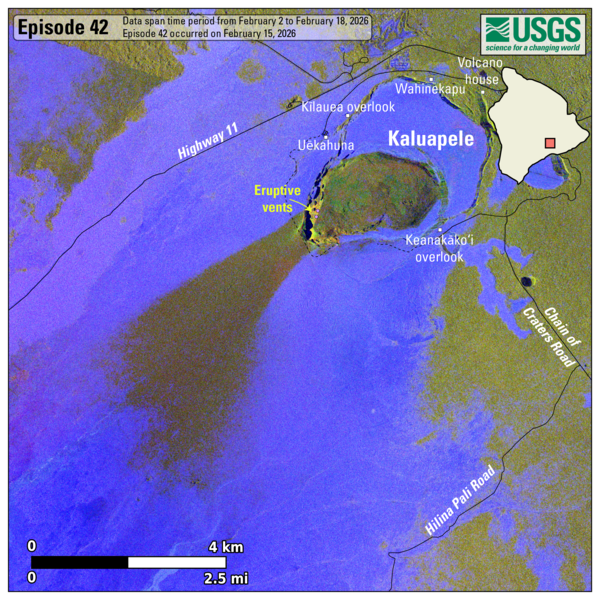
February 18, 2026 — Kīlauea lava flow and tephra fall map following episode 24
February 18, 2026 — Kīlauea lava flow and tephra fall map following episode 24This map shows lava flow and tephra accumulation at the summit of Kīlauea volcano associated with episode 42 of the ongoing eruption in Halemaʻumaʻu that started on December 23, 2024, using data recorded by the Italian Space Agency's (ASI) COSMO-SkyMed Second Generation satellite constellation.
February 18, 2026 — Kīlauea lava flow and tephra fall map following episode 24
February 18, 2026 — Kīlauea lava flow and tephra fall map following episode 24This map shows lava flow and tephra accumulation at the summit of Kīlauea volcano associated with episode 42 of the ongoing eruption in Halemaʻumaʻu that started on December 23, 2024, using data recorded by the Italian Space Agency's (ASI) COSMO-SkyMed Second Generation satellite constellation.
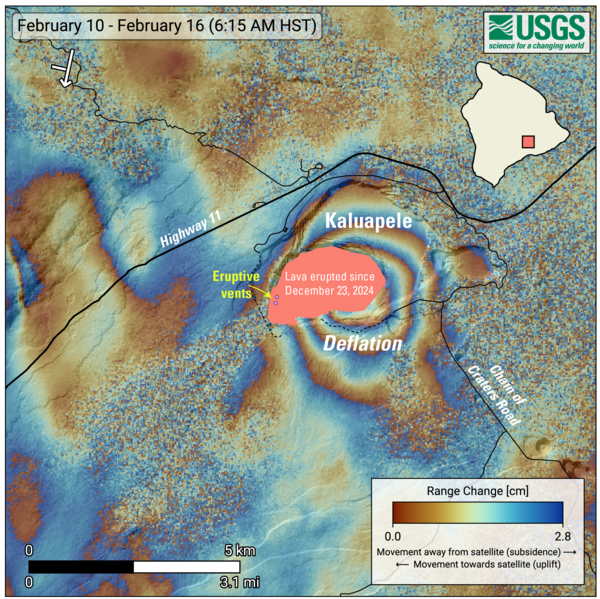
February 16, 2026—InSAR image of Kīlauea deformation associated with episode 42 of ongoing summit eruption
February 16, 2026—InSAR image of Kīlauea deformation associated with episode 42 of ongoing summit eruptionThis map shows recent deformation at Kīlauea, over the timeframe of February 10–16, 2026.
February 16, 2026—InSAR image of Kīlauea deformation associated with episode 42 of ongoing summit eruption
February 16, 2026—InSAR image of Kīlauea deformation associated with episode 42 of ongoing summit eruptionThis map shows recent deformation at Kīlauea, over the timeframe of February 10–16, 2026.
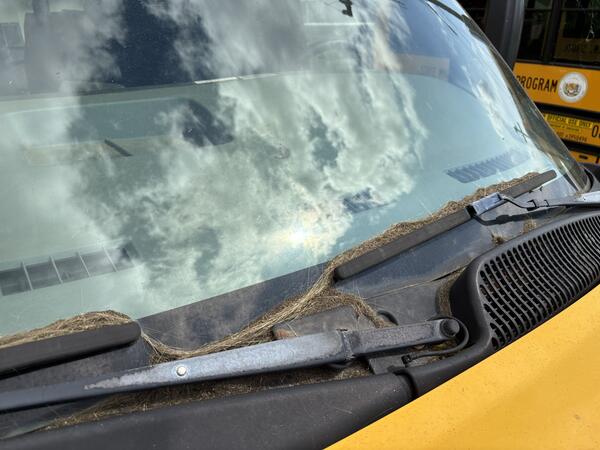
February 16, 2026 — Kīlauea episode 42 ash in Pāhala
February 16, 2026 — Kīlauea episode 42 ash in PāhalaTephra accumulated in the community of Pāhala, about 18.5 miles (30 km) to the southwest of north and south vents in Halema‘uma‘u crater at the summit of Kīlauea. A few hours after episode 42 started on February 15, 2026, fine ash of less than 0.03 inch (1 mm) diameter began to accumulate on surfaces.
February 16, 2026 — Kīlauea episode 42 ash in Pāhala
February 16, 2026 — Kīlauea episode 42 ash in PāhalaTephra accumulated in the community of Pāhala, about 18.5 miles (30 km) to the southwest of north and south vents in Halema‘uma‘u crater at the summit of Kīlauea. A few hours after episode 42 started on February 15, 2026, fine ash of less than 0.03 inch (1 mm) diameter began to accumulate on surfaces.
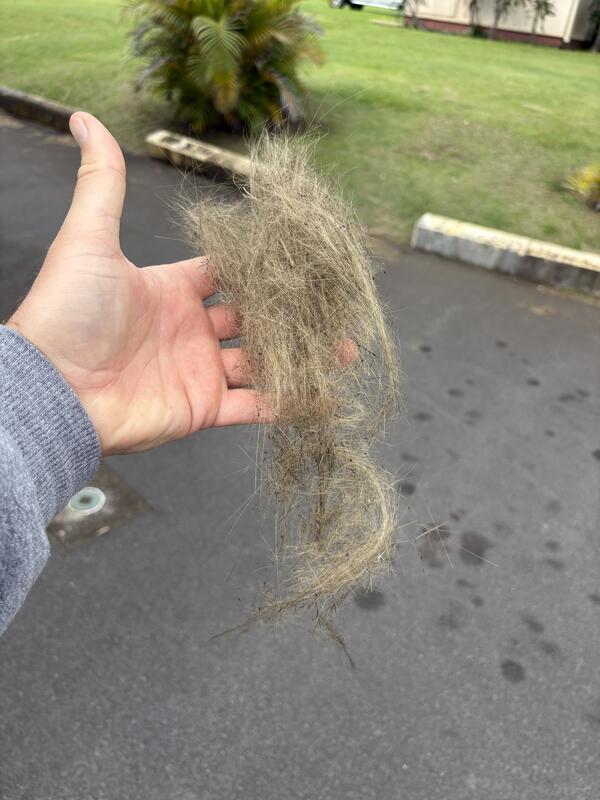
February 17, 2026 — Kīlauea episode 42 Pele's hair in Pāhala
February 17, 2026 — Kīlauea episode 42 Pele's hair in PāhalaLong strands of Pele's hair, which is made of volcanic glass, drifted on the wind to the southwest during episode 42 of Kīlauea summit lava fountaining on February 15, 2026. This photo shows a bundle of these long strands of Pele's hair after they had blown around in the wind in the community of Pāhala and became tangled up. USGS photo by D. Downs.
February 17, 2026 — Kīlauea episode 42 Pele's hair in Pāhala
February 17, 2026 — Kīlauea episode 42 Pele's hair in PāhalaLong strands of Pele's hair, which is made of volcanic glass, drifted on the wind to the southwest during episode 42 of Kīlauea summit lava fountaining on February 15, 2026. This photo shows a bundle of these long strands of Pele's hair after they had blown around in the wind in the community of Pāhala and became tangled up. USGS photo by D. Downs.
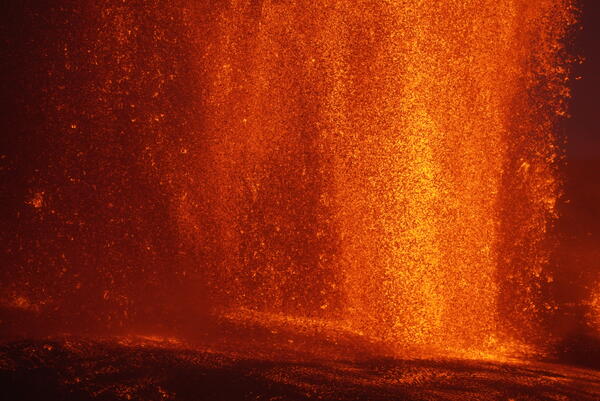
February 15, 2026 — Kīlauea episode 42 lava fountains
February 15, 2026 — Kīlauea episode 42 lava fountainsA telephoto view of the south vent fountain, taken from the south rim of Halema‘uma‘u crater at night on February 15, 2026. Molten clasts falling near the base of the fountain were feeding a channelized flow that carried lava into the eastern portion of the crater.
February 15, 2026 — Kīlauea episode 42 lava fountains
February 15, 2026 — Kīlauea episode 42 lava fountainsA telephoto view of the south vent fountain, taken from the south rim of Halema‘uma‘u crater at night on February 15, 2026. Molten clasts falling near the base of the fountain were feeding a channelized flow that carried lava into the eastern portion of the crater.
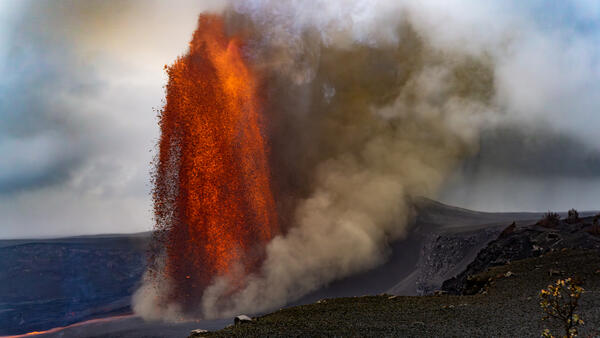
February 15, 2026 — North vent lava fountain during episode 42 at Kīlauea summit
February 15, 2026 — North vent lava fountain during episode 42 at Kīlauea summitThis photo north vent lava fountain during Kīlauea summit eruption episode 42 was captured from the northwest rim of Halema‘uma‘u crater on February 15, 2026.
February 15, 2026 — North vent lava fountain during episode 42 at Kīlauea summit
February 15, 2026 — North vent lava fountain during episode 42 at Kīlauea summitThis photo north vent lava fountain during Kīlauea summit eruption episode 42 was captured from the northwest rim of Halema‘uma‘u crater on February 15, 2026.
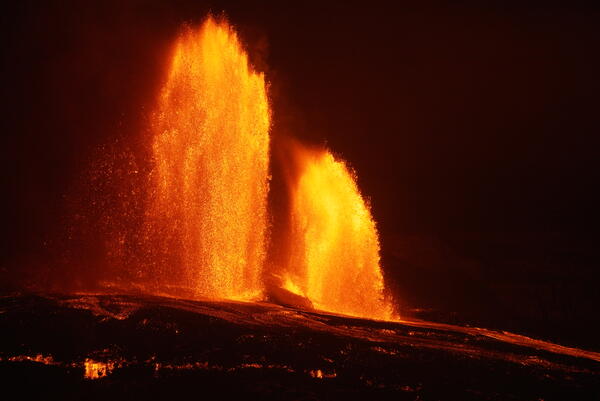
February 15, 2026 — Kīlauea night time lava fountains during episode 42
February 15, 2026 — Kīlauea night time lava fountains during episode 42This night-time photo shows north and south vent lava fountains at the summit of Kīlauea, from the south rim of the Halema‘uma‘u crater. The south fountain (left) was fluctuating in height over timescales of seconds. At the bottom of the photo, a spatter-fed ‘a‘ā flow slowly advances, with clinker collapsing along its front. USGS photo by M. Patrick.
February 15, 2026 — Kīlauea night time lava fountains during episode 42
February 15, 2026 — Kīlauea night time lava fountains during episode 42This night-time photo shows north and south vent lava fountains at the summit of Kīlauea, from the south rim of the Halema‘uma‘u crater. The south fountain (left) was fluctuating in height over timescales of seconds. At the bottom of the photo, a spatter-fed ‘a‘ā flow slowly advances, with clinker collapsing along its front. USGS photo by M. Patrick.
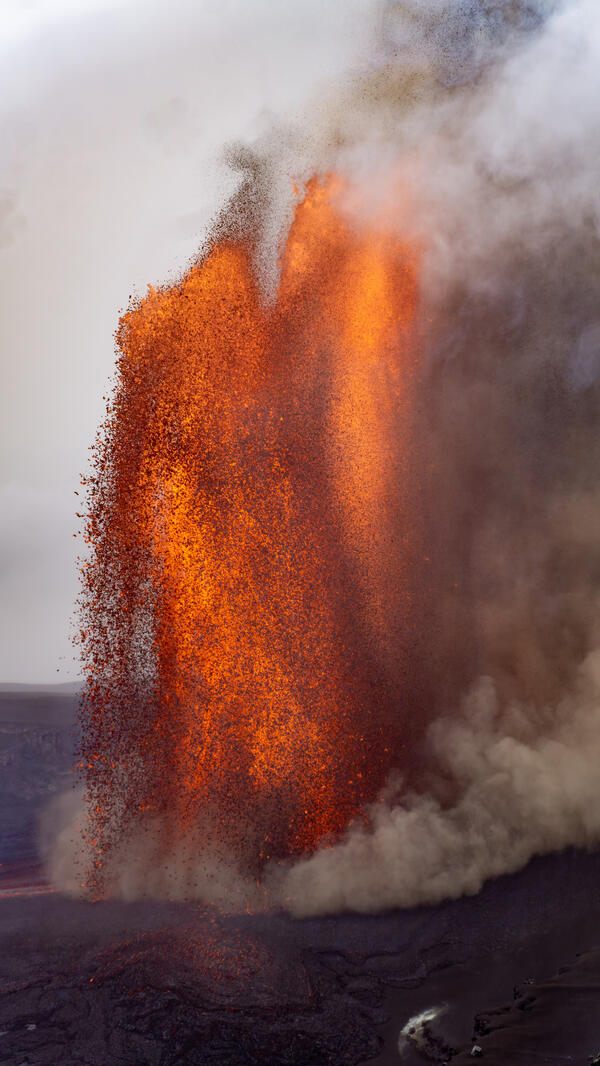
February 15, 2026 — Semi-molten clasts falling from the north vent feed into Kīlauea lava flow during episode 42
February 15, 2026 — Semi-molten clasts falling from the north vent feed into Kīlauea lava flow during episode 42Photograph of the north vent fountain during episode 42, taken from the northwest rim of Halema‘uma‘u crater on February 15, 2026. Semi-molten clasts feed a small ‘a‘ā lava flow carrying lava north from the base of the north vent lava fountain within the caldera.
February 15, 2026 — Semi-molten clasts falling from the north vent feed into Kīlauea lava flow during episode 42
February 15, 2026 — Semi-molten clasts falling from the north vent feed into Kīlauea lava flow during episode 42Photograph of the north vent fountain during episode 42, taken from the northwest rim of Halema‘uma‘u crater on February 15, 2026. Semi-molten clasts feed a small ‘a‘ā lava flow carrying lava north from the base of the north vent lava fountain within the caldera.
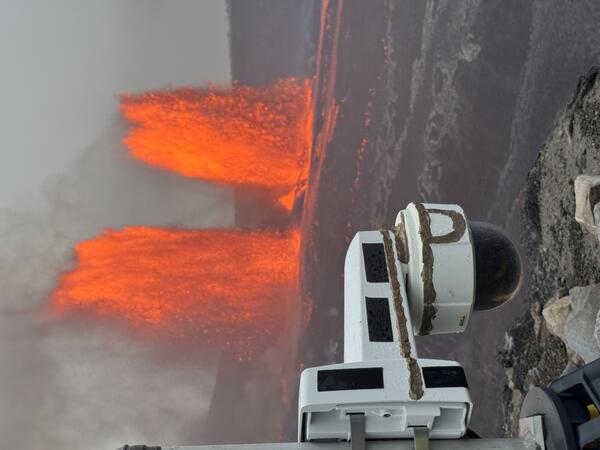
February 15, 2026 — V3cam monitors Kīlauea lava fountains during episode 42
February 15, 2026 — V3cam monitors Kīlauea lava fountains during episode 42The V3cam livestream webcam monitors the episode 42 lava fountaining from the south rim of Kīlauea caldera, USGS photo by M. Patrick on February 15, 2026.
February 15, 2026 — V3cam monitors Kīlauea lava fountains during episode 42
February 15, 2026 — V3cam monitors Kīlauea lava fountains during episode 42The V3cam livestream webcam monitors the episode 42 lava fountaining from the south rim of Kīlauea caldera, USGS photo by M. Patrick on February 15, 2026.
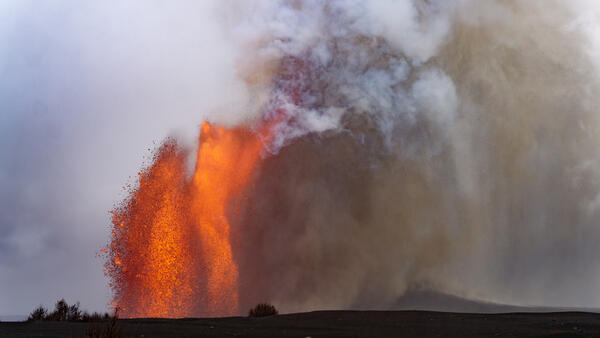
February 15, 2026 — Side-by-side lava fountains during episode 42 at the summit of Kīlauea
February 15, 2026 — Side-by-side lava fountains during episode 42 at the summit of KīlaueaLate in the afternoon on Sunday, February 15, USGS Hawaiian Volcano Observatory scientists monitoring Kīlauea summit eruption episode 42 hiked west of Halema‘uma‘u crater for an angle of both the north and south vent lava fountains side by side. During most of episode, the south vent lava fountain (right) was slightly taller than the north vent's (left).
February 15, 2026 — Side-by-side lava fountains during episode 42 at the summit of Kīlauea
February 15, 2026 — Side-by-side lava fountains during episode 42 at the summit of KīlaueaLate in the afternoon on Sunday, February 15, USGS Hawaiian Volcano Observatory scientists monitoring Kīlauea summit eruption episode 42 hiked west of Halema‘uma‘u crater for an angle of both the north and south vent lava fountains side by side. During most of episode, the south vent lava fountain (right) was slightly taller than the north vent's (left).
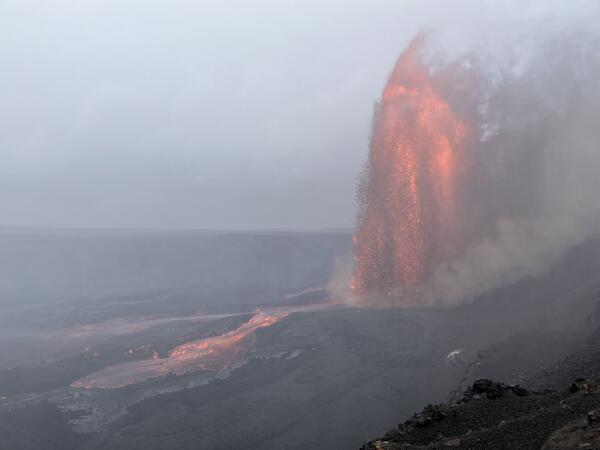
February 15, 2026 — North vent channel realignment during episode 42 at Kīlauea summit
February 15, 2026 — North vent channel realignment during episode 42 at Kīlauea summitOn Sunday, February 15, USGS Hawaiian Volcano Observatory scientists monitored episode 42 of the Kīlauea summit eruption from the northwest rim of Halema‘uma‘u crater. Despite driving rains, this location provided good views of the north vent's lava fountains and flows on the crater floor. Around 4:20 p.m.
February 15, 2026 — North vent channel realignment during episode 42 at Kīlauea summit
February 15, 2026 — North vent channel realignment during episode 42 at Kīlauea summitOn Sunday, February 15, USGS Hawaiian Volcano Observatory scientists monitored episode 42 of the Kīlauea summit eruption from the northwest rim of Halema‘uma‘u crater. Despite driving rains, this location provided good views of the north vent's lava fountains and flows on the crater floor. Around 4:20 p.m.
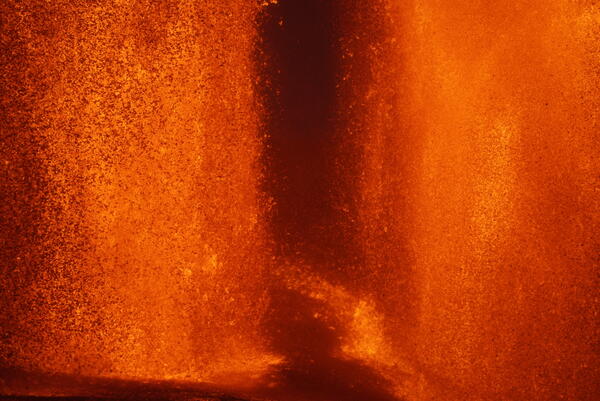
February 15, 2026 — Kīlauea fountain bases during episode 42
February 15, 2026 — Kīlauea fountain bases during episode 42A telephoto view of the base of the two lava fountains, and the narrow gap that was present between them, during episode 42 of the Kīlauea summit eruption on February 15, 2026. On the south side of the north fountain (right), a very small third fountain was active, with frequent bubble bursting. USGS photo by M. Patrick.
February 15, 2026 — Kīlauea fountain bases during episode 42
February 15, 2026 — Kīlauea fountain bases during episode 42A telephoto view of the base of the two lava fountains, and the narrow gap that was present between them, during episode 42 of the Kīlauea summit eruption on February 15, 2026. On the south side of the north fountain (right), a very small third fountain was active, with frequent bubble bursting. USGS photo by M. Patrick.
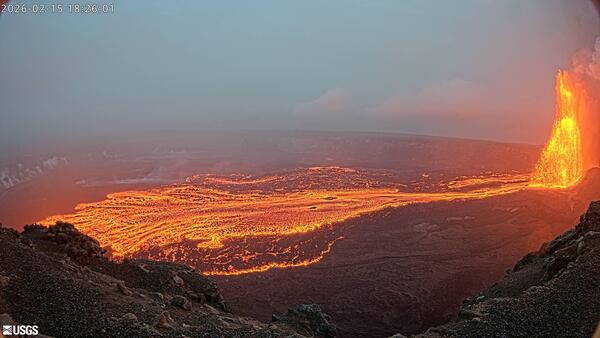
February 15, 2026 — Kīlauea episode 42 from the KWcam
February 15, 2026 — Kīlauea episode 42 from the KWcamThe KWcam is located on the northwest rim of Halemaʻumaʻu crater at the summit of Kīlauea. The camera is one of many located around the Kaluapele, Kīlauea summit caldera, that aid in monitoring conditions. This image was captured 6:26 p.m. on February 15, 2026, during episode 42 of lava fountaining. USGS photo.
February 15, 2026 — Kīlauea episode 42 from the KWcam
February 15, 2026 — Kīlauea episode 42 from the KWcamThe KWcam is located on the northwest rim of Halemaʻumaʻu crater at the summit of Kīlauea. The camera is one of many located around the Kaluapele, Kīlauea summit caldera, that aid in monitoring conditions. This image was captured 6:26 p.m. on February 15, 2026, during episode 42 of lava fountaining. USGS photo.
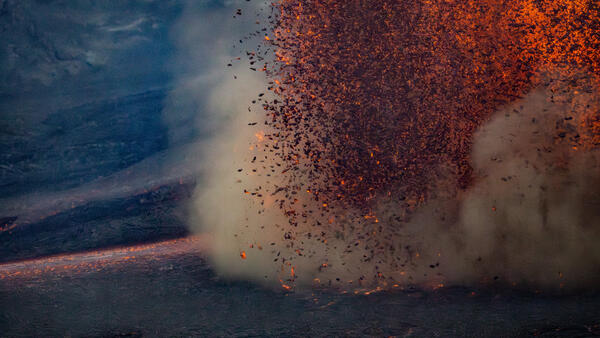
February 15, 2026 — Semi-molten clasts from the north vent fountain feed into lava flow at Kīlauea during episode 42
February 15, 2026 — Semi-molten clasts from the north vent fountain feed into lava flow at Kīlauea during episode 42Photograph of the north vent fountain during episode 42, taken from the northwest rim of Halema‘uma‘u crater on February 15, 2026. Semi-molten clasts feed a small ‘a‘ā lava flow carrying lava north from the base of the north vent lava fountain within the caldera.
February 15, 2026 — Semi-molten clasts from the north vent fountain feed into lava flow at Kīlauea during episode 42
February 15, 2026 — Semi-molten clasts from the north vent fountain feed into lava flow at Kīlauea during episode 42Photograph of the north vent fountain during episode 42, taken from the northwest rim of Halema‘uma‘u crater on February 15, 2026. Semi-molten clasts feed a small ‘a‘ā lava flow carrying lava north from the base of the north vent lava fountain within the caldera.
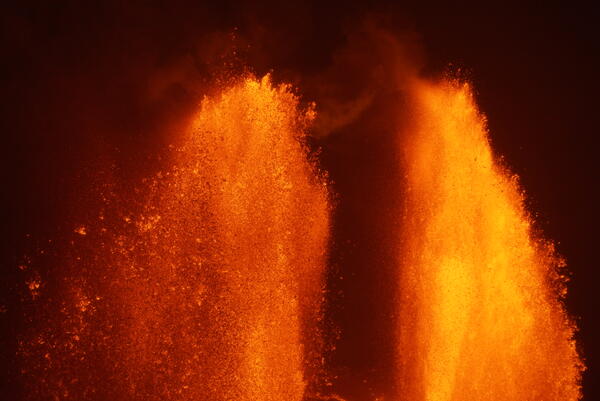
February 15, 2026 — Kīlauea fountain tops during episode 42
February 15, 2026 — Kīlauea fountain tops during episode 42At brief moments during episode 42 Kīlauea summit lava fountaining on February 15, 2026, the south (left) and north (right) fountains were similar in height, and wispy fingers of gas and small particles from the two fountains mingled in the gap between them. USGS photo by M. Patrick.
February 15, 2026 — Kīlauea fountain tops during episode 42
February 15, 2026 — Kīlauea fountain tops during episode 42At brief moments during episode 42 Kīlauea summit lava fountaining on February 15, 2026, the south (left) and north (right) fountains were similar in height, and wispy fingers of gas and small particles from the two fountains mingled in the gap between them. USGS photo by M. Patrick.
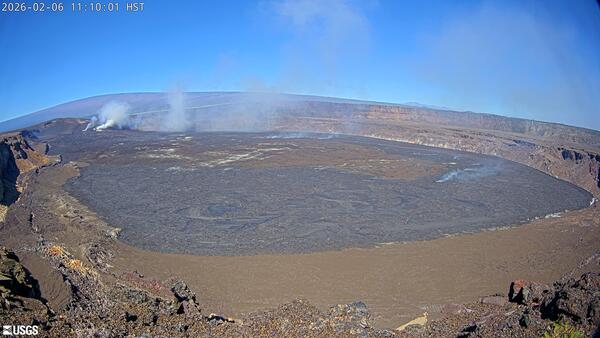
Kīlauea summit caldera from B1 camera on February 6, 2026
Kīlauea summit caldera from B1 camera on February 6, 2026View of Kaluapele (Kīlauea's summit caldera) from the B1 webcam on February 6, 2026, acquired between lava fountaining episodes 41 and 42.
Kīlauea summit caldera from B1 camera on February 6, 2026
Kīlauea summit caldera from B1 camera on February 6, 2026View of Kaluapele (Kīlauea's summit caldera) from the B1 webcam on February 6, 2026, acquired between lava fountaining episodes 41 and 42.
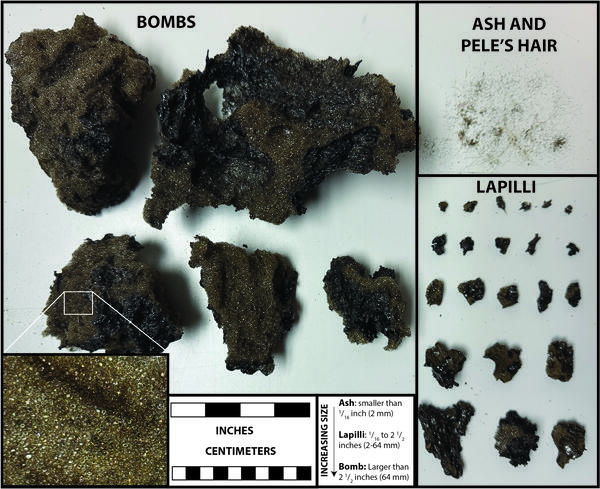
Kīlauea lava fountaining episode tephra clast sizes
Kīlauea lava fountaining episode tephra clast sizesThis annotated photograph shows the different size categories of tephra associated with recent lava fountaining episodes at the summit of Kīlauea. The inset photo on the bottom left shows the vesicular (bubble-rich) texture of most of these clasts. The smallest particles of tephra are volcanic ash, and they are smaller than 1/16 of an inch (2 mm).
Kīlauea lava fountaining episode tephra clast sizes
Kīlauea lava fountaining episode tephra clast sizesThis annotated photograph shows the different size categories of tephra associated with recent lava fountaining episodes at the summit of Kīlauea. The inset photo on the bottom left shows the vesicular (bubble-rich) texture of most of these clasts. The smallest particles of tephra are volcanic ash, and they are smaller than 1/16 of an inch (2 mm).