



Alaska Science Center Newsletter - 2025 Yearly Review
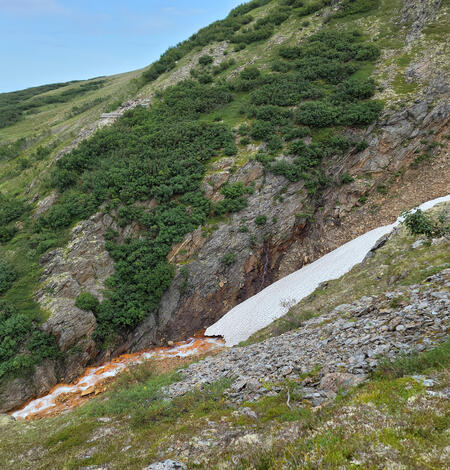
Alaska Critical Mineral Resource Assessments
Alaska has potential for a wide range of critical minerals including, but not limited to, graphite, lithium, tin, tungsten, rare earth elements, and platinum-group elements.
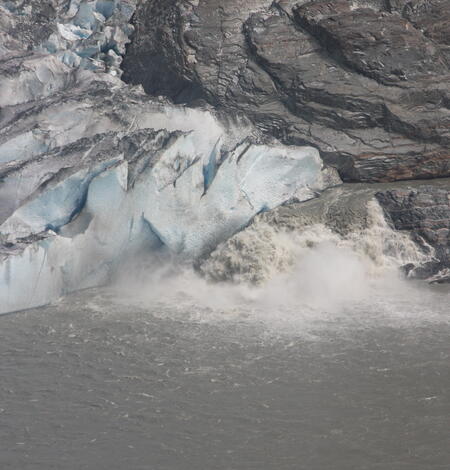
Science Spotlight: USGS Monitoring of Glacial Outburst Flood in Juneau Alaska
The U.S. Geological Survey Alaska Science Center is working in cooperation with the City and Borough of Juneau (CBJ), Alaska Department of Transportation and Public Facilities (ADOT&PF), and the Corps of Engineers (COE) to provide real-time warning of an impending glacial outburst flood and monitor Mendenhall River conditions during the flood.

A 700-year rupture sequence of great eastern Aleutian earthquakes from tsunami evidence and modeling
New research from the USGS, University of Hawaiʻi, and the University of California, Santa Cruz provides fresh insights into a prehistoric sequence of earthquakes in the Aleutian Islands. Researchers inferred the earthquake sequence from coastal evidence of high tsunamis that inundated the eastern Aleutian Islands in the past 700 years.
Sea Otter Survey Visualization Tool
Interactively explore, filter, and download sea otter survey data on a map.

Ecosystems on the Edge: Landscape and Fire Ecology of Forests, Deserts, and Tundra
Climate changes and interacting disturbances such as wildfires, insect and disease outbreaks, and erosion and flooding can perturb and reorganize ecosystems.
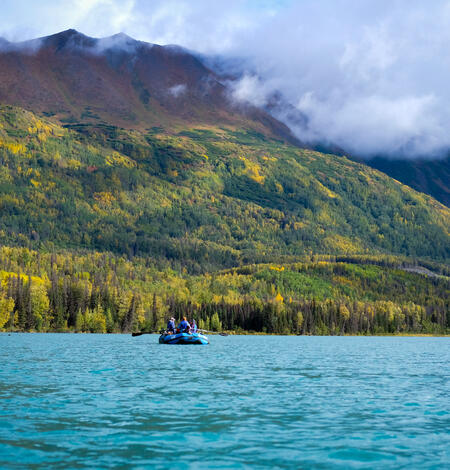
Project Spotlight: USGS Scientists Work with Kenai Peninsula Communities to Define Baseline Water Data Amid Climate Uncertainty
As temperatures rise on the Kenai peninsula, freshwater quality is expected to change, affecting both salmon and local communities, new Alaska CASC-funded research suggests.
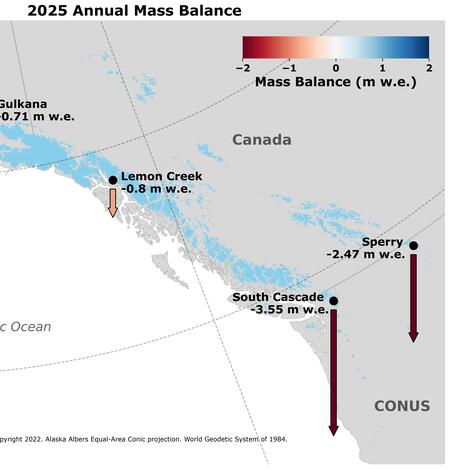
2025 USGS Benchmark Glaciers Executive Summary
2025 Data Now Available: Explore how the USGS Benchmark Glaciers have changed in 2025
Q&A: USGS Ecosystems Provides Objective Science to Manage Lands, Fish, and Wildlife
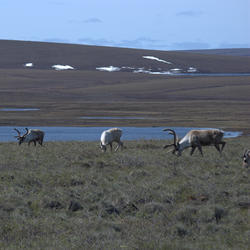
Terrestrial Mammal Research
Understanding the population dynamics, predator/prey relationships and habitat ecology of terrestrial mammals, such as caribou and muskoxen, is critical for the management of these species and their habitats in Alaska.

Nearshore Fish Surveys in the Beaufort Sea
Nearshore systems provide habitat to a unique community of marine and diadromous (lives in both fresh and saltwater) fish and support high fish abundance.
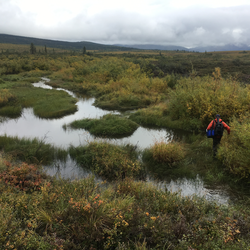
Hydro-Ecology of Arctic Thawing (HEAT): Ecology
Permafrost thaw is leading to a myriad of changes in physical and chemical conditions throughout the Arctic.
Alaska Science Center’s Commitment to “Gold Standard Science” for Data Products
Scientific products to inform resource, hazard, and ecosystem decisions in Alaska and circumpolar regions.

Alaska Science Center Seminar Series
The USGS Alaska Science Center has a monthly seminar series that runs from October through May. This series highlights the multiple research programs that are taking place across all disciplines at the center.

Publications
Explore publications related to research areas and staff members at the USGS Alaska Science Center compiled from the USGS Publications Warehouse.

Indigenous Community Outreach and Engagement
It is critically important that Indigenous peoples, rural communities, and Alaska co-management councils are kept informed of USGS research activities and findings. Involvement of and collaboration with these stakeholders provides valuable perspectives. This page offers information on how USGS communicates and seeks out important perspectives from stakeholders.