



Q&A: USGS Ecosystems Provides Objective Science to Manage Lands, Fish, and Wildlife
The USGS Ecosystems Mission Area is the only program within the Department of Interior (DOI) focused on generating science to inform the management of the nation’s lands, fish, and wildlife. The Ecosystems Mission Area is also the only entity with the specific role of meeting the information needs of DOI agencies (e.g., Bureau of Land Management, Bureau of Ocean Energy Management, National Park Service, and U.S. Fish and Wildlife Service), while also working to meet the needs of state agencies, tribal entities, and other DOI partners. As an exclusively science-focused bureau, the USGS has policies that ensure transparency and objectivity. For example, data and science products are released to the public after extensive internal and external review. Additionally, USGS has a ‘no advocacy’ policy: scientists do not recommend policies or actions but instead provide only the scientific information needed to make management decisions. The Ecosystems Mission Area often provides the only source of scientific information available on changes in the distribution, abundance, and health of wildlife species and habitats, information used to effectively manage these resources across the country.
Return to USGS Alaska Q&A Series
Regulatory bureaus within the DOI are statutorily required to incorporate science into management decisions, creating a critical need to collect and interpret scientific information. The USGS fills this unique role while having no management or regulatory authority of its own. In Alaska, USGS Ecosystems Mission Area scientists work with federal, state, tribal and rural entities to identify changes in the distribution and abundance of important fish and wildlife resources, such as caribou, forage fish, migratory birds, polar bears, salmon, sea otters, and walruses.
In this Q&A, we provide information and examples of how work by the USGS Ecosystems Mission Area differs from other entities that may conduct studies on natural resources, using examples from Alaska.
Q: How do the services provided by the USGS Ecosystems Mission Area differ from those provided by other entities?
- USGS Ecosystems fills a unique and critical role by addressing the science needs of multiple entities including DOI agencies, state agencies, tribal organizations, and industry. Given the broad mission of providing science to manage and conserve the nation’s biological resources, USGS Ecosystems conducts work for a diverse network of partners. For example, Ecosystems scientists in Alaska have provided data to the Bureau of Ocean and Energy Management on seabird and forage populations in oil and gas lease areas, worked with Alaska Department of Fish and Game to understand how caribou are responding to changing habitat conditions, non-invasively monitored the health of walruses that routinely rest near a Native village, and partnered with industry and the Department of Defense to reduce human-polar bear conflicts near Arctic facilities.

- USGS Ecosystems works across administrative boundaries to address science needs. Fish and wildlife populations and their habitats often span federal, state, tribal, private, and other lands and waters, necessitating research at broad, landscape scales to meet management needs. As a result, Ecosystems scientists often conduct and coordinate research across administrative boundaries. For example, scientists study marine mammals that range throughout the circumpolar Arctic, birds that migrate between Alaska and the lower 48 states, and patterns of avian influenza virus transmission between Asia and North America.

- USGS Ecosystems collects long-term data from a range of species, including DOI Trust Species. Ecosystems scientists collect data and maintain databases on species such as caribou, forage fish, landbirds, polar bears, seabirds, shorebirds, walruses, and waterfowl. These data are often the only information available to determine whether populations are increasing, decreasing or remaining stable, and whether the distributions of animals are changing. Collection of long-term data is particularly important for informing management decisions for ‘Trust Species’, those species that DOI has a responsibility to conserve and manage, such as migratory birds, marine mammals, and threatened and endangered species. For example, scientists maintain a database of polar bear den locations used by managers and industry to ensure denning bears are not disturbed by winter oil and gas extraction activities.

- USGS Ecosystems provides analytical expertise and statistical support to the DOI and other partners. Ecosystems scientists and statisticians develop state-of the-art methods and tools to improve biological monitoring, model animal distributions and population dynamics, and simulate management options and future scenarios. Scientists have developed statistical methods to assess the sustainability of subsistence harvest for walrus, genetic-based sampling techniques to understand the impacts of ‘rusting’ rivers on vitally important fish resources, and spatial models to track changes in sea otter distribution. The adoption of such tools often translates to less cost and better-quality data for partners.

- USGS Ecosystems ensures transparency and objectivity in data and science products. USGS publicly releases the data and software used in its publications. These products are peer reviewed and standardized, ensuring the transparency and repeatability of the information for decision-making. Ecosystem scientists also publish their findings in journals and reports, both of which are internally and externally peer-reviewed. Some examples of these products in Alaska include tracking data for a variety of terrestrial and marine species, maps of current and projected future caribou distributions, and the North Pacific Pelagic Seabird Database and Visualization Tool. Data releases and publications are used by decision-makers at all levels of government, other scientists, industry, and citizens.

Q: What are some examples of USGS Ecosystems science that has informed management and policy by DOI agencies?
- The USGS Ecosystems collection of long-term data from marine mammal Trust Species has allowed for the accurate determination of population abundance and trends, and evaluation of management actions. Ecosystems scientists have conducted long-term studies on polar bear populations that helped inform the decision to list polar bears as threatened under the Endangered Species Act and have since revealed relative stability in abundance. After the Pacific walrus became an endangered species candidate scientists estimated the population trend and survival rates and determined that the population stabilized after a long decline. This work was critical to the U.S. Fish and Wildlife Service decision to not list walruses as endangered. Scientists also lead aerial survey and statistical modeling efforts that provide much of the information on the status of the three sea otter stocks in Alaska that the US Fish and Wildlife Service is mandated to include in regular stock assessment reports.

- USGS Ecosystems leads efforts to map wildlife habitat use and ranges. Recent statistical modeling by Ecosystems scientists, related to a directive from Congress, has provided maps of sea otter occupancy, population density, and carrying capacity that inform Marine Mammal Protection Act regulatory activities at the US Fish and Wildlife Service. This up-to-date information is provided to local communities so that they can anticipate potential impacts of sea otters to their commercial and subsistence activities. Scientists recently used field surveys and satellite data to map eelgrass biomass within Izembek National Wildlife Refuge and conducted an analysis to improve eelgrass monitoring programs. The Refuge contains one of the largest eelgrass beds in the world, which provides critical habitat for thousands of migrating birds including the entire population of black brant geese.

- USGS Ecosystems monitors and forecasts the spread of emerging diseases. Agricultural practices and human inputs may lead to the emergence and spread of viral and bacterial pathogens that negatively impact human and animal health. Wildlife species are also colonizing Alaska and potentially bringing with them parasites and pathogens, such as winter tick and chronic wasting disease (CWD), that could infect native species, like moose, that many communities rely on for subsistence. Ecosystems scientists are leading research on high priority animal diseases such as highly pathogenic avian influenza as well as modeling, mapping, and forecasting expanding wildlife populations in Alaska that will help inform national, state and local wildlife management in support of animal and human health.
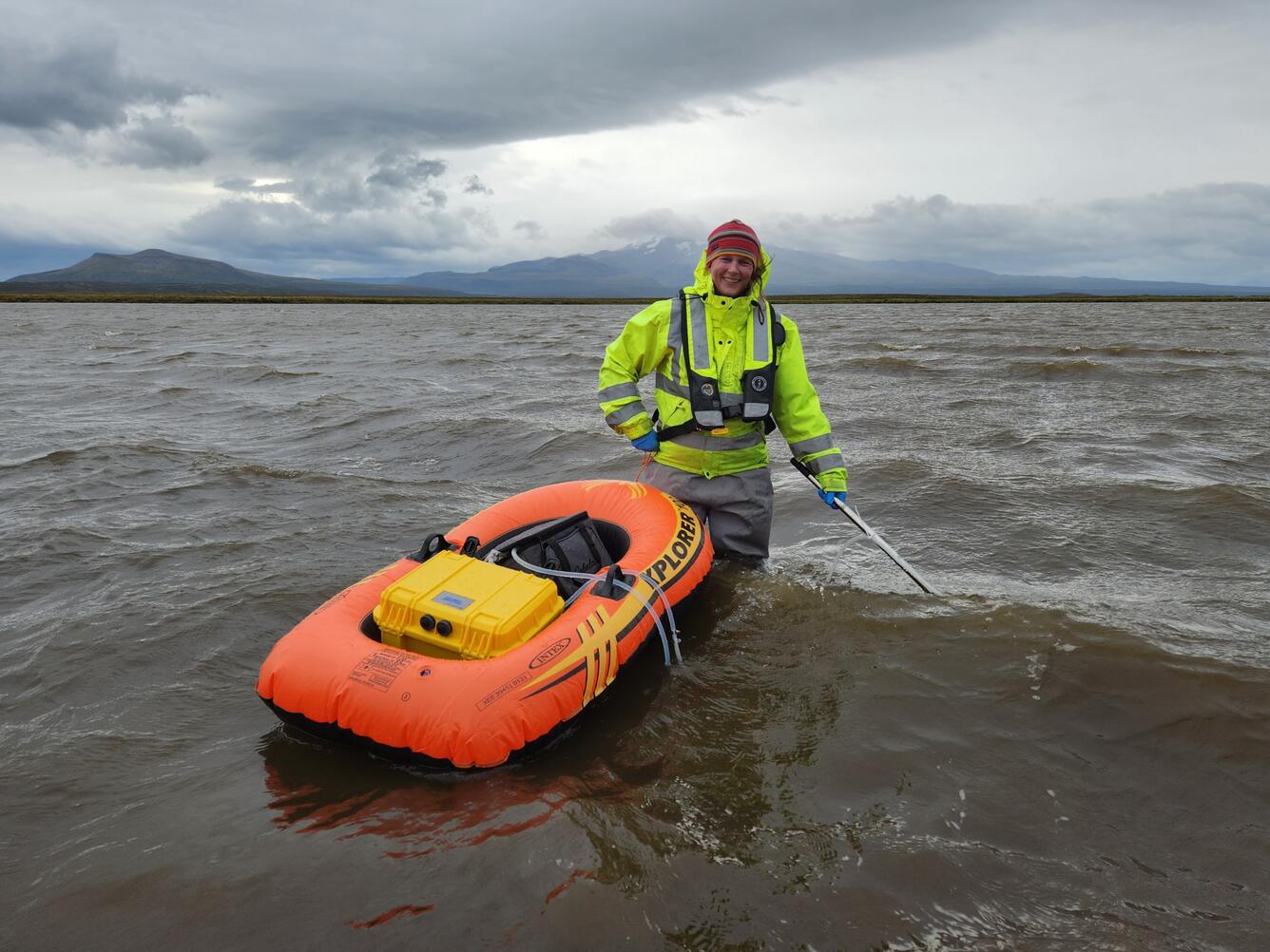
- USGS Ecosystems assesses wildlife responses to industrial development for effective mitigation. Ecosystems scientists have collaborated with federal and state agencies and industry to understand caribou responses to infrastructure and activities related to oil development on the North Slope of Alaska and is currently conducting research to determine the effectiveness of different oil field mitigation measures. Scientists estimated long-term trends in polar bear den distribution and abundance, and briefed oil and gas industry representatives on their findings which are informing efforts to mitigate the risk of human-bear conflict and facilitate Marine Mammal Protection Act compliance. These studies are being used by the Bureau of Land Management and the U.S. Fish and Wildlife Service to determine best management and design practices for new energy development.

USGS Alaska Science Center Ecosystems Research
USGS Alaska Science Center Community Outreach and Engagement

Ecosystems Analytics

ASC Ecosystems Data Releases
The USGS Ecosystems Mission Area is the only program within the Department of Interior (DOI) focused on generating science to inform the management of the nation’s lands, fish, and wildlife. The Ecosystems Mission Area is also the only entity with the specific role of meeting the information needs of DOI agencies (e.g., Bureau of Land Management, Bureau of Ocean Energy Management, National Park Service, and U.S. Fish and Wildlife Service), while also working to meet the needs of state agencies, tribal entities, and other DOI partners. As an exclusively science-focused bureau, the USGS has policies that ensure transparency and objectivity. For example, data and science products are released to the public after extensive internal and external review. Additionally, USGS has a ‘no advocacy’ policy: scientists do not recommend policies or actions but instead provide only the scientific information needed to make management decisions. The Ecosystems Mission Area often provides the only source of scientific information available on changes in the distribution, abundance, and health of wildlife species and habitats, information used to effectively manage these resources across the country.
Return to USGS Alaska Q&A Series
Regulatory bureaus within the DOI are statutorily required to incorporate science into management decisions, creating a critical need to collect and interpret scientific information. The USGS fills this unique role while having no management or regulatory authority of its own. In Alaska, USGS Ecosystems Mission Area scientists work with federal, state, tribal and rural entities to identify changes in the distribution and abundance of important fish and wildlife resources, such as caribou, forage fish, migratory birds, polar bears, salmon, sea otters, and walruses.
In this Q&A, we provide information and examples of how work by the USGS Ecosystems Mission Area differs from other entities that may conduct studies on natural resources, using examples from Alaska.
Q: How do the services provided by the USGS Ecosystems Mission Area differ from those provided by other entities?
- USGS Ecosystems fills a unique and critical role by addressing the science needs of multiple entities including DOI agencies, state agencies, tribal organizations, and industry. Given the broad mission of providing science to manage and conserve the nation’s biological resources, USGS Ecosystems conducts work for a diverse network of partners. For example, Ecosystems scientists in Alaska have provided data to the Bureau of Ocean and Energy Management on seabird and forage populations in oil and gas lease areas, worked with Alaska Department of Fish and Game to understand how caribou are responding to changing habitat conditions, non-invasively monitored the health of walruses that routinely rest near a Native village, and partnered with industry and the Department of Defense to reduce human-polar bear conflicts near Arctic facilities.
- USGS Ecosystems works across administrative boundaries to address science needs. Fish and wildlife populations and their habitats often span federal, state, tribal, private, and other lands and waters, necessitating research at broad, landscape scales to meet management needs. As a result, Ecosystems scientists often conduct and coordinate research across administrative boundaries. For example, scientists study marine mammals that range throughout the circumpolar Arctic, birds that migrate between Alaska and the lower 48 states, and patterns of avian influenza virus transmission between Asia and North America.
- USGS Ecosystems collects long-term data from a range of species, including DOI Trust Species. Ecosystems scientists collect data and maintain databases on species such as caribou, forage fish, landbirds, polar bears, seabirds, shorebirds, walruses, and waterfowl. These data are often the only information available to determine whether populations are increasing, decreasing or remaining stable, and whether the distributions of animals are changing. Collection of long-term data is particularly important for informing management decisions for ‘Trust Species’, those species that DOI has a responsibility to conserve and manage, such as migratory birds, marine mammals, and threatened and endangered species. For example, scientists maintain a database of polar bear den locations used by managers and industry to ensure denning bears are not disturbed by winter oil and gas extraction activities.
- USGS Ecosystems provides analytical expertise and statistical support to the DOI and other partners. Ecosystems scientists and statisticians develop state-of the-art methods and tools to improve biological monitoring, model animal distributions and population dynamics, and simulate management options and future scenarios. Scientists have developed statistical methods to assess the sustainability of subsistence harvest for walrus, genetic-based sampling techniques to understand the impacts of ‘rusting’ rivers on vitally important fish resources, and spatial models to track changes in sea otter distribution. The adoption of such tools often translates to less cost and better-quality data for partners.
- USGS Ecosystems ensures transparency and objectivity in data and science products. USGS publicly releases the data and software used in its publications. These products are peer reviewed and standardized, ensuring the transparency and repeatability of the information for decision-making. Ecosystem scientists also publish their findings in journals and reports, both of which are internally and externally peer-reviewed. Some examples of these products in Alaska include tracking data for a variety of terrestrial and marine species, maps of current and projected future caribou distributions, and the North Pacific Pelagic Seabird Database and Visualization Tool. Data releases and publications are used by decision-makers at all levels of government, other scientists, industry, and citizens.
Q: What are some examples of USGS Ecosystems science that has informed management and policy by DOI agencies?
- The USGS Ecosystems collection of long-term data from marine mammal Trust Species has allowed for the accurate determination of population abundance and trends, and evaluation of management actions. Ecosystems scientists have conducted long-term studies on polar bear populations that helped inform the decision to list polar bears as threatened under the Endangered Species Act and have since revealed relative stability in abundance. After the Pacific walrus became an endangered species candidate scientists estimated the population trend and survival rates and determined that the population stabilized after a long decline. This work was critical to the U.S. Fish and Wildlife Service decision to not list walruses as endangered. Scientists also lead aerial survey and statistical modeling efforts that provide much of the information on the status of the three sea otter stocks in Alaska that the US Fish and Wildlife Service is mandated to include in regular stock assessment reports.
- USGS Ecosystems leads efforts to map wildlife habitat use and ranges. Recent statistical modeling by Ecosystems scientists, related to a directive from Congress, has provided maps of sea otter occupancy, population density, and carrying capacity that inform Marine Mammal Protection Act regulatory activities at the US Fish and Wildlife Service. This up-to-date information is provided to local communities so that they can anticipate potential impacts of sea otters to their commercial and subsistence activities. Scientists recently used field surveys and satellite data to map eelgrass biomass within Izembek National Wildlife Refuge and conducted an analysis to improve eelgrass monitoring programs. The Refuge contains one of the largest eelgrass beds in the world, which provides critical habitat for thousands of migrating birds including the entire population of black brant geese.
- USGS Ecosystems monitors and forecasts the spread of emerging diseases. Agricultural practices and human inputs may lead to the emergence and spread of viral and bacterial pathogens that negatively impact human and animal health. Wildlife species are also colonizing Alaska and potentially bringing with them parasites and pathogens, such as winter tick and chronic wasting disease (CWD), that could infect native species, like moose, that many communities rely on for subsistence. Ecosystems scientists are leading research on high priority animal diseases such as highly pathogenic avian influenza as well as modeling, mapping, and forecasting expanding wildlife populations in Alaska that will help inform national, state and local wildlife management in support of animal and human health.
- USGS Ecosystems assesses wildlife responses to industrial development for effective mitigation. Ecosystems scientists have collaborated with federal and state agencies and industry to understand caribou responses to infrastructure and activities related to oil development on the North Slope of Alaska and is currently conducting research to determine the effectiveness of different oil field mitigation measures. Scientists estimated long-term trends in polar bear den distribution and abundance, and briefed oil and gas industry representatives on their findings which are informing efforts to mitigate the risk of human-bear conflict and facilitate Marine Mammal Protection Act compliance. These studies are being used by the Bureau of Land Management and the U.S. Fish and Wildlife Service to determine best management and design practices for new energy development.
USGS Alaska Science Center Ecosystems Research
USGS Alaska Science Center Community Outreach and Engagement
Ecosystems Analytics