
Widespread permafrost thaw, thaw-induced erosion, and wildfires have altered the concentration and flux of organic carbon, nutrients, and trace metals in Arctic rivers. Subsequently, changes in surface waters can impact the habitability for biota and growth rates for fish.
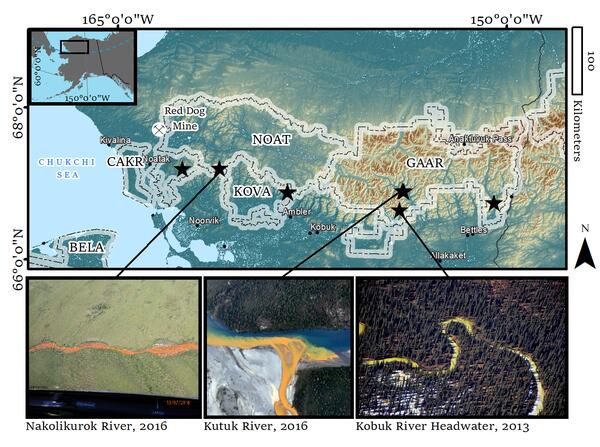
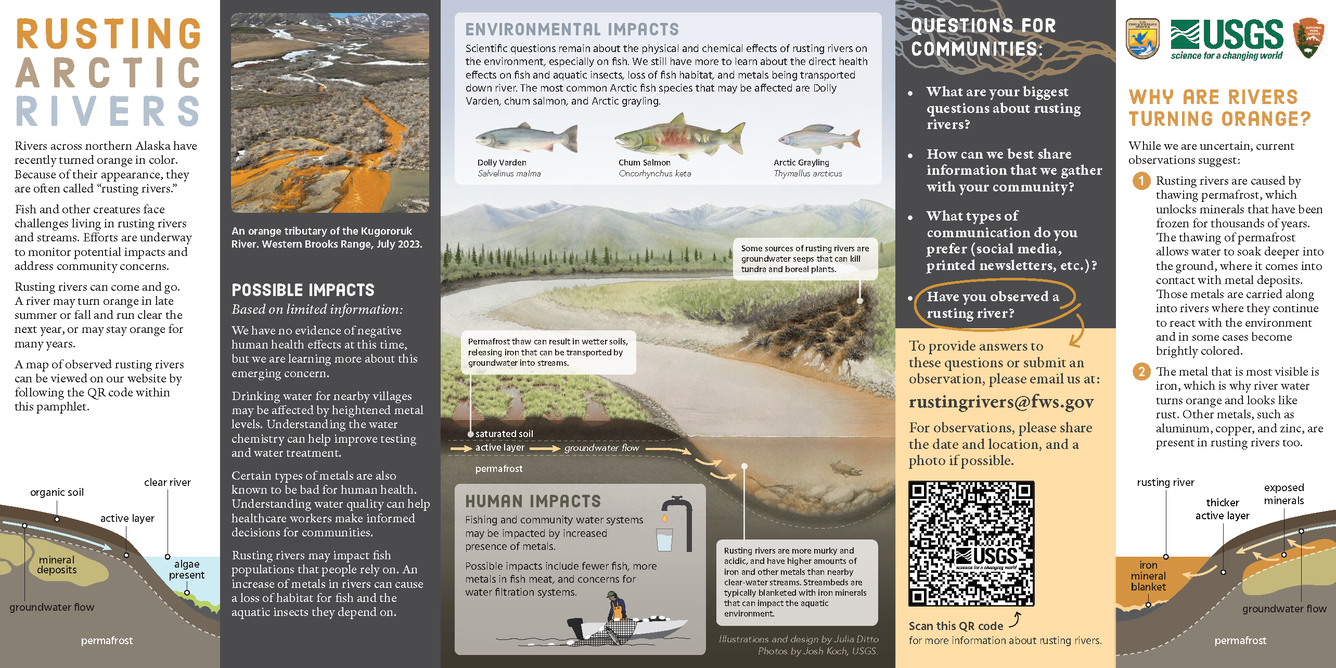
Recent observations from Arctic Alaska indicate that waters draining permafrost landscapes may be susceptible to iron and carbon mobilization following thaw. One consequence of these altered iron-cycling processes is the abrupt change in color (orange) of stream and river reaches, reflecting a dramatic shift in water quality.
Although the exact mechanisms are yet to be determined, evidence indicates that shifting hydrological and oxidation-reduction processes associated with permafrost thaw may function to transport high concentrations of iron in dissolved and colloidal forms from thawing soils to streams.
Preliminary observations suggest that orange stream reaches have higher iron concentrations, less dissolved oxygen, and more acidic water than nearby clearwater streams. Further, the conversion of streams from clear to orange water appears to reflect a considerable deterioration of habitat for benthic macroinvertebrates and fish.