



Avian Influenza Spread, Prevalence and Persistence
USGS researchers seek to understand the factors influencing the spread and persistence of avian influenza viruses on the landscape. This research also addresses how novel strains of highly pathogenic avian influenza are impacting a larger number and diversity of host species, including waterfowl, shorebirds, raptors and other birds.
What is the issue?
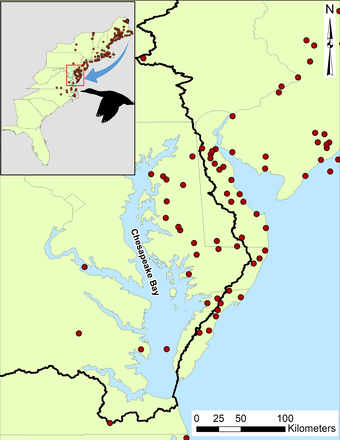
Avian influenza has had severe effects on wild birds, domestic poultry and, increasingly, mammals since the first detection of highly pathogenic avian influenza virus (HPAI) H5N1 clade 2.3.4.4b in North America in late 2021. What differentiates the currently circulating strain of HPAI from previous strains is the magnitude of the effect on migratory wild birds. This strain of avian influenza has resulted in tens of thousands of reported, suspected and confirmed infections in wild birds, including infections in a diversity of species previously not known to have been affected by HPAI. In addition, little is known regarding how this particular strain may persist in water and within bird hosts, both of which could affect the magnitude and duration of avian influenza outbreaks.
What is at stake?
Further increases in avian influenza virus transmission have the potential for major economic damage, impacts on food security and mortality events among domestic animals and wild birds, including populations and species of conservation concern.
What is our approach?
Surveillance efforts for avian influenza usually focus on sampling waterfowl, especially dabbling ducks like mallards, which are known to spread the virus to other animals and into new areas. However, this approach is insufficient to understand the HPAI strain now circulating in North America because wild birds other than waterfowl as well as the physical environment may serve as additional natural reservoirs for the virus.
To fill this gap, USGS is collaborating with partners to:
- Assess what viral strains are circulating in wild waterfowl and how viruses are spreading and evolving across the landscape. Learn more.
- Assess which non-traditional host species have been impacted and which have mounted antibody responses. Learn more.
- Increase understanding of the species and environmental conditions that facilitate persistence of the virus on the landscape across seasons and movement of the virus within and between migratory bird flyways. Learn more.
Compare laboratory experiments and experimental challenge studies to assess how field-based results relate to information obtained through laboratory models. Learn more.
What are the benefits?
North America is facing a future with the potential for additional avian influenza outbreaks affecting large numbers of wildlife, captive species, and poultry. Gaining a better understanding of the spread, prevalence and persistence of highly pathogenic avian influenza virus H5N1 clade 2.3.4.4b will aid natural resource managers and poultry producers in their surveillance of and response to the virus. Results from this research will also provide better inputs for avian influenza transmission risk models.
<< Back to Avian Influenza Research at EESC

USGS researchers seek to understand the factors influencing the spread and persistence of avian influenza viruses on the landscape. This research also addresses how novel strains of highly pathogenic avian influenza are impacting a larger number and diversity of host species, including waterfowl, shorebirds, raptors and other birds.
What is the issue?
Avian influenza has had severe effects on wild birds, domestic poultry and, increasingly, mammals since the first detection of highly pathogenic avian influenza virus (HPAI) H5N1 clade 2.3.4.4b in North America in late 2021. What differentiates the currently circulating strain of HPAI from previous strains is the magnitude of the effect on migratory wild birds. This strain of avian influenza has resulted in tens of thousands of reported, suspected and confirmed infections in wild birds, including infections in a diversity of species previously not known to have been affected by HPAI. In addition, little is known regarding how this particular strain may persist in water and within bird hosts, both of which could affect the magnitude and duration of avian influenza outbreaks.
What is at stake?
Further increases in avian influenza virus transmission have the potential for major economic damage, impacts on food security and mortality events among domestic animals and wild birds, including populations and species of conservation concern.
What is our approach?
Surveillance efforts for avian influenza usually focus on sampling waterfowl, especially dabbling ducks like mallards, which are known to spread the virus to other animals and into new areas. However, this approach is insufficient to understand the HPAI strain now circulating in North America because wild birds other than waterfowl as well as the physical environment may serve as additional natural reservoirs for the virus.
To fill this gap, USGS is collaborating with partners to:
- Assess what viral strains are circulating in wild waterfowl and how viruses are spreading and evolving across the landscape. Learn more.
- Assess which non-traditional host species have been impacted and which have mounted antibody responses. Learn more.
- Increase understanding of the species and environmental conditions that facilitate persistence of the virus on the landscape across seasons and movement of the virus within and between migratory bird flyways. Learn more.
Compare laboratory experiments and experimental challenge studies to assess how field-based results relate to information obtained through laboratory models. Learn more.
What are the benefits?
North America is facing a future with the potential for additional avian influenza outbreaks affecting large numbers of wildlife, captive species, and poultry. Gaining a better understanding of the spread, prevalence and persistence of highly pathogenic avian influenza virus H5N1 clade 2.3.4.4b will aid natural resource managers and poultry producers in their surveillance of and response to the virus. Results from this research will also provide better inputs for avian influenza transmission risk models.
<< Back to Avian Influenza Research at EESC