



Contaminants in Blue Catfish: Implications for Human, Wildlife, and Environmental Health
As blue catfish become increasingly harvested, recent studies are showing signs that these fish may contain detectable levels of Per- and polyfluoroalkyl Substances (PFAS) and other contaminants. Measuring PFAS in their blood and heavy metals, Polychlorinated biphenyls (PCBs), and microplastics from filets will help determine potential health effects for people, animals, and the environment.
What is the issue?
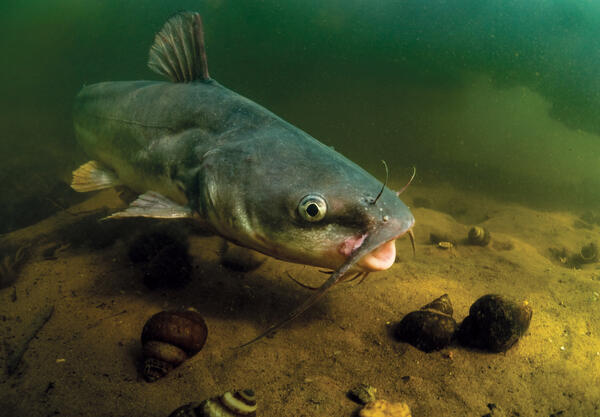
Blue catfish in Maryland and surrounding regions contain PFAS, an emerging contaminant that can be linked to serious human and wildlife health effects.
PFAS contamination is not a specific concern for blue catfish as these compounds can affect many fish species. Compounds such as perfluorooctane sulfonic acid (PFOS) have been found in fish sampled in recent studies, often at concentrations far exceeding levels considered safe for human exposure. Other contaminants such as heavy metals, PCBs, and microplastics are also a concern. Maryland, Virginia, and Washington, D.C. are increasing harvest and use of blue catfish for food and other purposes, but the levels of contaminants in their blood (a proxy for whole-body contamination) and filets remain largely unknown.
What is at stake?
Without knowing contaminant levels in blue catfish, there is a potential health risk to humans, wildlife, and animals that might consume these fish directly or indirectly. This affects:
- Residents and subsistence anglers consuming blue catfish.
- People in state institutions where catfish may be served.
- Wildlife or zoo animals if catfish are used as feed.
- Agricultural systems if catfish are composted or used as fertilizer.
Gaining a better understanding of contamination levels is essential for informed public health decisions and environmental management.

What is our approach?
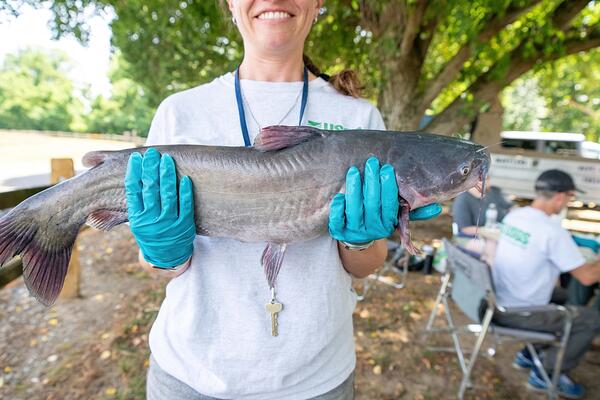
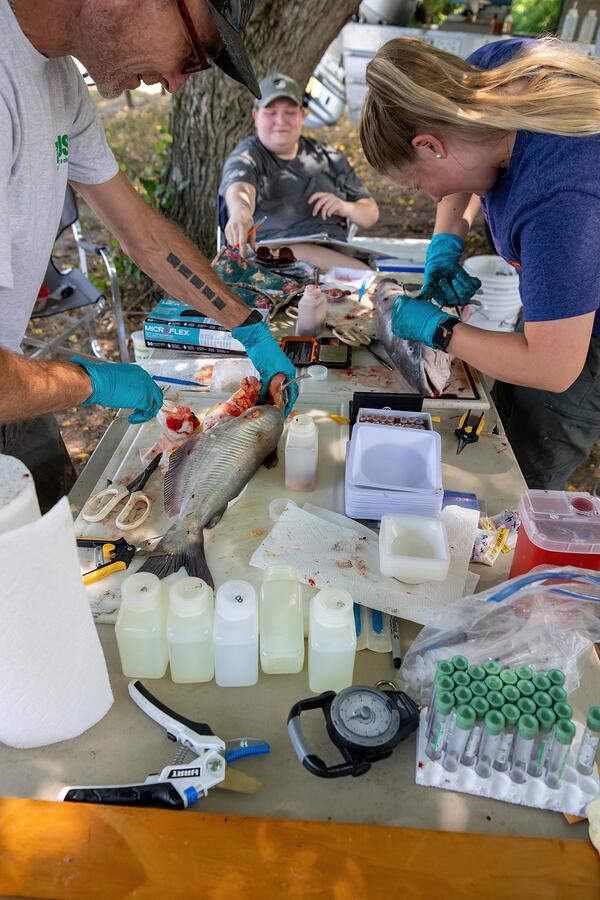
USGS and partners will sample blue catfish of various sizes from multiple river systems (Patuxent, Nanticoke, Wicomico, Potomac, Anacostia, James, and Chickahominy). Plasma will be analyzed for PFAS using established methods at the EESC PFAS lab. Heavy metals, PCBs, and microplastics will also be analyzed. Comprehensive fish health assessments will be conducted to collect plasma, tissues, otoliths, and perform histopathology to evaluate associations between contaminant levels, fish health indicators, and environmental conditions.
What are the benefits?
There are multiple benefits to improving understanding of the contaminants in the things people, wildlife or animals may consume. Learning more about environmental contaminants in blue catfish will help:
- Provide critical PFAS data needed for safe decision‑making on human consumption and alternative uses of blue catfish (fertilizer, animal feed).
- Support state agencies in species management and policy development.
- Enhance understanding of PFAS bioaccumulation in a heavily harvested invasive species.
- Contribute to broader environmental, wildlife, and human health protection through One Health-informed research.
- Build a foundation for assessing potential health effects on fish populations themselves.
EESC Makes an Impact: Enhancing Recreational & Commercial Fishing
EESC Makes an Impact
EESC Makes an Impact: Restoring the Chesapeake Bay Watershed

EESC Makes an Impact: Protecting Ecosystems to Safeguard Food and Water
As blue catfish become increasingly harvested, recent studies are showing signs that these fish may contain detectable levels of Per- and polyfluoroalkyl Substances (PFAS) and other contaminants. Measuring PFAS in their blood and heavy metals, Polychlorinated biphenyls (PCBs), and microplastics from filets will help determine potential health effects for people, animals, and the environment.
What is the issue?
Blue catfish in Maryland and surrounding regions contain PFAS, an emerging contaminant that can be linked to serious human and wildlife health effects.
PFAS contamination is not a specific concern for blue catfish as these compounds can affect many fish species. Compounds such as perfluorooctane sulfonic acid (PFOS) have been found in fish sampled in recent studies, often at concentrations far exceeding levels considered safe for human exposure. Other contaminants such as heavy metals, PCBs, and microplastics are also a concern. Maryland, Virginia, and Washington, D.C. are increasing harvest and use of blue catfish for food and other purposes, but the levels of contaminants in their blood (a proxy for whole-body contamination) and filets remain largely unknown.
What is at stake?
Without knowing contaminant levels in blue catfish, there is a potential health risk to humans, wildlife, and animals that might consume these fish directly or indirectly. This affects:
- Residents and subsistence anglers consuming blue catfish.
- People in state institutions where catfish may be served.
- Wildlife or zoo animals if catfish are used as feed.
- Agricultural systems if catfish are composted or used as fertilizer.
Gaining a better understanding of contamination levels is essential for informed public health decisions and environmental management.
What is our approach?
USGS and partners will sample blue catfish of various sizes from multiple river systems (Patuxent, Nanticoke, Wicomico, Potomac, Anacostia, James, and Chickahominy). Plasma will be analyzed for PFAS using established methods at the EESC PFAS lab. Heavy metals, PCBs, and microplastics will also be analyzed. Comprehensive fish health assessments will be conducted to collect plasma, tissues, otoliths, and perform histopathology to evaluate associations between contaminant levels, fish health indicators, and environmental conditions.
What are the benefits?
There are multiple benefits to improving understanding of the contaminants in the things people, wildlife or animals may consume. Learning more about environmental contaminants in blue catfish will help:
- Provide critical PFAS data needed for safe decision‑making on human consumption and alternative uses of blue catfish (fertilizer, animal feed).
- Support state agencies in species management and policy development.
- Enhance understanding of PFAS bioaccumulation in a heavily harvested invasive species.
- Contribute to broader environmental, wildlife, and human health protection through One Health-informed research.
- Build a foundation for assessing potential health effects on fish populations themselves.
EESC Makes an Impact: Enhancing Recreational & Commercial Fishing
EESC Makes an Impact
EESC Makes an Impact: Restoring the Chesapeake Bay Watershed