



EESC Makes an Impact: Protecting Ecosystems to Safeguard Food and Water
Research at the USGS Eastern Ecological Science Center (EESC) supports understanding of the connection between ecosystem health and the quality and availability of America's food and water. USGS studies help monitor and assess the health of terrestrial and aquatic ecosystems, species populations, water quality, and contaminants affecting health and habitats. Information gained through this research provides critical insights needed to protect the safety and security of our nation’s food and water.
Science that helps protect pollinators
Crop pollination from bees and other animals is an ecosystem service valued at \$215 billion globally and \$34 billion in the United States. Pollinators, such as bees and butterflies, are integral to our food security and healthy ecosystems as they transport pollen among plants, allowing the plants to reproduce. Roughly 75 percent of all agricultural crop types depend on, or are enhanced by, animal pollination. Native bees pollinate a host of cultivated plants, including sunflowers, cherries, and blueberries.

EESC conducts pollinator research that supports both agriculture and wildlife.
- We investigate new methods to reduce the cost and difficulty of pollinator surveys.
- We study environmental stressors that may interfere with pollination.
- We manage the USGS Bee Lab, which supports native bee research and conservation by providing critical data and tools for the United States and other countries.


Science that helps protect poultry and waterfowl
Highly pathogenic avian influenza has had major implications across the United States since the beginning of the current outbreak in the winter of 2021/22. This includes the loss of over 168 million poultry and rapid transmission among wild birds, expanding beyond traditional hosts such as waterfowl to impact a widened range of species with often fatal consequences.


EESC research addresses the threat of avian influenza to agriculture and wildlife.
- We have developed models that predict the risk of HPAI transmission from wild birds to domestic poultry across the country each week of the year
- We sample waterfowl, raptors, waterbirds, and many other species to understand impacts of HPAI and inform conservation risk
- We pair disease sampling with telemetry to determine how infection impacts movement and inform capacity of different species to spread this disease
- We are currently collaborating with the U.S. Department of Agriculture (USDA) and others to design studies that will identify how virus enters poultry barns to improve biosecurity.


Science that supports safe fish consumption
In 2022, 39.9 million U.S. residents fished recreationally and spent \$99.4 billion on fishing activities. Exposure to chemical contaminants can affect fish health and our ability to safely consume them.
USGS supports food safety through research that sheds light on impacts chemical contaminants may have on fish and informs fish consumption advisories that protect public health.

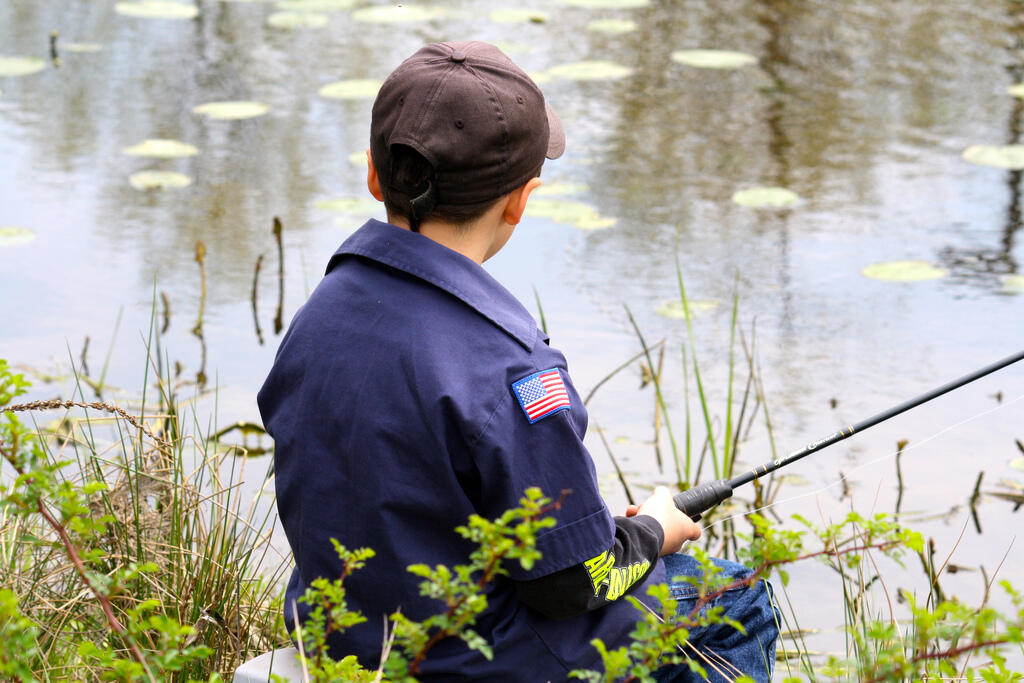
EESC research addresses chemical contaminants of concern with respect to healthy fish populations and the safety of the fish we consume.
- We investigated consumption risks for commonly harvested and consumed fish species.
- We conducted research on forever chemicals (PFAS) in invasive blue catfish to study consumption risk and collaborated with Maryland Department of Natural Resources to test for PFAS and heavy metals in invasives harvested for consumption.
- We studied how fish diet following exposure to chemical contaminants can influence toxicity in consumable fish tissues, providing information that could be used to inform development of human consumption advisories.
- We collaborated with University of Vermont and Vermont Fish & Wildlife to investigate potential causes of lesions on fish in a popular fishing lake. Fish condition raised concerns about water quality and potential risks to human health from contaminants in the lake.
- We worked with USGS Central Midwest Science Center to study contaminants of concern in Iowa's agricultural streams. Much of Iowa's landscape is devoted to agriculture and studying these contaminants is essential for establishing baseline exposure data that protects water quality, aquatic life, and human health.

Science that supports safe water use
Harmful algal blooms (HABs) are rapid increases in algae in water bodies that can produce toxins harmful to aquatic life, animals, and humans. These blooms can deplete oxygen levels in the water, leading to dead zones and negatively impacting aquatic ecosystems.
HABs can trigger public health advisories and use restrictions on using water for drinking, cooking, bathing, fish and shellfish harvest, or recreation. They can also have significant economic impacts. A 2018 USGS study in Lake Okeechobee, Florida estimated an economic value of \$5.5 million in foregone recreation as a result of closed boating ramp facilities and other restrictions on aquatic recreation such as fishing and swimming during a harmful algal bloom.
USGS water quality monitoring data and associated analyses play an important role in protecting the quality of the water that we rely upon.


EESC conducts research on harmful algal blooms.
A recent Chesapeake Bay study highlights critical findings about how harmful algal blooms (HABs) affect bird populations and human health.
HABs can be fueled by nutrient runoff and can produce toxins that are harmful to birds and other wildlife.
One of the primary toxins of concern in the Chesapeake Bay is microcystin, which can reach levels that exceed safety thresholds for human recreational use and drinking water.
Understanding the impact of HABs on birds is vital as they serve as sentinels for other wildlife and the health of our ecosystems.

The U.S. Geological Survey Eastern Ecological Science Center strives to provide world-class science to inform natural resource decisions that preserve and enhance our quality of life. We work directly with managers of our shared natural resources to provide the unbiased scientific tools, research and innovations needed to make informed decisions in today’s complex and rapidly changing conditions. We engage partners to co-develop solutions that balance economic and conservation goals, resulting in cost savings, risk reduction, and long-term resource sustainability.
Research at the USGS Eastern Ecological Science Center (EESC) supports understanding of the connection between ecosystem health and the quality and availability of America's food and water. USGS studies help monitor and assess the health of terrestrial and aquatic ecosystems, species populations, water quality, and contaminants affecting health and habitats. Information gained through this research provides critical insights needed to protect the safety and security of our nation’s food and water.
Science that helps protect pollinators
Crop pollination from bees and other animals is an ecosystem service valued at \$215 billion globally and \$34 billion in the United States. Pollinators, such as bees and butterflies, are integral to our food security and healthy ecosystems as they transport pollen among plants, allowing the plants to reproduce. Roughly 75 percent of all agricultural crop types depend on, or are enhanced by, animal pollination. Native bees pollinate a host of cultivated plants, including sunflowers, cherries, and blueberries.
EESC conducts pollinator research that supports both agriculture and wildlife.
- We investigate new methods to reduce the cost and difficulty of pollinator surveys.
- We study environmental stressors that may interfere with pollination.
- We manage the USGS Bee Lab, which supports native bee research and conservation by providing critical data and tools for the United States and other countries.
Science that helps protect poultry and waterfowl
Highly pathogenic avian influenza has had major implications across the United States since the beginning of the current outbreak in the winter of 2021/22. This includes the loss of over 168 million poultry and rapid transmission among wild birds, expanding beyond traditional hosts such as waterfowl to impact a widened range of species with often fatal consequences.
EESC research addresses the threat of avian influenza to agriculture and wildlife.
- We have developed models that predict the risk of HPAI transmission from wild birds to domestic poultry across the country each week of the year
- We sample waterfowl, raptors, waterbirds, and many other species to understand impacts of HPAI and inform conservation risk
- We pair disease sampling with telemetry to determine how infection impacts movement and inform capacity of different species to spread this disease
- We are currently collaborating with the U.S. Department of Agriculture (USDA) and others to design studies that will identify how virus enters poultry barns to improve biosecurity.
Science that supports safe fish consumption
In 2022, 39.9 million U.S. residents fished recreationally and spent \$99.4 billion on fishing activities. Exposure to chemical contaminants can affect fish health and our ability to safely consume them.
USGS supports food safety through research that sheds light on impacts chemical contaminants may have on fish and informs fish consumption advisories that protect public health.
EESC research addresses chemical contaminants of concern with respect to healthy fish populations and the safety of the fish we consume.
- We investigated consumption risks for commonly harvested and consumed fish species.
- We conducted research on forever chemicals (PFAS) in invasive blue catfish to study consumption risk and collaborated with Maryland Department of Natural Resources to test for PFAS and heavy metals in invasives harvested for consumption.
- We studied how fish diet following exposure to chemical contaminants can influence toxicity in consumable fish tissues, providing information that could be used to inform development of human consumption advisories.
- We collaborated with University of Vermont and Vermont Fish & Wildlife to investigate potential causes of lesions on fish in a popular fishing lake. Fish condition raised concerns about water quality and potential risks to human health from contaminants in the lake.
- We worked with USGS Central Midwest Science Center to study contaminants of concern in Iowa's agricultural streams. Much of Iowa's landscape is devoted to agriculture and studying these contaminants is essential for establishing baseline exposure data that protects water quality, aquatic life, and human health.
Science that supports safe water use
Harmful algal blooms (HABs) are rapid increases in algae in water bodies that can produce toxins harmful to aquatic life, animals, and humans. These blooms can deplete oxygen levels in the water, leading to dead zones and negatively impacting aquatic ecosystems.
HABs can trigger public health advisories and use restrictions on using water for drinking, cooking, bathing, fish and shellfish harvest, or recreation. They can also have significant economic impacts. A 2018 USGS study in Lake Okeechobee, Florida estimated an economic value of \$5.5 million in foregone recreation as a result of closed boating ramp facilities and other restrictions on aquatic recreation such as fishing and swimming during a harmful algal bloom.
USGS water quality monitoring data and associated analyses play an important role in protecting the quality of the water that we rely upon.
EESC conducts research on harmful algal blooms.
A recent Chesapeake Bay study highlights critical findings about how harmful algal blooms (HABs) affect bird populations and human health.
HABs can be fueled by nutrient runoff and can produce toxins that are harmful to birds and other wildlife.
One of the primary toxins of concern in the Chesapeake Bay is microcystin, which can reach levels that exceed safety thresholds for human recreational use and drinking water.
Understanding the impact of HABs on birds is vital as they serve as sentinels for other wildlife and the health of our ecosystems.
The U.S. Geological Survey Eastern Ecological Science Center strives to provide world-class science to inform natural resource decisions that preserve and enhance our quality of life. We work directly with managers of our shared natural resources to provide the unbiased scientific tools, research and innovations needed to make informed decisions in today’s complex and rapidly changing conditions. We engage partners to co-develop solutions that balance economic and conservation goals, resulting in cost savings, risk reduction, and long-term resource sustainability.