



Harmful Algal Blooms


Detailed Description
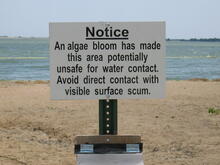
You may notice a green, red or brown film on your favorite boating or swimming area in the summer. This coloring could mean that the water is affected by harmful algal blooms. Harmful algal blooms are an accumulation of tiny organisms known as algae and can release harmful toxins into the environment. If you see a bloom, avoid the area. Pictured here is a beach on Marion Lake in Kansas with a posted warning indicating that a potentially harmful algal bloom is present.
Sources/Usage
Public Domain.
Related

EESC Makes an Impact: Protecting Ecosystems to Safeguard Food and Water
Research at the USGS Eastern Ecological Science Center (EESC) supports understanding of the connection between ecosystem health and the quality and availability of America's food and water. USGS studies help monitor and assess the health of terrestrial and aquatic ecosystems, species populations, water quality, and contaminants affecting health and habitats. Information gained through this...

Harmful Algal Blooms Investigations at the Virginia and West Virginia Water Science Center
Excessive accumulations of algae that impair waterbodies, called harmful algal blooms (HABs), can have detrimental effects on aquatic ecosystems, reduce the quality of water resources, and can pose significant risks to human and animal health. The Virginia and West Virginia Water Science Center works with state, regional, and local partners to evaluate the drivers and distribution of harmful algal...
Related
EESC Makes an Impact: Protecting Ecosystems to Safeguard Food and Water
Research at the USGS Eastern Ecological Science Center (EESC) supports understanding of the connection between ecosystem health and the quality and availability of America's food and water. USGS studies help monitor and assess the health of terrestrial and aquatic ecosystems, species populations, water quality, and contaminants affecting health and habitats. Information gained through this...
Harmful Algal Blooms Investigations at the Virginia and West Virginia Water Science Center
Excessive accumulations of algae that impair waterbodies, called harmful algal blooms (HABs), can have detrimental effects on aquatic ecosystems, reduce the quality of water resources, and can pose significant risks to human and animal health. The Virginia and West Virginia Water Science Center works with state, regional, and local partners to evaluate the drivers and distribution of harmful algal...