
U.S. flag

An official website of the United States government

Recreation Ecology

Filter Total Items: 7
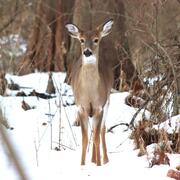
EESC Makes an Impact: Preserving our Hunting Resources

Hunting is an economic engine for the U.S. and responsible management of these resources directly supports 45.2 billion dollars spent by hunters annually. Conservation and management of hunting resources also contributes substantially to the 394.8 billion dollars spent on all wildlife-related recreation. Hunting traditions are an integral component of our American heritage, with 14.4 million...
EESC Makes an Impact: Preserving our Hunting Resources

EESC Makes an Impact: Preserving our Hunting Resources

Hunting is an economic engine for the U.S. and responsible management of these resources directly supports 45.2 billion dollars spent by hunters annually. Conservation and management of hunting resources also contributes substantially to the 394.8 billion dollars spent on all wildlife-related recreation. Hunting traditions are an integral component of our American heritage, with 14.4 million...
Learn More

Production, Behavior, and Survival of Juvenile Shad and River Herring

USGS is conducting research to better understand biology, behavior, and survival of juvenile fishes that travel between fresh and saltwater to complete their lifecycles. Migratory fishes as such as herring and shad are vital components in riverine and coastal ecosystems, transporting food and nutrients between fresh rivers and the ocean. They are also an important forage fish for predators in...
Production, Behavior, and Survival of Juvenile Shad and River Herring

Production, Behavior, and Survival of Juvenile Shad and River Herring

USGS is conducting research to better understand biology, behavior, and survival of juvenile fishes that travel between fresh and saltwater to complete their lifecycles. Migratory fishes as such as herring and shad are vital components in riverine and coastal ecosystems, transporting food and nutrients between fresh rivers and the ocean. They are also an important forage fish for predators in...
Learn More

Decision Science Support for SARS-CoV-2 Risk to North American Bats

The Eastern Ecological Science Center is working closely with federal, state, and tribal partners to help inform decisions that reduce the risk of SARS-CoV-2 transmission from humans to North American wildlife, including bats.
Decision Science Support for SARS-CoV-2 Risk to North American Bats

Decision Science Support for SARS-CoV-2 Risk to North American Bats

The Eastern Ecological Science Center is working closely with federal, state, and tribal partners to help inform decisions that reduce the risk of SARS-CoV-2 transmission from humans to North American wildlife, including bats.
Learn More

Sustainable Management of Campsites: Research on the Appalachian and Pacific Crest National Scenic Trails

Current and increasing visitation to protected natural areas has the potential to negatively impact natural resources and threaten the quality of visitors’ experiences. In backcountry and wilderness settings land managers have often allowed visitors to select and create their own campsites, which surveys reveal are often close to water, formal trails, and other campsites. This research is focused...
Sustainable Management of Campsites: Research on the Appalachian and Pacific Crest National Scenic Trails

Sustainable Management of Campsites: Research on the Appalachian and Pacific Crest National Scenic Trails

Current and increasing visitation to protected natural areas has the potential to negatively impact natural resources and threaten the quality of visitors’ experiences. In backcountry and wilderness settings land managers have often allowed visitors to select and create their own campsites, which surveys reveal are often close to water, formal trails, and other campsites. This research is focused...
Learn More

Sustainably Designed Trails: Recent Recreation Ecology Findings on Design Factors Affecting Soil Loss

An estimated 146 million Americans participated in more than 10.9 billion outdoor recreation activities in 2017. Virtually all protected natural areas have recreational trails as an essential infrastructure component to accommodate these outdoor recreation activities and visitor access, supporting a diverse array of opportunities and experiences that include nature study, hiking, camping, mountain...
Sustainably Designed Trails: Recent Recreation Ecology Findings on Design Factors Affecting Soil Loss

Sustainably Designed Trails: Recent Recreation Ecology Findings on Design Factors Affecting Soil Loss

An estimated 146 million Americans participated in more than 10.9 billion outdoor recreation activities in 2017. Virtually all protected natural areas have recreational trails as an essential infrastructure component to accommodate these outdoor recreation activities and visitor access, supporting a diverse array of opportunities and experiences that include nature study, hiking, camping, mountain...
Learn More

Research and Management of Informal (Visitor-Created) Trails in Protected Areas

Protected area managers provide formal trail systems to accommodate recreational visitation on resistant “hardened” treads, while protecting off-trail vegetation, soils, and wildlife. When formal trail networks fail to provide visitors the access and experiences they require, visitors frequently venture “off-trail” to fish, hunt, explore, climb, or engage in other off-trail activities. Even...
Research and Management of Informal (Visitor-Created) Trails in Protected Areas

Research and Management of Informal (Visitor-Created) Trails in Protected Areas

Protected area managers provide formal trail systems to accommodate recreational visitation on resistant “hardened” treads, while protecting off-trail vegetation, soils, and wildlife. When formal trail networks fail to provide visitors the access and experiences they require, visitors frequently venture “off-trail” to fish, hunt, explore, climb, or engage in other off-trail activities. Even...
Learn More

Assessing Recreational Impact to Cliff Habitats and Rare Plants

Protected natural areas, including parks, forests, wilderness, and wildlife refuges, have a dual mandate to protect natural resources and accommodate recreational visitation. Recreational activities that occur on trails (hiking, mountain biking, horseback riding) and on recreation sites (picnicking, camping) can benefit from the development of a sustainable infrastructure of facilities that...
Assessing Recreational Impact to Cliff Habitats and Rare Plants

Assessing Recreational Impact to Cliff Habitats and Rare Plants

Protected natural areas, including parks, forests, wilderness, and wildlife refuges, have a dual mandate to protect natural resources and accommodate recreational visitation. Recreational activities that occur on trails (hiking, mountain biking, horseback riding) and on recreation sites (picnicking, camping) can benefit from the development of a sustainable infrastructure of facilities that...
Learn More
Was this page helpful?