



FORT Science in Action 2026, Part 16: Advances in science and monitoring tools for management of bats across the continent
This year marked another twelve months of progress for the North American Bat Monitoring Program (NABat). FORT researchers made discoveries about the effects of forest management and development on bats, documented what makes roost sites attractive to bats, and developed new models for bat population dynamics.
Batting a thousand
Scientists with NABat analyze massive biological datasets collected by the program, and produce cutting-edge tools to assist scientists and natural resource managers in bat monitoring activities across the country. Below are a few highlights from the past year:
- Researchers from three USGS science centers developed new population abundance and growth models that account for nonstationary population dynamics, like environmental stressors. These models improve historical methods by better integrating data on bat migration.
- NABat scientists are developing open-source models for acoustic bat monitoring, to improve the accuracy of species classification and accessibility of analysis tools.
- In partnership with the U.S. Fish and Wildlife Service, NABat scientists analyzed bat fatality data and environmental factors to understand what drives collisions with wind turbines.
- Finally, NABat scientists released a companion publication to updated occupancy maps for the Northern long-eared bat, which lives east of the Rocky Mountains. These maps accounted for white-nose syndrome, considered roost-site suitability, and identified priority survey areas.
Seeing the forest for the bats
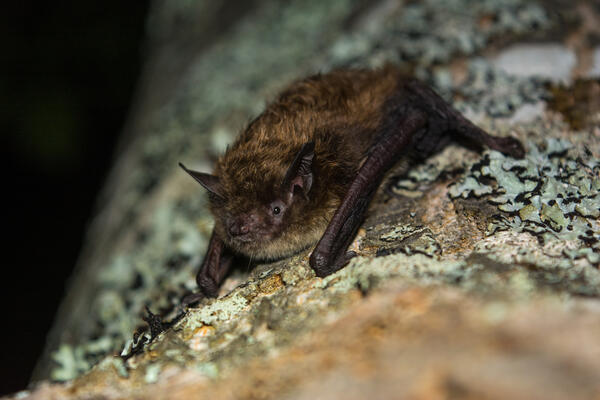
Roost-sites are vital for bats. To understand what factors contribute to the most suitable summer roosting habitat, a USGS team worked with researchers from the U.S. Forest Service and the U.S. Fish and Wildlife Service, focusing on four bat species: little brown bat, Northern long-eared bat, Indiana bat, and tricolored bat. Each species preferred slightly different habitat, though they all preferred areas with increased tree canopy cover, which can help wildlife managers identify habitat areas to prioritize during conservation efforts.
Another study examined how different types of forest management in the eastern U.S. impacted occupancy of the same four species. Just one year after management implementation, prescribed fire boosted expected occupancy for the Indiana bat, while ground vegetation management was best for the other three species. For all four species, thinning increased occupancy, but clear-cutting did not. These results can assist forest managers in determining which actions may be most likely to influence sensitive bat populations, prioritizing actions that improve bat habitat in areas with more bat populations.
More FORT Science in Action
This September, FORT is highlighting how our science projects support sound decision-making. Each day, we will highlight a new project and its applications. To see more, follow the tabs below.
Related

The Ecoinformatics and Wildlife Technology (ECOTECH) Research Group

North American Bat Monitoring Program (NABat)
Related
The Ecoinformatics and Wildlife Technology (ECOTECH) Research Group