



FORT Science in Action, Part 11: Understanding fire history to inform current wildfire and fuels management
Wildfires in the United States are increasing in size and severity, impacting lives, property, public health, ecosystems, and ecosystems services. Recovery from a single fire can cost \$100s of millions to over \$40 billion, not including the costs of fire suppression. FORT fire history research provides essential information to support wildfire managers across the country.
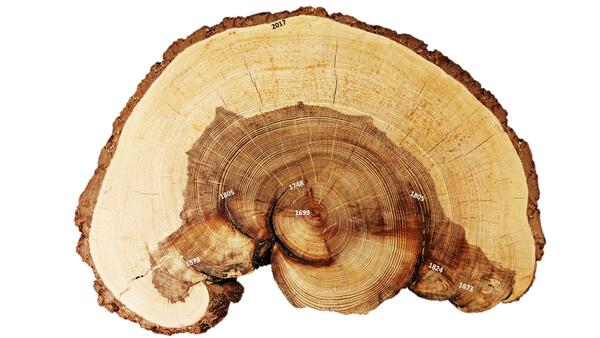
A century of fire suppression has increased fuels, contributing to our current, problematic fire patterns. Fire suppression also left us with little knowledge of the past fires that ecosystems and Indigenous societies co-existed with for millennia. Science on pre-1900 fire regimes and forest structure is a key foundation of current fuels and wildfire management programs used to combat the wildfire crisis; tree rings are a key source of this information.
FORT fire history research out of the New Mexico Landscapes Field Station 1) has improved and made possible tens of thousands of acres of fuels and wildfire hazard reduction treatments, and 2) is the foundation of Fire Management Plans and Forest Management Plans for the U.S. Forest Service Santa Fe and Carson National Forest, Bandelier and Valles Caldera National Park Service units, and the BLM Rio Grande del Norte National Monument. FORT fire science-informed fuels treatments were successful at stopping the 2020 En Medio Fire from burning Santa Fe, NM and the forested water supply, which translates into more than $1 billion in estimated avoided costs.
Local fire and forest histories directly inform local management projects (for example, thinning tree density targets and prescribed fire frequencies) across northern New Mexico, and new regional and national-level fire history research (from the new North American Tree-Ring Fire-Scar Network) informs management at broader scales.

More FORT Science in Action
This September, FORT is highlighting how our science projects support sound decision-making. Each day, we will highlight a new project and its applications. To see more, follow the tab below.
FORT Science in Action, Part 10
FORT Science in Action, Part 12
Related

New Mexico Tree-Ring Science

The New Mexico Landscapes Field Station

New Mexico Landscapes Field Station: Forest Ecosystem Research

New Mexico Landscapes Field Station: Fire Research

Synthesis of the new North American tree-ring fire-scar network: using past and present fire-climate relationships to improve projections of future wildfire
Related
New Mexico Tree-Ring Science
The New Mexico Landscapes Field Station
New Mexico Landscapes Field Station: Forest Ecosystem Research
New Mexico Landscapes Field Station: Fire Research