



FORT Science in Action, Part 13: Science and tools supporting amphibian management and conservation across the nation
This year, several USGS studies investigated the effects of drought, disease, and invasive species on frogs, toads, and newts across the country, from California to Wisconsin. Resulting science and tools provide strong support for conservation and habitat management of sensitive amphibian species across the country.
Mountain Toads
Living at elevations between 8,000 and 12,000 feet in the Rocky Mountains, the boreal toad is one of only two alpine toad species in the United States. This hardy amphibian withstands extreme weather and low temperatures. Currently, they’re threatened by changing environmental conditions and the widespread Batrachochytrium dendrobatidis chytrid fungus (Bd). To assess what habitats will remain suitable over time for boreal toad breeding in the southern Rockies, a FORT research team led a study combining long-term datasets on habitat quality, disease presence, and toad breeding data with current and predicted environmental conditions.
Their results, published this June, detail that predicted temperature changes mean a longer active season for the toads, which is associated with an increased extinction at breeding sites. While the exact reason is unknown, the association between longer active seasons and extinction may be related to Bd, as higher temperatures also mean a longer growing season for the deadly disease. The association may also be caused by less food and water availability later in the summer. Finally, the scientists made a web tool that allows managers to summarize future predicted conditions at individual sites and across the region, to inform management of boreal toad breeding sites and broader conservation efforts.
Battling Bd
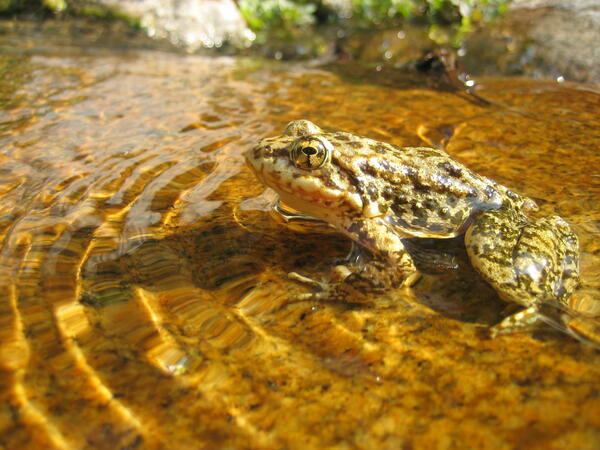
FORT scientists collaborated with several other research teams this year to study Bd in a variety of systems, building a better understanding of the prevalence and spread of the disease. Late last year, one group’s publication documented invasive American bullfrogs carrying the fungus in some tributaries of the Colorado River, threatening native species like the Great Basin spadefoot and Northern leopard frog both by preying on them and potentially spreading Bd. Last November, another team published their investigation of the environmental conditions in ponds driving Bd infection in Wisconsin’s Eastern newts. They discovered moderate temperatures and moderate temperature variability were associated with higher infection, highlighting how site-level conditions influence infection rates. Last October, a third research group published their findings on longevity in mountain yellow-legged frogs, including the discovery of a 21-year-old male, possibly the oldest wild ranid frog ever recorded. Researchers found that despite low population sizes, Bd, and low genetic diversity, relatively long generation times may be allowing the species to persist, emphasizing the need for managers to consider adult-focused conservation actions.
More FORT Science in Action
This September, FORT is highlighting how our science projects support sound decision-making. Each day, we will highlight a new project and its applications. To see more, follow the tabs below.
Related

A Framework for Guiding Management Decisions for Amphibians in an Uncertain Future

Amphibian Research and Monitoring Initiative: Rocky Mountain Region
Related
A Framework for Guiding Management Decisions for Amphibians in an Uncertain Future