



Machine Learning
Machine Learning
Filter Total Items: 5
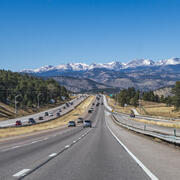
Using Artificial Intelligence to Estimate Traffic to Improve Planning and Access to Colorado’s Public Lands
This project applies data-driven, machine‑learning methods to estimate average annual daily traffic on roads that connect people to Colorado’s public lands, where traffic data are sparse or nonexistent. Expanding on successful applications in Wyoming, the approach uses socioeconomic, land-use, roadway, and accessibility data to uniquely model traffic patterns from 2015 to 2025. These predictions...
AI-driven science synthesis tools for resource managers
The scientific literature is abundant on drought-related topics in the western United States, including areas of the Colorado River Basin and the sagebrush biome. Scientists, resource managers, and decision makers use this science to assess, predict, and respond to the effects of drought on people and the environment. However, it can be difficult to quickly synthesize large amounts of research. To...

North American Bat Monitoring Program (NABat)
Bats are essential contributing members of healthy, functioning ecosystems. They perform numerous ecosystem services like insect pest control and plant pollination, and provide enormous economic benefits through ecotourism, medical research, and novel biotechnologies. North American bats face unprecedented threats including habitat loss and fragmentation, white-nose syndrome, and wind energy...

Estimating road age and traffic volume for disturbance assessments in Wyoming
In 2021, the Fort Collins Science Center initiated a research effort to estimate road age and annual traffic volumes across the majority of roads in Wyoming for assessing impacts to wildlife. Data on roads often focus on the ‘where’ (for example, spatial features) but neglect the ‘when’ (for example, road age) or ‘how much’ (for example, traffic volume). Knowing these characteristics is critical...

Road Ecology
Roads and their associated infrastructure can cause substantial and pervasive effects on adjacent ecosystems but are necessary for the movement and redistribution of goods, people, wealth, and natural resources in modern societies. The Fort Collins Science Center has initiated research looking at how roads and traffic may be impacting sagebrush ecosystems and the wildlife inhabiting them. This...