U.S. flag

An official website of the United States government

Multimedia

Scroll through the images below to see more of the fascinating science projects we are conducting at the Fort Collins Science Center. These are just a handful of the many amazing shots by FORT scientists and support staff that you will find on our website.

Images

three people stand in a large prairie, with trees sparsely distributed throughout and blue sky above
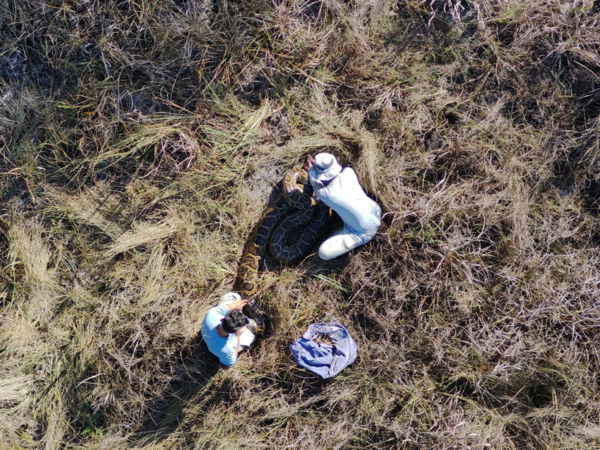
Researchers search for pythons in Everglades prairie habitat

Researchers search for Burmese pythons in Florida Everglades prairie habitat. Photo by Matthew Metcalf (USGS).

a person with red backpack and purple hat holds up a tracking device in a field with yellow flowers, trees in background
Tracking Burmese pythons in the Florida Everglades

Researchers working in the Florida Everglades use radio telemetry to track Burmese pythons tagged with location devices. 

photo montage of yearly riverbed changes across 2020-2024
Channel and vegetation change along a 6-mile reach of the Middle Green River

High resolution natural color imagery collected by uncrewed aircraft system (UAS) for mapping channel and vegetation change along a 6-mile reach of the Middle Green River at Ouray National Wildlife Refuge near Ouray, Utah from 2020-2024.

High resolution natural color imagery collected by uncrewed aircraft system (UAS) for mapping channel and vegetation change along a 6-mile reach of the Middle Green River at Ouray National Wildlife Refuge near Ouray, Utah from 2020-2024.

screen recording of the INHABIT application, with a mouse clicking through different options and map changing in response
The Invasive Species Habitat Tool (INHABIT)

Mapping invasive species habitat suitability within the INHABIT application.

a large lizard stands outside of a cage in a forest. A green box outlines the lizard and a label on the box reads 'tegu .84'
Photo used to train AI-based image detection algorithms for tegu surveillance

FORT scientists are using images like this to train artificial intelligence-based, image detection algorithms. These algorithms will be house in trail cameras to surveil natural areas for invasive tegus like the one seen in this photo. 

FORT scientists are using images like this to train artificial intelligence-based, image detection algorithms. These algorithms will be house in trail cameras to surveil natural areas for invasive tegus like the one seen in this photo. 

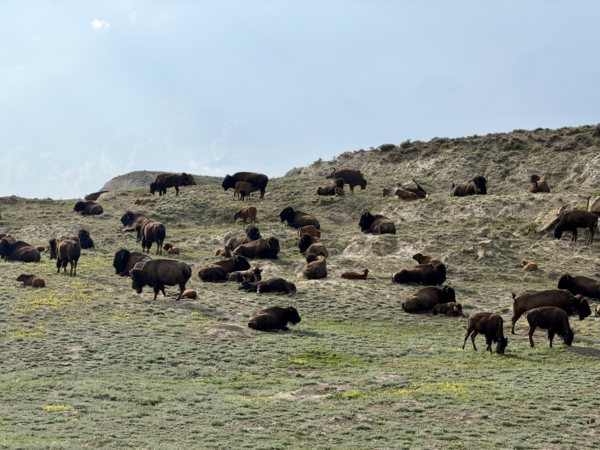
two people look through binoculars at a group of bison standing out in a field, partly cloudy sky above
Observing bison behavior in Theodore Roosevelt National Park

Researchers use binoculars to observe when bison are grazing or not in Theodore Roosevelt National Park.

Videos

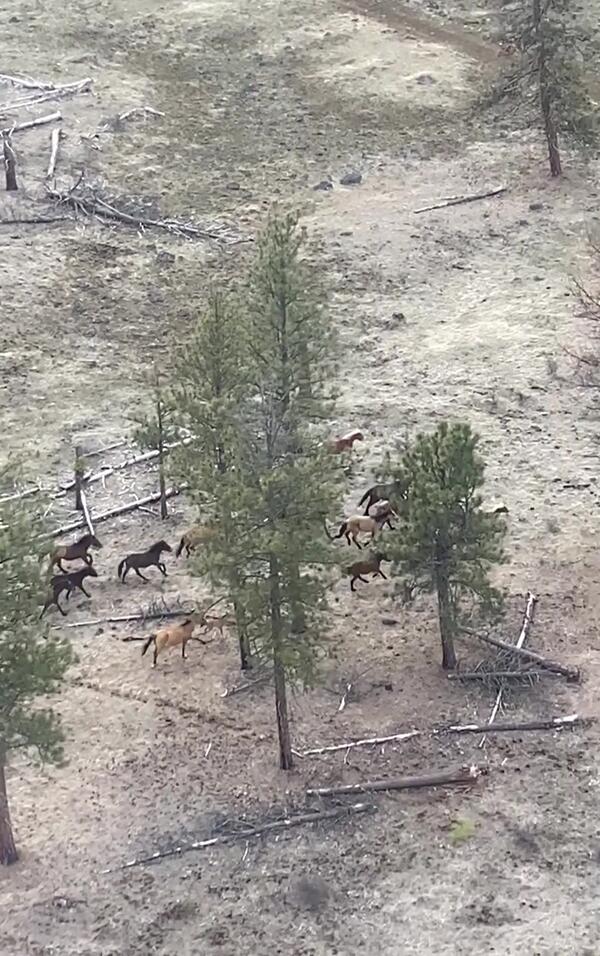
a group of horses running through tall trees and brown grasses a group of horses running through tall trees and brown grasses
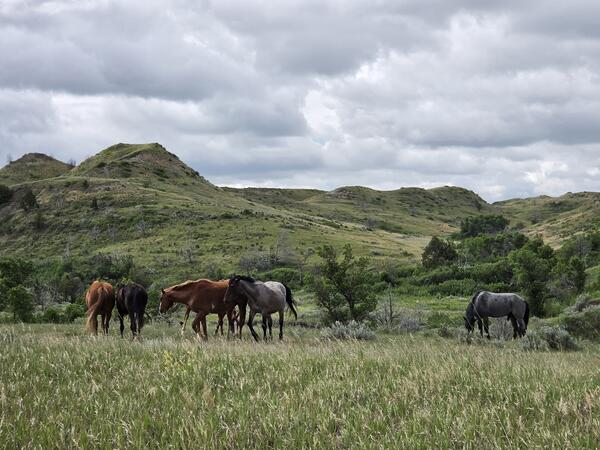
Wild horses on the Warm Springs Reservation

Wild horses run through trees on the Warm Springs Reservation in Oregon.

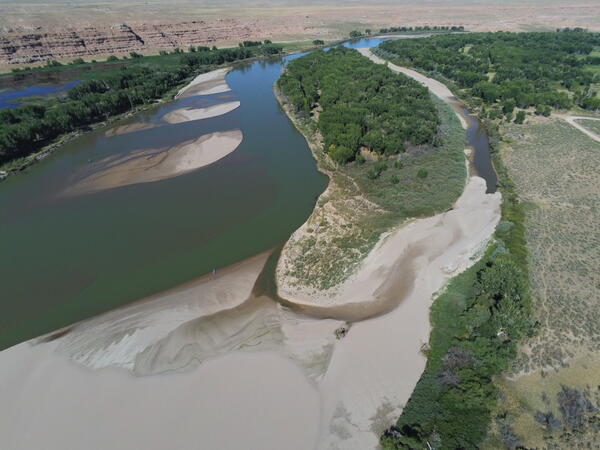
a blue-green river with many sand bars and beaches surrounded by trees and rock formations a blue-green river with many sand bars and beaches surrounded by trees and rock formations
Aerial footage of the Green River in Ouray National Wildlife Refuge

USGS researchers use high-resolution remote sensing data acquired from uncrewed aircraft systems (UAS) to monitor and analyze long-term hydrologic, geomorphic, and ecological dynamics in river systems.

USGS researchers use high-resolution remote sensing data acquired from uncrewed aircraft systems (UAS) to monitor and analyze long-term hydrologic, geomorphic, and ecological dynamics in river systems.

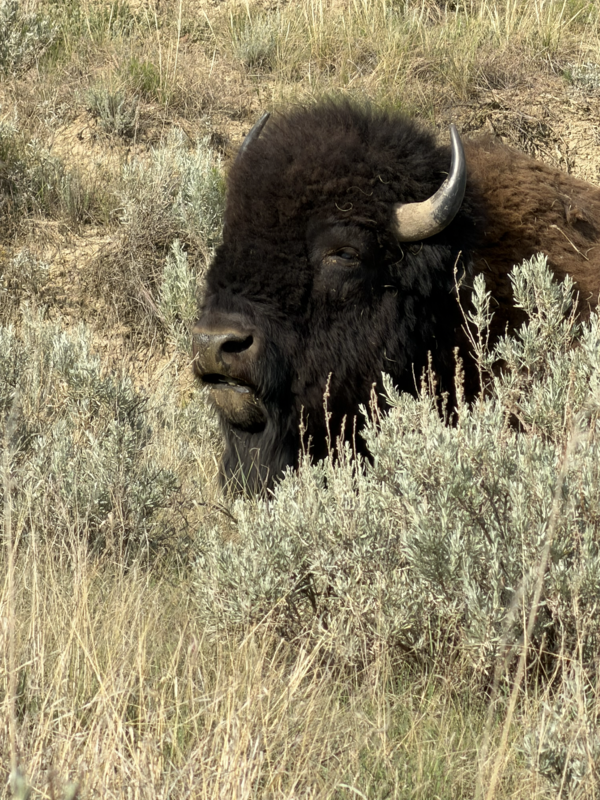
Bison in Theodore Roosevelt National Park

USGS researchers and collaborators are currently studying the grazing behavior of bison in Theodore Roosevelt National Park to determine the effects of ungulates on vegetation in the park. These studies will support park managers in maintaining healthy bison herds, conserving critical habitat, and sustaining outdoor recreation.

USGS researchers and collaborators are currently studying the grazing behavior of bison in Theodore Roosevelt National Park to determine the effects of ungulates on vegetation in the park. These studies will support park managers in maintaining healthy bison herds, conserving critical habitat, and sustaining outdoor recreation.

title slide of USGS presentation on satellite observations of lake surface water dynamics title slide of USGS presentation on satellite observations of lake surface water dynamics
Saline Lakes IWAA Fall 2024 Webinar Series: Satellite Observations of Lake Surface Water Dynamics

The sixth and final webinar in the Saline Lakes Ecosystems IWAA Fall 2024 Webinar Series is on satellite observations of lake surface water dynamics. John W. Jones of the USGS Hydrologic Remote Sensing Branch introduces the surface water and wetland remote sensing component of the Integrated Water Availability Assessment.

title slide of a presentation on Great Basin terminal lakes waterbird prey availability title slide of a presentation on Great Basin terminal lakes waterbird prey availability
Saline Lakes IWAA Fall 2024 Webinar Series: Waterbird Prey Availability
Saline Lakes Ecosystems IWAA Fall 2024 Webinar Series: Bird Movements

The fourth webinar in the Saline Lakes Ecosystems IWAA Fall 2024 Webinar Series is on movement of bird species associated with Great Basin terminal lake ecosystems. Cory Overton of the Western Ecological Research Center gives an overview of the USGS bird movement monitoring strategy and presents results from the 2024 field season.

Was this page helpful?