



Controls on Critical Element Enrichment in Carbonatite-Alkaline Igneous Complexes
The project seeks to determine the processes responsible for critical element enrichment in carbonatites and to enhance our ability to identify and assess economic deposits. This project will work at various scales to meet this objective and will primarily focus on deposits within the US or our USGS collaborative Nations.
Science Issue and Relevance
Identification and assessment of critical elements is a USGS and Department of the Interior priority because dependency on foreign sources creates a strategic vulnerability. Critical elements—such as rare earth elements—are essential to the economy and face potential supply chain disruptions. Carbonatites are igneous rocks that contain substantial amounts of primary magmatic carbonate minerals (at least 25 modal percent), most commonly calcite and dolomite. Carbonatite-related ore deposits are the primary supplier of light rare earth elements (LREE) and niobium and are potential sources of heavy rare earth elements (HREE). The processes responsible for the enrichment of these critical elements, and their relative contributions, remain poorly constrained. However, understanding why some carbonatites are enriched—and why enrichment is localized within specific zones of these deposits—is essential for delineating and assessing critical element potential in carbonatite–alkaline igneous complexes.
Methods to Address Issue
Several processes may control elemental enrichment including source (initial elemental concentration, overall chemical makeup, pressure, and temperature), magmatic evolution (crystal fractionation, liquid immiscibility, volatile composition), and late-stage interactions between magma, crystals, and fluids. To evaluate these factors, this project will work at a range of scales from regional to deposit to mineral (in-situ).
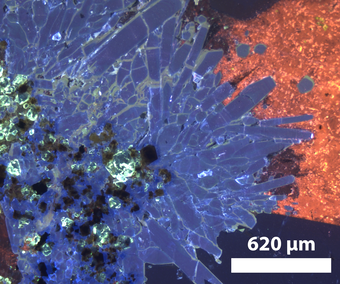
To study critical mineral enrichment processes, integrated chemical, petrographic, scanning electron microscopy (SEM), cathodoluminescence, mineral chemistry, (microprobe and laser ablation inductively coupled mass spectrometry), geochronology, and isotopic (radiogenic and stable) characterization is needed.
We aim to better understand critical mineral enrichment processes in carbonatite-alkaline igneous complexes through the following tasks:
Task 1. Deposit-scale controls on critical element enrichment
We examine carbonatite intrusive centers with varying degrees of REE, Nb, and P enrichment. Through mineral and isotopic characterization of samples, we will explore how local interactions of carbonatite melt with wall-rocks of variable composition affect solubility of these critical elements and promote crystallization toward carbonatite dike margins.
Task 2. REE-enriched carbonatite sources and lithospheric pathways
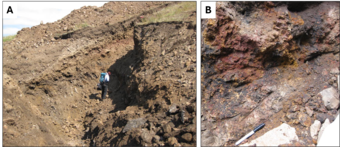
Craton margins and major basement terrane boundaries are pathways for the ascent of younger alkaline magmas derived from the upper mantle. These magmas form silica-undersaturated alkaline intrusions that commonly host economic concentrations of REE. Research focuses on Paleogene alkaline intrusive centers of Montana, Wyoming, and South Dakota. Geochemical, isotopic, and geochronological data acquisition efforts of this task will aid in the interpretation of airborne geophysical surveys conducted over parts of eastern Wyoming and the northern Black Hills region through the EarthMRI program.
Task 3. Investigations of igneous critical element occurrences in underexplored terranes via heavy mineral sediments
This task will focus on locating previously unknown resources containing REE, Nb, and Zr by examining the potential utility of heavy minerals in stream sediment samples as indicator minerals for upgradient REE+Nb mineralized carbonatite-hosted resources.
Task 4. Processes of critical element enrichment in weathered carbonatite resources
The objective of this task is to improve our understanding of processes responsible for critical element enriched in carbonatite-derived weathered deposits, including Mount Weld, Australia, the type example of ore-grade REE enrichment in a regolith. This task will also utilize 40Ar/39Ar dating of potassium-bearing manganese oxides.
Task 5. Heavy rare earth element resources of Hicks Dome, IL: potential links to carbonatite magmatism in the IL-KY fluorspar district
Zones enriched in HREE and high field strength elements are reported in some carbonatite-alkaline igneous complexes including Hicks Dome. Through this task we will, 1) examine the processes controlling critical element enrichment in this deposit, 2) determine whether mantle-derived carbonatite is present at Hicks Dome and in intrusive centers of Kentucky, and 3) use U-Pb and Lu-Hf geochronology to examine the potential for multiple mineralizing events.
Related projects and laboratories.

Evaluation of Critical Elements in Carbonatites

Critical Elements in Carbonatites: From Exploration Targets to Element Distribution

Denver Microbeam Laboratory: Mineral Resources Research Support

Denver Microbeam Laboratory
The project seeks to determine the processes responsible for critical element enrichment in carbonatites and to enhance our ability to identify and assess economic deposits. This project will work at various scales to meet this objective and will primarily focus on deposits within the US or our USGS collaborative Nations.
Science Issue and Relevance
Identification and assessment of critical elements is a USGS and Department of the Interior priority because dependency on foreign sources creates a strategic vulnerability. Critical elements—such as rare earth elements—are essential to the economy and face potential supply chain disruptions. Carbonatites are igneous rocks that contain substantial amounts of primary magmatic carbonate minerals (at least 25 modal percent), most commonly calcite and dolomite. Carbonatite-related ore deposits are the primary supplier of light rare earth elements (LREE) and niobium and are potential sources of heavy rare earth elements (HREE). The processes responsible for the enrichment of these critical elements, and their relative contributions, remain poorly constrained. However, understanding why some carbonatites are enriched—and why enrichment is localized within specific zones of these deposits—is essential for delineating and assessing critical element potential in carbonatite–alkaline igneous complexes.
Methods to Address Issue
Several processes may control elemental enrichment including source (initial elemental concentration, overall chemical makeup, pressure, and temperature), magmatic evolution (crystal fractionation, liquid immiscibility, volatile composition), and late-stage interactions between magma, crystals, and fluids. To evaluate these factors, this project will work at a range of scales from regional to deposit to mineral (in-situ).
To study critical mineral enrichment processes, integrated chemical, petrographic, scanning electron microscopy (SEM), cathodoluminescence, mineral chemistry, (microprobe and laser ablation inductively coupled mass spectrometry), geochronology, and isotopic (radiogenic and stable) characterization is needed.
We aim to better understand critical mineral enrichment processes in carbonatite-alkaline igneous complexes through the following tasks:
Task 1. Deposit-scale controls on critical element enrichment
We examine carbonatite intrusive centers with varying degrees of REE, Nb, and P enrichment. Through mineral and isotopic characterization of samples, we will explore how local interactions of carbonatite melt with wall-rocks of variable composition affect solubility of these critical elements and promote crystallization toward carbonatite dike margins.
Task 2. REE-enriched carbonatite sources and lithospheric pathways
Craton margins and major basement terrane boundaries are pathways for the ascent of younger alkaline magmas derived from the upper mantle. These magmas form silica-undersaturated alkaline intrusions that commonly host economic concentrations of REE. Research focuses on Paleogene alkaline intrusive centers of Montana, Wyoming, and South Dakota. Geochemical, isotopic, and geochronological data acquisition efforts of this task will aid in the interpretation of airborne geophysical surveys conducted over parts of eastern Wyoming and the northern Black Hills region through the EarthMRI program.
Task 3. Investigations of igneous critical element occurrences in underexplored terranes via heavy mineral sediments
This task will focus on locating previously unknown resources containing REE, Nb, and Zr by examining the potential utility of heavy minerals in stream sediment samples as indicator minerals for upgradient REE+Nb mineralized carbonatite-hosted resources.
Task 4. Processes of critical element enrichment in weathered carbonatite resources
The objective of this task is to improve our understanding of processes responsible for critical element enriched in carbonatite-derived weathered deposits, including Mount Weld, Australia, the type example of ore-grade REE enrichment in a regolith. This task will also utilize 40Ar/39Ar dating of potassium-bearing manganese oxides.
Task 5. Heavy rare earth element resources of Hicks Dome, IL: potential links to carbonatite magmatism in the IL-KY fluorspar district
Zones enriched in HREE and high field strength elements are reported in some carbonatite-alkaline igneous complexes including Hicks Dome. Through this task we will, 1) examine the processes controlling critical element enrichment in this deposit, 2) determine whether mantle-derived carbonatite is present at Hicks Dome and in intrusive centers of Kentucky, and 3) use U-Pb and Lu-Hf geochronology to examine the potential for multiple mineralizing events.
Related projects and laboratories.
Evaluation of Critical Elements in Carbonatites
Critical Elements in Carbonatites: From Exploration Targets to Element Distribution
Denver Microbeam Laboratory: Mineral Resources Research Support