



Surface Water
Surface Water
Filter Total Items: 34

Sediment Transport in the Yankee Fork Salmon River
The Yankee Fork of the Salmon River is one of the larger watersheds in the upper Salmon River subbasin of central Idaho. Mining activities since the late 19th century, specifically placer mining and associated dredging from 1940 to 1953, have left the fluvial system in a highly altered and unnatural state. To improve aquatic and terrestrial habitat in the Yankee Fork, the Bureau of Reclamation and...

Characterizing the Water Resources of the Big Lost River Valley
In cooperation with the Idaho Department of Water Resources, we are working to improve the scientific understanding of the Big Lost River basin's water resources. This improved understanding will support effective resource management.

Satellite Monitoring of Algal Blooms in Idaho Waterbodies
Harmful algal blooms (HABs) are an increasing concern in Idaho. Within the past few years, Idaho agencies have issued at least 57 HAB notices on 29 waterbodies throughout the state. Toxins produced by HABs pose risks to human and animal health. Local economies may also be adversely affected when algal blooms discourage outdoor recreation. Routinely monitoring the state's many waterbodies is too...

Kootenai River Sediment Studies
The Kootenai River white sturgeon ( Acipenser transmontanus) and other native fish species are culturally important to the Kootenai Tribe of Idaho, but their habitat and recruitment have been affected by anthropogenic changes to the river. White sturgeon and burbot have not successfully spawned in the Kootenai River since the completion of Libby Dam upstream in Montana. In recent years, most white...

Automated Sampling for Phosphorus in the Lower Boise River
For decades, the lower Boise River downstream of Lucky Peak Reservoir has been highly enriched with phosphorus. Too much of a good thing, the high concentrations of phosphorus create a cycle of excessive plant growth, decreased oxygen for fish, and even algal blooms.

Modeling the Hydraulic and Water-Quality Habitat Suitability for Macrophytes in the Middle Snake River, South-Central Idaho
Rooted aquatic plants (macrophytes) are essential components of freshwater ecosystems. Macrophyte beds provide shelter for fish and other aquatic life. Their leaves and stems also provide algae with surfaces to colonize, which, in turn, drives the aquatic food webs and dissolved oxygen cycles. However, too much of a good thing can create problems. When growth conditions are favorable, macrophytes...
INLPO Water Monitoring
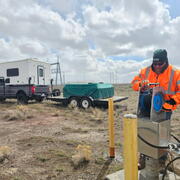
The U.S. Geological Survey (USGS) first characterized the water resources of the Idaho National Laboratory (INL) area prior to the establishment of nuclear reactor testing facilities in 1949. Since then, the USGS has maintained monitoring networks for groundwater quality and water levels at the INL. These efforts provide essential data on hydrologic trends and track the movement of radioactive and...

Wood River Valley Groundwater-Flow Model
Rapid population growth in the Wood River Valley since the 1970s has caused concern about the long-term sustainability of the groundwater resource. Water-resource planners and managers, as well as other decision makers, need a tool for water rights administration and water-resource management and planning.

Selenium in the Blackfoot River Watershed
The upper Blackfoot River receives runoff from 12 large phosphate mines. Shale waste rock that is a byproduct of mining is highly enriched in naturally occurring selenium. At optimal concentrations, selenium can be a positive nutrient and antioxidant in mammals and fish. At elevated concentrations, however, it can damage fish and animal immune systems. As early as 1996, livestock deaths attributed...

Streamflow Evaluation for Wild and Scenic Rivers, Owyhee Canyonlands Wilderness
Several river segments in the Owyhee Canyonlands Wilderness have been designated as “Wild and Scenic” under the Omnibus Public Lands Management Act of 2009. This designation is intended to protect the “outstanding remarkable values” (ORVs) in this area—specifically fish and wildlife habitat, scenic and geological features, and recreational opportunities. The Bureau of Land Management (BLM) is...

Occurrence and Potential Risk of Microplastics in Lake Mead and the Delaware River
There is mounting evidence that microplastics present a significant threat to aquatic organisms. Microplastics – defined as plastic particles less than 5 mm in diameter – come from many different sources, including synthetic textiles, industrial waste products, personal care products, and the breakdown of litter, car tires, and other objects. This study will assess the occurrence of microplastics...

Trace Elements in Streams Near the Stibnite Mining Area
Mining of stibnite (antimony sulfide), tungsten, gold, silver, and mercury near the town of Stibnite in central Idaho has left a legacy of trace element contamination in the East Fork of the South Fork of the Salmon River (EFSFSR) and its tributaries. Concentrations of arsenic, antimony, and mercury frequently exceed human health criteria and may impact threatened or endangered salmonid species...