



Water Resources
Water Resources
Powell Center working groups rarely are just one USGS Mission Area and are sorted into these areas by the groups themselves. Projects may be relevant to additional areas.
Impact of Thermoelectric Power Plant Operations and Water Use Reporting Methods on Thermoelectric Power Plant Water Use
Impact of Thermoelectric Power Plant Operations and Water Use Reporting Methods on Thermoelectric Power Plant Water Use
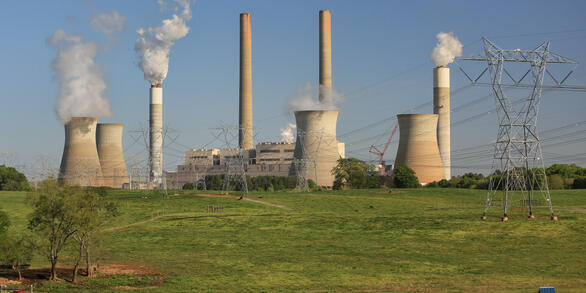
This study shows the importance of power plant operations and the water use reporting methods for thermoelectric power plant management, introducing an operations-based data filtration method and investigating the importance of features for predicting reported water withdrawal and consumption.
Filter Total Items: 34

Dam removal: synthesis of ecological and physical responses
Dam decommissioning is rapidly emerging as an important river restoration strategy in the U.S., with several major removals recently completed or in progress. But few studies have evaluated the far-reaching consequences of these significant environmental perturbations, especially those resulting from removals of large (>10-15 m tall) structures during the last decade. In particular...
Water availability for ungauged rivers: an integrative, multi-model approach to estimate water availability at ungauged rivers across the United States
There has been increasing attention placed on the need for water availability information at ungauged locations, particularly related to balancing human and ecological needs for water. Critical to assessing water availability is the necessity for daily streamflow time series; however, most of the rivers in the United States are ungauged. This proposal leverages over $1M currently...
Potential Impacts of Prospective Climate Change on Groundwater Recharge in the Western United States
Groundwater withdrawals in the western US are a critical component of the water resources strategy for the region. Climate change already may be substantially altering recharge into groundwater systems; however, the quantity and direction (increase or decrease) of changes are relatively unknown as most climate change assessments have focused on surface water systems. We propose to...
Transport of dissolved organic matter by river networks from mountains to the sea: a re-examination of the role of flow across temporal and spatial scales
The transport of dissolved organic matter (DOM) by rivers is an important component of the global carbon cycle, affects ecosystems and water quality, and reflects biogeochemical and hydrological processes in watersheds. Understanding the fundamental relationships between discharge and DOM concentration and composition reveals important information about watershed flow paths, soil...
Understanding and managing for resilience in the face of global change
Resilience science provides a conceptual framework and methodology for quantitatively assessing the ability of a system to remain in a particular state. Probable non-linear ecological responses to global change, including climate change, require a clear framework for understanding and managing resilience. However, much of the resilience research to date has been qualitative in nature...
Understanding Fluid Injection Induced Seismicity
Fluid injection induced seismicity has been reported since the 1960s. There are currently more than 150,000 injection wells associated with oil and gas production in 34 states in the conterminous US. Pore pressure disturbance caused by injection is generally considered the culprit for injection induced seismicity, but, not all injection causes seismicity. It is not well understood what...
A digital crust to advance continental‐scale modeling of subsurface fluid flow in climate, crustal process, and Earth system models
Fluid circulation in the Earth’s crust plays an essential role in surface, near surface, and crustal dynamics. Near the surface, soil water and groundwater interact with each other and with rivers, lakes and wetlands, affecting weathering, soil formation, ecosystem evolution and biogeochemical cycles. Further down (1km), fluid flow affects diagenesis, hydrocarbon maturation and migration...
Hydraulic Fracturing and Water Resources: An Assessment of the Potential Effects of Shale Gas Development on Water Resources in the United States
Shale gas is a key source of onshore domestic energy for the United States and production of this resource is increasing rapidly. Development and extraction of shale gas requires hydraulic fracturing, which entails horizontal drilling, perforation of steel casing and cement grout using explosive charges, and expansion of fractures using fluids under high pressure. Concern over potential
Climate change and ecohydrology in temperate dryland ecosystems: a global assessment
Water cycling and availability exert dominant control over ecological processes and the sustainability of ecosystem services in water - limited ecosystems. Consequently, dryland ecosystems have the potential to be dramatically impacted by hydrologic alterations emerging from global change, notably increasing temperature and altered precipitation patterns. In addition, the possibility of...
Global Croplands and Their Water Use for Food Security in the Twenty-first Century
Global climate change is putting unprecedented pressure on global croplands and their water use, vital for ensuring future food security for the world's rapidly expanding human population. The end of the green green revolution (productivity per unit of land) era has meant declining global per capita agricultural production requiring immediate policy responses to safeguard food security...