



USGS Research: Elk Personality Affects Patterns of Conflict and Migration—Implications for Hunting and Disease
New research finds that elk personality can shape patterns of human-elk conflict, whether elk are long- or short-distance migrators, and how close to a town they are likely to spend the winter. Wildlife managers can take the personality traits of conflict-prone elk into consideration for management plans.
Conflicts with Elk
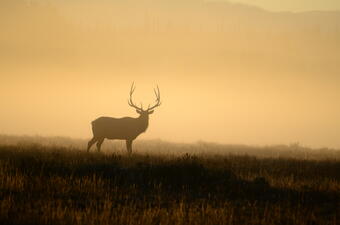
Elk contribute to regional economies through hunting and tourism but can also come into conflict with humans. Human-elk conflicts include vehicle collisions, damaging private property, and eating feed intended for livestock. However, not all elk are conflict-prone and the personality traits that make individual elk prone to conflict have important consequences for migration behavior and hunting opportunity.
USGS-led Study
Researchers with the USGS Northern Rocky Mountain Science Center (NOROCK), U.S. Fish and Wildlife Service, National Park Service, and Wyoming Game & Fish Department recently published a paper that investigated elk conflict behavior, its effects on migration, and implications for hunting.
- Researchers used GPS collar movement data from National Elk Refuge elk (NER), located next to Grand Teton National Park and Jackson, Wyoming
- The NER feeds the majority of the Jackson elk herd in winter, with feeding areas at various distances from Jackson
Conflict Elk
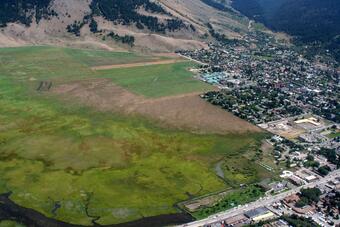
The authors documented several behavioral traits of conflict-prone elk.
- Conflict-prone elk
- Were found in the suburban area outside of Jackson
- Were found near resources used to feed livestock
- Migrated less than half the distance of shy elk that avoid conflicts
- In winter, were 4 times more likely to use the NER feeding area closest to Jackson and had higher levels of human presence
Benefits of This Research
Wildlife managers obviously cannot tell which elk in a herd are prone to conflict just by looking at them. This research showed that conflict-prone elk spent more time in areas where hunting was limited, migrated shorter distances, and spent more of the winter in areas of the NER closer to human activity. This information could be used by wildlife managers when developing management strategies.
- Conflict-prone elk are not as accessible to hunting as shy elk because they are more likely to occupy private land near human population centers
- Conflict-prone elk not accessible to hunting are generally located in one part of the NER during winter, while shy elk that are accessible to hunting (as long-distance migrators) winter on another part of the NER, providing wildlife managers a natural separation of the two elk groups for potential management actions
- The analysis identified 100% of previously known conflict hotspots, and detected additional hotspots, providing a potentially useful tool for managers to evaluate conflict and disease risk
- Conflict-prone elk were more likely to aggregate in suburban areas. Areas of higher animal density may increase the rate of disease transmission, such as chronic wasting disease