



Repeated Marine Heatwaves Have Dramatically Reshaped Coral Reefs in Hawaiʻi National Parks
Coral reefs along Hawaiʻi’s Kona Coast have undergone major declines over the past two decades, according to a new report from USGS and the National Park Service (NPS).
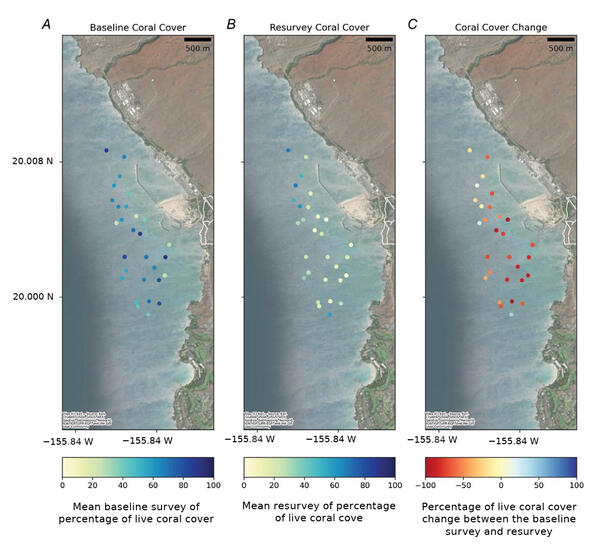
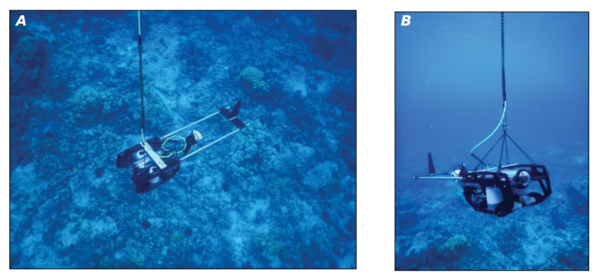
By comparing underwater imagery collected in the early 2000s with new surveys conducted in 2022, researchers documented widespread losses in live coral cover across three protected coastal park units on the Island of Hawaiʻi. The findings highlight the long-term effects of repeated coral bleaching events and other environmental stressors on nearshore reef ecosystems.
Tracking Two Decades of Reef Change
The study focused on reefs within and adjacent to Kaloko-Honokōhau National Historical Park, Puʻuhonua o Hōnaunau National Historical Park, and Puʻukoholā Heiau National Historic Site.
Researchers classified underwater imagery by coral cover and dominant reef type, including several coral categories as well as rubble, macroalgae, sand, and volcanic pavement.
Across all three parks, live coral cover declined between the baseline surveys and the 2022 resurvey, with the most severe losses occurring at Puʻukoholā Heiau National Historic Site.
Bleaching Events Leave a Lasting Mark
The Hawaiian Archipelago has experienced increasingly frequent coral bleaching events since 1996 as marine heatwaves have become more common and intense.
The most damaging event occurred during 2014–2015, when prolonged ocean warming caused catastrophic coral bleaching statewide.
The new study indicates those repeated heat stress events have fundamentally altered reef structure along the Kona Coast.
Researchers found:
- Low coral cover categories (0–20%) became much more common
- High coral cover categories (>50%) became less common
- Algae and rubble increased by roughly 25% overall across the parks
- These changes indicate many reef areas are transitioning away from coral-dominated ecosystems toward rubble, algae, and bare substrate.
Heat Stress Affected Entire Reef Systems
One notable finding was that coral decline occurred across nearly all surveyed depths.
Scientists found little evidence that deeper reef zones were protected from losses, demonstrating that marine heatwaves and associated stressors affected the reef system broadly, from shallow reef flats to deeper fore-reef habitats.
In addition to warming oceans, researchers noted that other local, human-related pressures likely contributed to reef decline, including water quality degradation, sewage runoff, and coastal development.
Building Long-Term Reef Monitoring
The study emphasizes the importance of continued reef monitoring in Hawaiʻi’s national parks. Expanding long-term monitoring efforts through periodic underwater imaging surveys and fixed diver transects managed by NPS could help scientists and park managers better track how critical marine habitats respond to future bleaching events and environmental change.
As climate-driven marine heatwaves continue to intensify globally, the reefs of Hawaiʻi may provide an important window into the long-term future of coral ecosystems worldwide.
Related

Coral Reef Project
Related