Re-establishing Waterbird Breeding Colonies in San Francisco Bay
Learn more about how our partners are using science and management to maintain and establish new bird nesting colonies in support of the South Bay Salt Pond Restoration Project. Any use of trade, firm, or product names is for descriptive purposes only and does not imply endorsement by the U.S. Government.
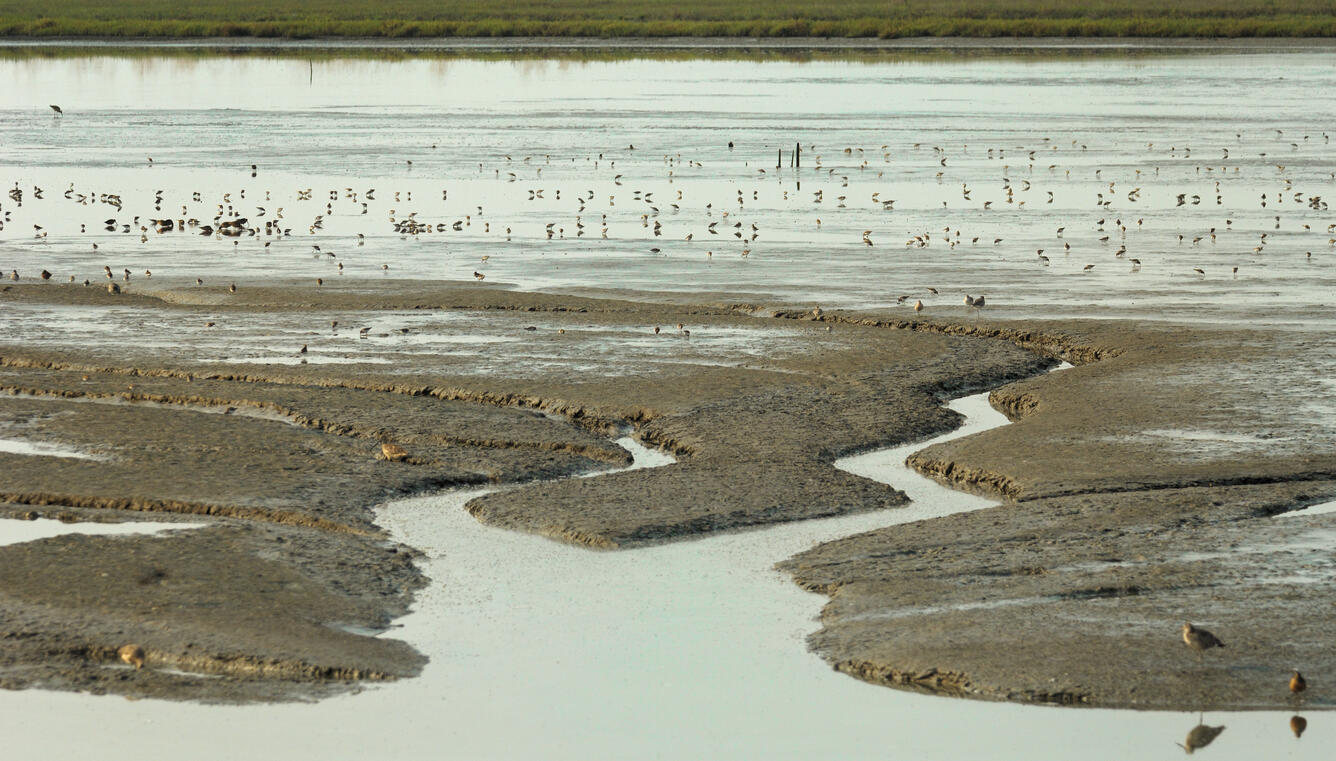
San Francisco Bay is the largest estuary on the West Coast of North America and supports more than 1 million breeding, migrating, and overwintering waterbirds annually (Takekawa and others, 2001). However, urban development and agriculture that included commercial salt production have contributed to the loss of nearly 79% of historic tidal marshes and 42% of tidal flats (San Francisco Bay Area Goals Project, 1999). South Bay Salt Pond Restoration Project is a large-scale plan to convert 50-90% of former salt evaporation ponds into managed tidal marsh habitats over the next 50 years.
Salt Pond Restoration
Building Nesting Habitat
Establishing Nest Colonies
caspian terns
Forster's Tern
population change
California Gulls
Partners & Contacts
products
Title
The South Bay Salt Pond Restoration Project is a large-scale plan to convert 50-90% of former salt evaporation ponds into managed tidal marsh habitats over the next 50 years.
The project encompasses land managed by the Don Edwards San Francisco Bay National Wildlife Refuge (Don Edwards SFBNWR) (U.S. Fish and Wildlife Service (USFWS)) and Eden Landing Ecological Reserve (California Department of Fish and Wildlife).
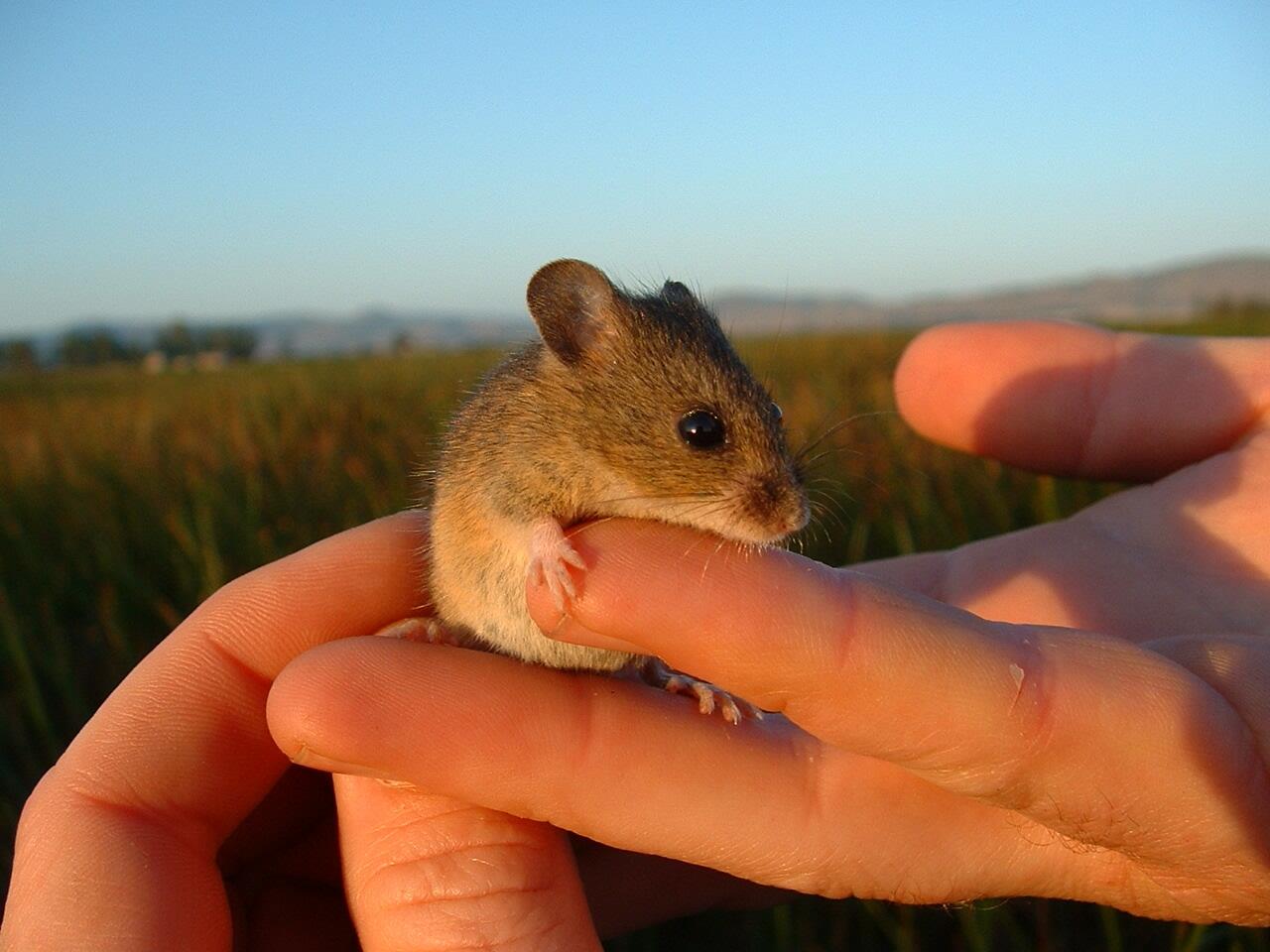
The South Bay Salt Pond Restoration Project will benefit vulnerable species like the salt marsh harvest mouse but will reduce the amount of pond nesting habitat used by breeding waterbirds. In an effort to maintain current waterbird population numbers, the project will enhance remaining pond habitat by constructing nesting islands.
Building Nest Habitats
More than 90% of waterbird nests within the South Bay Salt Pond Restoration Project area are on islands within former salt evaporation ponds. Using data from more than 9,000 individual nests over nine years, the USGS studied waterbird nesting preferences and developed management options for the design and construction of future nesting islands. These include building:
- Islands in ponds closer to San Francisco Bay
- 3-5 islands in each pond, rather than many islands within a few ponds
- Linear, elongated islands rather than round islands
- Islands located away from levees
- Small- to medium-sized islands (<0.2 ha), rather than a few large islands
- Islands with abundant area (0.5-1.5 m) above the water surface
- Islands with a combination of flat (0°) and moderate (15°) slopes
- Islands with low-growing and sparse to dense vegetation
Since 2010, new islands have been constructed in the Eden Landing Ecological Reserve (6 islands) and the Don Edwards SFBNWR (30 in pond SF2 and 16 added to the existing four in pond A16) to provide nesting habitat to waterbirds.


Establishing Nesting Colonies
Even when new islands are suitable for nesting waterbirds, they may need a “jump-start” to help establish nesting colonies.
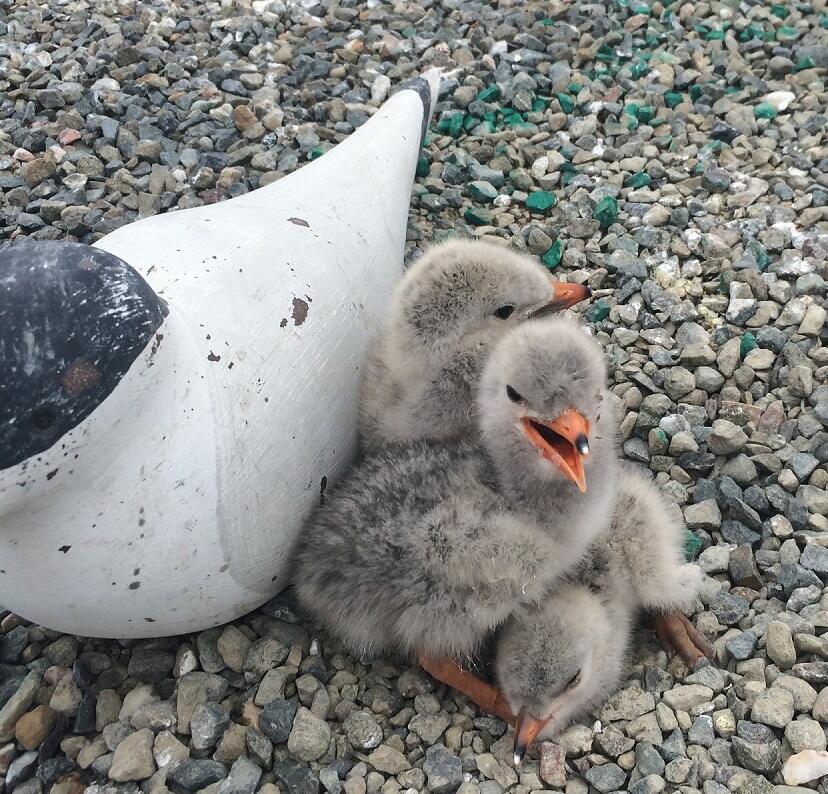
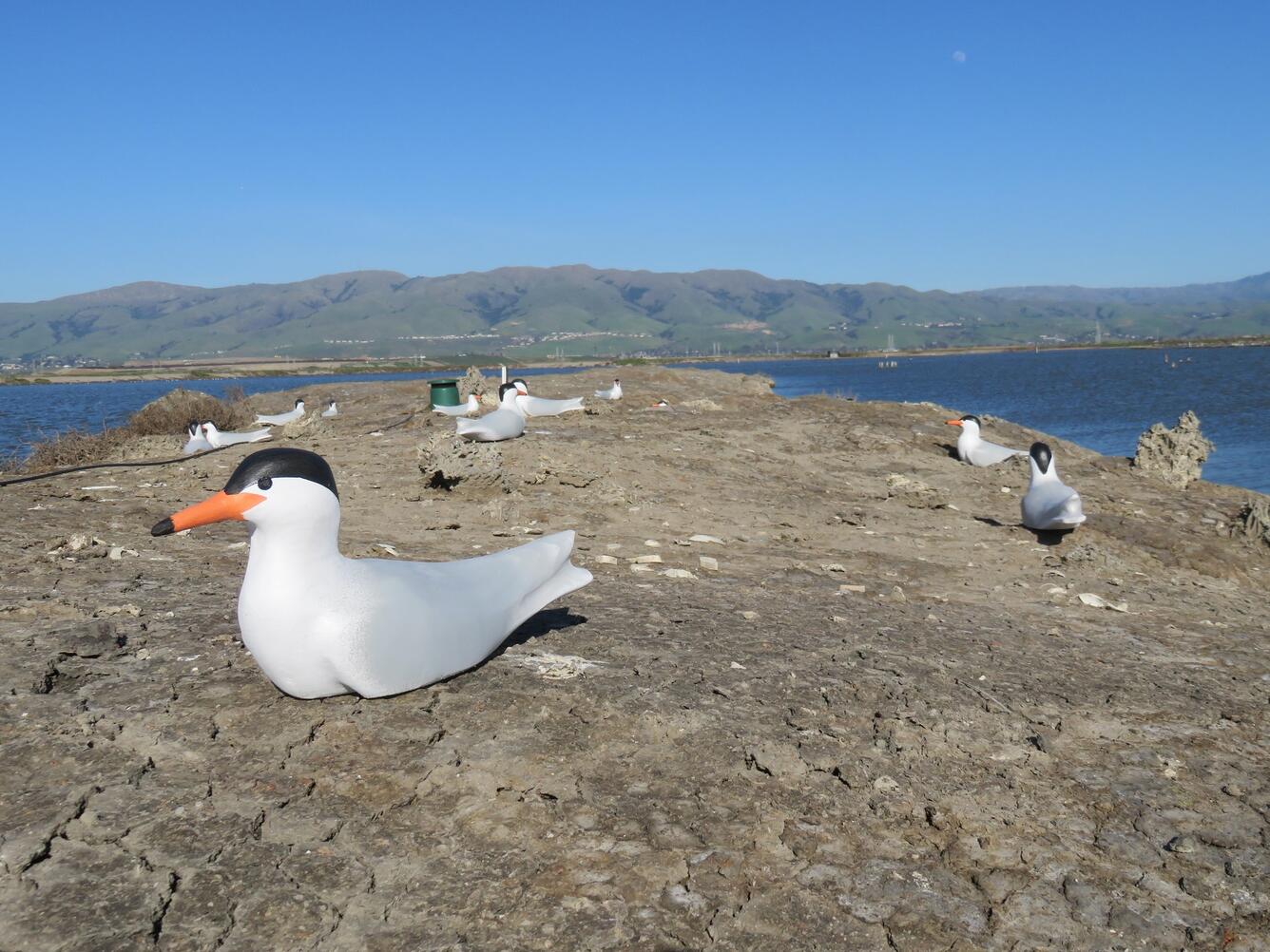
Scientists use decoys and electronic call systems to create the appearance of a real nesting colony. This form of “social attraction” is an effective strategy for luring adult birds to potential nesting sites, in order to establish successful breeding colonies. Colonial waterbirds, such as terns and other seabirds, are good candidate species for social attraction efforts because they are readily attracted to decoys of adult birds and sound recordings of adult vocalizations.

USGS is using social attraction to establish nesting colonies of Caspian terns and Forster’s terns at the Don Edwards San Francisco Bay National Wildlife Refuge.
Population Change
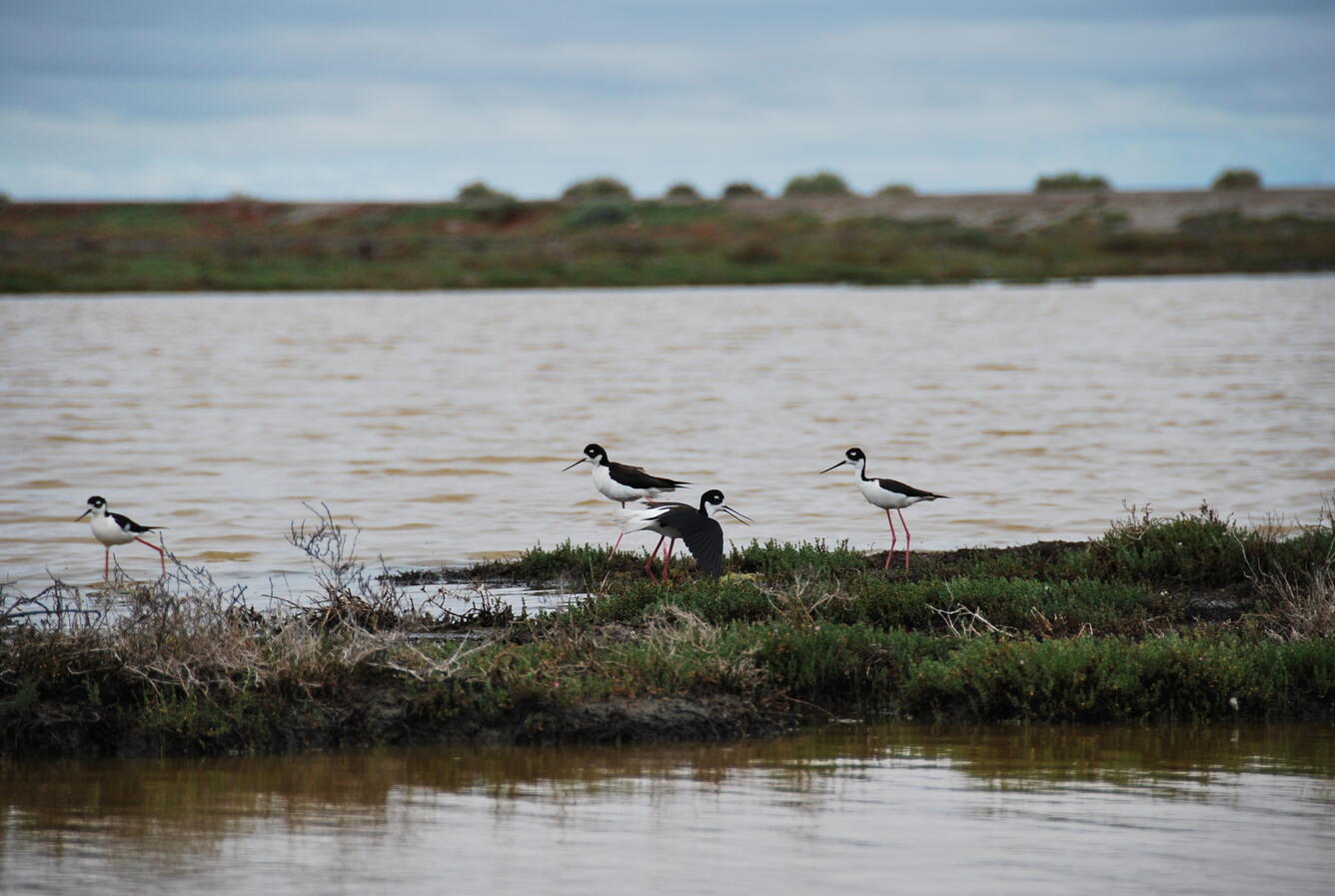
USGS has been monitoring waterbird nesting populations in South San Francisco Bay for 20 years. During that time the number of American avocet, black-necked stilt, and Forster’s tern nests have all declined, although Forster's tern numbers have recently rebounded to the highest levels observed.
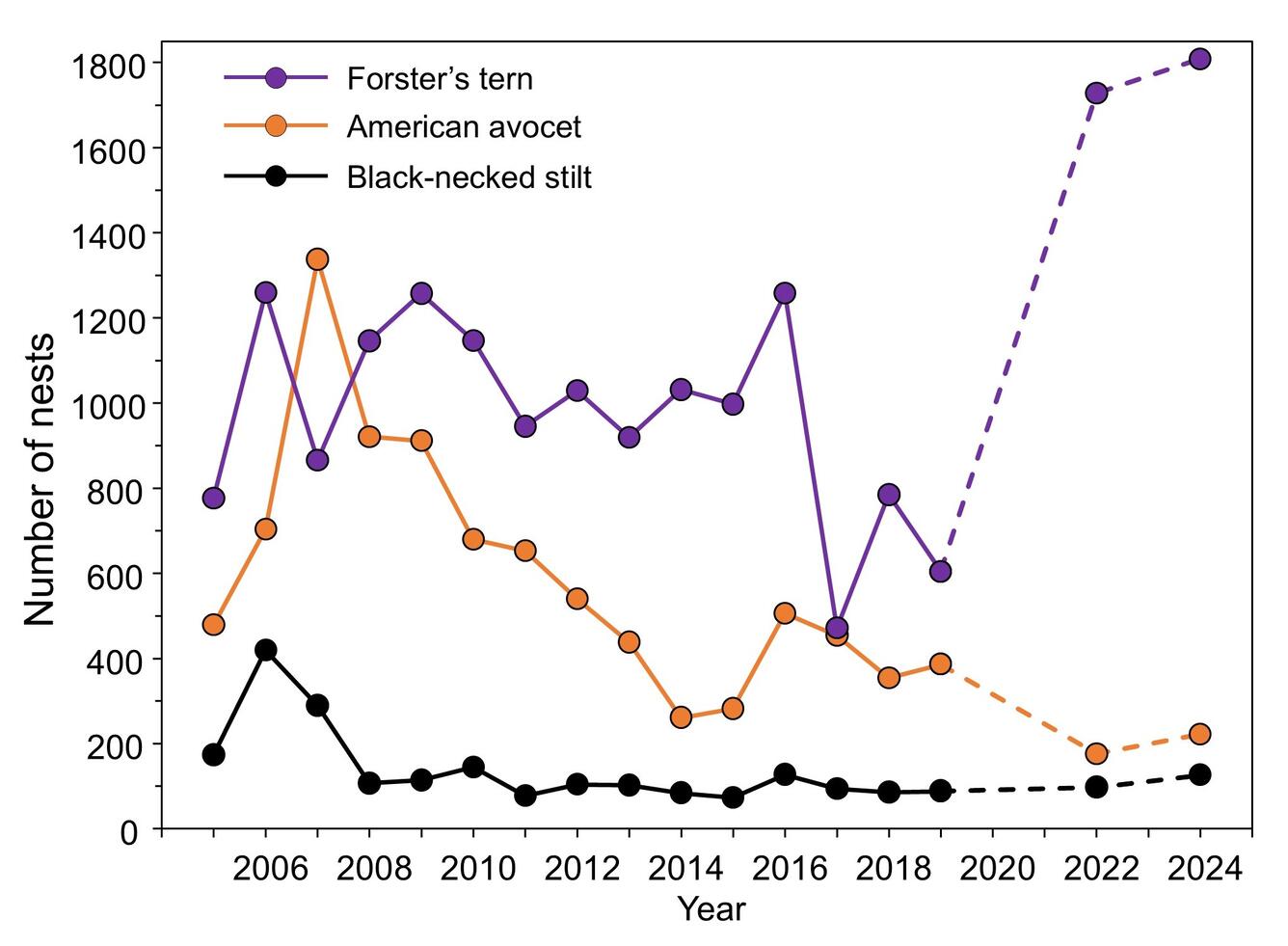
In May 2019, USGS, along with partners, conducted a comprehensive census of American avocets, black-necked stilts, and Forster’s terns throughout South San Francisco Bay. Results were compared to a similar study conducted in May 2001 (Rintoul et al. 2003) to assess population changes.

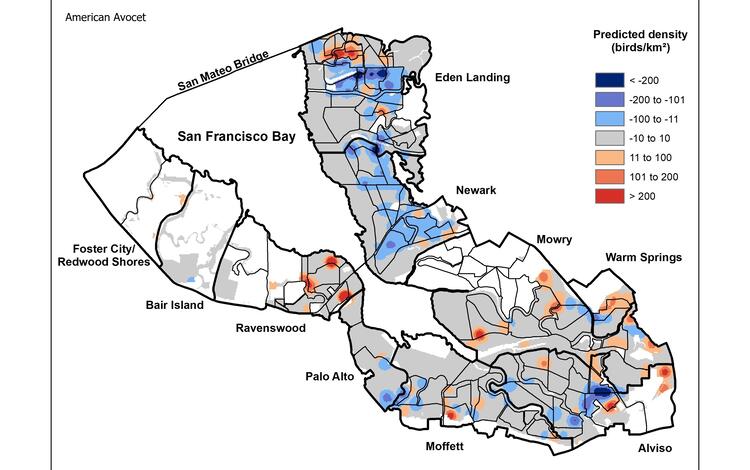
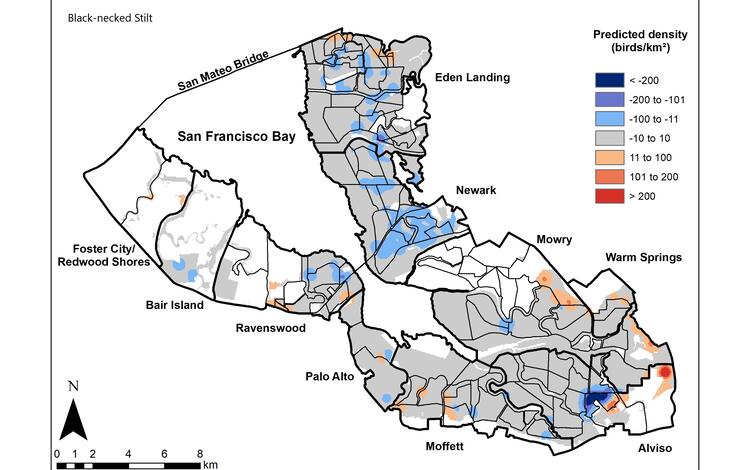
The census counted 2,392 American avocets, 828 black-necked stilts, and 2,675 Forster’s terns throughout South San Francisco Bay in 2019. Compared to 2001, American avocets declined 13.5% and black-necked stilts declined 30.0% (Forster’s terns were not surveyed in 2001) and both species showed key changes in their distributions around South San Francisco Bay.
Changes in density estimates for American avocets and black-necked stilts in South San Francisco Bay between 2001 and 2019. Darker blue colors indicate declining abundance whereas darker red colors indicate an increase in abundance from 2001 to 2019. Areas in white were not estimated because they were not surveyed in one or both years (Hartman and others, 2021).
Results of the 2019 population census will help to guide management of key habitats for these species as conversion of managed ponds to tidal marsh habitats continues.

California Gulls
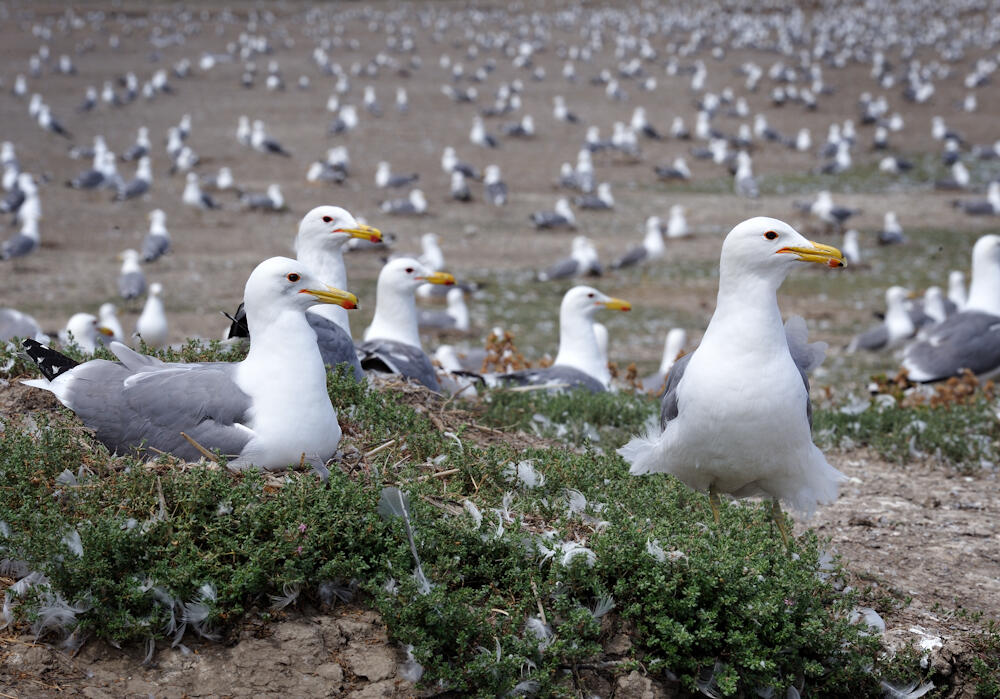
One waterbird whose numbers are increasing is the California Gull. The California Gull breeding population in San Francisco Bay has risen from a few dozen to over 50,000 individuals in the past 35 years.
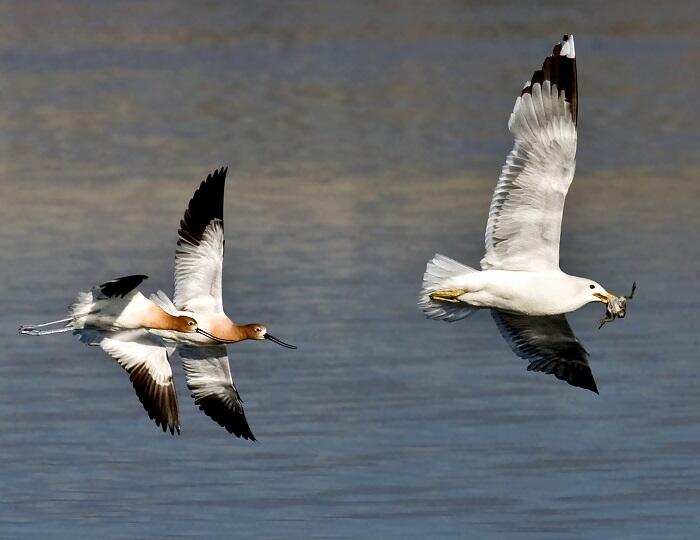
California Gulls are voracious predators of other breeding birds in the Bay. In fact, USGS identified California Gulls as the cause of more than 50% of Forster’s tern and American avocet chick deaths. In this photograph, avocets chase a California Gull with an avocet chick in its bill.
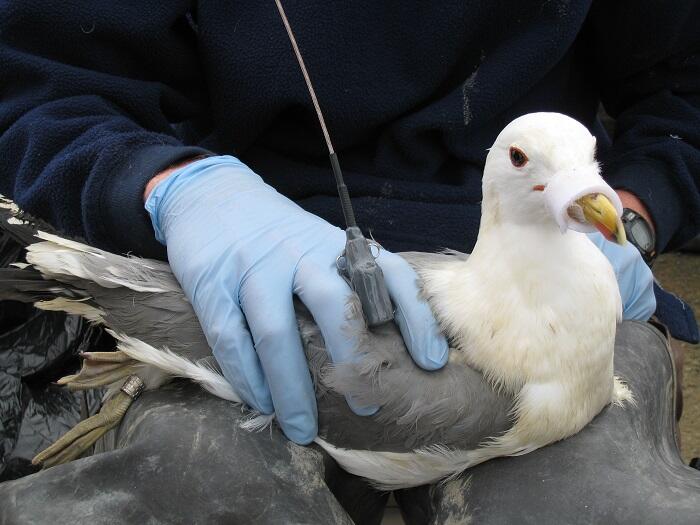
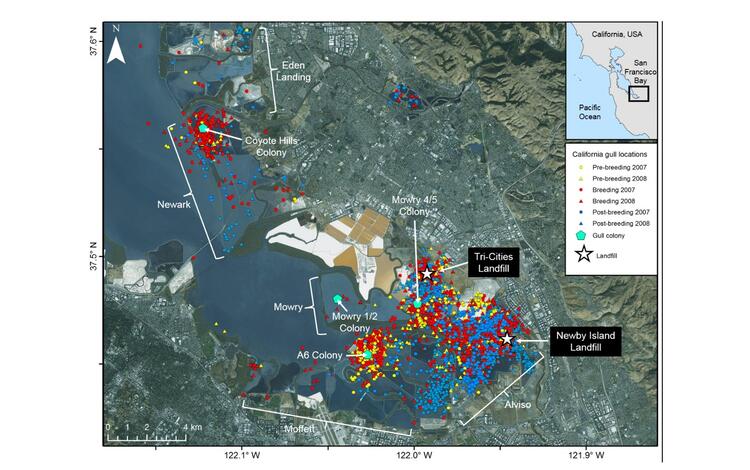
USGS is studying California Gull movements and habitat use to limit these predators' negative effects on breeding waterbirds in the Bay. In 2007 and 2008, USGS radio-marked and tracked California Gulls.
California Gulls’ ability to exploit landfills in and around San Francisco Bay likely has contributed to their explosive population growth. The vast majority of radio-marked gulls were located near South San Francisco Bay landfills throughout the breeding season.
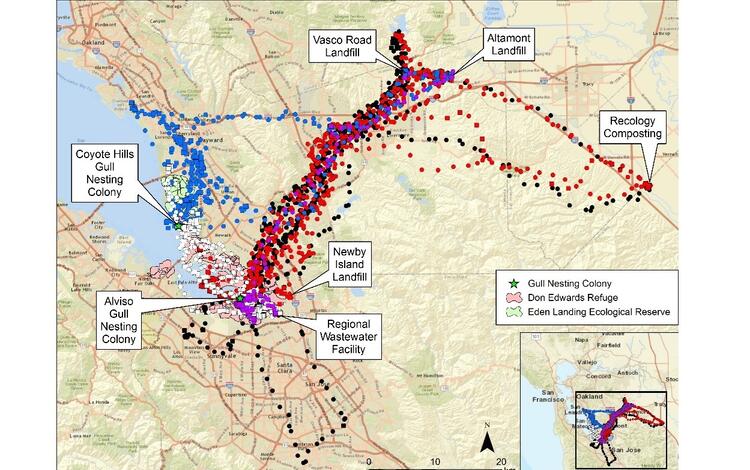
In response to this problem, gull abatement programs designed to limit landfill access by gulls, were implemented at the largest landfill in South San Francisco Bay (Newby Island). Yet, preliminary data from a 2016 follow-up pilot project using GPS dataloggers suggest that California Gulls may be responding by moving to more distant landfills outside of San Francisco Bay.
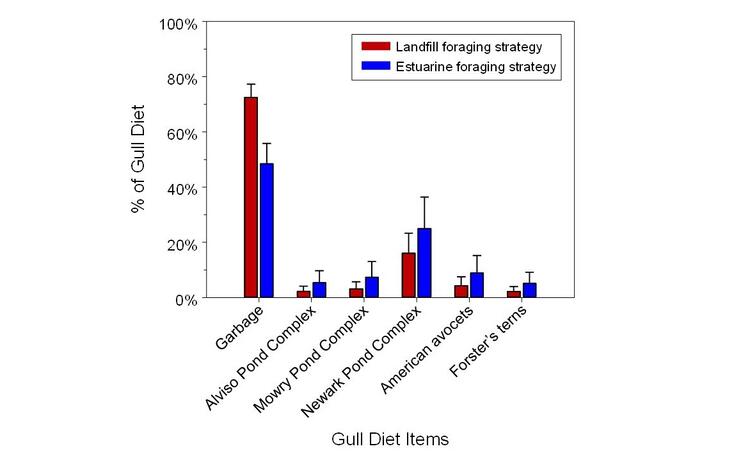
USGS diet analyses demonstrate that garbage makes up a substantial portion of most California Gulls’ diet in San Francisco Bay, even for more estuarine foraging gulls.
Partners
USGS Western Ecological Research Center
California Coastal Conservancy
California Department of Fish and Wildlife Eden Landing Ecological Reserve
Don Edwards San Francisco Bay NWR
Resource Legacy Fund
Santa Clara Valley Water District
San Francisco Bay Bird Observatory
South Bay Salt Pond Restoration Project
U.S. Army of Corps of Engineers
U.S. Fish and Wildlife Service
In alphabetical order, except for USGS. Names of all the collaborators that have contributed to this project.
Products
Technical Reports and Publications
2023 Schacter C.R., C.A. Hartman, M.P. Herzog, S.H. Peterson, L.M .Tarjan, Y. Wang, C. Strong, R. Tertes, N. Warnock, and J.T. Ackerman. 2023. Habitat Use by Breeding Waterbirds in Relation to Tidal Marsh Restoration in the San Francisco Bay Estuary. San Francisco Estuary and Watershed Science, 21:0–25. https://doi.org/10.15447/sfews.2023v21iss2art2.
2023 Ackerman J.T., C.A. Hartman, and M.P. Herzog MP. 2023. Monitoring Nesting Waterbirds for the South Bay Salt Pond Restoration Project: 2022 Breeding Season. U.S. Geological Survey Open-File Report 2023-1067. https://doi.org/10.3133/ofr20231067.
2021 Hartman C.A., J.T. Ackerman, C. Shacter, M.P. Herzog, L.M .Tarjan, Y. Wang, C. Strong, R. Tertes, and N. Warnock. 2021. Breeding waterbird populations have declined in South San Francisco Bay: an assessment over two decades. San Francisco Estuary and Watershed Science, 19:1–8. https://doi.org/10.15447/sfews.2021v19iss3art4.
2020 Hartman, C.A., Ackerman, J.T., Herzog, M.P., Wang, Y., and Strong, C., 2020, Establishing Forster’s Tern (Sterna forsteri) nesting sites at pond A16 using social attraction for the South Bay Salt Pond restoration project: U.S. Geological Survey Open-File Report, 2020–1081, 28 p., https://doi.org/10.3133/ofr20201081.
2020 Ackerman, J.T., C.A. Hartman, M.P. Herzog, J.Y. Takekawa, J.A. Robinson, L.W. Oring, J.P. Skorupa, and R. Boettcher (2020). American Avocet (Recurvirostra americana), version 1.0. In Birds of the World (A. F. Poole, Editor). Cornell Lab of Ornithology, Ithaca, NY, USA. https://doi.org/10.2173/bow.ameavo.01
2019 Hartman, C.A., J.T. Ackerman, M.P. Herzog, C. Strong, and D. Trachtenbarg. 2019. Social attraction used to establish Caspian tern nesting colonies in San Francisco Bay. Global Ecology and Conservation, 20:e00757.
2018 Ackerman, J.T., S.H. Peterson, D.C. Tsao, and J.Y. Takekawa. 2018. California gull (Larus californicus) space use and timing of movements in relation to landfills and breeding colonies. Waterbirds, 41(4):384-400.
2018 Burns, C.E., J.T. Ackerman, N.B. Washburn, J. Bluso-Demers, C. Robinson-Nilsen, and C. Strong. 2018. California gull population growth and ecological impacts in the San Francisco Bay estuary, 1980-2016. Pages 180-189 in Shuford, W.D., R.E. Gill Jr., and C.M. Handel (editors): Trends and Traditions: Avifaunal Change in Western North America. Studies of Western Birds 3. Western Field Ornithologists: Camarillo, California. 466 pages.
2018 Hartman, C.A., J.T. Ackerman, M.P. Herzog, C.M. Strong, D. Trachtenbarg, and C.A. Shore. 2018. Social attraction used to establish Caspian tern (Hydroprogne caspia) nesting colonies on modified Islands at the Don Edwards San Francisco Bay National Wildlife Refuge, California—Final Report. U.S. Geological Survey Open-File Report, 2018-1136, 41 p., doi:10.3133/ofr20181136.
2017 Peterson, S.H., J.T. Ackerman, and C.A. Eagles-Smith. 2017. Mercury contamination and stable isotopes reveal variability in foraging ecology of generalist California gulls. Ecological Indicators, 74:205-215.
2016 Hartman, C.A., J.T. Ackerman, J.Y. Takekawa, M.P. Herzog. 2016. Waterbird nest-site selection is influenced by neighboring nests and island topography. The Journal of Wildlife Management, 80(7): 1267-1279. doi:10.1002/jwmg.21105
2016 Hartman, C.A., J.T. Ackerman, and M.P. Herzog. 2016. Island Characteristics Within Wetlands Influence Waterbird Nest Success and Abundance. The Journal of Wildlife Management, 80(7): 1177-1188. doi:10.1002/jwmg.21120
2014 Ackerman, J.T., M.P. Herzog, J.Y. Takekawa, and C.A. Hartman. 2014. Comparative reproductive biology of sympatric species: nest and chick survival of American avocets and black-necked stilts. Journal of Avian Biology, doi:10.1111/jav.00385
2014 Ackerman, J.T., M.P. Herzog, C.A. Hartman, and G. Herring. 2014. Forster’s Tern chick survival in response to a managed relocation of predatory California Gulls. The Journal of Wildlife Management, 78(5): 818–829. doi:10.1002/jwmg.728
2014 Ackerman, J.T., C.A. Hartman, M.P. Herzog, L.M. Smith, S.M. Moskal, S.E.W. De La Cruz, J.L. Yee, and J.Y. Takekawa. 2014. The critical role of islands for waterbird breeding and foraging habitat in managed ponds of the South Bay Salt Pond Restoration Project, South San Francisco Bay, California: U.S. Geological Survey Open-File Report, 2014-1263, 118p., doi:10.3133/ofr20141263.
2014 Ackerman, J.T., M.P. Herzog, and C.A. Hartman. 2014. Effects of human disturbance on waterbird nesting and reproductive success at restoration pond SF2, south San Francisco Bay, California: U.S. Geological Survey Open-File Report, 2014-1223, 16 pp. doi:10.3133/ofr20141223
2013 Ackerman, J.T., M.P. Herzog, G. Herring, C.A. Hartman, J. Bluso-Demers, and C. Robinson-Nilsen. Impact of salt pond restoration on California gull displacement and predation on breeding waterbirds. Report prepared for the South Bay Salt Pond Restoration Project and Resources Legacy Fund, 83pp.
2012 Ackerman, J.T., M.P. Herzog, C.A. Hartman, L.A. Brand, J.Y. Takekawa, and J. Bluso-Demers. 2012. The critical role of islands for waterbird breeding and foraging habitat in managed ponds of the South Bay Salt Pond Restoration Project. Annual Report, U. S. Geological Survey, Western Ecological Research Center, Davis, CA. 19 pp.
2012 Ackerman, J.T., and M.P. Herzog. Waterbird nest monitoring program in San Francisco Bay (2005-2010). U. S. Geological Survey Open-File Report, 2012-1145; 24 pp.
2011 Herring, G., J.T. Ackerman, J.Y. Takekawa, C.A. Eagles-Smith, and J.M. Eadie. 2011. Identifying nest predators of American avocets (Recurvirostra americana) and black-necked stilts (Himantopus mexicanus) in San Francisco Bay, California. The Southwestern Naturalist, 56(1): 35-43. doi:10.1894/KF-14.1
2010 Bluso-Demers, J.D., J.T. Ackerman, and J.Y. Takekawa. 2010. Colony attendance patterns by mated Forster’s terns Sterna forsteri using an automated data-logging receiver system. Ardea, 98:59-65.
2010 Demers, S.A., J.Y. Takekawa, J.T. Ackerman, N. Warnock, and N.D. Athearn. 2010. Space use and habitat selection of migrant and resident American avocets in San Francisco Bay. Condor, 112:511-520.
2010 Ackerman, J.T., J. Bluso-Demers, M.P. Herzog, C. Robinson-Nilsen, and G. Herring. 2010. Impact of salt pond restoration on California gull displacement and predation on breeding waterbirds. Annual Report, U. S. Geological Survey and San Francisco Bay Bird Observatory; 10 pp.
2010 Ackerman, J.T., M.P. Herzog, C.A. Eagles-Smith, and J.B. Demers. 2010. California gull intrusions on breeding waterbird colonies and impacts to reproductive success: implications for the South Bay Salt Pond Restoration Project. Annual Report, U. S. Geological Survey, Western Ecological Research Center, Davis, CA; 13 pp.
2009 Ackerman, J.T., J.D. Bluso, and J.Y. Takekawa. 2009. Postfledging Forster’s tern movements, habitat selection, and colony attendance in San Francisco Bay. Condor, 111:100-110.
2009 Ackerman, J.T., C.A. Eagles-Smith, J.Y. Takekawa, J. Bluso-Demers, D. Tsao, and D. Le Fer. 2009. California gull movements in relation to nesting waterbirds and landfills: implications for the South Bay Salt Pond Restoration Project. Administrative Report, U. S. Geological Survey, Western Ecological Research Center, Davis, CA; 64 pp.
2008 Bluso-Demers, J.D., M.A. Colwell, J.Y. Takekawa, and J.T. Ackerman. 2008. Space use by Forster’s terns breeding in South San Francisco Bay. Waterbirds, 31:357-364.
2008 Demers, S.A., M.A. Colwell, J.Y. Takekawa, and J.T. Ackerman. 2008. Breeding stage influences space use of female American avocets in San Francisco Bay, California. Waterbirds, 31:365-371.
2008 Ackerman, J.T., C.A. Eagles-Smith, J.Y. Takekawa, and S.A. Iverson. 2008. Survival of postfledging Forster’s terns in relation to mercury exposure in San Francisco Bay. Ecotoxicology, 17:789-801.
2006 Ackerman, J. T., J.Y. Takekawa, C. Strong, N. Athearn, and A. Rex. 2006. California Gull distribution, abundance, and predation on waterbird eggs and chicks in South San Francisco Bay. Final Report, U. S. Geological Survey, Western Ecological Research Center, Davis and Vallejo, CA 61 pp.
2005 Ackerman, J.T., C.M. Marn, and J.Y. Takekawa. 2005. Life and death on a salt pond: avocets and stilts survive amidst mercury pollution and invasive gulls. Tideline, Winter, Vol. 25, No. 4:1-3.
2001 Takekawa, J.Y., C.T. Lu, and R.T. Pratt. 2001. Avian communities in baylands and artificial salt evaporation ponds of the San Francisco Bay estuary. Hydrobiologia, 466:317-328.
1999 San Francisco Bay Area Wetlands Ecosystem Goals Project. 1999. Baylands Ecosystem Habitat Goals. U.S. Environmental Protection Agency, San Francisco, California, USA and San Francisco Bay Regional Water Quality Control Board, Oakland, CA.