



This is a photo of a Chinook salmon fry taken by U.S. Fish and Wildlife, Roger Tabor, a Fish Biologist at the Western Washington FWCO.
How far do salmon travel?
Salmon first travel from their home stream to the ocean, which can be a distance of hundreds of miles. Once they reach the ocean, they might travel an additional 1,000 miles to reach their feeding grounds.
Learn more: Western Fisheries Research Center - Questions and Answers about Salmon
Related

How long do salmon usually live? How long do salmon usually live?
Most salmon species live 2 to 7 years (4 to 5 average). Steelhead trout can live up to about 11 years. Learn more: Western Fisheries Research Center - Questions and Answers about Salmon

How do salmon know where their home is when they return from the ocean? How do salmon know where their home is when they return from the ocean?
Salmon come back to the stream where they were 'born' because they 'know' it is a good place to spawn; they won't waste time looking for a stream with good habitat and other salmon. Scientists believe that salmon navigate by using the earth’s magnetic field like a compass. When they find the river they came from, they start using smell to find their way back to their home stream. They build their...

How many species of salmon are there and how large can they get? How many species of salmon are there and how large can they get?
There are seven species of Pacific salmon. Five of them occur in North American waters: chinook, coho, chum, sockeye, and pink. Masu and amago salmon occur only in Asia. There is one species of Atlantic salmon. Chinook/King salmon are the largest salmon and get up to 58 inches (1.5 meters) long and 126 pounds (57.2 kg). Pink salmon are the smallest at up to 30 inches (0.8 meters) long and 12...

Why are there so few salmon left? Why are there so few salmon left?
There are many reasons for the decline in salmon populations. Logging an area around a stream reduces the shade and nutrients available to the stream and increases the amount of silt or dirt in the water, which can choke out developing eggs. Dams cause fish to die from the shock of going through the turbines and from predators that eat the disoriented fish as they emerge from the dam. Overfishing...

Why do salmon change color and die after they spawn? Why do salmon change color and die after they spawn?
Salmon change color to attract a spawning mate. Pacific salmon use all their energy for returning to their home stream, for making eggs, and digging the nest. Most of them stop eating when they return to freshwater and have no energy left for a return trip to the ocean after spawning. After they die, other animals eat them (but people don't) or they decompose, adding nutrients to the stream...
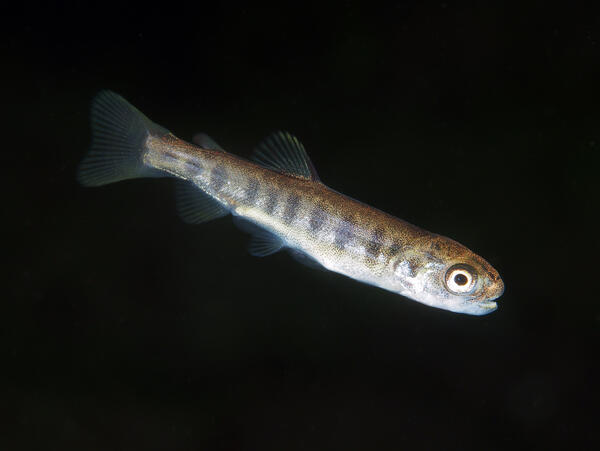
Chinook Salmon Fry
This is a photo of a Chinook salmon fry taken by U.S. Fish and Wildlife, Roger Tabor, a Fish Biologist at the Western Washington FWCO.

Coho salmon on the Sol Duc River, Washington (Image 2)
Coho salmon on the Sol Duc River, Washington (Image 2)Coho salmon migrating on the Sol Duc River, Washington to spawning grounds upstream. Fish must leap through a series of small waterfalls called the Salmon Cascades in Olympic National Park to reach the waters where they were born to complete their life cycle by spawning the next generation.

PubTalk 2/2015 — Undamming Washington's Elwha River
PubTalk 2/2015 — Undamming Washington's Elwha Riverby Amy East USGS Research Geologist
- Hear about river response to the largest dam removal in history.
- Causing disturbance as a means of restoration: how well does it work?
- Will legendary salmon runs return?

Mature Salmon
A mature salmon returns to a shallow stream reach to spawn.
A mature salmon returns to a shallow stream reach to spawn.

A Time to Spawn
Salmon and steelhead migrating through Bonnerville Dam.
Salmon and steelhead migrating through Bonnerville Dam.

Passage of adult Atlantic salmon in the Penobscot River, Maine
Passage of adult Atlantic salmon in the Penobscot River, MaineAtlantic salmon runs in the Penobscot and Kennebec Rivers of Maine are federally endangered and remain low. Inefficient fishways at dams continue to slow and prevent upstream migrations to spawning habitat, and delays of weeks to months are common. These delays expose fish to elevated water temperatures, resulting in increased metabolic demands.

Sockeye salmon spawning in the Grand Central River, Alaska
Sockeye salmon spawning in the Grand Central River, AlaskaSockeye salmon spawning in the Grand Central River, on the Seward Peninsula near Salmon Lake, Alaska.
Sockeye salmon spawning in the Grand Central River, Alaska
Sockeye salmon spawning in the Grand Central River, AlaskaSockeye salmon spawning in the Grand Central River, on the Seward Peninsula near Salmon Lake, Alaska.
Related
How long do salmon usually live? How long do salmon usually live?
Most salmon species live 2 to 7 years (4 to 5 average). Steelhead trout can live up to about 11 years. Learn more: Western Fisheries Research Center - Questions and Answers about Salmon
How do salmon know where their home is when they return from the ocean? How do salmon know where their home is when they return from the ocean?
Salmon come back to the stream where they were 'born' because they 'know' it is a good place to spawn; they won't waste time looking for a stream with good habitat and other salmon. Scientists believe that salmon navigate by using the earth’s magnetic field like a compass. When they find the river they came from, they start using smell to find their way back to their home stream. They build their...
How many species of salmon are there and how large can they get? How many species of salmon are there and how large can they get?
There are seven species of Pacific salmon. Five of them occur in North American waters: chinook, coho, chum, sockeye, and pink. Masu and amago salmon occur only in Asia. There is one species of Atlantic salmon. Chinook/King salmon are the largest salmon and get up to 58 inches (1.5 meters) long and 126 pounds (57.2 kg). Pink salmon are the smallest at up to 30 inches (0.8 meters) long and 12...
Why are there so few salmon left? Why are there so few salmon left?
There are many reasons for the decline in salmon populations. Logging an area around a stream reduces the shade and nutrients available to the stream and increases the amount of silt or dirt in the water, which can choke out developing eggs. Dams cause fish to die from the shock of going through the turbines and from predators that eat the disoriented fish as they emerge from the dam. Overfishing...
Why do salmon change color and die after they spawn? Why do salmon change color and die after they spawn?
Salmon change color to attract a spawning mate. Pacific salmon use all their energy for returning to their home stream, for making eggs, and digging the nest. Most of them stop eating when they return to freshwater and have no energy left for a return trip to the ocean after spawning. After they die, other animals eat them (but people don't) or they decompose, adding nutrients to the stream...
Chinook Salmon Fry
This is a photo of a Chinook salmon fry taken by U.S. Fish and Wildlife, Roger Tabor, a Fish Biologist at the Western Washington FWCO.
This is a photo of a Chinook salmon fry taken by U.S. Fish and Wildlife, Roger Tabor, a Fish Biologist at the Western Washington FWCO.
Coho salmon on the Sol Duc River, Washington (Image 2)
Coho salmon on the Sol Duc River, Washington (Image 2)Coho salmon migrating on the Sol Duc River, Washington to spawning grounds upstream. Fish must leap through a series of small waterfalls called the Salmon Cascades in Olympic National Park to reach the waters where they were born to complete their life cycle by spawning the next generation.
PubTalk 2/2015 — Undamming Washington's Elwha River
PubTalk 2/2015 — Undamming Washington's Elwha Riverby Amy East USGS Research Geologist
- Hear about river response to the largest dam removal in history.
- Causing disturbance as a means of restoration: how well does it work?
- Will legendary salmon runs return?
Mature Salmon
A mature salmon returns to a shallow stream reach to spawn.
A mature salmon returns to a shallow stream reach to spawn.
A Time to Spawn
Salmon and steelhead migrating through Bonnerville Dam.
Salmon and steelhead migrating through Bonnerville Dam.
Passage of adult Atlantic salmon in the Penobscot River, Maine
Passage of adult Atlantic salmon in the Penobscot River, MaineAtlantic salmon runs in the Penobscot and Kennebec Rivers of Maine are federally endangered and remain low. Inefficient fishways at dams continue to slow and prevent upstream migrations to spawning habitat, and delays of weeks to months are common. These delays expose fish to elevated water temperatures, resulting in increased metabolic demands.
Sockeye salmon spawning in the Grand Central River, Alaska
Sockeye salmon spawning in the Grand Central River, AlaskaSockeye salmon spawning in the Grand Central River, on the Seward Peninsula near Salmon Lake, Alaska.
Sockeye salmon spawning in the Grand Central River, Alaska
Sockeye salmon spawning in the Grand Central River, AlaskaSockeye salmon spawning in the Grand Central River, on the Seward Peninsula near Salmon Lake, Alaska.
Updated Date: August 7, 2026