



FORT Updates: From Plains to Peaks - Vol. 4 | Issue 2
Hot off the Press
Recent publications, events, and other news from the Fort Collins Science Center.
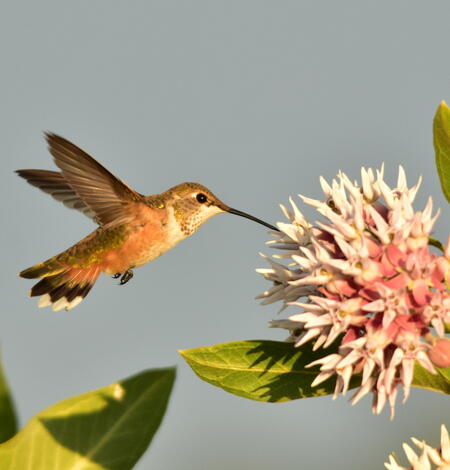
KWIC Science: Rapid response products to meet resource managers’ priority science needs
Federal public land managers in the US are required by law to use science to inform management decisions. However, managers have limited time to identify science for use in decision making. Literature reviews are one tool to efficiently summarize science for use by managers, but are time-consuming to produce. Keyword in Context (KWIC) text analysis is a straightforward method of locating specific...
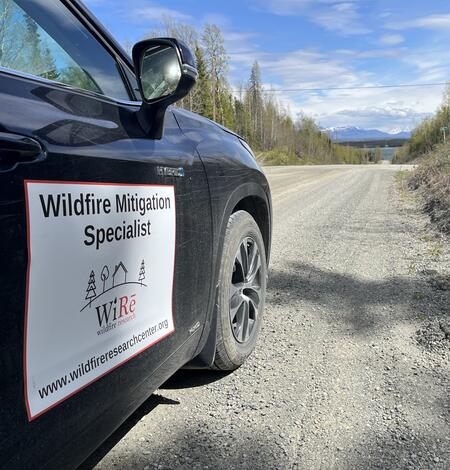
Science You Can Use newsletter features wildfire risk mitigation research from USGS and collaborators
The US Forest Service Rocky Mountain Research Station publishes a monthly newsletter, Science You Can Use, that summarizes current scientific research for land managers. This month's newsletter features multiple components of the wildfire mitigation research completed by the interdisciplinary Wildfire Research (WiRē) Team. Read the newsletter and learn more about WiRē through the links below.
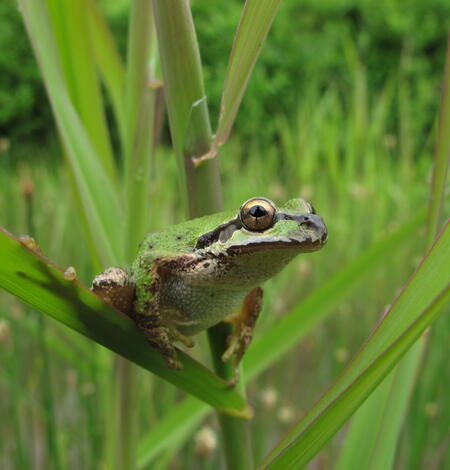
Amphibian Week with USGS: Science for Healthy Habitats
Amphibians (frogs, toads, salamanders, newts, and caecilians) are key contributors to healthy ecosystems and important indicators of environmental change. During Amphibian Week, the USGS is highlighting how long-term science is helping us understand amphibian declines and support conservation across the nation. Attend our webinar or one of our local events for more amphibian fun!
Subscribe to our newsletter to get all the FORT Science Updates!
Science Spotlights
New or ongoing research projects at the Fort Collins Science Center.
-
The Ecoinformatics and Wildlife Technology (ECOTECH) Research Group
The Ecoinformatics and Wildlife Technology (ECOTECH) team is a multidisciplinary group that unites expertise in biology, ecology, statistics, data science, and technology to deliver integrated scientific, hardware, and software solutions for modernizing natural resource science. ECOTECH leverages longstanding relationships with partners and draws upon intimate knowledge of both user needs and...
-

Modernized Breeding Bird Survey Portal
The North American Breeding Bird Survey (BBS) Portal is a modern information system that enables volunteer observers and regional coordinators to manage survey routes, enter field data, and coordinate route assignments online. The portal replaces legacy paper-based and outdated digital workflows with a streamlined interface built for the BBS community. Observers can view their assigned routes...
-
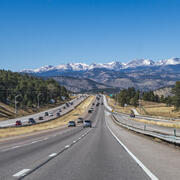
Using Artificial Intelligence to Estimate Traffic to Improve Planning and Access to Colorado’s Public Lands
This project applies data-driven, machine‑learning methods to estimate average annual daily traffic on roads that connect people to Colorado’s public lands, where traffic data are sparse or nonexistent. Expanding on successful applications in Wyoming, the approach uses socioeconomic, land-use, roadway, and accessibility data to uniquely model traffic patterns from 2015 to 2025. These predictions...
Learn More
Find our science and connect with our researchers.
Publications
FORT scientists have produced more than 2000 peer reviewed publications that are registered in the USGS Publications Warehouse, along with many others prior to their work at the USGS or in conjunction with other government agencies.

Data
Our interdisciplinary, integrated science teams develop various data sets in support of the USGS mission areas. This information then aids natural resource managers in decision making and support of the complex issues they face in today's world. The data and tools listed here are official USGS data releases.

Connect
The majority of our staff call Fort Collins, Colorado their home, but work all over the United States. FORT research and support staff work from one of four duty stations: in Colorado, at the Fort Collins Science Center or Denver Federal Center; in New Mexico, at the New Mexico Landscapes Field Station; or in Florida, at the USGS Everglades Research Offices.