



The National Wildlife Disease Database (NWDD) development team thanks the multiple agencies and organizations that are participating in this effort.
Data Contributors
NWDD analytical models generate situational awareness maps and contextual information by using diverse data, including fish and wildlife diagnostic and surveillance data, wildlife rehabilitation data, open-source data (e.g., weather, land use, species range maps), and more. These data are shared by federal sources, such as U.S. Geological Survey (USGS), National Park Service, U.S. Fish and Wildlife Service, U.S. Department of Agriculture (Animal and Plant Health Inspection Service, Wildlife Services), in addition to state fish and game agencies, a Canadian province, and others. Additional data sets are anticipated in the future.
Contact NWDD@pnnl.gov for more information.
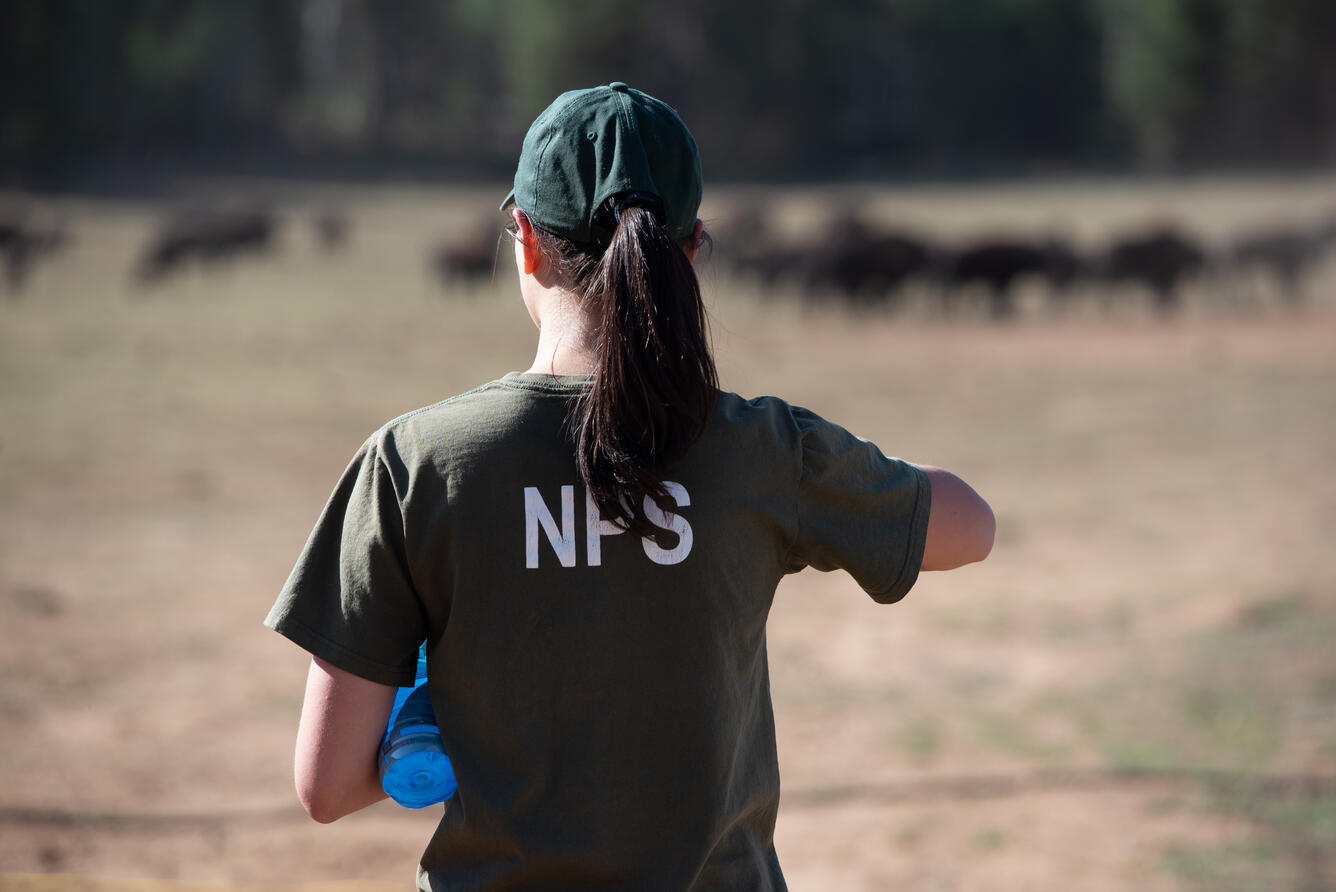
A National Park Service biologist observes bison in Grand Canyon National Park.
USGS National Wildlife Health Center
Role: Oversee project management and facilitate activities to ensure that development and project requirements are successfully met. The NWDD contributes to the national response framework for security and public safety. Specifically, it supports Primary Mission Essential Function (PMEF 3-13) assigned to the USGS, which involves wildlife disease monitoring, impact prediction, and providing data for informed decision making.
NWDD Steering Committee
Role: Senior executive leaders provide project guidance, collaborate on interagency problem solving, and champion implementation of NWDD within their agencies.
- Association of Fish and Wildlife Agencies
- National Oceanic and Atmospheric Administration
- National Park Service
- Native American Fish and Wildlife Society
- U.S. Department of Agriculture (Animal and Plant Health Inspection Service, Wildlife Services)
- U.S. Fish and Wildlife Service
- U.S. Geological Survey
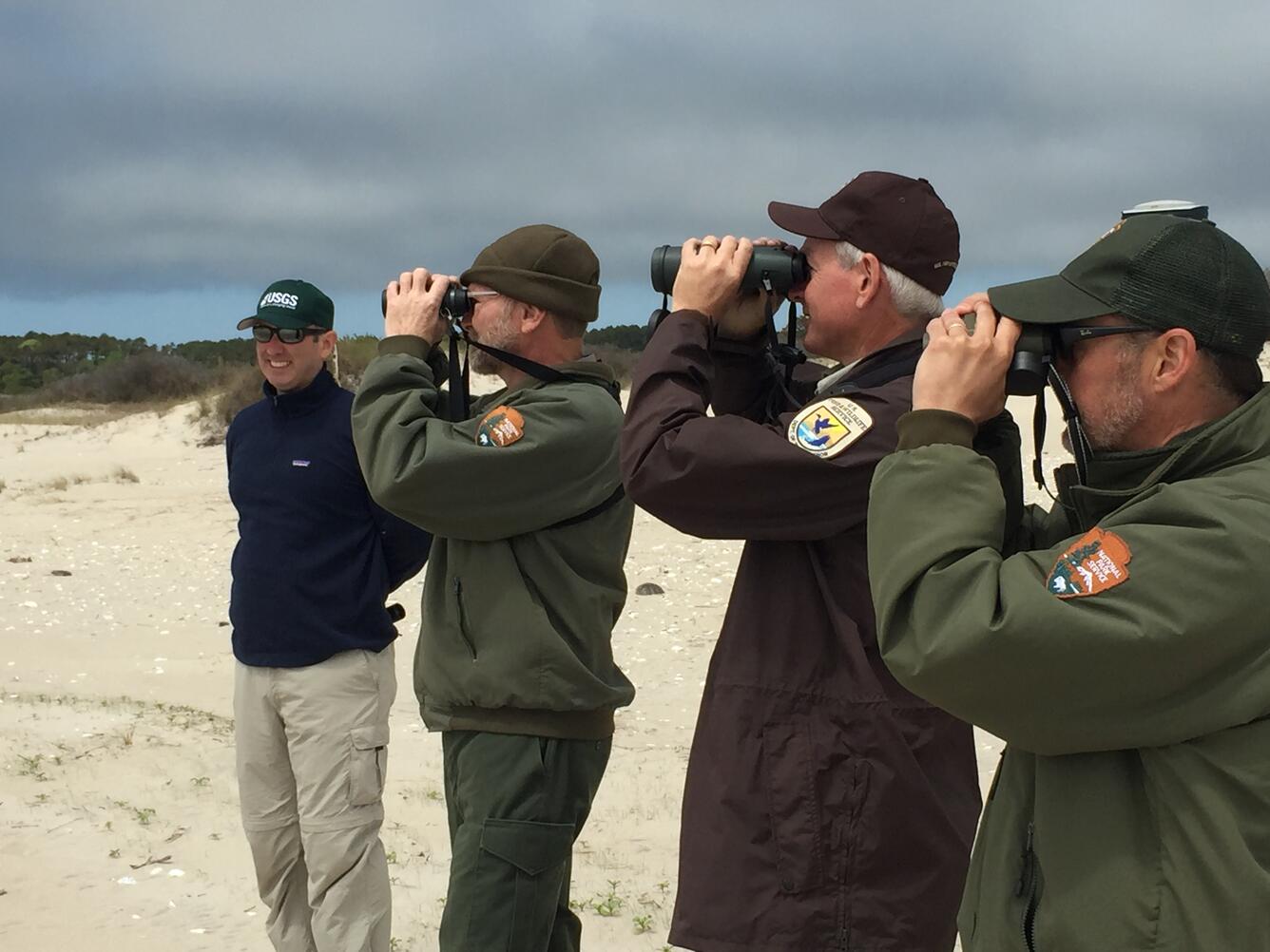
U.S. Geological Survey, National Park Service, and U.S. Fish and Wildlife Service collaborate on a shorebird project at the USGS Woods Hole Coastal and Marine Science Center.
Data Sharing Working Group
Role: Understand partners’ data sharing concerns and work with the development team and Steering Committee on solutions.
- Association of Fish and Wildlife Agencies
- Midwest Association of Fish and Wildlife Agencies
- National Park Service
- Native American Fish and Wildlife Society
- U.S. Department of Agriculture (Animal and Plant Health Inspection Service, Wildlife Services)
- U.S. Department of Agriculture (Animal and Plant Health Inspection Service, National Wildlife Research Center)
- U.S. Geological Survey (National Wildlife Health Center)
- Western Association of Fish and Wildlife Agencies
IT Sustainability Working Group
Role: Explore options and suggest solutions to the Steering Committee to ensure the efficient operation and long-term viability of the NWDD project. The focus is on key IT sustainability components that are necessary for maintaining the integrity, scalability, and accessibility of the NWDD (e.g., hosting, implementation, and maintenance).
- Cornell University -Surveillance Optimization Project for Chronic Wasting Disease (SOP4CWD)
- Michigan Department of Natural Resources
- U.S. Department of Agriculture (Animal and Plant Health Inspection Service, Marketing and Regulatory Programs)
- U.S. Geological Survey (National Wildlife Health Center)
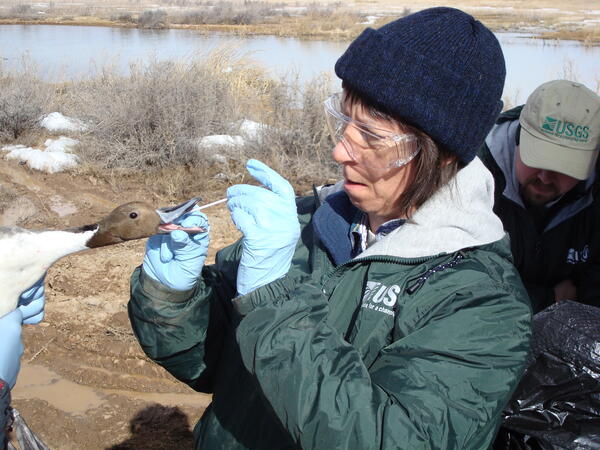
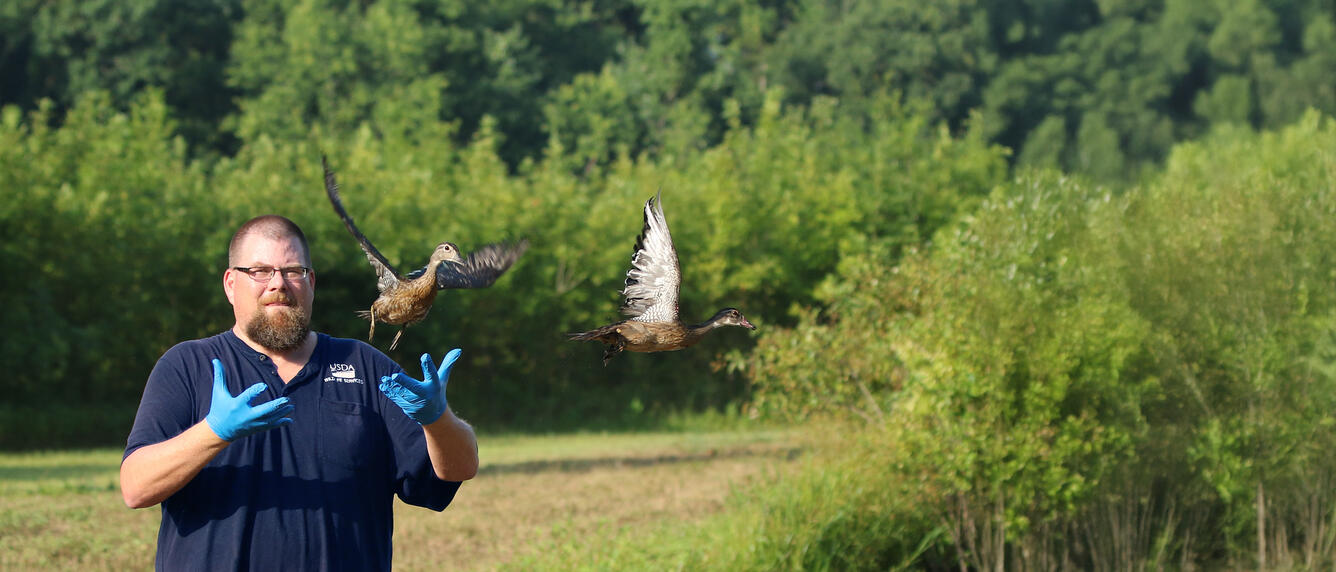
A U.S. Department of Agriculture scientist releases wood ducks after collecting samples for avian influenza surveillance.
Local User Working Group
Role: Collaborate with the Pacific Northwest National Laboratory user experience designer, data scientists, and software engineers to ensure the NWDD meets their needs and provides useful benefits. By sharing their roles, responsibilities, daily activities, decisions, and challenges, the platform's features and captured data are tailored to enhance their ability to manage public lands locally and make informed decisions. Participants also give direct feedback on platform design and overall user experience to ensure the final NWDD functionality is user-friendly and provides useful information for the local level with tools not available elsewhere.
- Midwest Association of Fish and Wildlife Agencies
- Minnesota Department of Natural Resources
- National Park Service
- Northeast Association of Fish and Wildlife Agencies, Cornell Wildlife Health Laboratory, and Cornell University - Surveillance Optimization Project for Chronic Wasting Disease (SOP4CWD)
- Southeastern Association of Fish and Wildlife Agencies and Southeastern Cooperative Wildlife Disease Study
- U.S. Department of Agriculture (Animal and Plant Health Inspection Service, Wildlife Services - Michigan)
- U.S. Fish and Wildlife Service (Horicon National Wildlife Refuge)
- Wisconsin Department of Natural Resources
National Users Working Group
Role: Collaborate with the Pacific Northwest National Laboratory user experience designer, data scientists, and software engineers on the workflow and capabilities of the NWDD. By sharing their wildlife health responsibilities at the national level, the platform is customized to meet data and analytical needs required to make informed decisions. Participants also give direct feedback on platform design and overall user experience so that the final NWDD functionality is user-friendly and provides useful information for the national level with tools not available elsewhere.
- Association of Fish and Wildlife Agencies (One Health Committee)
- Department of Homeland Security (National Biosurveillance Integration Center Countering Weapons of Mass Destruction Office)
- Department of Homeland Security (Office of Health Security)
- Department of Homeland Security (One Health - Threat Risk Event Analysis, Detection and Surveillance Framework)
- National Oceanic and Atmospheric Administration (Marine Mammal Stranding Response Network)
- National Park Service (Wildlife Health Office)
- Northeast Association of Fish and Wildlife Agencies
- U.S. Dept of Agriculture (Animal Plant Health Inspection Service, Veterinary Services - Center for Epidemiology and Animal Health)
- U.S. Department of Agriculture (Animal and Plant Health Inspection Service, Wildlife Services - National Feral Swine Damage Management Program)
- U.S. Geological Survey (Ecosystem Mission Area - Wildlife Health)
- Western Association of Fish and Wildlife Agencies
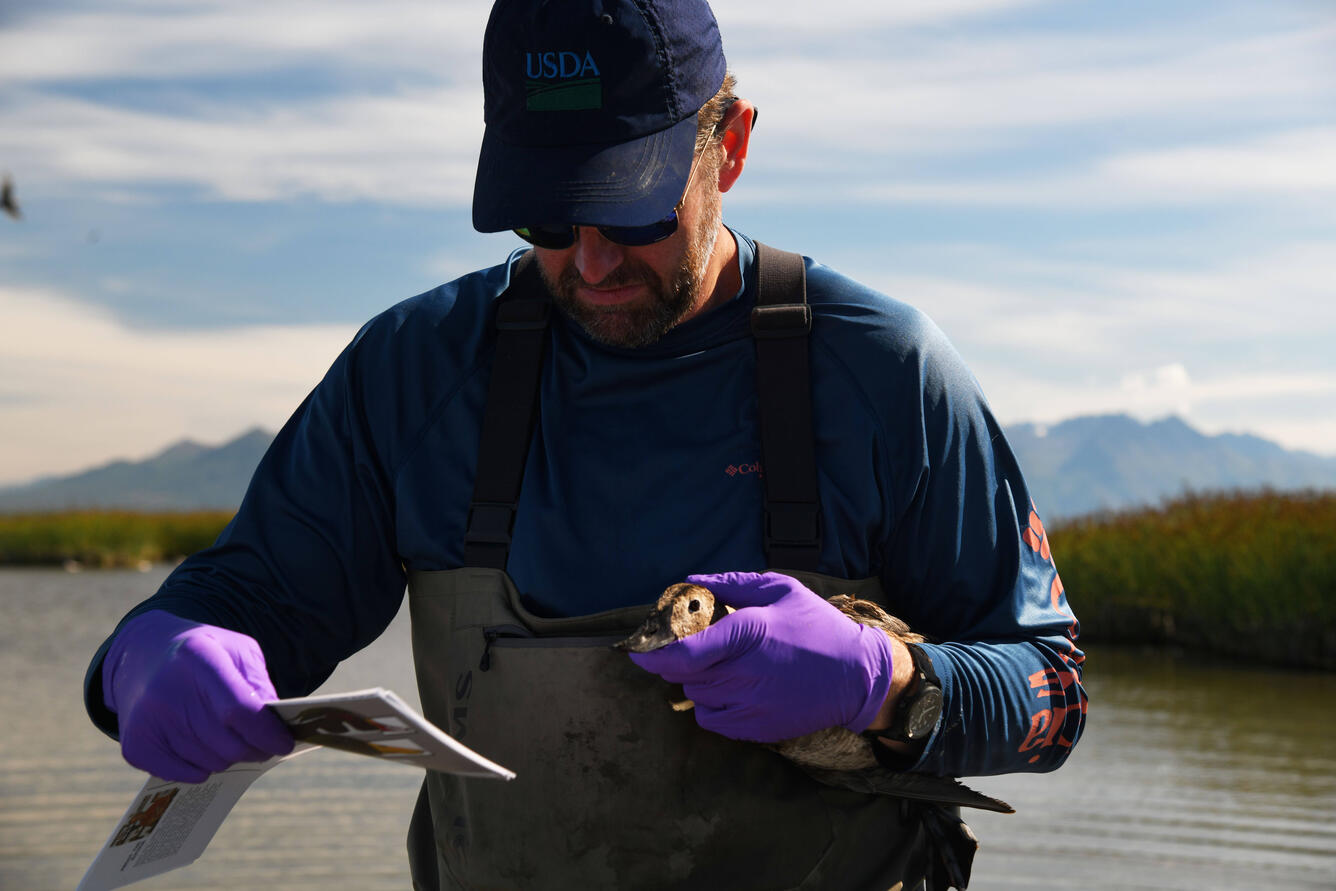
A U.S. Department of Agriculture wildlife disease biologist uses a field guide for accurate bird identification during avian influenza surveillance in Alaska.
Outreach and Communications Working Group
Role: Aid the Steering Committee and working groups in communicating NWDD’s function and benefits.
National Wildlife Disease Database (NWDD)
The National Wildlife Disease Database (NWDD) system applies advanced analytics to integrated data from government agencies, wildlife rehabilitators, and open sources, to identify unusual disease events, assess impacts, and map disease occurrences nationwide. Natural resource managers, agricultural communities, veterinary professionals, and human health practitioners rely on this data to investigate wildlife diseases while managing risks to health and resources.
The National Wildlife Disease Database (NWDD) development team thanks the multiple agencies and organizations that are participating in this effort.
Data Contributors
NWDD analytical models generate situational awareness maps and contextual information by using diverse data, including fish and wildlife diagnostic and surveillance data, wildlife rehabilitation data, open-source data (e.g., weather, land use, species range maps), and more. These data are shared by federal sources, such as U.S. Geological Survey (USGS), National Park Service, U.S. Fish and Wildlife Service, U.S. Department of Agriculture (Animal and Plant Health Inspection Service, Wildlife Services), in addition to state fish and game agencies, a Canadian province, and others. Additional data sets are anticipated in the future.
Contact NWDD@pnnl.gov for more information.
A National Park Service biologist observes bison in Grand Canyon National Park.
USGS National Wildlife Health Center
Role: Oversee project management and facilitate activities to ensure that development and project requirements are successfully met. The NWDD contributes to the national response framework for security and public safety. Specifically, it supports Primary Mission Essential Function (PMEF 3-13) assigned to the USGS, which involves wildlife disease monitoring, impact prediction, and providing data for informed decision making.
NWDD Steering Committee
Role: Senior executive leaders provide project guidance, collaborate on interagency problem solving, and champion implementation of NWDD within their agencies.
- Association of Fish and Wildlife Agencies
- National Oceanic and Atmospheric Administration
- National Park Service
- Native American Fish and Wildlife Society
- U.S. Department of Agriculture (Animal and Plant Health Inspection Service, Wildlife Services)
- U.S. Fish and Wildlife Service
- U.S. Geological Survey
U.S. Geological Survey, National Park Service, and U.S. Fish and Wildlife Service collaborate on a shorebird project at the USGS Woods Hole Coastal and Marine Science Center.
Data Sharing Working Group
Role: Understand partners’ data sharing concerns and work with the development team and Steering Committee on solutions.
- Association of Fish and Wildlife Agencies
- Midwest Association of Fish and Wildlife Agencies
- National Park Service
- Native American Fish and Wildlife Society
- U.S. Department of Agriculture (Animal and Plant Health Inspection Service, Wildlife Services)
- U.S. Department of Agriculture (Animal and Plant Health Inspection Service, National Wildlife Research Center)
- U.S. Geological Survey (National Wildlife Health Center)
- Western Association of Fish and Wildlife Agencies
IT Sustainability Working Group
Role: Explore options and suggest solutions to the Steering Committee to ensure the efficient operation and long-term viability of the NWDD project. The focus is on key IT sustainability components that are necessary for maintaining the integrity, scalability, and accessibility of the NWDD (e.g., hosting, implementation, and maintenance).
- Cornell University -Surveillance Optimization Project for Chronic Wasting Disease (SOP4CWD)
- Michigan Department of Natural Resources
- U.S. Department of Agriculture (Animal and Plant Health Inspection Service, Marketing and Regulatory Programs)
- U.S. Geological Survey (National Wildlife Health Center)
A U.S. Department of Agriculture scientist releases wood ducks after collecting samples for avian influenza surveillance.
Local User Working Group
Role: Collaborate with the Pacific Northwest National Laboratory user experience designer, data scientists, and software engineers to ensure the NWDD meets their needs and provides useful benefits. By sharing their roles, responsibilities, daily activities, decisions, and challenges, the platform's features and captured data are tailored to enhance their ability to manage public lands locally and make informed decisions. Participants also give direct feedback on platform design and overall user experience to ensure the final NWDD functionality is user-friendly and provides useful information for the local level with tools not available elsewhere.
- Midwest Association of Fish and Wildlife Agencies
- Minnesota Department of Natural Resources
- National Park Service
- Northeast Association of Fish and Wildlife Agencies, Cornell Wildlife Health Laboratory, and Cornell University - Surveillance Optimization Project for Chronic Wasting Disease (SOP4CWD)
- Southeastern Association of Fish and Wildlife Agencies and Southeastern Cooperative Wildlife Disease Study
- U.S. Department of Agriculture (Animal and Plant Health Inspection Service, Wildlife Services - Michigan)
- U.S. Fish and Wildlife Service (Horicon National Wildlife Refuge)
- Wisconsin Department of Natural Resources
National Users Working Group
Role: Collaborate with the Pacific Northwest National Laboratory user experience designer, data scientists, and software engineers on the workflow and capabilities of the NWDD. By sharing their wildlife health responsibilities at the national level, the platform is customized to meet data and analytical needs required to make informed decisions. Participants also give direct feedback on platform design and overall user experience so that the final NWDD functionality is user-friendly and provides useful information for the national level with tools not available elsewhere.
- Association of Fish and Wildlife Agencies (One Health Committee)
- Department of Homeland Security (National Biosurveillance Integration Center Countering Weapons of Mass Destruction Office)
- Department of Homeland Security (Office of Health Security)
- Department of Homeland Security (One Health - Threat Risk Event Analysis, Detection and Surveillance Framework)
- National Oceanic and Atmospheric Administration (Marine Mammal Stranding Response Network)
- National Park Service (Wildlife Health Office)
- Northeast Association of Fish and Wildlife Agencies
- U.S. Dept of Agriculture (Animal Plant Health Inspection Service, Veterinary Services - Center for Epidemiology and Animal Health)
- U.S. Department of Agriculture (Animal and Plant Health Inspection Service, Wildlife Services - National Feral Swine Damage Management Program)
- U.S. Geological Survey (Ecosystem Mission Area - Wildlife Health)
- Western Association of Fish and Wildlife Agencies
A U.S. Department of Agriculture wildlife disease biologist uses a field guide for accurate bird identification during avian influenza surveillance in Alaska.
Outreach and Communications Working Group
Role: Aid the Steering Committee and working groups in communicating NWDD’s function and benefits.
National Wildlife Disease Database (NWDD)
The National Wildlife Disease Database (NWDD) system applies advanced analytics to integrated data from government agencies, wildlife rehabilitators, and open sources, to identify unusual disease events, assess impacts, and map disease occurrences nationwide. Natural resource managers, agricultural communities, veterinary professionals, and human health practitioners rely on this data to investigate wildlife diseases while managing risks to health and resources.