



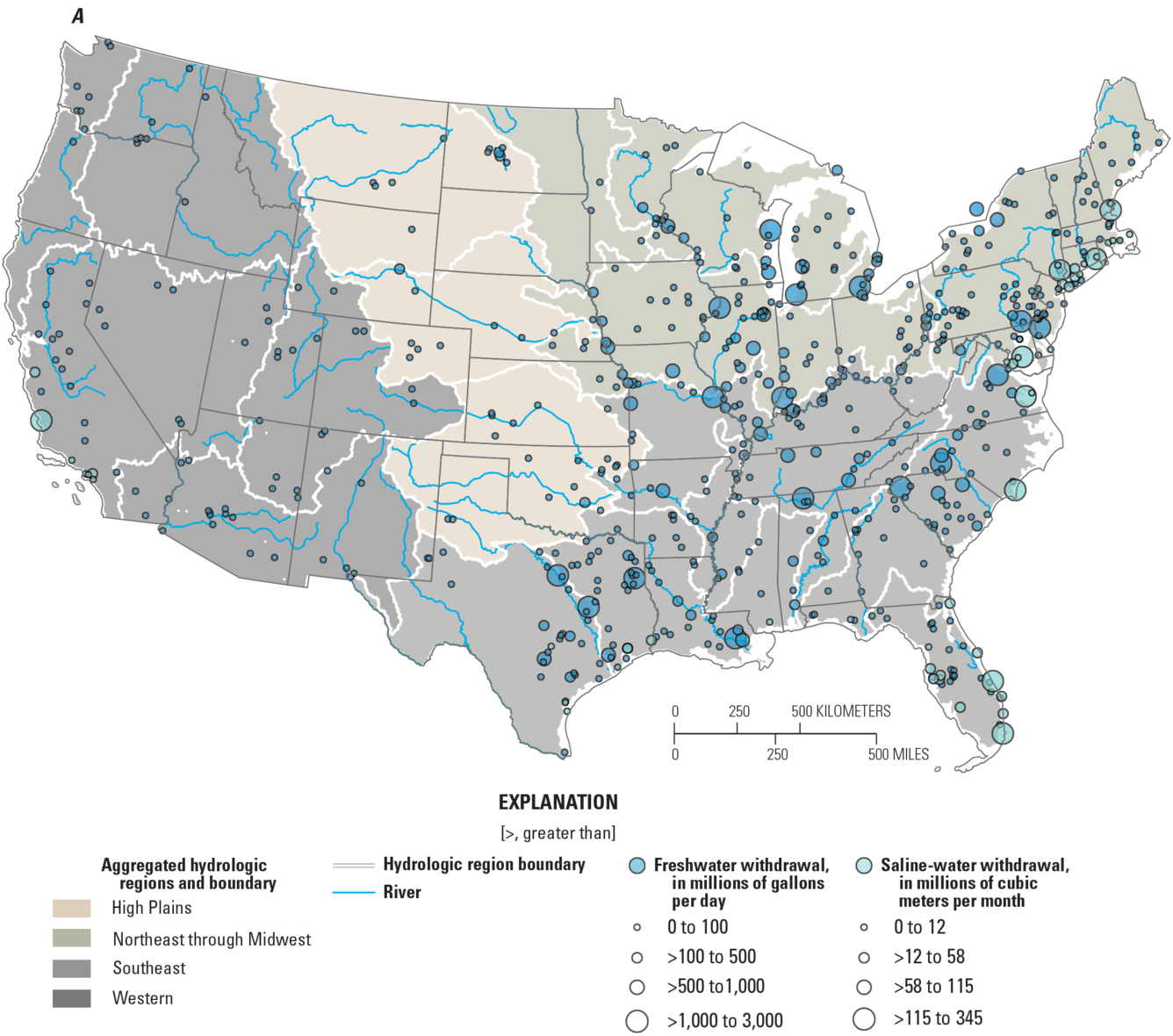
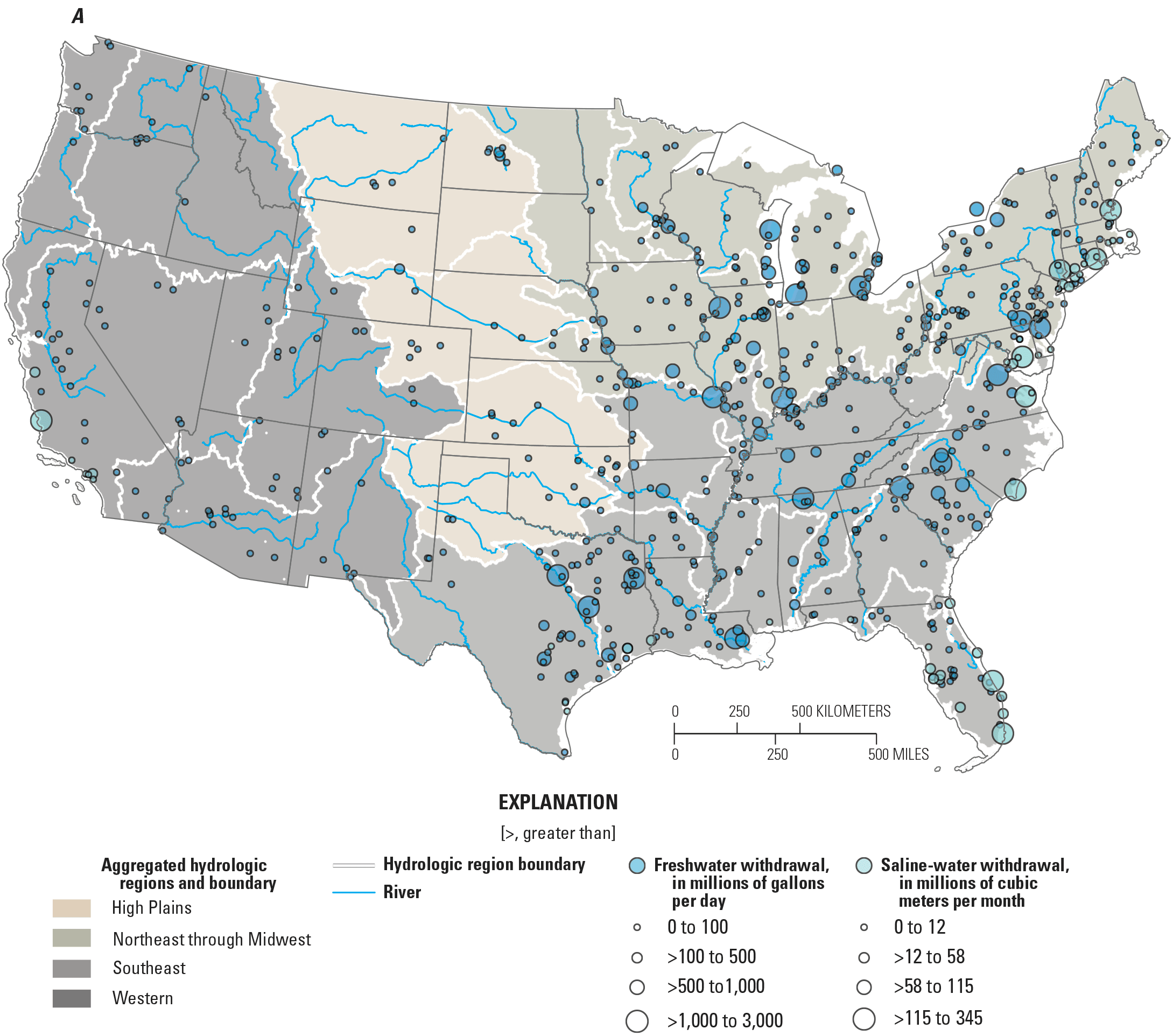
Thermoelectric power water use in the lower 48 United States as points


Detailed Description
Model estimates of thermoelectric power withdrawals from freshwater and saline water in the lower 48 United States for the water year 2020.
Figure 15a from Medalie, L., Galanter, A.E., Martinez, A.J., Archer, A.A., Luukkonen, C.L., Harris, M.A., and Haynes, J.V., 2025, Water use across the conterminous United States, water years 2010–20, chap. D of U.S. Geological Survey Integrated Water Availability Assessment—2010–20: U.S. Geological Survey Professional Paper 1894–D, 56 p., https://doi.org/10.3133/pp1894D.
Sources/Usage
Public Domain.
Related

Thermoelectric Power Water Use
Much of the electricity used in the United States and worldwide comes from thermoelectric power plants, which use water for both steam generation and cooling. Thermoelectric power consumes, or loses water via evaporation, at rates that can be significant—especially in water-stressed regions.

Accessing Water Use Data
The USGS provides historic and recent water use data for the United States including the District of Columbia, Puerto Rico, and the U.S. Virgin Islands. This page provides an up-to-date guide to accessing, downloading, and using USGS water use data.

Water Use in the United States
Since 1950, the USGS has regularly produced nationwide water‑use data, creating one of the most comprehensive pictures of how water is used across the United States. Building on this rich historical record, these data give water managers a critical foundation to evaluate long‑term trends, plan strategically, and identify and quantify water availability so they can design more adaptive, resilient...
Thermoelectric Power Water Use
Much of the electricity used in the United States and worldwide comes from thermoelectric power plants, which use water for both steam generation and cooling. Thermoelectric power consumes, or loses water via evaporation, at rates that can be significant—especially in water-stressed regions.

National Water Availability Assessments
The USGS National Water Availability Assessment consists of reports, which provide a scientific summary and interpretation of water quantity, quality and use, and the data companion, which delivers model-based estimates of water supply and demand.
National Water Availability Assessment: Key Findings
This interactive website highlights the top scientific findings of the National Water Availability Assessment report through engaging stories, plain-language explanations, and interactive data visualizations.

National Water Availability Assessment Reports
The National Water Availability Assessment reports provide synthesis and interpretation of water availability in the past, present, and future.

National Water Availability Assessment Data Companion
The National Water Availability Assessment Data Companion (NWDC) delivers model-based estimates of water supply and demand.
Related
Thermoelectric Power Water Use
Much of the electricity used in the United States and worldwide comes from thermoelectric power plants, which use water for both steam generation and cooling. Thermoelectric power consumes, or loses water via evaporation, at rates that can be significant—especially in water-stressed regions.
Accessing Water Use Data
The USGS provides historic and recent water use data for the United States including the District of Columbia, Puerto Rico, and the U.S. Virgin Islands. This page provides an up-to-date guide to accessing, downloading, and using USGS water use data.
Water Use in the United States
Since 1950, the USGS has regularly produced nationwide water‑use data, creating one of the most comprehensive pictures of how water is used across the United States. Building on this rich historical record, these data give water managers a critical foundation to evaluate long‑term trends, plan strategically, and identify and quantify water availability so they can design more adaptive, resilient...
Thermoelectric Power Water Use
Much of the electricity used in the United States and worldwide comes from thermoelectric power plants, which use water for both steam generation and cooling. Thermoelectric power consumes, or loses water via evaporation, at rates that can be significant—especially in water-stressed regions.
National Water Availability Assessments
The USGS National Water Availability Assessment consists of reports, which provide a scientific summary and interpretation of water quantity, quality and use, and the data companion, which delivers model-based estimates of water supply and demand.
National Water Availability Assessment: Key Findings
This interactive website highlights the top scientific findings of the National Water Availability Assessment report through engaging stories, plain-language explanations, and interactive data visualizations.
National Water Availability Assessment Reports
The National Water Availability Assessment reports provide synthesis and interpretation of water availability in the past, present, and future.
National Water Availability Assessment Data Companion
The National Water Availability Assessment Data Companion (NWDC) delivers model-based estimates of water supply and demand.