



Energy and Mineral Resource Assessments
We provide impartial estimates of known and potentially yet to be discovered energy and mineral resources. These energy and mineral resource assessments enable us to plan for our Nation’s energy and mineral future.
Assessing Mineral Resources

Learn more about our mineral resource assessments.
Assessing Energy Resources

Learn more about our energy resource assessments.
We assess both known and undiscovered energy and mineral resources.
We provide estimates of the location, amount, and characteristics of energy and mineral resources of known and potential yet-to-be-discovered mineral resources – a function that USGS has performed for over 140 years. Our assessments provide key information about where current energy and mineral resources are found and where future mineral and energy development could take place.
Our assessments evaluate established resources, including oil, gas, coal, uranium, geothermal heat (i.e. heat from the Earth) that could be accessed with currently used techniques, and critical minerals located beneath the ground. We also assess emerging resources that could provide significant value in the future, like geologic hydrogen gas, gas hydrates, geothermal heat that could be accessed by non-conventional techniques, and minerals in the wastes produced during mineral and energy production.
Our assessments are publicly available and inform key decisions about our nature’s future.
Our assessments are used by a variety of stakeholders including all levels of government, industries involved in resource exploration and development, land and resource managers, investors, and others. These assessments guide the investment of billions of dollars, inform decisions about trade strategies, advise resource management decisions, and shape emerging technologies.
Our data collection and foundational science is supporting better, faster assessments.
We continuously improve our resource assessment processes by collecting and incorporating new data, doing research to better understand key geologic processes, and incorporating advanced technologies. Our partnerships with State geological surveys, Federal agencies, industries, and universities benefit For instance:
- Through our Earth Mapping Resources Initiative (Earth MRI), we are partnering with States to collect modernized geophysical, geochemical, and other data that we are incorporating into upcoming assessments of graphite and other minerals.
- We are conducting research on how mine wastes change over time. This science will be the foundation for identifying and estimating recoverable mineral resources in mine wastes.
- We partnered with the Defense Advanced Research Project Agency (DARPA) to accelerate advances in science for understanding critical minerals, including leveraging advances in machine learning to speed up mineral assessments. Workflows developed through this project could shorten the timelines of some mineral assessments by years.
Supporting decision-making through a full life cycle and multi-resource approach.
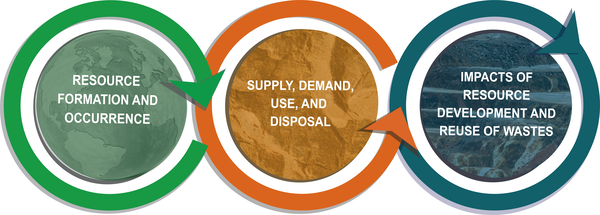
Decision makers face complicated choices about where and how to develop energy and mineral resources. In addition to providing resource assessments, we also deliver information about how mineral and energy resource development could interact with other natural resources at each stage from extraction to use and disposal or reuse.
For instance, in addition to oil and gas resources, we are assessing how much water it might take to develop them, as well as how much groundwater might be brought to the surface during production. These “produced waters” can contain greases and heavy metals but can also contain resources like lithium.
This kind of science provides information about both potential tradeoffs and potential opportunities of resource development, helping to support the co-management of multiple natural resources in the same place, especially on Federal lands.