



A large destructive landslide occurred near Oso, Washington on March 22, 2014. Computer simulations indicate that it could have behaved very differently (with much less mobility and consequent destructiveness) if the ground had been less porous and water-saturated. This video shows the results of two computer simulations.
Videos
Explore a diverse collection of engaging videos showcasing the latest research, discoveries, and educational content from the U.S. Geological Survey. Dive into the fascinating world of geology, hydrology, ecology, and natural hazards as we bring science to life. Stay informed and inspired by our visual storytelling that highlights the vital work of USGS scientists and their impact on the planet.
Filter Total Items: 2894

Oso Landslide Computer Simulations
A large destructive landslide occurred near Oso, Washington on March 22, 2014. Computer simulations indicate that it could have behaved very differently (with much less mobility and consequent destructiveness) if the ground had been less porous and water-saturated. This video shows the results of two computer simulations.
Amplification
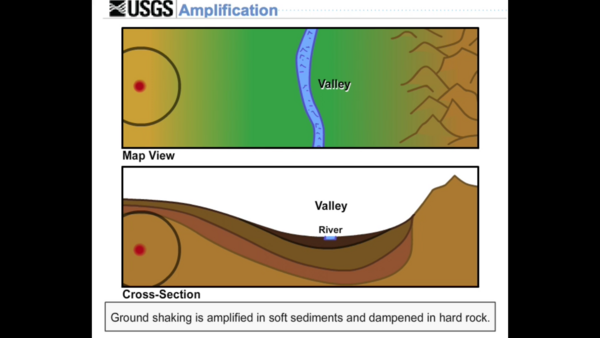
Shaking at a site may be increased, or amplified, by focusing of seismic energy caused by the materials in basins or by surface topography such as mountains.
Shaking at a site may be increased, or amplified, by focusing of seismic energy caused by the materials in basins or by surface topography such as mountains.

Asperity
An asperity is an area on a fault that is stuck. The earthquake rupture usually begins at an asperity.
An asperity is an area on a fault that is stuck. The earthquake rupture usually begins at an asperity.

Attenuation
When you throw a pebble in a pond, it makes waves on the surface that move out from the place where the pebble entered the water. The waves are largest where they are formed and gradually get smaller as they move away. This decrease in size, or amplitude, of the waves is called attenuation.
When you throw a pebble in a pond, it makes waves on the surface that move out from the place where the pebble entered the water. The waves are largest where they are formed and gradually get smaller as they move away. This decrease in size, or amplitude, of the waves is called attenuation.

Bat Thermal Video
Imagery from temperature-sensing cameras showing bats in hibernation. This new footage suggests that bats who warm up from hibernation together throughout the winter may be better at surviving white nose syndrome, a disease caused by a cold-loving fungus ravaging insect-eating bat populations in the United States and Canada.
Imagery from temperature-sensing cameras showing bats in hibernation. This new footage suggests that bats who warm up from hibernation together throughout the winter may be better at surviving white nose syndrome, a disease caused by a cold-loving fungus ravaging insect-eating bat populations in the United States and Canada.
Blind Thrust Fault
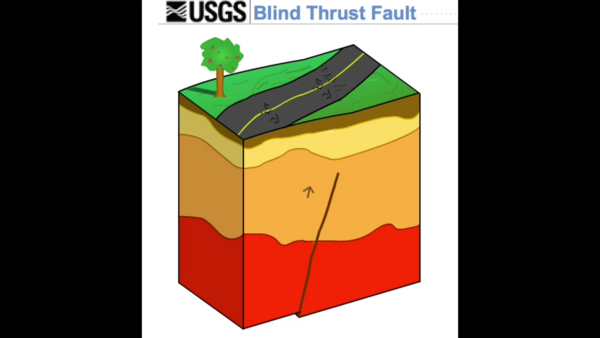
A thrust fault that does not rupture all the way up to the surface so there is no evidence of it on the ground. It is buried under the uppermost layers of rock in the crust.
A thrust fault that does not rupture all the way up to the surface so there is no evidence of it on the ground. It is buried under the uppermost layers of rock in the crust.

Continuous Gas Monitoring Tracks Volcanic Activity at Mount St. Helens
Continuous Gas Monitoring Tracks Volcanic Activity at Mount St. HelensVolcano gas geochemistry has been around for a long time. Scientists can make gas measurements using very large, very expensive Correlation Spectrometers or collect samples in the field and bring them back for analysis in the lab. But it’s possible we’re missing out on a lot of information because our monitoring capabilities don’t include continuous observation.
Continuous Gas Monitoring Tracks Volcanic Activity at Mount St. Helens
Continuous Gas Monitoring Tracks Volcanic Activity at Mount St. HelensVolcano gas geochemistry has been around for a long time. Scientists can make gas measurements using very large, very expensive Correlation Spectrometers or collect samples in the field and bring them back for analysis in the lab. But it’s possible we’re missing out on a lot of information because our monitoring capabilities don’t include continuous observation.

Directivity
Directivity is an effect of a fault rupturing whereby earthquake ground motion in the direction of rupture propagation is more severe than that in other directions from the earthquake source.
Directivity is an effect of a fault rupturing whereby earthquake ground motion in the direction of rupture propagation is more severe than that in other directions from the earthquake source.

Divergent
A divergent boundary is where two adjacent tectonic plates are moving away from each other.
A divergent boundary is where two adjacent tectonic plates are moving away from each other.

Elastic Rebound
Elastic rebound is what happens to the crustal material on either side of a fault during an earthquake. The idea is that a fault is stuck until the strain accumulated in the rock on either side of the fault has overcome the friction making it stick.
Elastic rebound is what happens to the crustal material on either side of a fault during an earthquake. The idea is that a fault is stuck until the strain accumulated in the rock on either side of the fault has overcome the friction making it stick.

Foreshocks, Mainshocks, and Aftershocks
Aftershocks are earthquakes that follow the largest shock of an earthquake sequence. They are smaller than the mainshock and within 1-2 fault lengths distance from the mainshock fault. Aftershocks can continue over a period of weeks, months, or years.
Aftershocks are earthquakes that follow the largest shock of an earthquake sequence. They are smaller than the mainshock and within 1-2 fault lengths distance from the mainshock fault. Aftershocks can continue over a period of weeks, months, or years.

Great Circle
The shortest path between two points on the surface of a sphere lies along a great circle. On a 2-dimensional map, this looks like a line, but when it's on a 3-dimensional sphere, it's an arc... part of a circle.
The shortest path between two points on the surface of a sphere lies along a great circle. On a 2-dimensional map, this looks like a line, but when it's on a 3-dimensional sphere, it's an arc... part of a circle.

Horst and Graben
A horst is an upthrown block lying between two steep-angled fault blocks. A graben is a down-dropped block of the earth's crust resulting from extension, or pulling, of the crust.
A horst is an upthrown block lying between two steep-angled fault blocks. A graben is a down-dropped block of the earth's crust resulting from extension, or pulling, of the crust.

Liquefaction
Liquefaction is a process by which water-saturated sediment temporarily loses strength and acts like a fluid... like when you wiggle your toes in the wet sand near the water at the beach. This effect can be caused by earthquake shaking.
Liquefaction is a process by which water-saturated sediment temporarily loses strength and acts like a fluid... like when you wiggle your toes in the wet sand near the water at the beach. This effect can be caused by earthquake shaking.

Normal Fault
Normal, or Dip-slip, faults are inclined fractures where the blocks have mostly shifted vertically. If the rock mass above an inclined fault moves down, the fault is termed normal, whereas if the rock above the fault moves up, the fault is termed a Reverse fault.
Normal, or Dip-slip, faults are inclined fractures where the blocks have mostly shifted vertically. If the rock mass above an inclined fault moves down, the fault is termed normal, whereas if the rock above the fault moves up, the fault is termed a Reverse fault.

Shadow Zone
The shadow zone is the area of the earth from angular distances of 104 to 140 degrees that, for a given earthquake, that does not receive any direct P waves. The shadow zone results from S waves (not shown in animation) being stopped entirely by the liquid core and P waves being bent (refracted) by the liquid core.
The shadow zone is the area of the earth from angular distances of 104 to 140 degrees that, for a given earthquake, that does not receive any direct P waves. The shadow zone results from S waves (not shown in animation) being stopped entirely by the liquid core and P waves being bent (refracted) by the liquid core.

Strike-Slip Fault
Strike-slip faults are vertical (or nearly vertical) fractures where the blocks have mostly moved horizontally. If the block opposite an observer looking across the fault moves to the right, the slip style is termed right-lateral; if the block moves to the left, the motion is termed left-lateral.
Strike-slip faults are vertical (or nearly vertical) fractures where the blocks have mostly moved horizontally. If the block opposite an observer looking across the fault moves to the right, the slip style is termed right-lateral; if the block moves to the left, the motion is termed left-lateral.

Thrust Fault
A thrust fault is a reverse fault with a dip of 45° or less, a very low angle. This animation shows a reverse fault which is a steeper-angle fault, but it moves the same way.
A thrust fault is a reverse fault with a dip of 45° or less, a very low angle. This animation shows a reverse fault which is a steeper-angle fault, but it moves the same way.

Wavefront
The wavefront is the instantaneous boundary between the seismic waves in the earth material, and the material that the seismic energy has not yet reached. As a seismic wave propagates through the earth, the wavefront moves.
The wavefront is the instantaneous boundary between the seismic waves in the earth material, and the material that the seismic energy has not yet reached. As a seismic wave propagates through the earth, the wavefront moves.

Aerial Overview of Active Flow Front
This Quicktime movie provides a brief aerial overview of the active flow front.
This Quicktime movie provides a brief aerial overview of the active flow front.

Grand Canyon High Flow Monitoring
The USGS monitors sediment loads during Grand Canyon's beach-building high flow releases.
The USGS monitors sediment loads during Grand Canyon's beach-building high flow releases.